


Is It Safe to Eat Figs? Selection, Allergy, and Handling
Sep 10, 2019

Ripe common figs sold as food are generally safe for most people when the fruit is sound, washed and handled hygienically, and eaten in a suitable form and portion. Safety is not established by a nutrient list. Check for spoilage, protect the cold chain, avoid cross-contamination, and account for food allergy, plant-sap contact, swallowing needs, and individual medical restrictions.
Wash fresh figs gently under running water just before preparation; FDA does not recommend soap, detergent, or commercial produce wash. Discard rotten fruit. Keep frozen figs frozen until controlled use and thaw them safely. Anyone with a previous fig reaction or concerning latex/Ficus cross-reaction should obtain medical advice rather than test a small bite at home.
The short answer: Yes, ordinary ripe edible figs are usually safe, but "safe" is conditional. Use the right fruit identity, reject spoilage, wash and prepare cleanly, maintain temperature control, manage choking or texture needs, and stop after allergy-like symptoms. Fruit flesh and milky plant sap are different exposure questions.

What a Food-Safety Answer Must Cover
Safety begins with identity. The food should be an edible fig species and commercial food product, not an unidentified ornamental plant or a home remedy made from leaves or sap. The common edible fig is Ficus carica, but do not use a generic photo to identify wild or ornamental material for eating.
Condition comes next. A fig can be ripe and soft without being spoiled, yet sour or alcoholic odor, visible mold, leaking decay, extensive breakdown, insects, or an obviously rotten area are rejection signals. FDA advises cutting away damaged or bruised areas on produce and discarding produce that looks rotten. With delicate figs, extensive damage often makes whole-fruit rejection the practical choice.
Handling determines whether a sound fruit remains acceptable. Dirty hands, an unclean knife, raw-meat contact, prolonged warm holding, or a failed freezer can add risks not visible in the original fruit. "Natural," "organic," and "frozen" do not mean sterile. A supplier certificate does not replace kitchen hygiene.
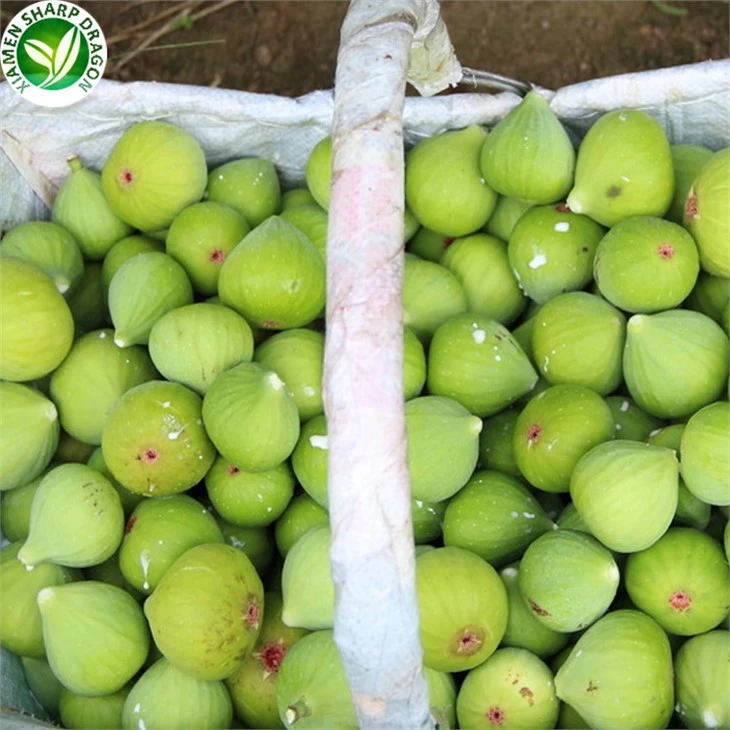
Decision example: Basket A contains intact ripe fruit with a normal aroma and no visible decay. Basket B contains split, leaking fruit with fuzzy growth and fermented odor. Washing does not rehabilitate Basket B; discard it. Prepare Basket A with clean hands, equipment, and running-water washing according to its use.

Wash Fresh Figs without Soap
FDA recommends washing produce thoroughly under running water before preparing or eating it. Begin with clean hands and a clean preparation area. Rinse the fig gently and rub the surface without crushing it, then dry with a clean cloth or paper towel. Wash before cutting so a knife does not carry surface contamination into the flesh.
Do not wash fruit with dish soap, detergent, bleach solution, or an unapproved chemical. FDA specifically advises against soap, detergent, and commercial produce wash for home produce preparation. Washing can reduce surface bacteria but does not eliminate all contamination; it cannot make rotten fruit safe.
Fresh figs are delicate. Washing far in advance can leave them wet and speed quality loss, so wash close to use unless a validated foodservice process specifies otherwise. Refrigerate perishable cut fruit promptly under the applicable food code and operation plan. Use separate utensils and boards from raw meat, poultry, and seafood.
Kitchen example: Six figs weigh 300 g. One cook washes them under running water, dries them, and cuts them with a clean knife. Another soaks them in dish-soap water and assumes the fruit is disinfected. The first method follows FDA consumer guidance; the second introduces an avoidable chemical-residue risk and still does not sterilize the fruit.
Recognize Ripeness, Damage, and Spoilage
Cultivar affects color, so green skin does not automatically mean unripe and dark skin does not automatically mean ripe. Use product identity, expected color, aroma, softness, intactness, and supplier guidance together. A ripe fig often yields gently, but a collapsed wet surface or spreading breakdown is different from normal softness.
Reject visible mold. Do not simply wipe a mold spot from a soft, high-moisture fruit and serve the remainder. Reject fruit with evidence of pests or foreign material outside the applicable tolerance. A sour or alcoholic note can indicate fermentation; where it is unexpected, treat it as a rejection signal.
Freezer burn, surface frost, or texture softening after thawing can be quality issues rather than proof of danger, but they still affect acceptance. Off odor, damaged packaging, temperature abuse, contamination, or unknown history need a safety decision. Do not taste a questionable item to determine whether it is safe.
Our guide to preparing and eating a fig covers peel, stem trimming, and serving methods. Preparation preference is separate from spoilage: peeling a rotten fig does not rescue it, while an intact washed edible peel can be acceptable for many people.

Frozen Fig Safety Depends on the Cold Chain
Freezing limits microbial growth but does not make fruit sterile or destroy every hazard. Keep the product at its specified frozen storage temperature, protect the packaging, and prevent cross-contamination. Follow the manufacturer's use instructions and destination-market food-safety controls.
USDA describes refrigerator, cold water, and microwave as safe thawing approaches in its general freezing guidance. For a ready-to-eat frozen fruit application, a controlled refrigerator thaw is often easiest to validate, but the product instructions and facility plan govern. Do not leave a bulk liner thawing on a warm counter.
Worked example: A 10 kg case is divided into five covered 2 kg foodservice pans before refrigerator thawing. If each pan supplies sixteen 125 g servings, five pans produce 5 × 16 = 80 nominal servings. This improves portion control and reduces repeated exposure of the entire case. The operation still needs time, temperature, hygiene, shelf-life, and discard rules.
If frozen fruit partially thaws during transport, record product temperature, duration, packaging condition, and ice-crystal state, then follow the documented deviation procedure. Do not make an acceptance decision from appearance alone. The supplier, QA team, carrier evidence, food-safety plan, and applicable rules determine disposition.
Fig Allergy Is Uncommon but Can Be Serious
Published research describes fig allergy and cross-reactivity involving Ficus benjamina, natural rubber latex, birch pollen-related allergens, and other plant foods in some sensitized people. A positive skin test does not by itself equal a clinical food allergy, but a history of reactions after eating figs deserves professional evaluation.
Possible symptoms include oral itching, lip or facial swelling, hives, vomiting, wheeze, breathing difficulty, throat tightness, dizziness, or anaphylaxis. Stop eating after an allergy-like reaction. Breathing difficulty, throat swelling, faintness, or rapid symptoms affecting more than one body system require urgent emergency action.
Do not rub a small amount on the skin or repeat a small bite to "test" allergy. Skin contact is not the same as supervised oral diagnosis, and sap can irritate independently. An allergist can interpret history and testing and advise avoidance or challenge under appropriate conditions.
For a commercial purchase, obtain ingredient and allergen cross-contact information appropriate to the market. Even where fig is not a priority allergen requiring a highlighted declaration, a finished product may include nuts, milk, wheat, sesame, sulfites, or other declarable ingredients. Review the full formula and facility controls.

Fruit Flesh and Milky Sap Are Different Exposures
A ripe edible fig purchased as food is not the same exposure as pruning a tree, crushing leaves, or deliberately applying milky latex. DermNet identifies fig sap-not the fruit flesh-as a cause of phytophotodermatitis when photosensitizing plant chemicals contact skin and are followed by ultraviolet exposure.
Avoid intentional sap contact. When harvesting or pruning, use suitable protective procedures, wash exposed skin, and follow occupational or medical guidance. If a phototoxic reaction develops, keep the area away from further sun and obtain medical advice for significant redness, pain, swelling, or blistering.
Stem-end latex can be more noticeable in immature fruit. Trim the stem as needed and avoid fruit that does not meet the maturity specification. Do not claim that peeling neutralizes sap exposure or allergy. The focused fig sap safety guide handles contact, sunlight, symptoms, and first response in more detail.
The separate question of whether every fig-type fruit or ornamental species is edible also needs botanical identity and harvest context. Use the edible fig identity guide rather than extending a safety answer for commercial Ficus carica to all Ficus plants.
Portion, Texture, and Swallowing Safety
A food can be microbiologically acceptable yet unsuitable in texture or portion. Whole figs, sticky dried fruit, large frozen pieces, and tough stem material may be difficult for young children or people with chewing and swallowing impairment. Use age-appropriate cutting and supervision and follow any prescribed texture-modification plan.
Do not serve a hard frozen whole fruit for immediate biting. Thaw or process it according to the recipe and safe-handling method. Cutting changes geometry but does not by itself establish swallowing safety. For diagnosed dysphagia, a clinician-directed texture standard has priority over ordinary menu practice.
Large portions can also cause gastrointestinal discomfort or diarrhea in some people, particularly after a rapid increase in fiber or dried fruit. That is a tolerance issue rather than proof the fruit is poisonous. Start with a normal serving and account for total diet, liquid plan, and medical restrictions.
For a shared product, state the intended use: ready to eat after thaw, ingredient for cooking, purée input, or bakery inclusion. The label and specification should not leave the customer to guess whether a frozen piece needs further preparation.
Ready-to-Eat Status Must Be Explicit
A pack labeled "frozen figs" does not tell you whether the product is intended for direct consumption after thawing or as an ingredient that receives a validated process. Ask for intended use, process description, microbiological criteria, preparation instructions, and the exact product statement. Do not make your customer infer safety status from the picture or fruit category.
If the product is represented as ready to eat, the supplier and buyer food-safety plans need controls appropriate to that use. If it requires cooking or another kill step, state the instruction clearly and validate the finished process for the actual equipment, time, temperature, load, and recipe. A vague phrase such as "use as desired" cannot replace a controlled use condition.
Microbiological testing samples only part of a lot and cannot prove that every unit is hazard-free. Treat results as one verification element within approved sourcing, sanitation, environmental controls where relevant, traceability, temperature management, and deviation response. Do not use a passing certificate to justify a use outside the agreed product status.
Use-status example: Café A buys an approved ready-to-eat frozen fig product and follows the supplier's thaw and refrigerated-hold instructions. Bakery B buys a product specified as an ingredient for a validated baked application. If Café A substitutes Bakery B's ingredient without review, the visual similarity does not establish equivalent safety. Put the substitution on hold until its status and controls are assessed.
Define post-thaw life separately from frozen shelf life. A date that applies to the sealed frozen case does not automatically authorize several refrigerated days after opening. Your procedure should state thaw method, covered container, product temperature, open time, lot identity, use-by time, and discard point. Avoid repeatedly returning a service pan to the freezer to extend its life.
Control cross-contamination after thawing. Use clean utensils, protected containers, trained staff, and separated workflows. A safe incoming product can become contaminated at portioning. Where a shared facility handles priority allergens, confirm cleaning, scheduling, label, and change-control practices for your destination and finished recipe.
Build change notification into the supply agreement. A new origin, factory, process, ingredient, pack, or microbiological method may alter the risk assessment. Identify which changes require advance approval, new documents, a sample, testing, or a renewed shelf-life review. That turns "safe to eat" into a maintained system rather than a one-time questionnaire answer.

A B2B Safety and Quality Acceptance Plan
Start with product identity and intended use. Specify species, whole or cut form, maturity, size, permitted ingredients, ready-to-eat status, pack, storage, shelf life, and preparation. Define microbiological criteria, pesticide-residue requirements, foreign-material control, allergen cross-contact, and destination documents in the signed specification.
Set sensory and defect acceptance separately from safety. Agree on color, aroma, flavor, texture, broken pieces, freezer burn, surface frost, stem material, decay, insects, free liquid, and sample size. A result can fail quality while meeting safety criteria, or fail safety while appearing visually acceptable. Keep the disposition routes distinct.
Sampling example: A lot contains 1,200 cases. The contract calls for a defined random sample and zero tolerance for visible mold in the examined units. One moldy piece triggers the specified hold and investigation; staff do not remove it and release the rest by intuition. The agreed plan identifies resampling, rejection, or another documented disposition.
Create a receiving record that can support a real release decision. Record purchase order, supplier lot, production and best-before dates, container and seal condition, case count, product temperature, logger status, appearance, sample selection, and document review. Name the person authorized to release or hold the lot. If a critical result is missing, identify the consequence and the evidence required to remove the hold.
Plan recall traceability before the first shipment. You need to connect incoming supplier lot to warehouse location, repacking or production batch, and outgoing customer lot. Run a mock trace under the agreed time objective and investigate gaps. Product safety is not only the condition of one fig; it is also the ability to locate affected stock and communicate quickly when new evidence changes the decision.
Review the frozen fig format against the intended use, then verify the actual sample, specification, and documents. Use the frozen packaging overview to define liner, seal, case, net weight, lot coding, pallet, and cold-chain evidence.

Frequently Asked Questions
Can you eat a fig with the skin?
The clean, sound peel of a ripe edible fig is generally eaten. Wash the fruit first. Peel preference does not override allergy, spoilage, texture, or swallowing needs.
Should fresh figs be washed with soap?
No. FDA recommends running water and advises against soap, detergent, and commercial produce wash for home produce cleaning.
Is white sap a sign that the flesh is poisonous?
No blanket conclusion follows. Plant latex can irritate skin and differs from ripe flesh, while excessive sap may signal immature fruit. Avoid sap contact and use correctly identified, mature food fruit.
Can frozen figs be eaten directly from the pack?
Follow the product's ready-to-eat status and use instructions. Frozen does not automatically mean ready to eat. Thaw and prepare under a controlled method, and avoid biting hard frozen pieces.
XMSD sourcing note: Share intended use, ready-to-eat requirement, size, defects, microbiological and residue criteria, allergens, pack, storage, destination, volume, and documents. We can review a frozen-fig sample and specification against those acceptance points.
Final Thoughts from XMSD
Ripe commercial edible figs are generally safe for most people when selected, washed, stored, and prepared correctly. Reject spoilage, keep frozen product under control, respect allergy and texture needs, and distinguish edible flesh from plant sap. For commercial use, write identity, ready-to-eat status, safety criteria, defects, pack, cold chain, and use instructions into the specification instead of relying on a blanket safety claim.
When new evidence conflicts with the release decision, place affected stock on hold and document the next review.
References
- U.S. FDA: Selecting and Serving Produce Safely
- USDA FSIS: Freezing and Food Safety
- Clinical & Experimental Allergy: Bet v 1-Related Allergens in Fig
- Clinical & Experimental Allergy: Ficus-Latex and Fig-Fruit Cross-Reactivity
- DermNet: Phytophotodermatitis and Fig Sap
- XMSD operational experience in frozen-fig specification, sample inspection, thaw protocols, packaging, cold-chain review, defect control, and B2B acceptance planning.