


Frozen Vegetable Rework and Carryover Control
Aug 22, 2026

Frozen vegetable rework is material deliberately returned to a controlled process or product after a documented suitability decision. It is not a disposal shortcut for unknown, contaminated, thawed, mislabelled or out-of-specification product. Approve the source, identity, age, frozen condition, hazard status, destination recipe, addition point, quantity and traceability before release.
The key decision is compatibility. Rework must not introduce an undeclared ingredient or allergen, weaken microbiological control, obscure lot history, exceed quality limits, misstate country or certification status, or carry packaging fragments and foreign material into finished output. A product that is edible is not automatically suitable for every SKU.
We recommend treating every rework container as a controlled ingredient with a stricter release path. Keep routine planned rework separate from exceptional nonconforming-product disposition. Validate routine routes before use; investigate unexpected losses; and prohibit any route that cannot preserve safety, label accuracy, buyer specification and one-step-forward/one-step-back traceability.
The short answer: identify and isolate rework immediately, assess hazards and specification, approve only a validated same- or compatible-product route, meter a defined quantity, preserve both source and destination lots, and verify the finished lot after addition.

Define Rework, Carryover and Nonconforming Product
Use clear terms in the procedure. Planned rework is known material from an approved route, such as conforming frozen peas recovered during a controlled pack change and returned to the same peas specification. Carryover is residual product remaining in equipment, bins or conveyors when a lot or SKU changes. Nonconforming product failed a requirement and remains on hold until a documented disposition. Reconditioning is an exceptional attempt to bring affected food into compliance and needs separate legal, safety and validation review.
Do not rename failed product as rework to bypass investigation. Product containing suspected glass, metal, chemical contamination, allergen conflict, temperature abuse, pest exposure or unknown identity belongs under the incident and hold procedure. FDA's reconditioning policy emphasizes determining whether contamination occurred and its extent; routine rework approval cannot answer those questions by assumption.
| Material | Possible route | Stop signal |
|---|---|---|
| Same-SKU line recovery | Validated return to same product and pack window | Lost identity, thawing, exposure or excessive age |
| Packaging reject with sound product | Controlled depack/repack route if validated | Film, ink, label or foreign-material risk |
| Previous-SKU carryover | Compatible destination only under approved matrix | Ingredient, allergen, claim, origin or cut conflict |
| Held nonconforming lot | Separate disposition after root-cause and safety assessment | Any unresolved hazard or misleading final identity |
Build a Rework Compatibility Matrix
Map source SKU to permitted destination SKU and state the reason. Check species, cut, grade, ingredient statement, additives, allergen profile, organic or other certification, country/region claims, customer ownership, packaging-contact history, microbiological status, blanching/process status and intended cook. "Green vegetable" is not a compatibility category.
Same product does not always mean compatible. Organic peas cannot receive conventional peas. A no-added-salt blend cannot receive seasoned product. A 10–20 mm broccoli floret may not accept larger stems without changing cut distribution. Private-label allocations can carry contractual segregation. Record each permitted route and prohibited route; blank cells mean no authorization.
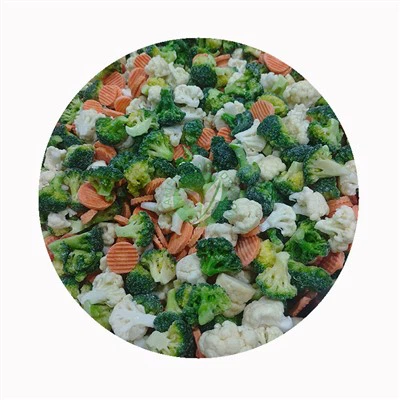
CFIA's inspection procedure explicitly checks identification of pre-mixed ingredients and reworked product. Treat identity as a continuous control from source container to destination lot. The frozen vegetable range illustrates different ingredients, cuts and blends, but the signed SKU specification and facility route decide compatibility.
Identify and Segregate at the Point of Creation
Apply a durable status label immediately: product, source lot, work order, line, time, quantity, reason, frozen condition, container, operator and hold/rework status. Use closed food-grade containers protected from condensation, foreign material, traffic and allergen cross-contact. Place them in a designated frozen zone with physical and system status control. An unlabeled tub cannot be reconstructed reliably after a shift change.
Set maximum time from creation to use and define the temperature basis. Record any exposure outside controlled frozen conditions. Product can clump, dehydrate, fracture or warm during repeated handling even when it remains visibly frozen. Include number of handling cycles and prohibit endless "rework of rework" unless the validated route explicitly covers it.
Inventory must reconcile created, used, returned to hold and disposed quantities. Investigate differences. Quantity reconciliation does not prove safety, but unexplained loss can reveal unrecorded addition, disposal, spillage or identity error. Use unique container IDs rather than one paper tag copied across several bins.

Assess Hazards Before Release
Review why the material left the normal flow. A packaging seal reject differs from a product dropped near a floor drain; a controlled startup purge differs from a metal-detector reject; a label error differs from a temperature alarm. Identify biological, chemical, physical, allergen and misrepresentation hazards at creation, storage, depacking and return.
FDA cGMP text, reproduced in current FDA food guidance, states that work-in-process and rework must be handled to protect against allergen cross-contact, contamination and growth of undesirable microorganisms, and material scheduled for rework must be identified. Codex General Principles of Food Hygiene emphasizes hazard-based hygiene, control, documentation and traceability. Translate those principles into the actual frozen vegetable route.
Do not rely on later freezing to correct contamination. Freezing is not a universal kill step. If rework bypasses blanching, washing, optical sorting or foreign-material controls, determine whether downstream controls remain effective and whether the route changes hazard analysis. Return only at an approved point that preserves necessary control measures.
Validate Depacking and Foreign-Material Control
Recovering product from rejected bags introduces film, label, adhesive, ink, zipper and cutting-tool risks. Define which package defects can enter the depacking route and which require destruction or another disposition. Use dedicated tools, controlled blade inventory, good lighting, clean contact surfaces and an inspection/sieving step suitable for the product and packaging material.
Validate the route with representative package material and worst practical conditions. Measure recovery, visible fragments, product damage and downstream detection. Challenge equipment only under an approved safe protocol. Metal detection does not detect every polymer, label or low-density fragment, and optical sorting performance depends on contrast and presentation. Prevention at depacking remains primary.
A bag with correct product but wrong artwork may be commercially recoverable, yet the route must also prevent obsolete printed material from returning to packing. Reconcile destroyed film and keep product identity. Link the approved packaging format and actual material revision to the depacking assessment.

Set Addition Rate and Mixing Logic
Define the maximum addition as a validated quantity and basis: percentage of destination batch, kilograms per blend cycle, or controlled continuous feed. The limit must protect composition, cut distribution, color, texture, defects, foreign-material performance and traceability. A mass-balance limit alone cannot correct incompatible quality.
Add rework gradually at a controlled point that achieves distribution and preserves downstream inspection. Dumping one container into the end of a blend creates local concentration. Record source container IDs and actual weights against the destination work order. If several source lots enter one destination lot, the traceability system must retrieve all of them and the destination customers.
Worked example: rework mass and lot inheritance
A hypothetical 2,000 kg same-SKU frozen pea batch allows up to 3.0% validated rework. The maximum is 2,000 × 0.03 = 60 kg. Two approved containers weigh 24 kg and 31 kg net, so 55 kg is metered during blending. The destination lot record inherits both source lot IDs, container IDs, creation times and release checks. A third 12 kg container is not added merely because equipment can accept it; total would be 67 kg or 3.35%. It remains segregated for another approved disposition. The 3.0% figure illustrates the calculation and is not an industry limit.
Consider cumulative carryover. If Lot A enters Lot B and material from B later enters C, source identity can spread while concentration falls. Define whether second-generation rework is prohibited and how traceability handles inheritance. Avoid a chain that makes targeted withdrawal impractical.
Control Product Changeover and Carryover
Map product-hold-up points in hoppers, elevators, multihead weighers, conveyors, freezers, graders, packers and floor-level collection systems. Define line-clearance method and acceptable residual. High-contrast product sequencing may make visible carryover easier to detect but does not resolve allergen, certification or customer segregation.
Use purge, cleanout, inspection and first-off verification appropriate to risk. Record product removed and disposition. The equipment configuration helps identify inaccessible hold-up points, while direct observation and validation establish the actual clearance capability.
Practical example: a line changes from seasoned mixed vegetables to plain cauliflower. Visible mixed pieces are removed, but flavored dust and small corn kernels remain in an elevator boot. The next plain bags risk ingredient and label conflict. The route is not compatible. Stop, clean and inspect the defined hold-up points, dispose of the purge under the approved plan, and verify first-off output before release.

Verify the Destination Lot After Rework
Verification should target the risks that rework can change: identity, composition, cut distribution, defects, sensory quality, clumping, foreign material, net quantity, code and traceability. Sample across the addition window, not only before or after it. Review addition records and mass balance against actual output.
Use the order-specific frozen vegetable quality standard. A destination lot passing routine checks does not validate a new rework route by itself. Validation needs planned worst-case sources, addition rates, distribution, storage and repeated results before routine authorization.
Preserve Traceability and Recall Scope
Record every source-destination link in searchable form. From a destination lot, retrieve all rework sources; from a source lot, retrieve every destination and shipment. CFIA's current inspection guidance checks identification of reworked product and one-step-back/one-step-forward capability. A notebook that lists source tubs but not finished lot codes cannot support rapid control.
Set lot boundaries so one small source does not unnecessarily contaminate the traceability of many days of output. FIFO use, short maximum holding and limits on source mixing can reduce spread. When an affected source is later implicated, the risk assessment determines which linked destinations require hold, notification or withdrawal; dilution is not a safety argument.

Audit the Loss, Not Only the Reuse
Trend rework created per product, line, reason, shift, package and season against total output. Repeated packaging rejects, filler overfeed, broken pieces or changeover purge indicate a process problem even when reuse is safe. Set action levels and investigate upward trends. A high recovery rate can hide a deteriorating first-pass process.
Audit container labels, age, freezer location, approvals, addition, reconciliation, destination testing and disposal. Select one destination lot and trace backward, then select one source container and trace forward. Observe actual handling. A perfect form does not prevent an uncovered bin, informal addition or obsolete status tag.
Review rework when equipment, recipe, supplier, certification, allergen, packaging or customer changes. A route validated for peas on one packing line does not automatically transfer to seasoned blends or another facility. Tie authorization to the qualified processing route.

Write Product-Specific Release Criteria
Peas, corn, broccoli, cauliflower, carrots, leaf vegetables and blends do not respond to recovery in the same way. Small free-flowing pieces may meter consistently but can accumulate ice or foreign fragments. Florets can break during depacking and repeated conveying. Leaves can compact and thaw locally. Blends can shift component ratios when recovered material contains an unrepresentative mix. Define quality and handling checks by product.
For same-SKU rework, specify acceptable frozen condition, free-flow or clump state, piece damage, cut/fines distribution, color, odor, visible defects, package-contact exposure and maximum age. For cross-SKU use, add recipe, ingredient, allergen, certification, claim and customer restrictions. Record the sampling basis. Looking at the top of a 50 kg bin cannot show fragments or thawed mass at the bottom.
Use a release code distinct from the container identity. The release decision should name the approved destination, maximum addition, deadline and required downstream checks. If any condition changes, return the container to hold rather than extending the authorization verbally.
Define the Failure Hold Boundary
If incorrect or unapproved rework enters production, identify the earliest possible addition time, latest possible addition time, source containers, destination work orders, intermediate bins, finished pallets and shipments. Hold the mapped window and material that could have bypassed normal records. Secure the remaining source and any first-off or retained samples. Do not reduce scope from an assumed mixing pattern that has never been validated.
The investigation must ask why identity, release or addition control failed: wrong status tag, open access, system override, schedule change, container mix-up, missing compatible destination, pressure to avoid waste, or unclear ownership. Correct the immediate lot and the system. Training alone is weak when container design, freezer layout or production scheduling keeps creating the same error opportunity.
If the conflict involves undeclared allergen, safety hazard, fraudulent certification or distributed product, use the applicable notification and incident process. A low addition rate does not automatically make the risk negligible. Obtain competent regulatory and safety judgment using the actual hazard and exposure.
Align Commercial Terms Before Production
State whether planned rework is permitted in the buyer specification, which sources and destinations are allowed, whether prior notice is required, maximum validated addition, evidence, testing and traceability. Do not hide a route that changes product identity or quality. Some customers or certifications may prohibit it even when the facility's generic procedure allows it.
Agree ownership of packaging-reject loss, private-label material, obsolete artwork and destination constraints. A commercial disagreement after film has been printed can create pressure for an unsafe or misleading recovery. Define acceptable depacking, repacking, relabelling and destruction routes in advance, including approval authority and cost responsibility.
Buyer evidence can be proportionate without exposing confidential formulas. A useful package shows approved route, compatibility fields, source/destination trace, actual addition, relevant finished-lot tests and deviations. It should not be a generic certificate that merely states "rework controlled."
Separate Waste Reduction From Product Release
Waste reduction is valuable, but it cannot be the release criterion. First prevent loss through stable freezing, careful transfer, correct filler settings, robust packaging and planned changeovers. Then recover only material that meets the documented route. Track first-pass yield separately from recovered yield so a higher total yield does not hide more rejects, breakage or repeated handling.
Calculate the true cost of recovery: labor, frozen storage, extra inspection, depacking, downtime, product damage, traceability complexity and recall-scope expansion. A route that recovers 40 kg but creates 400 kg of additional hold risk may be commercially poor. Use the cost analysis after safety and specification gates, never instead of them.
Set improvement actions against the reason code. Packaging-seal recovery calls for seal-window or material work; cut fines call for handling and mechanical review; changeover purge calls for equipment hold-up reduction; schedule-driven expiry calls for planning and inventory control. Preventing the loss protects quality better than expanding rework capacity.
Challenge the System With a Trace Exercise
Select a source container without advance notice and retrieve creation, source lot, release, storage, addition, destination lots, finished pallets, shipment and remaining balance. Then select a finished lot containing rework and trace every inherited source backward. Reconcile quantities and times. Include electronic records, paper labels and physical freezer location.
Test an exception: source later placed on hold, destination partly shipped, unreadable label, overdue container or addition above maximum. Verify that the system blocks use, identifies affected product and reaches the authorized decision maker. Record retrieval time and data gaps. Fix the cause and repeat the exercise.
Observe a live changeover and one routine rework addition. Compare practice with the compatibility matrix and work instruction. Interviews may sound correct while informal bins or schedule pressure bypass controls. Direct observation completes the evidence.
Frequently Asked Questions
Can frozen vegetables be reworked after thawing?
Do not assume so. Assess time-temperature history, microbiological and quality risk, downstream process, label and governing requirements. An unvalidated thawed route should remain prohibited.
Is same-product rework always acceptable?
No. Source condition, certification, customer allocation, age, packaging exposure, hazard status and traceability still matter. Same name does not repair lost control.
Can metal-detector rejects enter rework?
Keep them under the foreign-material incident procedure. Rework must not disperse a possible contaminant or erase the failure boundary. Investigate the rejection and use only an explicitly approved safe disposition.
What record is most important?
No single record is enough. Preserve source identity and condition, authorization, actual addition, destination lot, verification and disposition so the full source-to-shipment path can be reconstructed.
For a frozen vegetable rework or carryover review, send us the source and destination specifications, process route, pack format, reason, proposed addition and required evidence. We can align the supplier records available for your decision. Discuss the control package with XMSD.