


What Part of Broccoli Is Healthiest: Florets, Stems or Leaves?
Jul 03, 2019

No single part of broccoli is healthiest for every nutrient. If you want one familiar default, eat the florets: they are widely available, easy to prepare and, in comparative research, were higher than stems and leaves in most amino acids, glucoraphanin and neoglucobrassicin. But broccoli leaves led that same study in carotenoids, chlorophylls, vitamins E and K, total phenolics and an in-vitro antioxidant assay. Tender stems remain edible and contribute fiber, minerals and other plant compounds.
The practical winner is therefore the edible mix you will prepare well and actually eat. Choosing only crowns while discarding a large sound stem can reduce usable vegetable intake more than a modest difference in one laboratory measurement. Conversely, including woody lower stalk or damaged leaves simply to claim "whole-plant nutrition" is not useful. Trim by tenderness and condition, then match each sound part to a suitable cut and recipe.
For a frozen product, the question changes again. A bag of florets, a bag of cuts and a chopped broccoli ingredient can have different crown-to-stem ratios, cooked textures and usable yields. You cannot infer their exact nutrition from appearance alone. Compare the declared product, edible basis, processing history and application test before deciding which format is the healthier or more efficient choice for your menu.
Short answer: prioritize florets for a reliable everyday serving, use tender peeled stems instead of wasting them, and eat sound leaves when they are supplied as food. Leaves can lead for some nutrients, while florets lead for others; no valid comparison makes one part superior in every respect.

What Counts as a Floret, Stem or Broccoli Leaf?
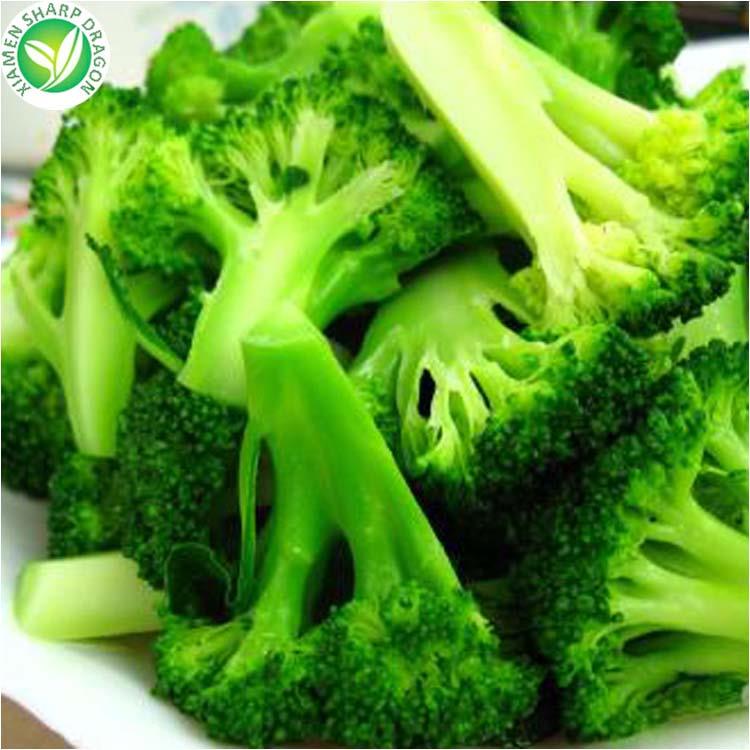
The head sold as broccoli is not one uniform tissue. Its dark crown contains tightly packed immature flower buds, supported by branching stems that join a larger central stalk. Small leaves may sit around the head, while field plants carry much larger leaves lower down. A retail "floret" normally includes crown tissue and a short attached stem, so even an apparently floret-only serving is already a mixture.
This matters when you read research. A laboratory may separate the crown, stem and mature leaf before analysis. A grocery store may sell a trimmed head with no large leaves. An IQF specification may call a crown with an attached stem a floret, while "cuts" can include more branching stem and smaller crown fragments. Those samples cannot be treated as identical just because all are called broccoli.
| Part or commercial style | Evidence-led nutrition distinction | Best practical use |
|---|---|---|
| Floret and short stem | Strong default; higher in several measured amino acids and selected glucosinolates in one tissue study | Sides, roasting, stir-fries and visible retail packs |
| Tender inner stem | Still contributes nutrients; composition and texture differ from crown | Slaw, soup, dice, purée and stir-fry |
| Sound food-grade leaf | Higher in several pigments, fat-soluble vitamins and phenolics in the same study | Sautéed greens, soup or a defined processed ingredient |
| Frozen florets or cuts | Nutrition depends on actual part ratio, blanching, storage, cooking and edible basis | Choose from appearance, texture, dosing and yield requirements |
Use the table as a decision map, not a nutrient ranking. The broader broccoli nutrition and evidence guide covers composition, physiological roles and health-claim limits for broccoli as a food. Here, the narrower job is to judge which edible tissue fits your nutrition goal and product use.
Why Florets Are the Best Everyday Default
Florets deserve their familiar place without being declared the universal champion. USDA FoodData Central's raw broccoli entry reports 34 kcal, 2.6 grams of dietary fiber and 89.2 milligrams of vitamin C per 100 grams of edible raw broccoli. That entry describes the ordinary edible food, not a laboratory-separated crown, so it establishes broccoli's useful baseline but cannot prove an exact floret-versus-stem difference.
Part-specific research adds the comparison. A 2018 study measured florets, stems and leaves from the "Green Magic" cultivar. Most amino acids were more concentrated in florets than in the other tissues. Florets also had higher absolute concentrations of glucoraphanin and neoglucobrassicin. Glucoraphanin is a precursor that can be converted into sulforaphane, but the amount formed depends on myrosinase activity, plant genetics, processing, preparation and digestion.
A separate analysis of six broccoli and cauliflower cultivars found total glucosinolates statistically higher in broccoli florets than leaves across the broccoli cultivars tested. It also found substantial variation by cultivar and tissue. This supports "florets often lead for selected glucosinolates," not "every floret has one fixed concentration" and not "more glucosinolate guarantees a health outcome."
The evidence boundary matters because cell and animal mechanisms are often promoted as disease prevention. The U.S. National Cancer Institute says glucosinolates can form biologically active compounds during preparation, chewing and digestion, while human studies of cruciferous vegetables and cancer risk have shown mixed results. Eat broccoli as a vegetable, not as a treatment, and do not use one plant-part number to promise protection from disease.
For most households and menus, florets remain the easiest priority because they combine evidence, availability and acceptance. A part that looks best in a chart but is unavailable, rejected for taste or discarded after cooking contributes nothing to the eaten meal. Select compact, sound crowns, keep the short tender stems attached and cook to an acceptable texture.
Broccoli Leaves Lead Some Nutrient Comparisons
Leaves overturn the simple claim that the flower head always contains the most nutrition. In the 2018 tissue study, leaves had the highest measured carotenoids, chlorophylls, vitamins E and K, calcium, manganese, total phenolic content and antioxidant activity. That does not make leaves a complete food or a clinical intervention; it shows that different plant tissues allocate compounds differently.
The scale of some differences was large under the study conditions. On a dry-weight basis, total tocopherols were 1.57 micrograms per gram in florets, 1.97 in stems and 155 in leaves. Phylloquinone concentrations were 8.84, 2.21 and 24.3 micrograms per gram, respectively. Leaves therefore measured about 2.8 times the floret concentration of phylloquinone in that sample.
Total phenolics were 4.14 milligrams of gallic acid equivalents per gram of dry leaf, compared with 2.51 for florets and 1.41 for stems. The leaf extract also performed best in a DPPH laboratory antioxidant assay. An extract scavenging result is not the same as an outcome in a person: digestion, dose, food matrix and human metabolism sit between the assay and the meal.
These figures came from one cultivar grown at one site, with three biological replicates. The researchers pooled selected mature leaves and measured water contents of 86% for florets, 89% for stems and 81% for leaves before converting some results. Dry-weight and fresh-weight numbers answer different questions, so do not compare a dry leaf concentration with a fresh floret label value as if both describe the same 100-gram serving.
Use leaves only when they are sound and supplied as edible produce. Most retail heads have large field leaves removed, and a standard frozen floret bag is not an undeclared leaf product. If you grow broccoli or buy an intact food-grade plant, wash the leaves and treat them like a firm cooking green. Reject yellowed, slimy, moldy or contaminated tissue rather than trying to save it for its laboratory nutrient profile.
Broccoli Stems Are Nutritious Food, Not Automatic Waste
Stems ranked lower for several compounds in the tissue study, yet "lower in one comparison" is not "empty." They remain broccoli tissue with water, carbohydrate, fiber, minerals, amino acids and glucosinolates. The study found most measured sugars higher in stems than in florets or leaves, which fits the mild sweetness many people notice in the tender inner core.
Tenderness is the real dividing line. The upper branching stems and inner part of the central stalk can be sliced, diced, shredded or puréed. The thick lower exterior may become lignified and unpleasantly fibrous. Peel that outer layer when needed, cut across the fibers and give thicker pieces a longer cooking head start than delicate buds. Do not force woody tissue into a visible side merely to maximize percentage yield.
A stem can improve a dish when the cut fits. Matchsticks suit stir-fries, thin coins suit soups, shreds suit slaw, and small dice can distribute through a sauce or filling. Florets are more attractive for a plated crown, but that visual advantage is not a nutritional law. If your recipe accepts stem texture, using the sound inner stalk increases the edible mass obtained from the same head.
People with a medically managed diet may need a different decision. Broccoli parts can differ in composition and digestive tolerance, and vitamin K intake may matter when a clinician is managing a vitamin-K–interacting medicine. Do not replace individualized guidance with a leaf-versus-stem ranking. For ordinary use, begin with a modest portion of the prepared part and judge tolerance within the whole meal.
Practical example: You buy a head with a large sound stalk but normally serve only crowns. Peel the tough stalk exterior, slice the tender core into 3-millimeter coins and start those pieces several minutes before adding the florets to a stir-fry. If the coins become pleasantly crisp-tender while the crowns hold their structure, keep both. If the lower core remains stringy, trim that section rather than treating the whole stem as edible or inedible.

Preparation Can Matter More Than a Small Part Difference
Food composition is only the starting point. Chopping, heat, water, draining, holding and storage can change measured compounds and edible weight. Water-soluble vitamin loss can increase when a vegetable is held in a large volume of water that is later discarded. Texture also changes whether the food is eaten: perfectly measured nutrients in overcooked, rejected broccoli do not reach the meal.
Cook different parts to a common endpoint rather than adding every piece at once. Thin leaves wilt quickly. Small florets heat through sooner than thick stem coins. Cut stems smaller or begin them first; add leaves near the end. That sequence protects eating quality without promising that one method preserves every nutrient better under every appliance, batch size and starting condition.
A controlled cooking study found steaming retained several measured broccoli compounds better than the other domestic methods under its defined conditions, while boiling, microwaving and stir-frying produced different losses. It used a particular cultivar, portion, equipment and time. Our focused guide to the healthiest practical way to cook broccoli handles that method question without turning it into a claim that only steamed florets are worthwhile.
Wash fresh broccoli under running water before preparing or eating it. FDA guidance does not recommend soap, detergent or commercial produce wash. Separate leaves and florets as needed so you can inspect hidden surfaces, cut away damaged areas and discard rotten produce. Keep clean produce and utensils away from raw meat, poultry and seafood.
Frozen broccoli has a different history. Commercial product may be trimmed, cut, washed, blanched, cooled and frozen before final cooking. Follow the package directions because blanching for enzyme control does not automatically establish ready-to-eat status. Compare fresh and frozen broccoli by form, yield and use, not by assuming that either form always wins nutritionally.

Measure Whole-Head Yield Before Discarding Edible Parts
"Healthiest" can be misleading when it ignores how much food reaches the plate. Measure incoming weight, each usable part, necessary trim and prepared yield. Keep condition and tenderness rules consistent. A stem is not usable merely because it has mass, but a sound tender stem should not be classified as waste merely because a recipe has always requested crowns.
Worked example: A hypothetical kitchen receives 1.50 kilograms of fresh broccoli heads. After inspection it obtains 0.90 kilograms of florets, 0.36 kilograms of peeled tender stems, 0.09 kilograms of suitable leaves and 0.15 kilograms of woody or damaged trim. Floret-only yield is 0.90 ÷ 1.50 × 100 = 60%. Using all suitable parts raises edible yield to (0.90 + 0.36 + 0.09) ÷ 1.50 × 100 = 90%.
The calculation does not prove that the mixed 90% has more of every nutrient than 0.90 kilograms of florets. It shows that you can obtain 0.45 kilograms more edible vegetable from the same purchase. Use florets for the visible side, stems in soup and leaves in a cooked green component. Record whether each part is actually eaten, because shifting waste from the prep bin to the plate is not a successful yield improvement.
Repeat the test across representative heads, seasons and suppliers. Crown proportion, stalk size, leaf trim, maturity and field condition vary. Report an average and range rather than one perfect result. If the stem becomes more fibrous late in the season, its potential mass may stay high while usable yield falls. That is a product-quality change, not evidence that broccoli stem is nutritionally worthless.
For product development, test acceptance separately from chemical analysis. A soup can absorb chopped stems and small crown pieces, while a premium visible side depends on intact florets. A by-product ingredient made from leaves or stalks requires its own identity, composition, safety assessment, sensory limit and label review. Research on edible tissues does not authorize an undeclared powder or concentrated extract in a finished food.

For Frozen Broccoli, Specify the Part Ratio You Can Use
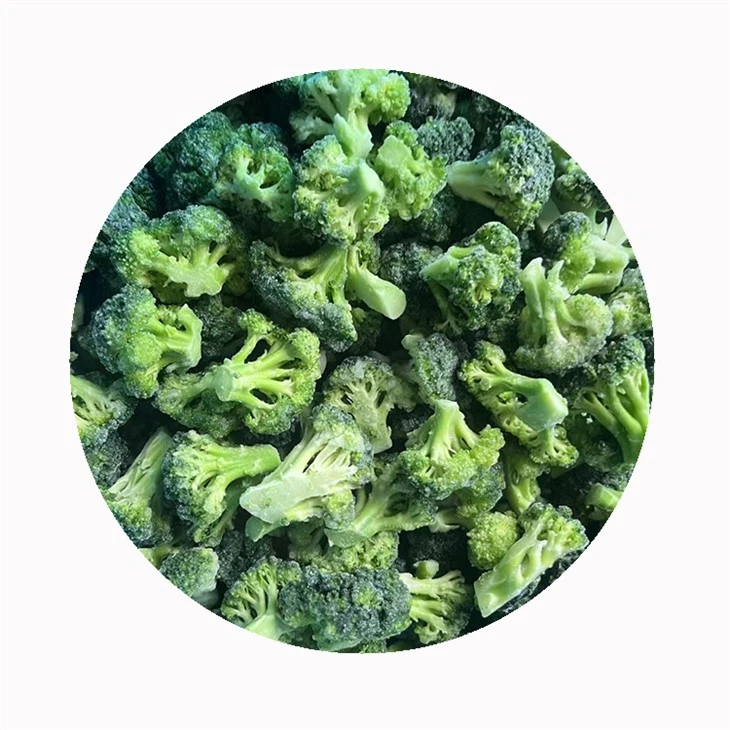
The current XMSD frozen broccoli category shows why one generic name is insufficient. Commercial styles can emphasize florets, cuts or other forms. Define the intended application first, then approve crown width, stem length, piece-size distribution and the treatment of broken florets, loose buds and obvious leaf material.
For a visible retail or foodservice side, the green crown area, consistent shape and short tender stem usually carry more value. For soup, sauce, purée or chopped filling, a higher proportion of sound stem pieces may be efficient and acceptable. That does not make the cut product less healthy. It makes its appearance and texture appropriate for a different job.
Create a repeatable measurement rule. State whether size means crown width, longest dimension or screen result; identify the sample mass; separate intact florets, acceptable cuts, excessive stem, fragments and defects; and calculate each fraction as category mass ÷ sample mass × 100. Add photographs of an approved sample, but keep the written rule because photographs alone do not set a measurable tolerance.
Cook a representative sample through the real process. Record frozen input, cooked and drained output, crown breakage, stem tenderness, color, released water and portion consistency. A cold floret can look acceptable yet over-soften during a long tray cycle. A stem-rich cut can look less premium in the bag yet perform better in a blended soup. The finished application decides acceptance.
Worked example: Two hypothetical 10-kilogram offers have the same delivered price. The floret-heavy offer gives 9.2 kilograms usable output after the side-dish cooking and sorting test. The mixed-cut offer gives 9.8 kilograms usable output in soup. For soup, the mixed cut provides (9.8 ÷ 9.2 − 1) × 100 = 6.5% more usable mass. For a visible side, repeat the trial under that use; the same stem proportion may fail appearance or texture even though the nutrition claim has not changed.
Keep Nutrition Evidence Separate from Physical Acceptance
A stem-ratio inspection cannot quantify vitamin C, vitamin K or glucoraphanin. It controls product identity, appearance, texture and usable yield. A nutrient value needs a data source that matches the actual food form and measurement basis; a regulated nutrition claim needs evidence and wording accepted in the destination market. Laboratory analysis may be necessary when the exact SKU value matters.
Likewise, a nutrient-rich reputation cannot release a defective lot. Yellowing, brown buds, woody stems, excessive fragments, clumping and freezer dehydration affect quality. Foreign material, damaged seals, temperature abuse, microbiological nonconformance, residue issues or an incomplete traceability record belong to separate safety and compliance decisions. Use the evidence that matches each risk.
Packaging preserves the agreed product condition but does not define the edible-part ratio. Specify inner-bag material and seal, net weight, carton strength, lot code, label instructions and frozen storage requirement alongside the floret or cut definition. Our frozen-food packaging review explains those separate pack decisions. Inspect both the food and the package at arrival.
If health communication will appear on a menu or retail pack, keep it proportionate. "Broccoli florets" or "broccoli cuts" is an identity statement. A quantitative nutrient declaration requires the correct serving and product basis. Claims that one part detoxifies the body, prevents cancer or guarantees better immunity go beyond food-composition evidence and should not be inferred from an in-vitro antioxidant result.

Final Answer
Florets are the best everyday default and lead some important comparisons, including selected glucosinolates in the studies reviewed. Leaves lead other comparisons, including carotenoids, vitamins E and K and phenolics in a detailed tissue study. Tender stems remain nutritious, edible and useful. There is no scientifically honest basis for calling one part richest in every nutrient or healthiest for every person and product.
Use sound florets, peel and cut tender stems to suit their longer cooking time, and prepare food-grade leaves like other firm greens. Judge the complete eaten serving, not one dry-weight compound. For frozen sourcing, define the floret-to-stem presentation, size method, cooked texture and usable-yield test before attaching nutrition language to the product.
XMSD sourcing note: Send us your application, preferred floret range, allowed stem presentation, cooked-yield test, pack format and destination requirements. We can review a frozen broccoli sample and specification against the actual product job.
References
- Liu et al. - Comparative Phytonutrient Analysis of Broccoli By-Products: The Potentials for Broccoli By-Product Utilization
- Hwang et al. - Chemical Composition and Antioxidant Activity in Different Tissues of Brassica Vegetables
- USDA FoodData Central API - Broccoli, raw, SR Legacy food 170379
- U.S. National Cancer Institute - Cruciferous Vegetables and Cancer Prevention
- Yuan et al. - Effects of Different Cooking Methods on Health-Promoting Compounds of Broccoli
- U.S. Food and Drug Administration - Selecting and Serving Produce Safely
- XMSD operational experience in frozen-broccoli cut review, sample evaluation, packaging, cold-chain checks and B2B specification coordination.