


Best Way to Store Bananas: Counter, Fridge or Freezer?
Jul 02, 2019

The best way to store bananas depends on their current state. Keep intact green or partly green bananas at a stable room temperature until they reach the ripeness you want. Move ripe whole bananas to the refrigerator for a short extension. Refrigerate cut or peeled fruit promptly in a covered container, and peel and freeze sound surplus when you need storage beyond the fresh-use window.
There is no single location that is best from purchase to final use. A household refrigerator is too cold for normal ripening of mature-green bananas, while a warm counter keeps a fully ripe banana changing when the aim is to hold it. Freezing stops the fresh-ripening sequence but changes the texture, so thawed banana is usually better for smoothies, baking, fillings or sauces than for a firm fresh garnish.
Use color, firmness, aroma and intended use together. Do not treat peel color alone as a safety test: refrigerated peel can turn brown or black while the flesh remains cream-colored and usable. By contrast, mold, leakage, extensive wet breakdown or a fermented, rotten odor are reasons to discard the fruit rather than move it into another storage method.
Fast decision: green and firm = counter; yellow at your preferred stage = eat or refrigerate; cut or peeled = cover and refrigerate within two hours; sound ripe surplus = peel, portion and freeze; moldy, leaking or rotten-smelling = discard.

Choose Storage by Banana State, Not by One Universal Rule
Bananas are climacteric fruit. They continue ripening after harvest as respiration and ethylene signaling drive peel-color change, starch-to-sugar conversion, aroma development and softening. Storage can change the rate and protect usable quality, but it cannot make every stage behave the same way. Begin by identifying the state in front of you, then choose the next state you need.
| Current state | Best next action | What the method can achieve | Main limit |
|---|---|---|---|
| Intact, green and firm | Open, shaded room-temperature location | Allows normal ripening | Heat and nearby ethylene can shorten the stage |
| Whole and ready to eat | Eat soon or refrigerate | Slows further flesh softening | Peel may darken in the cold |
| Cut or peeled | Covered container in refrigerator | Controls exposure and supports safe handling | Browning and softening continue |
| Sound ripe surplus | Peel, portion and freeze | Creates a longer-use ingredient | Thawed texture will be softer |
| Decayed or contaminated | Discard | Prevents unsuitable fruit entering food | Cold does not reverse spoilage |
The table is a sequence, not five unrelated tips. A banana may begin green on the counter, reach its target yellow stage, spend a short period in the refrigerator and then be frozen if the use plan changes. Inspect at each transition. Moving fruit early is more effective than waiting until quality has already crossed the boundary for the intended application.
Worked example: Household allocation. You have six bananas on Monday. Keep the two greenest fruit at room temperature, refrigerate three that are already at your preferred yellow stage, and peel and freeze the one that is very ripe but still sound. This 2 + 3 + 1 allocation gives every banana a destination based on condition. It does not promise six identical shelf-life days; daily inspection remains the control.
Store Green Bananas at Room Temperature Until They Ripen
Place intact green bananas in an open tray or on a hanger in a shaded, ventilated area. Keep them away from direct sun, ovens, hot appliances and warm air discharge. Protect the bunch from being crushed under other fruit. A stable location matters more than a decorative container because temperature and mechanical damage directly affect the usable ripening path.
Hanging is useful when it prevents pressure damage, not because it stops ethylene. Wrapping the joined crown may be tested as a secondary household measure, but it does not create a dependable number of extra days. Do not rinse bananas in an attempt to remove a ripening agent: ripening is an internal biological process. Wash before preparation, and keep stored whole fruit dry.
Do not seal green bananas in a paper or plastic bag when you want to hold the stage. Enclosure retains ethylene around the fruit and a closed container may also trap moisture. Apples, pears and avocados can add more ethylene to the local environment, so move them away when slower change is the goal. These controls are covered in greater depth in our guide to keeping bananas from ripening too quickly.
A household refrigerator is not an appropriate ripening room for hard green fruit. UC Davis identifies bananas as chilling-sensitive and gives 13–14°C as the optimum commercial storage and transport range for mature-green Cavendish bananas. Typical home refrigeration is much colder. Green fruit exposed to excessive cold may develop peel discoloration, internal browning or an abnormal failure to ripen even after it returns to a warmer room.
Do not translate the 13–14°C commercial figure into an improvised sealed box at home. Commercial rooms control fruit temperature, airflow, humidity and gas conditions. At home, the safer practical instruction is simpler: let intact green fruit ripen in a moderate, ventilated room location, check it every day and refrigerate only when it reaches the stage you intend to hold.

Refrigerate Ripe Whole Bananas for a Short Extension
Once a whole banana reaches the color, firmness and aroma you want, refrigeration becomes useful. Mississippi State University Extension gives two to three days in the refrigerator as a practical period for ripe bananas. Treat that as planning guidance, not a warranty: starting ripeness, refrigerator temperature, bruising and handling history still change the result.
The peel often darkens faster in cold storage even though the flesh changes more slowly. That visual mismatch explains why a blackened refrigerated banana can still be suitable. Peel it and assess the flesh, aroma and texture. Cream-colored or lightly browned flesh with a normal ripe aroma may be useful; wet collapse, mold, leakage or an unpleasant fermented odor indicates a different decision.
Keep ripe bananas away from raw meat, seafood and leaking packages. Use a clean refrigerator area where the fruit is not crushed by heavier items. If one fruit has a split peel, place it in a clean covered container and use it promptly if the flesh remains sound. Refrigeration slows change but does not protect against cross-contamination or repair physical damage.
A calendar should never replace inspection. If you refrigerate four ripe bananas on Tuesday, mark the date and check the fruit before each use. The practical window is "short refrigerated holding after ripeness," not "safe until a fixed weekday regardless of condition." This distinction reduces both unnecessary waste from peel color and unsafe optimism about genuinely decayed fruit.
Handle Cut or Peeled Bananas as Refrigerated Prepared Produce
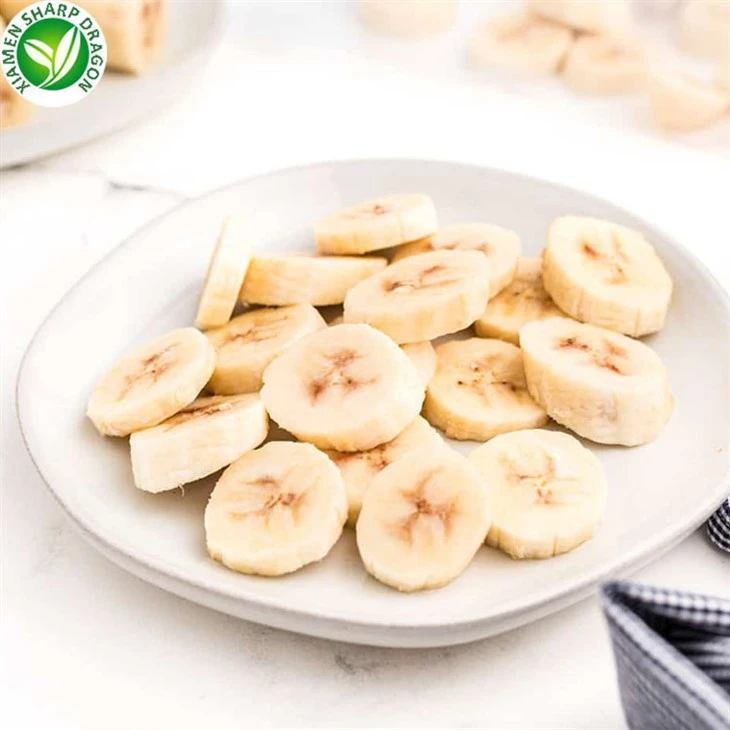
Wash the intact banana under running water before cutting or peeling, even though the peel will not be eaten. The FDA explains that surface contamination can transfer to the edible portion during cutting. Do not use soap, detergent or commercial produce wash. Dry with a clean cloth or paper towel, then use clean hands, a clean knife and a clean board.
Once cut or peeled, place the banana in a clean covered container and refrigerate it promptly. U.S. federal food-safety guidance says to refrigerate fruit and vegetables within two hours after cutting or peeling, or within one hour when exposed to temperatures above 90°F (32°C). For foodservice, follow any stricter time-and-temperature limits in the applicable food-safety plan.
Air exposure causes enzymatic browning on cut banana surfaces. A tight lid or food-contact wrap reduces exposure and prevents odor pickup, but it will not stop the biochemical change completely. Lemon juice or a measured ascorbic-acid treatment can slow browning for some recipes; the acid changes flavor and is a quality treatment, not a way to make spoiled fruit acceptable.
Portion before storage when you know the use. A 120-gram portion for a smoothie or a fixed number of rounds for a dessert reduces repeated opening and handling. Label the container with preparation time, date and intended use. In foodservice, follow the site's approved shelf-life and time-temperature procedure rather than adopting a household estimate.
Practical example: A café cuts 1.8 kilograms of banana for morning service but uses only 1.2 kilograms. The remaining 0.6 kilograms has been on the chilled prep line for 45 minutes. If it was prepared hygienically and held within the approved cold-control limit, cover, label and return it to refrigeration for the approved use window. If it has been at room temperature for more than two hours, do not reset the clock by chilling it.

Freeze Sound Ripe Bananas When Fresh Texture Is No Longer Required
Freezing is the best choice when ripe fruit will not be used during its short fresh window and the final application can accept soft texture. Peel first, remove unsuitable tissue, choose whole pieces, chunks, rounds or mash, and package in a moisture-vapor-resistant container. Portioning before freezing lets you remove only the quantity a recipe needs.
For individually usable pieces, arrange cut banana in a single layer, freeze until firm and then transfer it to a freezer container. For mash, the National Center for Home Food Preservation specifies firm ripe fruit and 1/2 teaspoon, or 1,500 milligrams, of ascorbic acid for each cup of mashed banana before sealing and freezing. Follow the tested formulation rather than estimating the powder.
Frozen banana becomes softer and can release liquid after thawing because ice crystals disrupt the tissue. Choose smoothies, baking, purée, sauce or fillings when that behavior is acceptable. If you need a visible firm slice on a fresh dessert, refrigeration and tighter use planning are better than freezing and thawing.
Our method guide explains when and how to freeze whole bananas. For a separate nutrition question, the analysis of nutrient changes in frozen bananas keeps storage method and nutrient retention from becoming one confused claim.
Freezing sound fruit is not a rescue operation for mold or decay. Trim ordinary physical damage only when the remaining fruit is sound and the handling policy permits it. Discard fruit with mold growth, leaking decomposition, pest contamination or rotten odor. The freezer preserves the condition you put into it; it does not convert unsuitable raw material into a suitable ingredient.

Commercial Banana Storage Needs Fruit-Temperature Evidence
Commercial fresh-banana control is more precise than "counter or fridge." UC Davis gives 13–14°C for storage and transport of mature-green Cavendish bananas, 15–20°C for ripening, and 90–95% relative humidity. It also reports chilling injury below 13°C. These figures describe managed postharvest operations; cultivar, maturity, exposure duration and measured fruit temperature determine the actual response.
The same source reports commercial ethylene treatment of 100–150 parts per million for 24–48 hours at 15–20°C and 90–95% relative humidity for many cultivars. That is a controlled uniform-ripening process, not a household recommendation and not a slow-storage method. A ripening room also needs airflow, temperature monitoring, ventilation and trained operating procedures.
Measure fruit or pulp temperature at receipt instead of accepting the ambient-air display as proof. Sample agreed carton positions with a calibrated instrument, record the time after unloading and connect the result to lot identity. The center of a pallet can carry a different thermal history from the outer cartons, and a warm room reading cannot erase earlier cold exposure.
Worked example: Receiving temperature. A mature-green lot is specified to arrive at 13–14°C, but measured fruit temperatures across five agreed positions are 10.5, 10.9, 11.2, 11.4 and 12.0°C. The mean is 56.0 ÷ 5 = 11.2°C, below the specified range and the published chilling threshold. Isolate the affected lot, retain the records and inspect for delayed discoloration or abnormal ripening; do not approve it solely because the room air later reaches 14°C.
Bruising can produce internal browning even when external skin damage is not obvious. Include crown condition, finger splits, scuffing, compression, pulp firmness, peel-color stage and internal checks in the receiving plan. Photograph defects with the carton code visible. A storage complaint becomes actionable when it identifies the lot, temperatures, sampling method, times, positions and observed defect.

Plan Quantity and Format Before Storage Becomes a Loss Problem
Storage works best when buying stage matches the use schedule. If a household eats one banana per day, buying seven at the same ready-to-eat stage creates a predictable surplus. If a café uses variable quantities, one large fresh delivery may shift from green to overripe before demand catches up. Mixed maturity, smaller releases or a fresh-plus-frozen plan can reduce that exposure.
Count usable weight rather than purchased weight. Fresh whole fruit includes peel and may include trim or rejected portions; a purchased kilogram is not a kilogram of recipe input. Run a yield test using the actual cultivar and maturity. Weigh the lot before peeling, record edible flesh, record discard separately and calculate edible yield as usable flesh ÷ incoming weight × 100.
Worked example: Fresh yield. A kitchen weighs 50 kilograms of incoming bananas and obtains 34 kilograms of acceptable flesh after peeling and trim. Edible yield is 34 ÷ 50 × 100 = 68%. At 8 kilograms of recipe use per day, that batch provides 34 ÷ 8 = 4.25 days of usable input. If fresh quality can be held for only three operating days, the buying quantity or product format needs to change.
Worked example: Frozen input. A smoothie program needs 240 servings at 80 grams of banana each, or 240 × 0.08 = 19.2 kilograms of usable fruit. A trial shows 3% measured transfer and thaw loss, so required input is 19.2 ÷ 0.97 = 19.79 kilograms. Two 10-kilogram cartons provide 20 kilograms nominal input and about 19.4 kilograms after that measured loss, leaving a 0.2-kilogram operational buffer.
The 68% fresh yield and 3% frozen loss in these examples are measured assumptions, not universal banana constants. Repeat the test with your pack, specification, handling method and recipe. Cost comparison should include edible yield, labor, rejected fruit, storage space, energy, packaging disposal and whether the final product needs fresh visual texture.
Banana's broader food value is covered in our overview of banana nutrition and practical use. For storage planning, composition does not override condition: sound ripe fruit can be redirected, while a nutrient-rich label never makes rotten or temperature-abused fruit acceptable.
Specify Frozen Banana When Consistency Matters More Than Fresh Display
Frozen banana can remove day-to-day ripening work from smoothies, bakery mixes, fillings, baby-food formulations and industrial purée systems, but only when the specification matches the application. Define whole, chunk, dice or slice form; target dimensions and tolerance; maturity before freezing; color; permitted ingredients; piece separation; net weight; inner bag; outer carton; labeling and storage temperature.
Review a sample in the real process. Measure portioning behavior while frozen, drip after the intended thaw procedure, color after mixing, sweetness or soluble-solids target where relevant, and texture in the finished product. A sample that looks attractive in the bag may clump in dosing equipment or release too much liquid into a bakery formula.
The current XMSD frozen banana product page gives the starting product-form context. Before an order, confirm the approved sample, specification version, lot identification, cold-chain condition, microbiological and residue requirements, destination documents and acceptance method. Price without yield and application fit is not a complete comparison.
At receipt, inspect carton integrity, inner-bag seal, lot codes, product temperature, piece separation, color and visible foreign material according to the agreed sampling plan. Record nonconformities before product is mixed into production. Frozen storage controls time and temperature; it does not replace supplier qualification or incoming verification.

Final Storage Decision
Keep intact green bananas at room temperature until they reach your preferred stage. Refrigerate ripe whole bananas when you need a short extension, accepting that cold may darken the peel. Wash before cutting, refrigerate cut or peeled portions promptly in a clean covered container, and follow the two-hour FDA limit for prepared produce left without refrigeration.
Freeze sound ripe surplus when the final use accepts soft thawed texture. Discard fruit with mold, leakage, extensive wet decay or rotten odor. For commercial operations, control measured fruit temperature, maturity stage, handling damage, usable yield and demand by day. The best storage method is the one that moves a sound banana into the required use before quality or safety crosses its acceptance boundary.
XMSD sourcing note: If variable fresh ripeness is disrupting a smoothie, bakery or foodservice program, send us your application, daily volume, preferred form, cut size, pack, target yield and receiving requirements. We can review a frozen banana specification against the actual process.
References
- UC Davis Postharvest Research and Extension Center - Banana maturity, temperature, humidity, ethylene and chilling-injury guidance
- UC Davis Postharvest Research and Extension Center - Banana response to ethylene at different fruit temperatures
- Mississippi State University Extension - Selecting and storing bananas
- U.S. Food and Drug Administration - Selecting and serving produce safely
- FoodSafety.gov - Fruit and vegetable safety, including the two-hour and high-temperature one-hour limits
- National Center for Home Food Preservation - Freezing bananas
- XMSD operational experience in frozen-banana form review, packaging, cold-chain checks and B2B specification coordination.