


XMSD Banana Nutrition Guide: Portions, Forms and Buyer Decisions
May 27, 2019

Yes, a banana can be a good fruit to eat. It is a whole fruit that supplies carbohydrate, dietary fiber, potassium, vitamin B6 and other nutrients in a portable form. The useful answer is not that every banana product is automatically healthy or that everyone needs the same portion. Size, ripeness, preparation, added ingredients, the rest of the meal and individual medical needs change how it fits.
The short answer: Choose a portion that matches your meal and use. A plain whole or unsweetened frozen banana is different from banana candy, sweetened puree, deep-fried chips or a large smoothie with multiple energy-dense additions. For a food buyer, "good" must be translated into a declared form, ingredient statement, serving, nutrition basis and intended application.

Judge the Banana, Not the Reputation
Bananas are sometimes described as a perfect food and sometimes rejected as too sugary. Both shortcuts ignore context. A banana is primarily a carbohydrate-containing fruit, not a high-protein food and not a treatment. Its naturally occurring sugar arrives with water, fiber and micronutrients in the intact fruit matrix. That does not make portion irrelevant, but it does distinguish a plain banana from a drink or confection with added sugar.
Current U.S. dietary guidance places whole fruits within a nutrient-dense eating pattern. "Whole" can include fresh, frozen, canned and dried fruit, although water content and serving size differ and added ingredients still matter. A sound decision asks what the banana displaces. Replacing a sugar-sweetened pastry with a plain banana and yogurt is not the same as adding several bananas, syrup and ice cream after a full meal.
We use four checks: product identity, portion basis, eating context and individual constraint. If those are clear, the question becomes practical. If they are missing, broad labels such as healthy, natural, energy-boosting or guilt-free can conceal more than they explain.

Read Banana Nutrition on a Stated Basis
USDA legacy composition data for raw banana report about 89 kcal, 22.84 g carbohydrate, 12.23 g total sugars, 2.6 g dietary fiber, 1.09 g protein and 0.33 g fat per 100 g edible portion. The same database reports potassium and vitamin B6, but no single nutrient makes the fruit universally good or bad. The basis matters because a small banana, a medium banana, 100 g of slices and a 250 g smoothie are not the same portion.
| Raw banana value | Per 100 g edible portion | Decision use |
|---|---|---|
| Energy | 89 kcal | Scale to edible grams in the serving |
| Carbohydrate | 22.84 g | Count within the meal when carbohydrate matters |
| Total sugars | 12.23 g | Distinguish naturally occurring from added sugar |
| Dietary fiber | 2.6 g | Do not call the product high-fiber without checking claim rules |
| Protein | 1.09 g | Pair with another food if protein is the meal objective |
A consumer may reasonably value the fruit for convenient carbohydrate and variety. A formulation buyer needs a tighter basis: edible weight, drained or thawed basis if relevant, ingredient additions, serving size, laboratory or database method, rounding rules and destination-market labeling. Copying a raw-banana table onto sweetened puree or a finished dessert can misstate both the numerator and the product.
Portion Size Changes the Answer
A banana's peel makes it look like one fixed serving, but edible weights vary. Nutrition tables may define a medium banana at about 118 g edible portion. Commercial frozen slices are usually measured by weight, not by fruit count. A smoothie recipe may use 60 g, 120 g or 240 g without the customer seeing how many fruits went into it.
Worked example: Using 22.84 g carbohydrate and 2.6 g fiber per 100 g, a 75 g banana portion supplies an estimated 75 ÷ 100 × 22.84 = 17.13 g carbohydrate and 75 ÷ 100 × 2.6 = 1.95 g fiber. A 150 g portion supplies about 34.26 g carbohydrate and 3.90 g fiber. These are database estimates for raw banana, not laboratory results for every cultivar or finished product.
The arithmetic explains why "one banana" is an incomplete nutrition instruction. If you count carbohydrate for diabetes management, the American Diabetes Association advises fitting fruit into the meal plan and monitoring total carbohydrate. It identifies fresh, frozen or canned fruit without added sugar as strong choices, while noting that portions still matter. Individual medication, activity and glucose response belong in a personal care plan.
Portion is also a product-development control. Define grams per serving, pieces per serving, weight tolerance and servings per pack. If a label declares 80 g but routine filling averages 110 g, the customer receives more carbohydrate and energy than the front-panel serving implies even if the composition per 100 g is correct.
Whole, Frozen, Smoothie and Chip Forms Are Not Equivalent
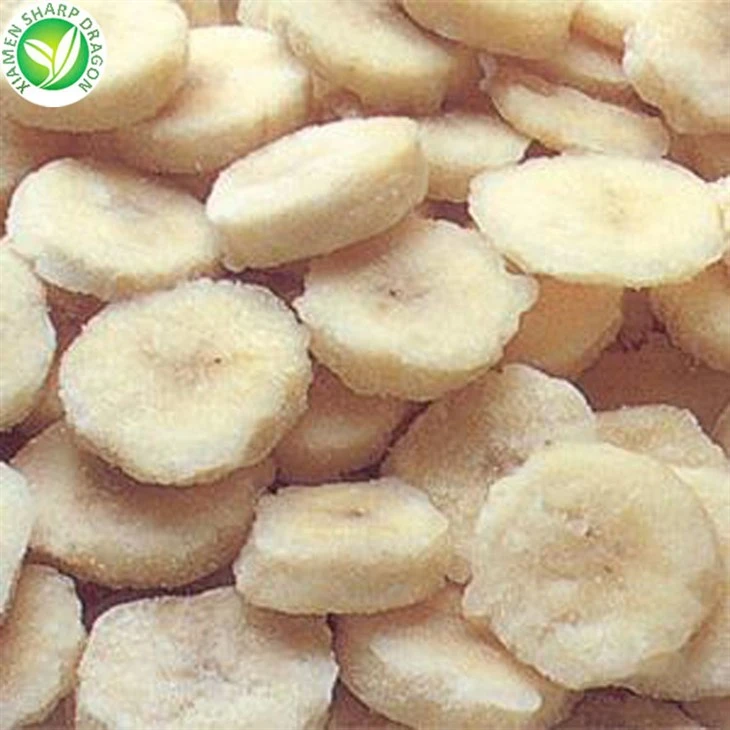
Plain frozen banana can remain a whole-fruit ingredient, but freezing changes texture. Ice formation softens the fruit after thawing, which suits blending, bakery fillings and puree applications better than uses requiring fresh firmness. It does not automatically add sugar. Check the ingredient statement because a coated, sweetened or compound product is a different food.
| Form | What to verify | Main interpretation risk |
|---|---|---|
| Fresh whole banana | Edible size, ripeness, intended portion | Assuming every fruit has the same weight |
| Unsweetened frozen slices | Ingredient statement, cut, clumping, thaw loss | Treating storage temperature as the freezing method |
| Smoothie or puree | Banana input, total serving, added sugar, other ingredients | Counting a large drink as one small fruit portion |
| Banana chips | Dehydration or frying, oil, sugar, serving weight | Equating concentrated chips gram-for-gram with fresh fruit |
Blending does not make banana poisonous, but a drink can be consumed faster and can combine several fruit portions with juice, sweeteners, nut butter or ice cream. Chips remove much of the water and may add oil or sugar, so a small bag can represent more banana solids and energy than its volume suggests. Judge the complete product and stated serving.
Our separate guide explains what freezing changes in banana nutrition. The decision here is simpler: an unsweetened frozen fruit form can fit a good diet, but a freezing claim does not replace the product's real formula and serving.

Ripeness Changes Texture, Flavor and Application
As banana ripens, starch is converted into smaller sugars, firmness falls, aroma develops and the peel changes color. A greener banana may taste less sweet and feel firmer; a riper banana may give stronger sweetness and softer texture. That does not mean every brown-spotted fruit has spoiled. Leakage, fermentation odor, mold, abnormal discoloration and package damage are different signals from normal ripening.
Ripeness can change a person's sensory response and may change digestion, but it does not justify a universal claim that one color is best for everyone. For a smoothie manufacturer, riper fruit may reduce the need for added sweetener yet increase softness and variability. For visible frozen slices, the same ripeness may create darkening or handling challenges. Choose a target that matches the finished application and validate it with the actual process.
Practical example: A 1,000 kg recipe targets 12% banana, so the required banana input is 1,000 × 0.12 = 120 kg. If thawing and transfer produce a verified 4% mass loss, usable input is 120 × 0.96 = 115.2 kg. To deliver 120 kg usable banana, purchasing would need 120 ÷ 0.96 = 125 kg. This is a yield calculation, not a nutrient-retention claim. Test ripeness, thaw method and transfer practice before fixing the allowance.
When an Individual Plan May Need Adjustment
Most people can include bananas in a varied diet, but "good fruit" is not the same as "unlimited for every condition." People managing diabetes may need to count the carbohydrate and compare the portion with the rest of the meal. A small amount paired with a meal may fit differently from a large blended serving consumed alone. Personal glucose targets and medicines require individualized guidance.
People with advanced chronic kidney disease or receiving hemodialysis may need to manage potassium. NIDDK identifies bananas among higher-potassium fruits in that context and recommends working with a dietitian or health professional to find the right amount. This warning should not be generalized to healthy kidneys, and a general banana article cannot set a renal diet.
Allergy is uncommon but possible. Infants, people with swallowing difficulty and anyone following a medically prescribed texture or nutrient plan need an age- and condition-appropriate form. New or severe symptoms deserve professional care rather than an online food rule. The responsible message is not fear; it is to match a normal food to the person's actual constraints.
How Buyers Turn "Good" into a Product Specification
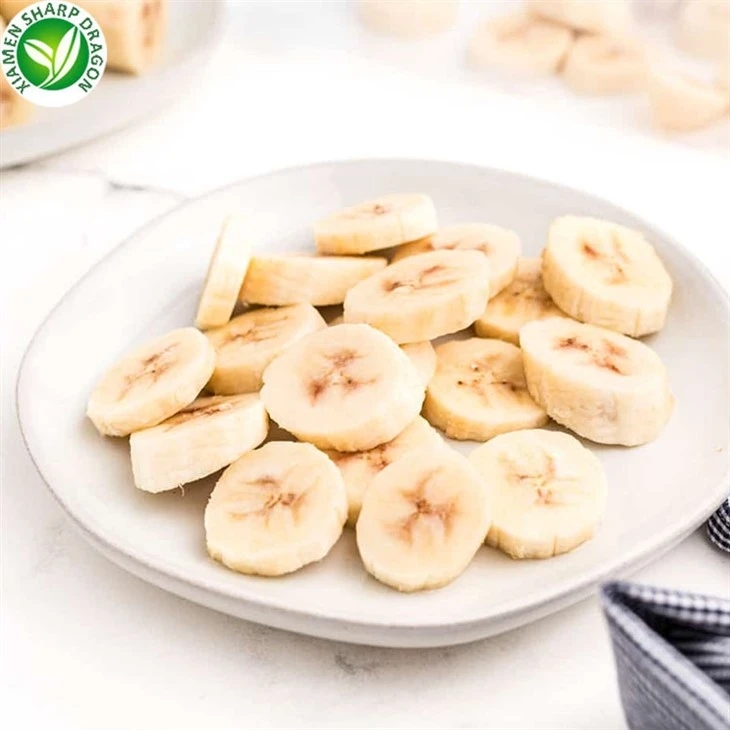
A B2B buyer cannot approve "healthy banana" as a raw-material specification. Start with identity and use: cultivar or agreed type where relevant, slice or chunk dimensions, maturity and color target, ingredient statement, added sugar or additive status, sensory expectations, defects, microbiological criteria, pesticide-residue controls, pack, storage, shelf life and destination documents.
Then connect those variables to the application. A smoothie base may prioritize predictable sweetness, dispersion and low preparation labor. Bakery filling may prioritize consistency after heating. Retail frozen fruit may need free-flowing pieces, attractive color and a clear ingredient declaration. Foodservice may value portion control and pack reseal performance. The best form is the one that meets the tested use, not the one with the broadest wellness language.
Use our frozen banana buying guide to compare slices, chunks and application requirements. The current IQF frozen banana page shows commercial food formats, while our frozen packaging overview identifies pack variables for discussion. Final acceptance still belongs in the agreed product file.
Review every nutrition and health statement against the finished product and market rules. A raw-fruit nutrient value does not validate the label of a sweetened blend. "No added sugar" does not mean carbohydrate-free. "Source of potassium" or "high fiber" may have defined thresholds and calculation rules. Keep the serving, formula, supporting analysis, approved copy and version control together.
Separate a Nutrition Fact from a Health Promise
A composition fact answers what is in a measured amount. A nutrient-content claim compares that amount with a defined legal threshold. A health claim connects a food or nutrient with a health relationship under specific rules. A treatment claim promises to prevent, cure or manage disease. These are not interchangeable steps on a copywriting scale.
For example, a database value for potassium in raw banana does not by itself approve "supports healthy blood pressure" on a frozen dessert. The finished serving may contain a different banana percentage, other ingredients and a different nutrient amount. The market may define required wording, qualifying levels, disqualifying nutrients and recordkeeping. Start with the finished formula and declared serving, obtain an accepted nutrition basis, and send the exact proposed words-not a general concept-for review.
The same discipline applies to sugar. A plain banana has naturally occurring sugars. A manufacturer may add sucrose, syrup, juice concentrate, sweetened yogurt or a coating to a banana product. "Fruit sugar" is not a reason to hide the added ingredient or ignore the finished label. Conversely, the presence of natural sugar is not proof that the plain fruit is equivalent to confectionery. Ingredient declaration, added-sugar rules, total carbohydrate and serving size answer different questions.
Keep evidence current when the formulation changes. If a 100% banana smoothie base becomes an 80% banana blend, a nutrient calculation and front-panel message may need revision. If the serving rises from 100 g to 150 g, the per-serving energy and carbohydrate rise even when per-100-g composition is unchanged. Change control protects both the customer and the buyer's credibility.
Use Receiving Data to Confirm the Purchased Form
The purchasing decision is incomplete until receiving can verify it. For frozen banana, record product temperature, package and seal condition, lot code, carton identity, piece size, clumping, surface frost, color, abnormal odor, broken pieces and any thaw loss required by the agreed method. A nutrition-focused brief does not replace food-safety, microbiological, residue or foreign-material controls.
Do not reject normal frozen appearance by applying a fresh-fruit visual standard. Frost, softened thawed texture and some color change can be compatible with a frozen ingredient, while severe clumping, dehydration, seal failure or temperature abuse may signal a process or cold-chain problem. Define reference photos and numeric tolerances before shipment so inspection is reproducible.
Example: A 10 kg sample carton contains 6.5 kg free-flowing conforming slices, 2.4 kg usable joined pieces, 0.7 kg pieces outside the agreed size and 0.4 kg loose frost or liquid under the stated test. If the specification counts only free-flowing conforming slices as first-grade yield, that yield is 6.5 ÷ 10 × 100 = 65%. If joined pieces are acceptable after normal separation, usable yield becomes (6.5 + 2.4) ÷ 10 × 100 = 89%. The acceptance method changes the commercial result, so the contract must state which definition applies.
Retain the sample, inspection sheet and application result with the lot record. If the banana meets incoming appearance but produces excessive liquid, weak flavor or unstable color in the customer's process, reopen the ripeness, thawing and formulation variables. "Good banana" is finally proven by consistent specification and in-use performance, not a photograph or nutrient headline alone.

Packaging follows the same logic as the ingredient. A retail pouch, foodservice bag and industrial carton create different serving, reseal, handling and label requirements. Review material, net weight, inner liner, carton strength, lot coding and cold-chain instruction with the approved banana specification.

XMSD sourcing note: Tell us the banana form, cut, ripeness target, application, serving concept, pack, destination and documents you need. We can discuss IQF slice or chunk specifications, samples and product-specific verification.
Frequently Asked Questions
1. Is a banana too high in sugar to be a good fruit?
A plain banana contains naturally occurring sugar and carbohydrate along with water, fiber and nutrients. Whether the portion fits depends on the meal and individual plan; it is not equivalent to a product with added sugar.
2. Can people with diabetes eat bananas?
Fruit can fit a diabetes meal plan, but carbohydrate and portion need to be counted. Use individualized guidance and monitor your response rather than applying a universal banana ban or unlimited allowance.
3. Is frozen banana still a whole fruit?
Plain frozen banana pieces can remain a whole-fruit form. Check the ingredient statement for sugar, syrup, coatings or additives and read nutrition on the stated serving.
4. Are banana chips the same as fresh banana?
No. Drying concentrates solids per gram, while frying can add oil and some products add sugar. Compare the process, ingredient list and serving weight instead of treating equal gram weights as equivalent.
5. Does a brown-spotted banana have more calories?
Ripening changes starch, sugars, aroma and texture, but peel color alone is not a reliable finished-product calorie calculation. Use the edible amount and an appropriate composition or laboratory basis.
6. Who may need to limit banana potassium?
Some people with advanced kidney disease or receiving dialysis may need a potassium plan. Follow the amount set with a kidney-care professional; do not generalize that restriction to everyone.
Final Answer from XMSD
A plain banana can be a good fruit when the portion and form fit the eater's overall diet. Read edible weight, total carbohydrate, additions and serving context instead of arguing from reputation. For commercial products, approve the actual ingredient statement, cut, ripeness, serving, nutrition method, pack and intended use. That makes "good" a verifiable product decision rather than a slogan.
The decision can remain positive without becoming absolute. Choose whole or unsweetened forms when that fits the use, compare the serving with the whole meal, and adjust for a documented medical plan. In procurement, connect the claim to composition and the composition to a controlled lot. That is more useful than calling every banana exceptional or treating its natural carbohydrate as a reason to avoid it.