


How to Cook Lotus Root for Crisp or Tender Results
Dec 06, 2019

Short answer: lotus root can be sliced thin for fast stir-frying or chips, cut thicker for braises, or portioned into chunks for soup. Peel it, rinse away surface soil, cut to one even thickness, limit air exposure, and cook according to the texture required. Short cooking preserves more snap; longer moist cooking moves the result toward tender and starchy.
Fresh and frozen forms do not always enter a recipe at the same stage. A frozen slice may be raw, blanched or fully cooked, so the pack instruction and technical specification matter. The practical sequence is form first, then cut, pretreatment, heat method, endpoint and holding. That sequence is more reliable than using one universal time.

Start with the Result You Want
Lotus root is the underground rhizome of the lotus plant. Its open channels create the familiar wheel pattern, while its cell structure and starch give it an unusual ability to remain springy after heat. A 2016 study of cooked lotus root linked its characteristic retained crunch to springiness measured after cooking. That is why it can behave differently from a potato even when the two are cut to a similar shape.
For a crisp vegetable side, choose even slices that are thin enough to heat quickly without turning fragile. Blanch briefly where the recipe needs a predictable head start, drain well, then finish over high heat with limited sauce. For a tender braise, use thicker slices or chunks and allow enough liquid contact for gradual softening. For a soup, give the pieces room in the pot and decide whether the broth should stay clear or accept some starch.
Frying moves the target again. Thin slices can become chips; paired rounds can enclose a filling; thicker battered pieces can retain a firm center. Surface water, thickness, oil temperature and load determine whether the coating sets or absorbs excess oil. Pickling is not simply a flavor variation on boiling: acid, salt, sugar, slice thickness, refrigeration and validated preservation practice define the result.
Before choosing a technique, write the endpoint in ordinary sensory terms: clean snap, crisp-tender bite, yielding center, mashable texture or brittle chip. Add the service condition-immediate plate, chilled salad, hot hold, chilled retail cup or frozen reheat. A method that succeeds at the stove may fail after twenty minutes in sauce.
| Use | Useful starting cut | Heat route | Main control |
|---|---|---|---|
| Quick stir-fry | Even thin rounds or half-moons | Brief blanch, drain, high-heat finish | Dry surface and short sauce contact |
| Soup | Thick slices or chunks | Simmer in broth | Addition point and holding time |
| Braise | Medium or thick pieces | Covered moist heat | Sauce reduction versus softening |
| Chip or tempura | Uniform rounds | Dry, then fry or bake | Thickness, surface water and oil load |
| Chilled pickle | Thin, even slices | Cook as required, cool, acid season | Validated acid and refrigerated life |
Prepare Fresh Lotus Root Without Losing Control
Choose firm rhizomes without a sour odor, leaking areas or extensive soft decay. Soil may remain in the outer surface and internal channels. Rinse the exterior, trim the ends and peel with a clean vegetable peeler. After slicing, inspect the holes and rinse again so visible soil is not carried into the dish. Keep raw preparation separate from ready-to-eat foods and clean the board and knife after use.
Fresh-cut lotus root browns after exposure to oxygen. Browning research describes enzymatic activity after peeling and cutting, while heating can introduce additional non-enzymatic color change. The simplest kitchen response is to work promptly. A short hold in lightly acidulated water can slow visible discoloration, but prolonged soaking may dilute flavor and change surface behavior.
Acid also affects color during boiling. A 2023 LWT study found that time, temperature and pH influenced boiling-related browning and nutrient loss; acidic conditions produced a different outcome from alkaline treatment. That evidence supports modest vinegar use when a pale appearance suits the dish. It does not support an unlimited soak or a fixed recipe ratio for every cultivar and batch.
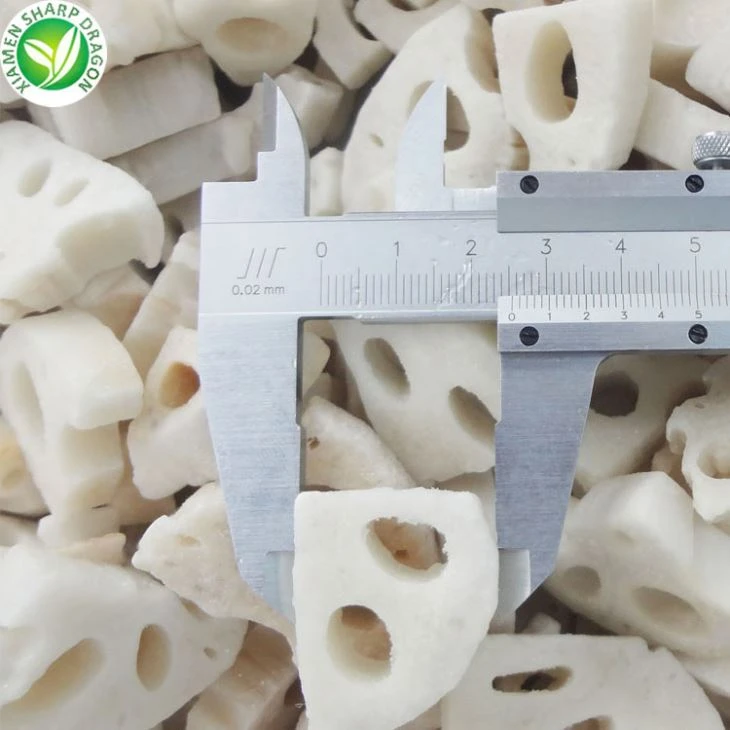
Cut geometry is the strongest everyday control. A slice that varies from 2 mm on one edge to 8 mm on the other cannot reach one endpoint at the same moment. Use a sharp knife or controlled slicer, reject shattered rounds where presentation matters, and measure a sample rather than relying on a verbal label such as "thin." The holes make the cut visually distinctive, but the solid tissue between them carries the bite.
Blanching Is a Tool, Not a Complete Recipe
A brief blanch can equalize heating, reduce raw surface character, help manage color and shorten the final stir-fry. Hong Kong Department of Health recipe guidance for a mixed-vegetable lotus-root dish uses a blanch-until-tender step before stir-frying. That is a useful sequence model, although the exact time must follow slice thickness, starting temperature and desired bite.
Use enough boiling water that the load does not stop the boil for an extended period. Add uniform pieces, agitate gently so slices separate, then remove and drain at the chosen endpoint. Cooling in clean cold water can halt softening for a later finish; immediate cooking may preserve more heat and reduce handling. The operation has to choose one route rather than drifting between both.
Drainage matters. Water trapped in the holes and between slices lowers wok temperature, dilutes sauce and increases splatter in hot oil. Spread the pieces, shake or spin gently, and allow visible water to leave. For a high-volume line, record post-drain weight and elapsed drain time. "Well drained" becomes repeatable only when the team agrees on the observable condition.
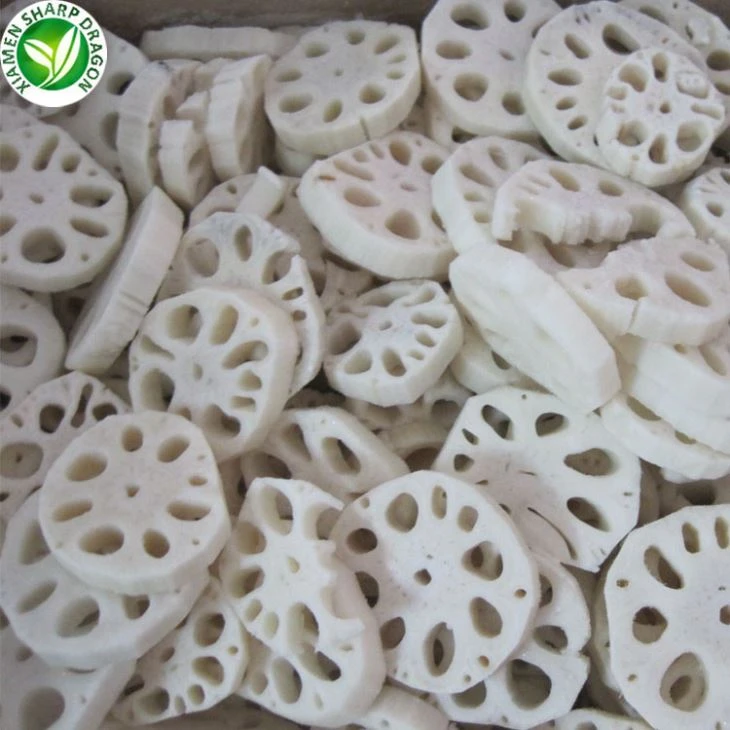
Do not confuse a processing blanch with a ready-to-eat cook. Frozen lotus root is often blanched before freezing for quality control, yet the final thermal requirement is defined by the product specification and instructions. The frozen sliced lotus root format illustrates a prepared ingredient, not a universal cook status.
Stir-Frying: Protect Heat, Separation and Timing
For a bright, crisp-tender stir-fry, preheat the pan, use a manageable load and add lotus root after aromatic ingredients have released their fragrance but before a watery sauce floods the surface. Blanched slices need a shorter finish than raw slices. Keep them moving enough to expose both faces without breaking the rounds.
Seasoning can enter in layers. Oil carries aromatics; salt and light soy provide salinity; vinegar adds brightness; sugar balances acidity; chili and fermented pastes add stronger direction. Add thickened sauce near the end if the goal is a glossy coat. A long simmer in starch-thickened sauce removes the very snap that made stir-frying the preferred route.
Practical example: representative scenario for a quick-service kitchen. The menu needs a lotus-root and mixed-vegetable side served within four minutes. The kitchen tests 4 mm frozen slices, a brief boiling-water finish, a two-minute drain and a high-heat sauce toss. It records batch weight, pan load, center bite and sauce pickup.
The larger pan load drops temperature and produces watery plates, so the kitchen divides the batch into two finishes. That choice raises handling slightly but restores separation and snap. The decision function is throughput with a defined sensory endpoint, not maximum tenderness.
Soup and Braising: Manage Softening and Broth Quality
Soup gives lotus root time to exchange flavor with broth while retaining a recognizable shape. Thick slices or chunks tolerate the longer route better than fragile thin rounds. Begin with the broth profile and total simmer time, then choose the addition point. Pieces added at the start become more integrated; pieces added later preserve a firmer bite.
A research trial under pressurized conditions showed that temperature and time change lotus-root texture in ways that ordinary 100°C cooking may not reproduce. Pressure cooking therefore needs its own test. Do not translate a stovetop time directly into a pressurized batch. Valve behavior, fill level, piece dimensions and cooling route all affect the endpoint.
Braising uses less free liquid and often stronger seasoning. Turn pieces gently so the wheel shape remains visible. Watch sauce reduction: salt and sweetness intensify as water leaves, while lotus root continues to absorb and release moisture. If the sauce reaches its target before the center softens, add controlled liquid rather than scorching the base.
Hot holding deserves a separate check. Texture can continue to change after active cooking, and open slices can carry sauce into every channel. Test at the intended service interval, not only at minute zero. The lotus root storage guide addresses shelf-life decisions by form; cooked holding still follows the kitchen's validated safety program.
Example: representative scenario for a meal producer. A chilled soup will be reheated once and held for 25 minutes before service. Thin slices become too soft after the second heat, while 12 mm pieces stay distinct but feel underdone at the first cook endpoint. The trial compares addition time and reheated center texture.
The producer approves a medium-thick piece added earlier, then defines the first-cook endpoint with a fork and cut-face check. The decision function is reheat resilience and portion identity, distinct from the stir-fry line's speed target.
Frying, Baking and Air-Frying Change More Than Color
A thin lotus-root round can become crisp because moisture leaves and the structure sets. Uniformity is essential: one thick slice remains leathery while a thin neighbor burns. Dry the surface after rinsing or blanching, arrange pieces without crowding and control the oil or air flow so steam can escape.
A 2024 comparison of lotus-root chips reported different browning and acrylamide outcomes across oil-frying, air-frying, oven baking, microwaving and freeze-drying. The study is a reminder that "crisp" methods are not interchangeable. Browning degree, moisture, oil uptake and heat exposure move together, so select the process against both sensory and analytical targets.
For filled lotus-root sandwiches, match the two rounds and keep the filling layer even. A thick filling can remain undercooked while the exterior colors. Meat or seafood fillings require a validated internal endpoint appropriate to the recipe. The decorative cross-section is not evidence that the center is ready.
Season after frying when dry powders need to adhere without burning. For a glaze, apply it after crisping and serve promptly; sugar and water in the glaze soften the crust. If a packed product must stay crisp, moisture-barrier packaging and realistic shelf-life testing become part of the cooking decision.

Pickling and Chilled Dishes Need a Defined Safety Route
For a refrigerated sweet-sour side, slice evenly, cook to the chosen bite, cool under controlled conditions and add the measured dressing. Vinegar brings acidity and brightness, but flavor alone does not prove a shelf-stable process. Unless a validated preservation process supports ambient storage, keep the product refrigerated and assign a conservative approved life.
Write the formula by weight. Specify vinegar type and acidity, water, sugar, salt, aromatics, vegetable weight and final yield. Measure pH with suitable equipment when the safety plan relies on acidity. A restaurant garnish consumed promptly and a sealed retail cup held for days are different systems even when the seasoning tastes alike.
Drain before dressing if dilution would weaken the target. Conversely, retain a measured amount of cooking liquid only when the formula includes it. Chill shallow batches rapidly under the applicable food code or site program, cover against cross-contact and record the preparation date. Do not top up an older container with a fresh batch.
Cold service changes perception. Acid feels sharper, sweetness can seem muted and a slice that was tender when hot may feel firmer after chilling. Approve the product at its actual serving temperature. If sesame, soy, peanuts, crustaceans or another allergen enters the dressing, carry the declaration and cross-contact control through the finished dish.
Using Frozen Lotus Root Without Guessing
Frozen slices reduce peeling and cutting labor and make piece count easier to plan. They also introduce questions: raw or blanched, size tolerance, glazing, broken-piece level, thawing instruction and final cook. Review those fields before adjusting a recipe. The broader frozen lotus root range shows available forms, while the agreed lot specification controls use.
Some applications can cook from frozen; others need separation or controlled tempering. Adding a large frozen block to a wok sharply lowers surface temperature. For stir-fry, separate slices through the approved method and remove free water. For soup, direct addition may be efficient, but the product will cool the broth and extend the recovery interval.
Never use room-temperature holding as an improvised thaw. Follow the pack instruction and site food-safety system. If thawing is required, contain drip and keep the material protected. Once thawed, compare piece integrity, odor, color and free water with the approved sample; freezing can reveal cracks and handling damage that were not obvious in a small frozen handful.

Two XMSD Trial Checks That Prevent Recipe Drift
In our application checks, we measure several slices across the lot before cooking, then record frozen weight, thaw or direct-cook route, drain time and finished texture. A nominal diameter does not describe thickness, and thickness often decides whether a stir-fry stays crisp. We judge the cut after the intended heat and hold, not only under frozen light.
We also track free water separately from net pack weight. Excess surface ice or drip can make a sauce watery and distort usable yield. For a soup, some water may enter the formula without harm; for frying, the same amount creates splatter and slows browning. Recording the application beside the yield prevents one pass/fail rule from being applied to every kitchen route.
Pack design supports that control. Inner bag strength, seal quality, carton fit and cold-chain condition protect slice edges and limit dehydration. The frozen packaging framework helps structure the discussion, but the chosen bag and carton still need validation against load, route and handling.
Worked example: converting frozen input into saleable portions. A trial begins with 5.00 kg frozen slices. Sorting removes 0.20 kg of broken pieces outside the agreed presentation grade, and cooking plus draining reduces weight by another 0.45 kg. Saleable cooked yield is 5.00 − 0.20 − 0.45 = 4.35 kg.
At 145 g per portion, 4,350 g ÷ 145 g equals 30 portions. If the purchase comparison used the full 5.00 kg as saleable food, the cost model would overstate output. Repeat the calculation across representative lots and keep broken pieces only when another approved recipe can use them.

Troubleshoot by Symptom, Not by Adding Time Blindly
If slices turn gray or brown before cooking, shorten exposed hold, use clean acidulated water where suitable and review raw-material age and cutting damage. If color darkens during a long alkaline boil, review pH and heat exposure. Color correction cannot recover decayed or off-odor material; reject sensory defects that point beyond normal oxidation.
If a stir-fry is watery, measure drain time, batch load and sauce addition. More heat may scorch aromatics without removing water trapped between crowded slices. If pieces are unevenly tender, inspect thickness distribution and separation before changing the timer. The cause often enters upstream at cutting or loading.
If soup pieces disappear during hold, use a thicker cut, later addition or firmer material and retest after the complete service interval. If a braise stays hard while the sauce becomes salty, manage liquid and cover before increasing seasoning. If chips bend rather than snap, check thickness, final moisture, cooling and pack barrier.
Stringy threads may appear when lotus-root pieces are pulled apart. They arise from the plant tissue and are not, by themselves, proof of spoilage. Judge freshness through the full condition-odor, firmness, surface, package, storage history and visible decay. The lotus root use guide covers broader form choices, while cooking trials determine the recipe endpoint.

A Repeatable Lotus Root Cooking Plan
Write six lines before the first large batch: product state, slice or chunk dimensions, pretreatment, heat route, endpoint and service hold. For fresh rhizome, include peeling and discoloration control. For frozen product, include raw or blanch status, direct-cook or thaw route, free-water handling and net usable yield.
Run the trial with measured weights and times, then taste at the real service temperature. Photograph acceptable and unacceptable cut condition. Record whether the wheel shape stays intact, whether sauce fills the channels, and whether the center matches the declared endpoint. A short record turns one successful cook into a method another shift can repeat.
Lotus root rewards deliberate method choice. Stir-frying highlights snap, soup develops integration, braising builds sauce contact, frying creates brittle contrast and chilled pickling emphasizes acid and crunch. The best use is the one that connects product form and cut to a measured outcome, then keeps that outcome stable through service.
XMSD sourcing note: Send the recipe route, frozen or fresh starting form, target diameter and thickness, pack, destination and trial endpoint. We can align a frozen lotus-root sample and specification review with the cooking result that matters.
References
- Foods: Changes in the Texture and Flavor of Lotus Root after Different Cooking Methods
- Journal of the Science of Food and Agriculture: Cooking Effects on Lotus Root Texture and Volatiles
- LWT: Non-Enzymatic Browning of Lotus Root during Boiling
- Food Science & Nutrition: Quality and Acrylamide of Lotus Root Chips by Processing Method
- Hong Kong Department of Health: Stir-Fried Lotus Root and Assorted Vegetables
- XMSD operational perspective on cut measurement, blanch status, drain loss, cooking sequence, holding texture, packing and usable yield.