


What Is Lotus Root Good For? Uses by Cut and Recipe
Aug 26, 2019

Lotus root is good for dishes that need a mild-tasting, visually distinctive vegetable with a crisp-to-tender bite. Thin slices work in quick stir-fries, salads, chips and pickles; thicker slices or chunks suit soups, braises and hot pot; uniform frozen slices help foodservice teams portion repeatable recipes. It contributes carbohydrate and fiber, but it is not a detox, weight-loss treatment, immune booster or guaranteed cure for constipation.
Start with the finished application rather than a benefit list. Define the target bite, slice thickness, cook method, sauce pickup, plate appearance and portion. Then choose fresh, chilled prepared, canned or frozen form. The ring of air channels gives lotus root its lace-like cross-section, while its relatively neutral flavor carries broth, vinegar, soy-based sauces, spices and coatings.
Nutrition numbers also need a form and basis. A USDA reference for cooked, boiled, drained lotus root without salt reports about 66 kcal, 16.0 g carbohydrate, 3.1 g fiber, 1.58 g protein and 0.07 g fat per 100 g edible portion. A fried chip, sweet pickle or sauce-rich braise is a different finished food. Use the recipe and product label you actually serve.
Best-use rule: thin cuts favor quick heating and surface flavor; thick cuts favor sustained bite in soups and braises; small dice favor blends and fillings. Approve the cut by a controlled cook test, not by diameter alone.

The Main Value Is Texture Plus Flavor Absorption
Lotus rhizome has a mild, slightly sweet or nutty character rather than an aggressive flavor. The New South Wales Department of Primary Industries notes that the edible tubers stay crisp and crunchy after cooking and absorb flavors from sauces and other ingredients. That combination makes them useful when a recipe needs structure without overpowering aromatics.
"Crisp" is not one fixed texture. A thin slice can become tender quickly while retaining a clean bite; a thick slice can remain firm through a longer simmer; extended pressure or high-temperature cooking can soften it further. A 2023 study comparing boiling, steaming and frying found that cooking method and duration change texture and flavor. Specify the sensory endpoint, not simply "cooked."
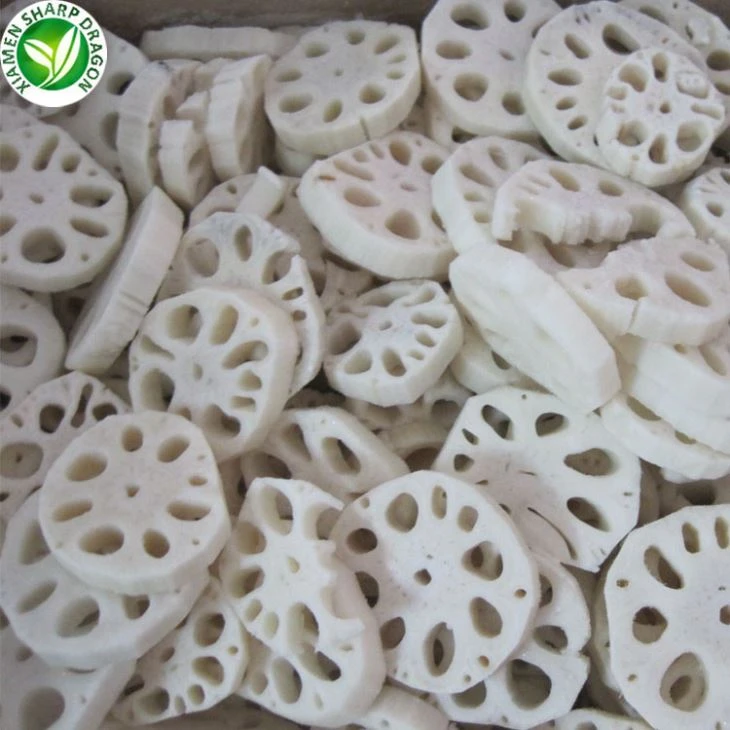
The holes add visual value but also create inspection points. Soil, peel fragments or discoloration inside channels are more noticeable on pale slices. Define channel cleanliness and color tolerance in the specification. A beautiful radial pattern helps presentation only when broken slices, dark spots and embedded foreign material remain controlled.
Practical example: choose by sensory endpoint. A chilled salad needs a 4 mm slice that stays crisp after brief heating and acidic dressing. A soup needs a 10 mm slice that remains intact after a longer simmer. Testing one cut and calling it "good for both" hides the main application variable.

Match the Cut to the Cooking Method
Thin round slices give a high surface-to-mass ratio. They take sauce or seasoning quickly and cook faster, which suits stir-fries, vinegar-dressed sides, tempura, baked or fried chips and decorative garnishes. The trade-off is higher breakage risk and a narrower window between crisp and overly soft.
Medium slices suit hot pot, mixed vegetables and braises where the ring should remain visible. Thick slices or chunks are better when the product must survive long simmering, but they require more time for heat and seasoning to reach the center. Dice or irregular smaller pieces fit fillings, mixed rice, soups and blended vegetable packs where exact round appearance matters less.
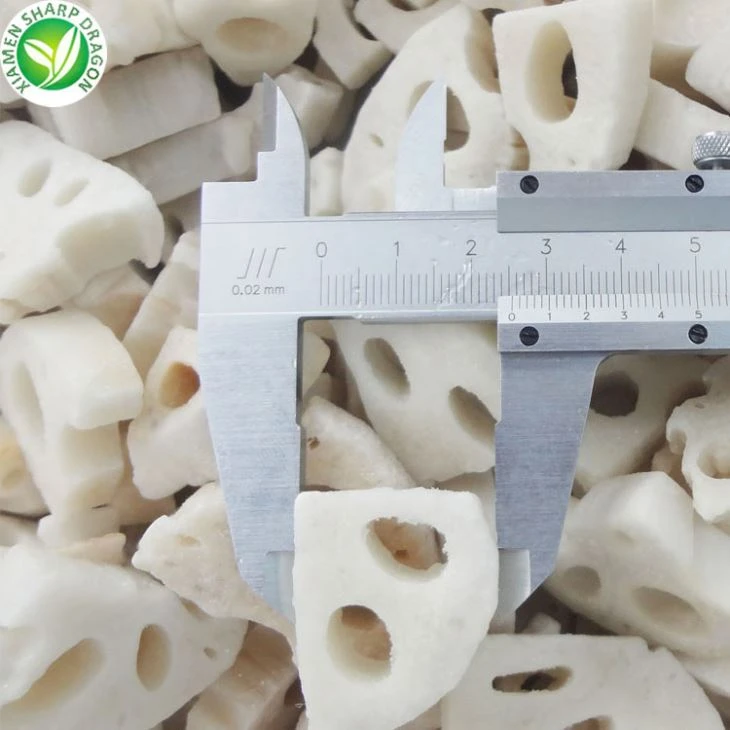
Specify thickness with a tolerance and a measurement method. Measure across the solid part of the slice, not through a channel, and sample across a case. Also define diameter range because the same thickness on a small and large rhizome creates different portion count and plate coverage. The frozen sliced lotus root format is a starting point, not the final order specification.
Cook tests should hold water ratio, batch load, starting state, temperature and time constant. Evaluate immediately and after the actual service hold. A slice that is ideal straight from the pan may soften after 30 minutes in hot broth or dry at a buffet. Approve the condition customers receive.

Use Nutrition Data Without Turning It Into a Cure
The cooked USDA reference shows lotus root is mainly a carbohydrate-containing vegetable, with meaningful fiber and very little fat before recipe additions. That supports ordinary food description. It does not prove that eating one serving removes toxins, prevents constipation, lowers body weight or "enhances immunity." Those claims require specific human evidence and, for labels, destination-market review.
Fiber contributes to total dietary intake, but bowel response depends on overall fiber, fluids, movement, medicines and individual conditions. A rapid increase can cause discomfort for some people. Potassium and vitamin values do not make lotus root a treatment for blood pressure or deficiency. Use a qualified professional for condition-specific diet decisions.
Raw and cooked numbers differ because water, cooking and drainage change the basis. USDA reports approximately 74 kcal and 17.23 g carbohydrate per 100 g raw lotus root, while the cooked boiled drained reference is about 66 kcal and 16.0 g carbohydrate per 100 g. Do not combine the calories from one form with the fiber from another in one claim.
Worked example: scale the cooked reference. A bowl contains 150 g cooked boiled lotus root. Energy is 66 × 150 ÷ 100 = 99 kcal; carbohydrate is 16.0 × 150 ÷ 100 = 24.0 g; fiber is 3.1 × 150 ÷ 100 = 4.65 g. Add 10 g oil and the dish gains about 90 kcal, taking the approximate total to 189 kcal before sauce and other ingredients.
That calculation is useful for recipe design, not a universal label. A commercial label should use the accepted ingredient data, actual yields, full bill of materials, declared serving and applicable rounding rules. If the frozen product contains salt, antioxidants or other ingredients, include them.

Fresh, Frozen, Canned and Fried Forms Serve Different Jobs
Fresh whole rhizome gives maximum control over peel, cut and immediate cooking, but it brings trimming labor, variable yield, oxidation risk and shorter handling time. It suits kitchens with trained preparation and reliable turnover. The lotus root storage guide owns those condition and shelf-life decisions.
Frozen slices reduce peeling and cutting work, support portioning and extend availability. They may be blanched and will not behave exactly like freshly cut raw rhizome. Test from the state you will use-often directly from frozen-because thawing can change drip, surface and breakage. Confirm whether the product is ready to cook or requires a defined preparation step.
Canned or pickled forms prioritize shelf stability and acid or brine flavor; they are useful for cold sides and fast assembly but may carry more sodium or sugar. Fried or coated forms provide a crisp snack experience but add oil and potentially flour, allergens and seasoning. A statement about plain boiled lotus root cannot describe those finished products.
Powder or starch products serve thickening and formulation roles rather than visible vegetable identity. They need their own composition, hydration and functionality tests. Do not treat a lotus-derived powder as nutritionally or culinarily equivalent to 100 g of sliced rhizome.

Choose the Application Before the Product Form
For stir-fry, prioritize uniform thin-to-medium slices, limited breakage and a bite that remains crisp after high heat. Test whether frost and surface moisture cause splatter or dilute sauce. Add the frozen load in a way that restores pan temperature quickly. If the line cannot recover heat, a technically acceptable slice may steam and soften before browning.
For soup and hot pot, prioritize structural survival, clean channels and a predictable time to the chosen tenderness. Test the slice in the actual broth because salt, acid and cook duration influence perception. Record the end point at service and again after holding. A ring that remains intact for 12 minutes but fragments after 40 minutes may be fine for cook-to-order and wrong for buffet service.
For chilled salads and pickles, prioritize color, channel cleanliness, acid response and a crisp bite after refrigeration. The cooling and dressing sequence matters. Measure drained yield after the holding period, not immediately after blanching, because water and dressing can change the final portion. Keep the cold-chain and shelf-life validation separate from sensory acceptance.
For chips or coated slices, prioritize diameter, thickness, surface condition and oil or coating pickup. Large diameter increases visual impact but can make center texture harder to control. Thin slices increase surface area and may absorb more oil. Compare finished weight, breakage and coating yield rather than buying only by frozen kilogram.
For mixed vegetable packs, prioritize piece balance and segregation. Lotus slices should remain recognizable but must not dominate every scoop. Run a distribution test across at least ten finished packs, counting lotus pieces and total weight. If rings settle or break during filling, revise cut, blend sequence or packaging operation before changing the declared formula.
Practical example: portion a soup line. The target is three 12 g lotus slices per 400 g bowl, or 36 g per serving. For 250 bowls, theoretical need is 250 × 36 g = 9,000 g. If the verified cooking-and-service yield is 92%, frozen input is 9,000 ÷ 0.92 = 9,783 g, about 9.8 kg. Use the measured yield from the approved cut, not a generic vegetable allowance.
Read Failure Signals Before Reordering
Brown or gray areas can arise from raw-material damage, oxidation, inadequate preparation, process differences or temperature history. Do not diagnose the cause from a photograph alone. Record whether discoloration is on the surface or inside channels, whether it appears frozen or after cooking, and how many pieces are affected. Hold the lot if it exceeds the agreed limit and investigate against receiving and process records.
Excessive breakage may come from thin cut, brittle frozen handling, case compression, partial thawing, rough mixing or cooking. Separate whole rings, half rings and fragments in a weighed sample. If breakage increases between receipt and service, inspect your own storage, opening and mixing steps before assigning the entire loss to the supplier.
A watery or unexpectedly soft result calls for a controlled retest. Verify product temperature, batch load, thawing practice, cook time and hold. Compare with the retained approval sample if available. Change one variable at a time. Adding more seasoning can hide weak texture temporarily but cannot correct an unsuitable cut or process.
Clumping and heavy surface ice signal handling or dewatering questions. Record the mass of the largest cluster, free-flow percentage and visible ice. Check whether the case experienced temperature cycling. A product can remain microbiologically acceptable yet lose portioning efficiency and plate consistency, so include free-flow in commercial acceptance.
Flavor failures need the same discipline. Earthy, sour, oxidized or otherwise atypical notes should be evaluated against an approved sample in a neutral cook test before sauce is added. Record lot, pack, storage and preparation. A mild clean lotus flavor is useful precisely because it carries the recipe; an off-note will carry through as well.
Use the failure signal to choose the next action: accept, rework within an approved method, use in a less appearance-sensitive application, hold for investigation or reject. Do not lower a defect limit after production simply because the recipe launch is near. The specification exists to make that pressure visible before it becomes a customer complaint.
Build a Controlled Recipe Test
Write the target before opening samples: intended dish, grams per portion, cut, bite, visual ring integrity, sauce pickup, cook time and hold time. Select at least three representative samples from the case. Photograph them frozen and cooked under the same lighting, then score against the stated target instead of "good" or "bad."
Measure yield. Record frozen weight, cooked and drained weight, broken pieces and rejected defects. A lower pack price can lose its advantage if breakage or channel contamination raises waste. Conversely, a premium-looking wide slice may cover more plate area and reduce pieces per serving. Cost the edible accepted portion.
Practical example: compare two cuts. Sample A is 5 mm thick and yields 94% accepted pieces after a 4-minute stir-fry; Sample B is 3 mm and yields 84% because more rings break. If both cost $2.00/kg frozen, accepted-piece cost is $2.00 ÷ 0.94 = $2.13/kg for A and $2.00 ÷ 0.84 = $2.38/kg for B. Choose B only if its thinner texture creates enough menu value.
Repeat the test after the real service hold and with the final sauce. Acid, salt, sugar, oil and heat change perception. Keep a reference photo and score sheet with the approved specification so later lots are judged against the same endpoint.
Specify the Product Around the Use
Name Nelumbo nucifera rhizome, product form, slice or piece dimensions, tolerance and blanching status. Add ingredients, color, channel cleanliness, broken pieces, skin, dark spots, foreign material, free-flow, net weight, pack, lot coding and storage temperature. The frozen lotus root range helps identify forms, while your application decides acceptance limits.
Connect origin without letting it replace performance. The lotus root origin guide separates growing, processing and shipment fields. Add those records to the product file, then keep the sensory and defect criteria independent.
Ask for a cooking method on the specification or approval sheet. "Boil until done" cannot reproduce texture. Record sample weight, water or sauce ratio, starting temperature, heat setting, time and evaluation point. If the intended use is frying, record oil temperature and load; if it is soup, record simmer and hold.
Set change triggers for cultivar, growing area, cut equipment, blanching, additive, pack and factory. Re-test when any variable can alter color, bite, breakage or label. Link approved artwork and lot code through the frozen packaging workflow.
A Responsible Answer for Menus and Product Pages
Describe lotus root by the value people can observe: a mild rhizome with a distinctive perforated cross-section, used in soups, stir-fries, braises, salads, pickles, chips and coated applications. State the cut and cooking state. If nutrition is relevant, give the validated serving and finished product values.
Avoid "detox," "boosts immunity," "prevents constipation" and "causes weight loss." A food can contribute nutrients without causing a clinical outcome. Keep cultural or traditional uses clearly identified as tradition and do not convert them into modern treatment instructions.
The strongest answer is operational: lotus root is good for a recipe when its cut, texture, flavor absorption, visual appearance, yield and preparation fit the target. That standard works for a home cook choosing a dish and for a processor approving a frozen specification.
Keep one approved reference for every important use rather than forcing one "standard" slice into every recipe. A soup reference, salad reference and frying reference may share botanical identity while using different thickness, cook time and defect priorities. Your product file should show which application each approval covers, the exact test method, and which changes require a new trial.
Review actual service results after launch. Track portion weight, breakage, waste, hold-time texture and complaints by lot. Those observations tell you whether lotus root remains useful in the intended system. They are also a better basis for improvement than adding broad wellness language that neither the ingredient specification nor the recipe can prove.
For a commercial brief, send the dish, cut, target bite, portion, cooking method, pack, expected volume and destination through the XMSD inquiry form. We can align the sample and specification around the finished use.
References
- U.S. Department of Agriculture, Agricultural Research Service. FoodData Central: Lotus root, raw; and cooked, boiled, drained, without salt. Accessed August 27, 2026.
- New South Wales Department of Primary Industries. Lotus (Nelumbo nucifera). Accessed August 27, 2026.
- Liu Y, et al. Changes in the Texture and Flavor of Lotus Root after Different Cooking Methods. Foods. 2023.
- U.S. Department of Agriculture. Composition of Foods Raw, Processed, Prepared. Accessed August 27, 2026.