


Where Does Lotus Root Come From? Plant and Lot Origin
Aug 26, 2019

Lotus root is the edible underground rhizome of sacred lotus, Nelumbo nucifera, an aquatic perennial with a broad native range across warm-temperate and tropical Asia and into northern Australia. It is not a true botanical root. The swollen horizontal stem grows in mud below shallow water while leaves and flowers rise above the surface. Centuries of cultivation mean a product's commercial origin must be read from lot records, not guessed from the plant's ancient range or its culinary name.
Kew records a native range from parts of eastern Europe and Iran through tropical and eastern Asia to northern and northeastern Australia, and notes more than 3,000 years of cultivation in China. FAO material lists cultivation in China, India, Japan, Korea, Russia, Vietnam, the United States and Europe. Those facts explain the crop's geography; they do not prove where a carton was grown.
For buying, separate four fields: botanical identity, country and growing area, processing location, and shipment origin. A rhizome grown in one province may be washed, sliced, blanched, frozen and exported from another. Ask for the farm or approved growing-area code, harvest season, processing lot and origin documents that follow the actual order.
Short answer: biologically, lotus "root" comes from the mud-growing rhizome of N. nucifera; geographically, the species has a wide Asian-to-Australian native range; commercially, only lot traceability establishes the declared origin.
It Is a Rhizome, Not a True Root
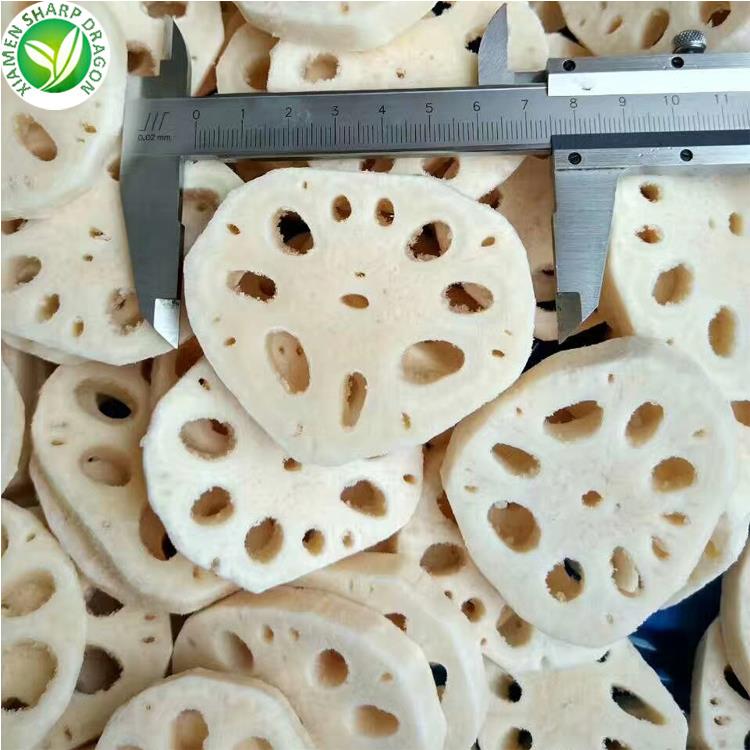
A rhizome is a horizontal stem with nodes and internodes. Lotus rhizomes store reserves, extend through submerged soil and produce shoots. The familiar holes are air channels that help the plant function in waterlogged conditions. True roots arise from the rhizome, but the crisp cylindrical vegetable sold as lotus root is stem tissue.
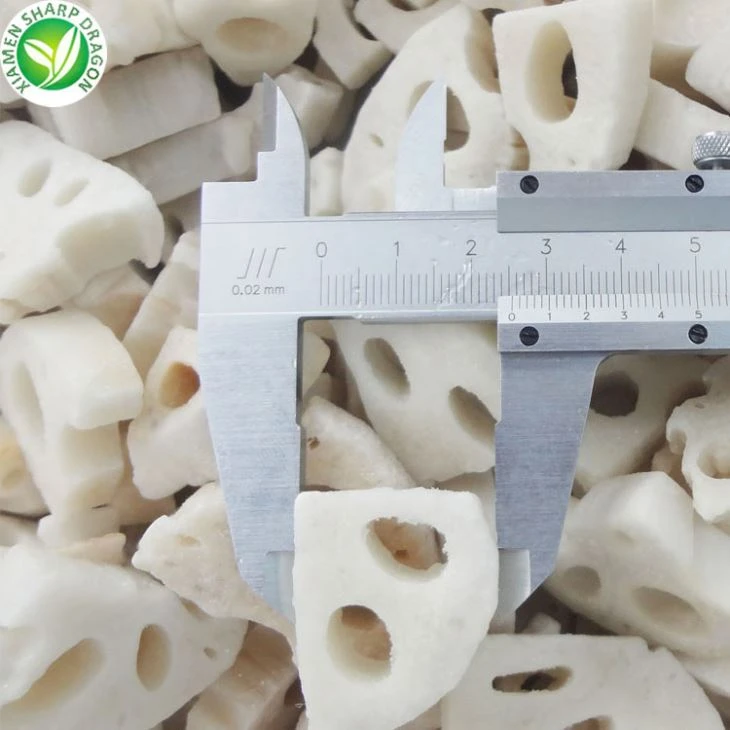
This distinction explains product shape. A whole marketable chain contains enlarged internodes joined by narrower nodes. Cross-cutting exposes the radial pattern of air spaces; longitudinal cutting exposes longer channels. Cultivar, maturity and growing conditions influence internode length, diameter, skin and texture, so one old description of a named hybrid cannot define all lotus root.
Use the accepted name Nelumbo nucifera when botanical identity matters. "Lotus" can refer to unrelated plants, including the genus Lotus in the legume family and water lilies. A product specification should connect common name, scientific name and edible part. That prevents an origin discussion from mixing different taxa.
Practical example: the request says "lotus root slices," while the offered sheet says only "lotus." Request N. nucifera, rhizome, slice thickness and cross-section before comparing origin. The correction changes the acceptance record from a cultural name to a verifiable ingredient.

Native Range Is Broader Than One Origin Story
Simple answers often assign lotus to a single country. Current botanical databases are more careful. Kew's Plants of the World Online treats the species as native from Ukraine and northern Iran across parts of Asia to northern Australia. World Flora Online and Flora of China likewise describe a wide distribution. Long cultivation, movement and naturalized populations make a one-line birthplace claim unreliable.
Native range means botanists consider the species naturally occurring in those territories. Cultivated range means people grow it there. Commercial origin means the crop used for a particular lot was grown and handled in named locations. These are different statements. A product can be authentically Chinese-grown without proving the species first evolved in China; it can be processed in China without being Chinese-grown unless records show that.
Kew notes over 3,000 years of cultivation in China and food uses in China, Japan and India. That history supports cultural importance, not a monopoly on origin. Use precise language: "grown in [declared area] from N. nucifera rhizomes" is auditable; "the original lotus root" is usually not.
Ancient-history claims are especially vulnerable to citation drift. Archaeological finds, texts, pollen, seed remains and genetic studies answer different questions. Unless the purchase decision specifically needs a historical study, keep the product record on present botanical identity and lot provenance.

Where Food Lotus Is Cultivated
Sacred lotus grows as a rhizomatous aquatic crop in ponds, wetlands and flooded fields. Kew describes rhizomes in mud at the bottom of shallow water; its cultivated plants remain submerged and use loam. FAO material reports growth across China, India, Japan, Korea, Russia, Vietnam and other regions, with Chinese production concentrated in several provinces and major river basins.
Production geography follows water, soil, temperature, cultivar and market. A region suited to ornamental flowers or seed production is not automatically a rhizome source. Cultivars selected for edible rhizomes need useful internode shape, yield, texture, color and harvest behavior. Ask what plant part the production system targets.
Harvest is labor-sensitive because rhizomes are fragile and hidden in mud. Damage creates broken ends and exposed tissue before washing. The growing area therefore affects more than a country name: field type, harvest method, transport time and washing capacity can influence raw-material condition when it reaches the processor.
Season also belongs in the origin file. A country can supply from different regions or storage programs during the year. Record crop year or harvest window beside growing area. Do not use a permanent website sentence as evidence for a shipment made under a different season and lot.

Growing Origin, Processing Origin and Export Origin
A commercial chain may cross administrative boundaries before export. Farms or contracted growers supply fresh rhizomes; a collection point may wash and grade them; a factory may peel, cut, blanch and freeze; a separate cold store may consolidate; an exporter may issue shipping documents. "Made in" and "product of" rules vary by destination, so regulatory review must use the actual chain.
Request a traceability map rather than one origin field. At minimum, connect grower or growing-area code, receiving date, raw lot, processing date, finished lot, pack code and shipment. If several raw lots are combined, the finished-lot record must preserve all sources. If product is repacked, keep the original lot identity through the new code.
The frozen lotus root category identifies product forms, while a sliced lotus root page shows a commercial presentation. Neither replaces farm and lot evidence for an order.
Worked example: a 24,000 kg shipment contains finished lots A, B and C at 8,000 kg each. A traces to growing area G1; B to G2; C combines 5,000 kg from G1 and 3,000 kg from G3. Shipment origin cannot be summarized as one farm. The trace file must retain G1, G2 and G3 and link each carton code to A, B or C.

What Origin Does-and Does Not-Predict
Origin can guide risk questions, seasonal planning, documentary requirements and supplier qualification. It does not by itself guarantee white color, crisp texture, low defects or a particular flavor. Those outcomes also depend on cultivar, maturity, harvest damage, wash and peel control, cut, pretreatment, freezing, storage and cooking.
Compare samples under one method. Define slice diameter and thickness, cook from frozen under controlled time and ratio, then record color, bite, broken slices and channel cleanliness. If two origins differ, do not assign cause until cultivar, process and age are comparable. A geographic label is not a sensory specification.
Keep neighboring questions on their own evidence. The lotus root application guide owns use and benefit boundaries. The lotus root storage guide owns shelf-life decisions. An origin file supports both without replacing either.
Reject origin stereotyping. "Province X is always crisp" or "country Y is always safer" hides supplier and lot variation. Use origin to choose the questions, then use specification, audit, sample and records to answer them.
Stress-Test the Origin Claim Against Real Failure Cases
First test a mixed receiving day. The factory receives rhizomes from two growing zones, but the intake bins carry only the product name. Once the material enters one wash line, later cartons cannot be assigned honestly to either zone. The corrective action is upstream: assign raw-lot codes at receipt, segregate or document controlled combination, and link the resulting finished lot before processing begins. A declaration written after packing cannot recreate lost identity.
Next test repacking. A bulk frozen lot moves to another facility for retail packing. The new carton receives a new production code, but the repacker must preserve the source finished lot, quantity received, quantity packed, rejects and destination codes. If the repack record only names the repacking country, it answers where the retail unit was packed-not where the lotus grew or where the rhizome was originally processed.
Then test a crop-year transition. The website and approved specification name one growing area, while the first lot of the new season comes from an additional area. Review residue risks, water and soil controls, cultivar, sensory performance, documentation and label impact before accepting the change. Do not let a broad country statement hide an unreviewed agricultural source simply because both lots cross the same border.
Practical example: reconcile a quantity mismatch. Receiving records show 12,000 kg raw rhizome. The process record shows 2,100 kg peel and trim loss and 300 kg rejected damage, leaving a theoretical 9,600 kg before later process changes. Finished frozen output is listed as 10,200 kg. The extra 600 kg cannot be explained by the declared raw lot. Stop the origin approval and investigate carryover stock, coding error, water basis or undocumented input before release.
Finally, test the document hierarchy. A website page, invoice, certificate, carton and trace report should not give competing countries or facilities. Decide which controlled record is authoritative for each field and how discrepancies are escalated. Correct the source record and every affected downstream document; adding a note to the purchase file while leaving mismatched cartons in circulation does not resolve the risk.
These cases turn origin from a marketing adjective into a control system. The pass condition is not that a country name appears somewhere. It is that the declared botanical material and every quantity in the selected shipment can be traced through known transformations to the accepted agricultural sources, with no unexplained substitutions or gaps.
Build a Verifiable Origin File
Define each geographic level before collecting evidence. Country answers the legal high-level field; province or growing zone supports seasonal and agricultural risk review; farm or grower group enables traceback; factory location identifies processing jurisdiction; port identifies logistics only. Do not put a port name into a growing-origin field simply because it appears on the bill of lading.
Set an acceptance document for each level. A supplier declaration may open review, a farm register connects growers, receiving tickets connect raw lots, and processing records connect them to finished cartons. The label and certificate of origin must agree with the approved chain and destination rules. When evidence conflicts, stop release and reconcile the named lot rather than choosing the most convenient document.
Practical example: distinguish port from crop origin. A shipment leaves Qingdao, the factory is in Shandong, and receiving records identify rhizomes from two approved growing zones. "Qingdao-grown" is unsupported because the port is only an export node. Record the two growing zones, Shandong processing facility and Qingdao loading port in separate fields, then use the legally reviewed country statement on the pack.
Apply change control. A new growing zone, subcontracted processor, relabeling site, harvest year or mixed-origin consolidation changes the evidence set. Require notification before shipment and decide whether the change triggers a new sample, audit, residue plan, label review or tariff check. Origin assurance is a maintained system, not a certificate collected once.
Start with the legal product name, N. nucifera, edible rhizome and product form. Add country of cultivation, province or approved growing area, crop year, grower code, raw-lot code, factory and processing date. Connect the finished lot, carton code, cold-store movement and shipment documents.
Then add evidence appropriate to risk: supplier declaration, farm list, field or collection records, receiving weights, certificate of origin, packing list and traceability exercise. Verify which document establishes which fact. A certificate of origin may support customs treatment but not every farm-level claim.
Run a mass-balance check. Opening raw quantity minus documented trim, peel, rejects and process loss should reconcile with finished quantity and recorded waste within the accepted tolerance. Large unexplained gaps or finished output above plausible input are origin-integrity signals requiring investigation.
Test one step backward and one step forward from a carton code. The backward test should reach raw lots and growing areas; the forward test should find every shipment containing the finished lot. Record completion time and missing fields. Correct weak links before approval, not after an origin complaint.
Put the Origin Decision Into the RFQ
Your RFQ should ask only for origin detail that will be checked and used. State the accepted countries or zones, whether mixed growing areas are allowed, what crop-year information is required, and whether repacking outside the processing facility is permitted. Name the records required before sample approval and before shipment. Vague requests such as "full traceability" invite equally vague declarations.
Define the consequence of a change. If your label, tariff treatment, retailer policy or residue plan depends on a particular origin, an unapproved substitution can make an otherwise acceptable lot unusable. Require notification early enough to reassess documents and sample performance. If origin is informational rather than restrictive, say so and still require accurate lot records.
Pair the origin fields with the physical specification. Your approved sample should identify cultivar when relevant, slice dimensions, defect tolerance, color, blanching status, ingredients, free-flow, pack and cooking test. That link prevents a team from accepting the same country name while the material, harvest maturity or process has changed.
Close the loop at receiving. Match carton codes and documents to the pre-shipment lot list, sample a defined number of cases, and hold discrepancies for investigation. Save the accepted set with your purchase order and inspection report. When a complaint arrives, you can then identify which lot, growing zone, process date and shipment were involved instead of searching a folder of unrelated certificates.
Archive the evidence for the period required by your market, customer and recall program. Keep controlled copies readable after staff or software changes. A trace record that exists only in one person's mailbox is not a dependable origin control. Test retrieval periodically and record how long it takes to assemble the complete chain.
The Answer to Put on a Specification
Do not write "lotus root comes from Asia" as the only origin statement. Write the botanical and commercial facts separately: "Frozen slices of Nelumbo nucifera rhizome; cultivated in [declared country/area]; processed at [approved facility]; traceable by finished lot to receiving and growing-area records." Add the destination-specific legal origin statement after regulatory review.
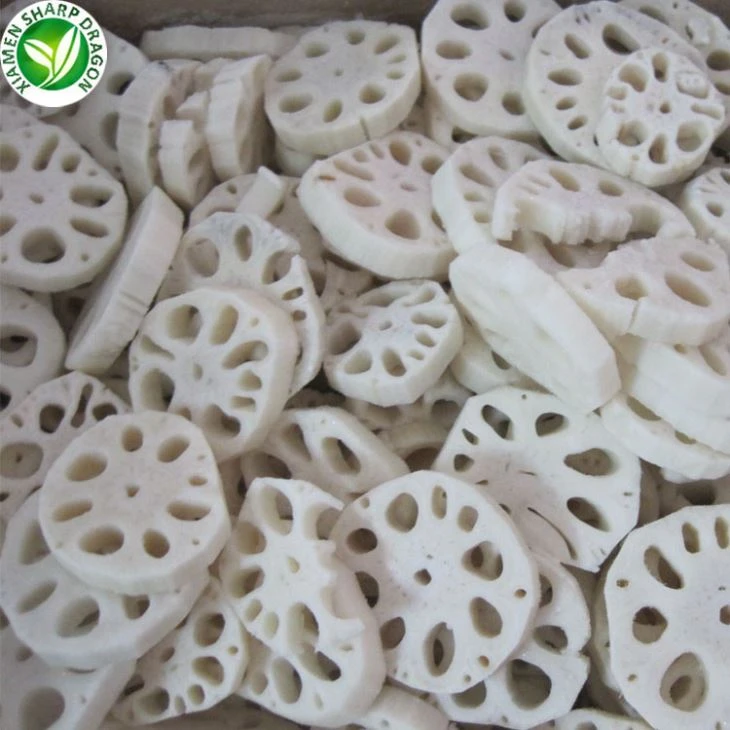
Request a pre-shipment lot list when several regions or harvest windows are possible. Match that list to the purchase order, label and shipping documents. For a lotus root sourcing format, treat photos as evidence of form and cut, not proof of farm origin.
This approach preserves the interesting botanical answer without weakening the commercial one. The vegetable comes from a mud-growing rhizome of an ancient, widely distributed aquatic species. The carton comes from the specific farms, factory, lots and shipment shown in its records.
Send product form, cut, pack, destination, expected volume and required origin detail through the XMSD inquiry form. We can align the sample and specification with the lot-level provenance your approval needs.
References
- Royal Botanic Gardens, Kew. Nelumbo nucifera Gaertn. Accessed August 27, 2026.
- World Flora Online. Nelumbo nucifera Gaertn. Accessed August 27, 2026.
- Flora of China. Nelumbo nucifera. Accessed August 27, 2026.
- Food and Agriculture Organization of the United Nations. Lotus production and cultivation profile. Accessed August 27, 2026.