


How Long Does Lotus Root Last? Storage by Form
Aug 26, 2019

Lotus root does not have one shelf life. Whole fresh rhizome, peeled slices, cooked leftovers and commercially IQF-frozen slices start with different processes and hazards. Keep fresh whole lotus root refrigerated and use the seller's date plus condition checks; refrigerate cut produce promptly; use cooked leftovers within the applicable food-safety guidance; and keep commercial frozen product continuously at or below its declared temperature until the labeled best-before date.
Do not revive the old "12 days in soil" or universal "three months in a freezer" rule. Reburying retail rhizomes in wet soil does not recreate a controlled farm-storage system and can introduce contamination. Freezer life depends on preparation, packaging, temperature history and whether the product is home-frozen or commercially processed. Nutrient loss is not the only endpoint; color, texture, dehydration, oxidation, package integrity and microbiological safety also matter.
For XMSD's current frozen lotus root category, the stated commercial shelf life is normally 24 months when stored continuously at ≤−18°C under proper frozen conditions. That is a product specification, not permission to extend any opened, thawed or temperature-abused case. Use the production date, lot, label, actual cold-chain records and destination rules.
Storage answer in one line: identify the form, record time and temperature, follow its validated or labeled limit, and discard for spoilage or unsafe handling even when calendar time remains.
Build the Clock From Form and Process
Whole unpeeled rhizome retains a protective surface and loses moisture differently from exposed slices. Once you cut or peel it, tissue damage accelerates browning and creates more handling surfaces. Once cooked, it becomes a prepared food with its own cooling and leftover rules. Once commercially blanched and frozen, quality is controlled through a frozen specification and cold chain.
Start the correct clock. For fresh retail product, note purchase or receiving date and any seller use-by date. For fresh-cut product, note processing and opening time. For cooked food, note when cooking ended and cooling began. For frozen cartons, use production date, best-before date and time of any temperature excursion.
The clock is not enough without temperature. FoodSafety.gov advises a refrigerator at 40°F/4°C or below and a freezer at 0°F/−18°C or below. A refrigerator door, crowded warm prep room and commercial cold store do not create the same history. Use a thermometer and record the condition where decisions matter.
Practical example: identify the right clock. A whole rhizome arrived Monday, was peeled Wednesday and cooked Friday. "Five days since delivery" does not decide the leftover limit. The fresh receiving record controls raw inventory; Friday's cooking and cooling record starts the cooked-food clock.

Whole Fresh Lotus Root: Refrigerate and Inspect
Choose intact rhizomes without soft collapse, slime, mold, leaking areas, severe cuts or abnormal odor. Soil on a raw agricultural product does not make spoilage harmless. Keep it separate from ready-to-eat food and contain any dirt. Do not wash far ahead unless your process controls drying and refrigerated storage; excess surface moisture can complicate handling.
Refrigeration slows quality loss. Research comparing 4°C and higher temperatures found that low temperature delayed water loss, starch changes and texture decline in specific lotus cultivars. Those experiments support the direction-cold is better than ambient-not a universal retail day count. Cultivar, harvest maturity, wounds, packaging and initial quality differed.
Protect the rhizome from dehydration without sealing visible moisture into an uncontrolled warm pack. Follow the supplier's packaging and label. In a business, rotate by received and lot dates, not appearance alone. Inspect a defined sample at receiving and before preparation; document loss when lots decline faster than expected.
Do not store retail lotus root in watered soil. Commercial field holding or postharvest systems control variety, mud or water, hygiene and temperature. A household container cannot validate those conditions. Refrigeration in clean food-contact packaging is the more defensible default.

Peeled or Cut Lotus Root Has a Shorter Decision Window
Cutting exposes cells and moisture, accelerates visible browning and transfers contamination from hands, knives and surfaces. FoodSafety.gov advises refrigerating peeled or cut produce at 40°F/4°C or below in covered containers or sealed bags. Prepare only the quantity that your operation can cook or pack promptly.
Acidulated water may slow discoloration in a recipe, but it is not a stand-alone safety validation or an excuse for long ambient holding. Define acid concentration, immersion time, drain and subsequent cook if you use it. Unmeasured "a little vinegar" produces inconsistent flavor and browning control.
Avoid giving a fixed fresh-cut life without knowing sanitation, package atmosphere, cut thickness, treatment and temperature. Research on fresh-cut lotus root often uses specific heat, modified-atmosphere or high-pressure processes; those study lives apply only to the tested system. A kitchen-cut slice in a basic container cannot inherit a 45- or 90-day research result.
Use color as a quality signal, not a complete safety test. A pale slice can still be mishandled, and normal enzymatic browning does not automatically mean dangerous spoilage. Discard for slime, mold, sour or putrid odor, gas, leaking pack, soft breakdown or time-temperature abuse. When uncertain, discard rather than taste-test.

Cooked Lotus Root Follows Leftover Controls
Once lotus root is in soup, braise, stir-fry or mixed vegetables, store the finished dish-not the raw ingredient. FoodSafety.gov lists 3 to 4 days refrigerated for soups and stews with vegetables or meat. Use that as a general home reference for comparable leftovers, while stricter local rules or validated business procedures take precedence.
Refrigerate perishable food within two hours, or within one hour when ambient temperature is above 90°F/32°C, according to FoodSafety.gov guidance. Divide deep pots into shallow containers or use an approved rapid-cooling method. A sealed large vessel can stay warm in the center even when its surface feels cool.
Label preparation date and discard date. Reheat only the portion needed, using the applicable safe process for the dish. Repeatedly warming and cooling the same container makes the true history harder to control. If the recipe includes meat, seafood, dairy or other ingredients, follow the most restrictive relevant rule.
Practical example: set a leftover decision. A lotus-root stew finishes cooking at 6 p.m. Tuesday and is cooled and refrigerated correctly that evening. A 3-to-4-day reference points to using it by Friday or Saturday, depending on the chosen house rule. An unrecorded pot left on the counter overnight should be discarded; the calendar cannot repair missing time-temperature control.

Commercial Frozen Lotus Root Uses the Declared Shelf Life
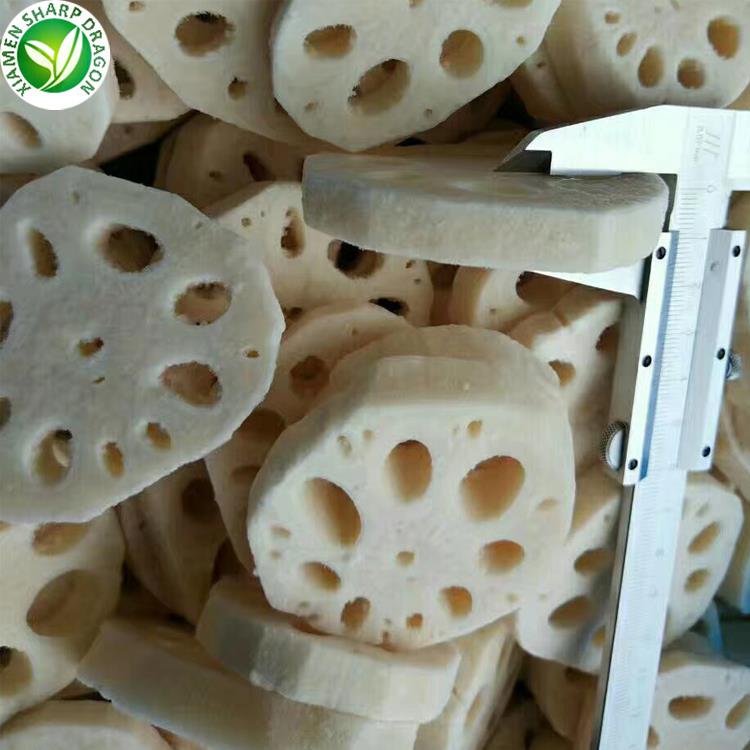
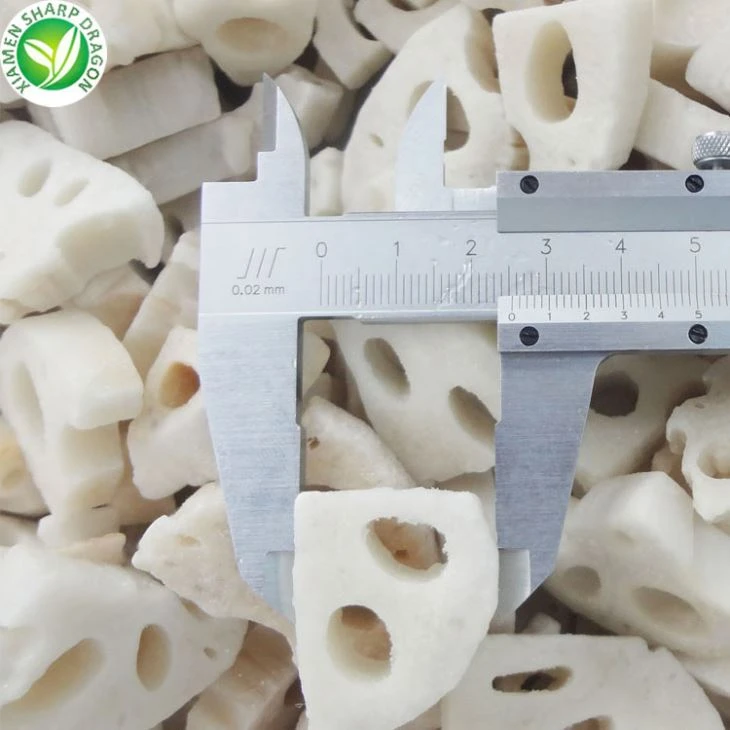
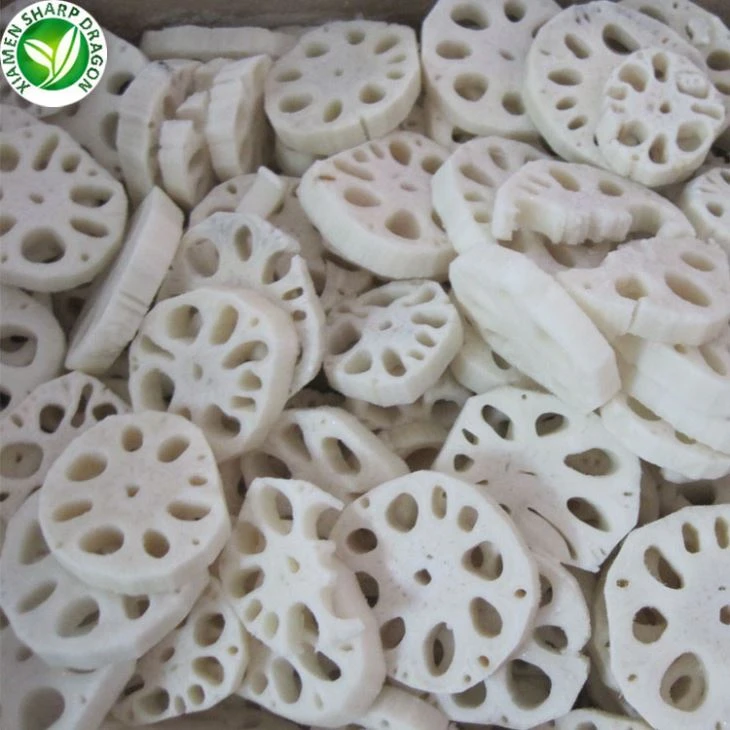
Commercial IQF lotus root is normally washed, peeled, cut, blanched as specified, cooled, frozen and packed under a defined process. XMSD's frozen lotus root category currently states a normal 24-month shelf life at ≤−18°C under proper continuous frozen storage. Confirm the exact SKU and label before ordering.
FoodSafety.gov explains that foods kept continuously frozen at 0°F/−18°C can remain safe indefinitely, while published freezer time limits address quality. A commercial best-before date still matters because the manufacturer has defined quality, packaging and market commitments. Do not extend it using the general safety statement.
Freezing does not reset weak raw material or sterilize the product. Keep cases frozen, protect packaging and follow cooking directions. Inspect for broken seals, water staining, severe ice buildup, fused mass, dehydration and abnormal color. A small amount of surface frost can differ from evidence of partial thawing; record and compare against the specification.
After opening, close the liner, minimize warm exposure and return unused product promptly. The original best-before date assumes intact declared packaging and proper handling. If an operation repeatedly opens the same 10 kg bag, validate an open-bag handling rule around humidity, frost, cross-contamination and dispensing time.
Calculate Remaining Commercial Life
A "24-month product" does not give every customer 24 months after receipt. Remaining life starts at production, not arrival. Collect production date, best-before date, shipment date, estimated arrival, release time and customer minimum-life requirement. Then account for distribution and stock rotation.
Worked example: a lot produced January 15, 2026 carries a 24-month life ending January 14, 2028. It arrives July 15, 2026, after 6 months. Nominal remaining life is about 18 months. If the distributor requires 15 months at delivery to its customer and expects 4 months of own storage, the lot leaves only 14 months after that storage, so it misses the requirement by about 1 month.
Use exact dates in the order system rather than converting everything to approximate months. Leap years and different month lengths create errors. Apply first-expired-first-out, verify carton coding against the pre-shipment list and block mixed-date pallets from being sold as one remaining-life value.
A temperature excursion can shorten acceptable quality even when the printed date remains. Record duration, product temperature, case location and condition. Follow the approved deviation process; do not simply subtract an arbitrary number of days. Qualified evaluation may require data logger review, inspection, sampling and supplier decision.
Separate Quality Failure From Safety Decisions
Browning, drying, toughness and loss of crispness can make lotus root commercially unacceptable without proving it unsafe. Slime, mold, gas, leaking liquid, putrid odor or a known unsafe time-temperature history are stronger discard or hold signals. Do not taste a questionable product to classify it.
Set objective quality limits: color reference, percentage broken pieces, free-flow, surface ice, channel cleanliness and cook-test bite. Add microbiological criteria and sampling methods appropriate to product and market. A photograph alone cannot replace measurements or laboratory results.
If a frozen case partly thaws, do not rely on "still cold" as the decision. Determine product temperature, duration, packaging condition and whether cross-contamination occurred. Follow your food-safety plan and competent authority guidance. Refreezing may preserve safety in some controlled circumstances but can worsen quality; it is not an automatic commercial release.
Keep claims specific. "Best quality through date X at ≤−18°C in unopened packaging" is auditable. "Lasts forever" is not. "Eat within three months or nutrients disappear" is also unsupported without a defined product and study.
Audit the Frozen Cold Chain at Every Handoff
Begin before loading. Match production and best-before dates to the approved lot list, inspect case condition, record cold-store temperature and verify the container is suitable and pre-cooled under the agreed procedure. Photograph representative pallets and the door area. A container set point alone does not prove product temperature or good loading practice.
Place data loggers according to the written plan. One logger beside a door can show a different history from product deeper in the load, while a logger attached to a wall may not represent cartons. Record logger serial numbers, positions, activation time and the shipment they belong to. Keep calibration status and retrieval instructions available.
At receiving, inspect the seal before opening and compare its number with shipping documents. Record arrival time, container set point, displayed return-air or supply-air values when available, and product temperatures using the approved sampling method. Check pallet stability, crushed or wet cases, ice around liners and evidence that doors were opened or product shifted.
Practical example: isolate an excursion. The center pallets measure −19°C, but three cases beside the door show fused slices and one liner has refrozen water marks. Hold the affected door-zone cases under their lot and pallet positions while reviewing logger data. Do not reject or release the entire container from one observation, and do not blend the suspect cases into sound stock before disposition.
After receipt, map storage locations to lot and expiry. Use first-expired-first-out and prevent older cases from being trapped behind new pallets. Record defrost cycles, alarms, door events and maintenance that could affect product. If the warehouse changes, compare air circulation, pallet spacing and monitoring rather than assuming the same thermostat setting creates the same product condition.
At picking and dispatch, limit dock exposure and stage only the quantity that can load promptly. Scan carton codes, inspect liner closure on open foodservice cases and record departure condition. Remaining shelf life is useful only if the temperature evidence remains connected through the last handoff. A complete date calculation with a missing week of cold-chain history is not a complete acceptance file.
Trend recurring failures. Door-zone fusion, wet cartons, broken seals, late logger retrieval and short remaining life point to different corrective actions. Assign each failure a limit, evidence and response. Repeatedly granting informal waivers makes the printed 24-month life less reliable because the actual distribution assumptions are no longer controlled.
Verify the pack barrier during shelf-life review. A punctured inner liner can accelerate dehydration and invite contamination even when the outer carton looks sound. Record liner material, seal or closure, punctures and headspace ice. If a new bag supplier or case format is introduced, treat it as a shelf-life change trigger and repeat the relevant transport and storage checks.
Use retained samples carefully. They can show color, free-flow and cook-test drift under the reference cold store, but they do not represent every customer warehouse or damaged case. Compare a complaint sample with the retained lot under one method, then review both histories. A sound retained sample does not automatically disprove a downstream excursion, and a weak retained sample can reveal a lot-wide issue.
Write a Storage Specification That Can Be Audited
State product form, process status, packaging, storage temperature, shelf-life period and start point. Add whether the life applies unopened, how cases are coded, minimum remaining life at shipment and receipt, and the open-pack rule. Link the exact cut and use through the lotus root application guide.
Add temperature evidence: pre-cooling or freezing record as applicable, cold-store log, loading condition, container set point, data logger plan and receiving temperature method. The frozen packaging workflow should keep label date, lot and pack version connected.
Define deviation ownership and evidence. A case outside temperature limit needs a recorded disposition, not an informal promise. State who reviews logger data, which samples are taken, whether cooking or sensory tests are needed and how affected pallets are isolated. Preserve the reason for release or rejection.
Keep origin and storage separate but linked. The lotus root origin guide identifies growing and processing lots. Storage records then show what happened to the specific finished lot after packing.
The Practical Answer
At home, refrigerate whole fresh lotus root promptly, prepare cut pieces soon, and treat cooked dishes as leftovers under the applicable 3-to-4-day refrigerator guidance. Discard for unsafe handling or spoilage. Use dates and a thermometer instead of storing it in watered soil.
For a commercial frozen order, use the SKU's label and specification. The current XMSD category reference is normally 24 months at ≤−18°C, unopened and continuously frozen. Calculate remaining life from production and keep logger, lot and pack evidence through delivery. The frozen slice format still requires order-specific confirmation.
That answer is less dramatic than one universal number, but it is usable. Form determines the storage system; time and temperature determine remaining life; condition and validated limits determine acceptance. Record the decision beside the lot so the next person does not restart from an unsupported guess.
For a frozen lotus root brief, send cut, pack, quantity, destination, minimum remaining life and temperature-record requirements through the XMSD inquiry form. We can align dates, lot coding and cold-chain evidence.
References
- FoodSafety.gov. Cold Food Storage Chart. Accessed August 27, 2026.
- FoodSafety.gov. Maintain Food Safety While Cutting Food Waste. Accessed August 27, 2026.
- Gong X, et al. Examining starch metabolism in lotus roots during post-harvest storage at different temperatures. Food Chemistry. 2024.
- Min T, et al. Effects of different temperatures on storage characteristics of lotus root. Food Chemistry. 2021.