


Is Frozen Cauliflower Cooked? Blanching, Safety, and Buyer Checks
Aug 27, 2019

Most plain frozen cauliflower is not fully cooked. It is commonly washed, trimmed, cut, and briefly blanched in hot water or steam before freezing. That short heat treatment starts the cooking process, so thawed florets may feel softer than fresh raw cauliflower, but it does not automatically make the product ready to eat. It also does not sterilize the cauliflower. A plain IQF ingredient, a fully cooked frozen side dish, and a prepared frozen meal are three different products.
The label or agreed product specification gives the decisive answer. If it says "cook before eating," follow the stated method. If a product is presented as fully cooked or ready to eat, its process, handling controls, and instructions should support that claim. For importers, food manufacturers, distributors, and foodservice teams, the practical question is not simply whether heat was used. Buyers need to know the heat-treatment status, intended use, floret size, required final cooking step, and acceptance criteria for the finished application.
The short answer: Frozen cauliflower is usually blanched, which means partially heat-treated, but it should not be treated as fully cooked or sterile unless its label and specification explicitly say so.

Blanched, Fully Cooked, and Sterilized Are Not the Same
Blanching is a short heat treatment followed by rapid cooling. Its main purpose in frozen vegetables is to slow enzyme activity that would otherwise damage flavor, color, and texture during storage. Because the treatment is brief, it only partially cooks the cauliflower. Florets can become slightly more tender, yet they still need the preparation required by the product label and the intended dish.
Full cooking is different: the product is heated to produce the intended edible texture and, where food safety depends on a kill step, to meet the validated process for that product. Sterilization is a much stronger term. Neither blanching nor freezing should be described as sterilizing ordinary frozen cauliflower. USDA food-safety guidance explains that freezing slows microbial activity but does not reliably destroy all microorganisms, while blanching is brief or partial cooking used mainly to protect vegetable quality.
| Product state | What the heat step means | How to decide what to do |
|---|---|---|
| Fresh raw cauliflower | No commercial blanching or cooking step | Wash and prepare for the selected raw or cooked application |
| Plain IQF cauliflower | Usually washed and briefly blanched or steamed before quick freezing | Treat it as partially heat-treated and follow the package or case instructions |
| Fully cooked frozen product | A cooking process has been applied for the defined finished product | Follow reheating, holding, or ready-to-eat instructions and verify the product classification |
Why Cauliflower Is Blanched Before Freezing
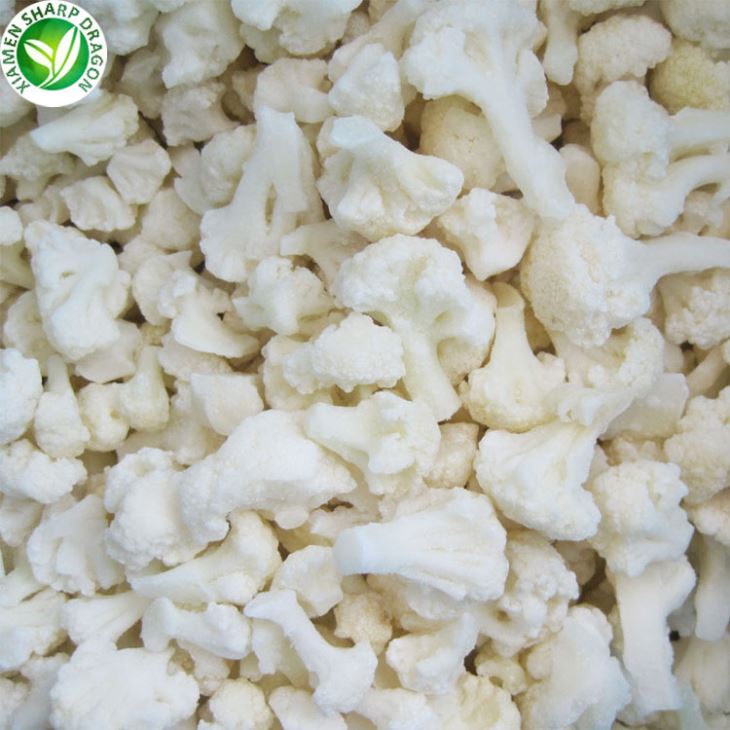
Quick freezing preserves the condition reached before the product enters the freezer, but freezing alone does not stop every quality-related enzyme. This is why commercial frozen-vegetable lines commonly use water blanching or steam blanching before IQF freezing. The current Codex standard for quick-frozen vegetables defines quick-frozen cauliflower as washed and sufficiently blanched to stabilize color and flavor during normal marketing. That wording describes quality control; it does not declare the product fully cooked or sterile.
Blanching conditions depend on the product form and the process. The National Center for Home Food Preservation, for example, gives a three-minute water-blanching direction for one-inch cauliflower pieces in home freezing. That is useful evidence that blanching is brief and size-dependent, but it is not a universal commercial processing specification. A factory must set and control its own parameters for the agreed floret size, equipment, load, cooling step, and product requirement.
At XMSD, our current IQF frozen cauliflower specification describes the processing type as washed, trimmed, blanched or steamed, IQF frozen, and packed. For a buying project, we recommend confirming the exact process statement in the order specification rather than assuming that every frozen cauliflower SKU has the same treatment.
Does blanching keep cauliflower white?
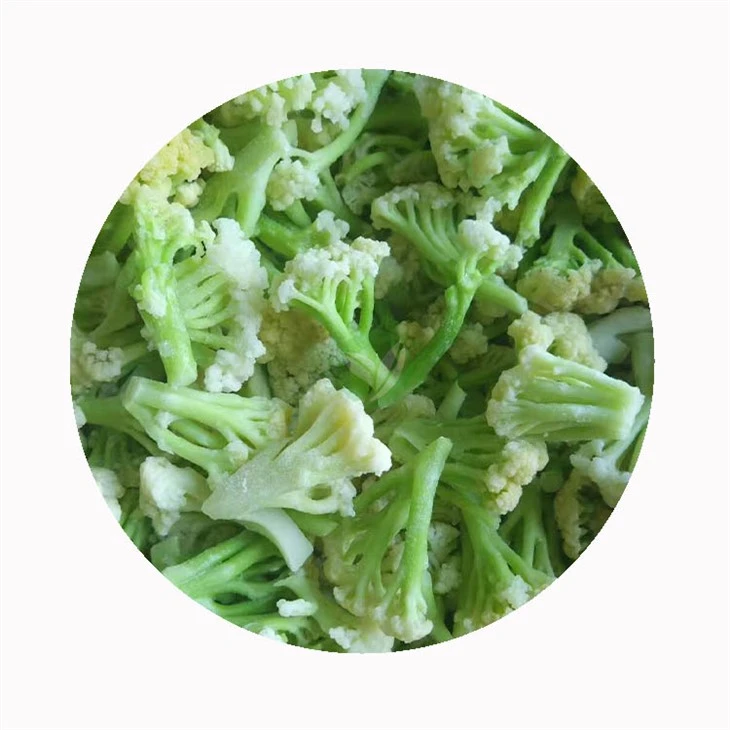
Blanching helps limit enzyme-driven changes, but it should not be described as a whitening or sterilizing treatment. Final color also depends on the raw material, maturity, trimming, blanching control, cooling, freezing speed, packaging, storage time, and temperature history. Natural white to cream tones and some green stem are normal product characteristics. Buyers should approve a realistic color range against a sample instead of specifying an artificial "pure white" appearance.

Do You Still Need to Cook Frozen Cauliflower?
For a plain frozen product, the safest general answer is to follow the package directions and cook it when the label requires cooking. The Food Standards Agency advises that frozen vegetables should be thoroughly cooked and that consumers should follow the packaging instructions, especially when a frozen vegetable might otherwise be used in a cold salad or smoothie. EFSA likewise notes that blanched frozen vegetables can still be contaminated after or around processing and that risk is lower when they are cooked properly and handled according to the label.
Safety note: Blanching reduces some surface microorganisms, but it is not proof of sterility and freezing does not make contaminated food safe. Do not rely on the word "frozen" or on a white color as evidence that the product can be eaten without cooking.
Product format changes the answer. Plain florets and cauliflower rice are normally ingredients. A seasoned cauliflower side, breaded cauliflower product, puree, or complete frozen meal may be partially cooked, fully cooked, or designed to cook from frozen. The front-of-pack description is not enough: check the preparation panel, ingredient statement, storage directions, and any "ready to eat" or "cook before eating" statement. Foodservice case labels and industrial specifications should be equally explicit.
Thawing also does not finish the cooking step. In many applications, cauliflower can go directly from frozen into a hot process, which limits handling and can help protect texture. If a formulation requires thawing, control time and temperature and use the thawed product promptly under the site's food-safety plan. A buyer should never turn a cook-before-eating ingredient into a cold ready-to-eat component merely because it was blanched before freezing.

How to Cook Frozen Cauliflower Without Making It Mushy
Because blanching and freezing have already softened some cell structure, frozen cauliflower usually needs less cooking than a comparable fresh piece. The right method depends on the final dish. Roasting or air-frying can remove surface moisture and build browning; steaming gives a more even, moist texture; boiling is useful for soup or puree but can make florets waterlogged if the product stays in excess water too long. Add frozen pieces directly to stir-fries, casseroles, sauces, and ready meals only when the cooking sequence provides enough heat and the package permits that method.
Size is the first variable to control. Small florets and cauliflower rice heat and soften faster than large florets or thick green stems. A mixed-size bag can produce an uneven result: small pieces break down while larger pieces remain firm. For a tender-crisp side dish, stop when the thickest selected piece has the required bite and has been heated according to the label. For puree or soup, a softer endpoint may be correct. Color alone is not a reliable doneness test.
Surface ice and released water also affect performance. Separate loose IQF pieces before cooking, avoid crowding a roasting tray, and do not add more water than the method needs. Large ice clumps can indicate that pieces have thawed and refrozen together or that moisture entered the pack, although clumping by itself does not prove that the food is unsafe. When the temperature history is uncertain or the package is damaged, the buyer or kitchen should follow its rejection and food-safety procedures rather than trying to judge safety by appearance alone.

What B2B Buyers Should Confirm Before Approving a Product
For B2B procurement, "blanched" is only the beginning of the specification. The buyer must connect the process status to the intended application. A retail steam-in-bag vegetable, a foodservice side dish, an industrial soup ingredient, and a cold prepared salad do not have the same safety controls or texture target. We recommend resolving the decision in this order:
- Classify the intended use. State whether the cauliflower will receive a validated cooking step, reheating only, or no further heat treatment.
- Confirm the process description. Record whether the product is raw, water-blanched, steam-blanched, partially cooked, or fully cooked, together with the manufacturer's handling instructions.
- Approve application performance. Test the proposed floret size or rice cut in the real recipe and assess tenderness, breakage, released water, color, flavor, and yield.
- Set the evidence and labeling package. Agree on the specification, process flow, label wording, lot traceability, test documents, and destination-market requirements relevant to the product.
- Define arrival acceptance. Check seal and carton condition, product temperature, free-flowing state, abnormal ice, odor after proper preparation, and the agreed defect tolerances.
1. Separate process safety from eating quality
A short blanch can be well controlled for color and enzyme inactivation while still being insufficient for a ready-to-eat claim. Ask which later step controls the hazard for the intended use and who owns that step: the frozen-vegetable processor, the food manufacturer, the caterer, or the consumer. A missing intended-use statement is a risk signal. Review the process flow and supporting records instead of assuming that a "steam-blanched" description equals fully cooked. XMSD's current processing and quality-control equipment overview provides context for washing, steaming, IQF freezing, packing, inspection, and testing stages.
2. Approve floret size after the real cooking test
Two cauliflower lots can both be correctly blanched and still perform differently because of floret diameter, stem ratio, maturity, blanching intensity, and freezer history. A visual frozen sample is not enough. Cook the candidate product in the intended equipment and formulation, then define an acceptable range for bite, breakage, color, water release, and piece integrity. Risk signals include broad size variation, excessive fines, unusually soft florets before the planned cook, or a result that changes sharply between sample and shipment.
3. Make packaging and arrival checks part of the cooking decision
Packaging and cold-chain condition influence how frozen cauliflower portions, heats, and holds texture. Torn inner bags, crushed wet cartons, heavy internal snow, large fused blocks, or missing lot marks justify further investigation. Agree on pack format, sealing, label instructions, carton marks, temperature evidence, and arrival sampling before shipment. The XMSD frozen-food packaging guide shows the kinds of inner-pouch, carton, label, and cold-chain details buyers can compare. The acceptance decision should follow the contract and food-safety plan, not a single cosmetic observation.

XMSD sourcing note: We can discuss frozen cauliflower form, floret size, blanching or steaming requirement, application testing, packing format, and buyer-specific documentation. Tell us the final cooking process and texture target so the specification can be reviewed against the intended use.
Final Thoughts from XMSD
Frozen cauliflower is generally blanched rather than fully cooked. That distinction explains why it softens faster than fresh cauliflower but may still require a complete cooking step. The reliable decision comes from the label and product specification: identify the process status, intended use, final cook, piece size, and acceptance evidence. For buyers, testing the actual product in the actual recipe is the clearest way to connect safe handling with the desired texture.