


Red Dragon Fruit as a Color Ingredient: Process It Gently
Nov 28, 2019

Red-flesh dragon fruit can supply edible fruit, visible black seeds and a vivid pink-purple color in one ingredient. That combination suits smoothies, frozen desserts, chilled dairy, fruit preparations and other products where the fruit itself belongs in the recipe. White-flesh dragon fruit offers the seed-speckled appearance with far less color transfer, while red-flesh material carries water-soluble betalain pigments into the surrounding matrix.
The color is useful but not indestructible. Heat, oxygen, light, pH, water activity, storage temperature and contact time can alter betalain retention. A magenta raw sample may therefore produce a different shade after pumping, pasteurization, aeration, freezing, thawing and shelf storage.
The practical answer to "what is dragon fruit used for?" is application-specific: use pieces when visible fruit and seed texture matter, pulp or puree when broad color distribution matters, and a standardized pigment preparation only when its identity and legal status fit the market. Approve the served result rather than assuming the raw-fruit photograph predicts it.
Fast selection rule: begin with the product's desired visual signal. Choose whole fruit or large pieces for identity, dice for distributed inclusions, and pulp or puree for color spread. Then challenge that form in the actual pH, heat, oxygen, light, freeze-thaw and storage sequence.

Separate Fruit Function from a Color-Additive Claim
Red dragon fruit may enter a formulation because the finished food needs recognizable fruit, mild flavor, seed texture, soluble solids, moisture and color together. In that case, the development team is handling a food ingredient with several functions. The recipe, ingredient declaration and product story need to reflect the actual supplied form and quantity.
A concentrated preparation used mainly to color another food raises a different regulatory question. The legal definition, permitted source, extraction route, carrier, use category, maximum level and labeling can vary by destination. Fruit origin alone does not create blanket permission. U.S. FDA guidance, for example, treats substances added to impart color within the color-additive framework unless a specific exclusion applies.[1]
Keep three files separate during development: the commercial ingredient specification, the application trial record, and the destination-market regulatory assessment. A successful bench shade cannot replace legal clearance, and a permitted ingredient cannot prove that a chosen lot will survive the process.
Nutrition language also needs its own evidence path. A color result does not establish a physiological benefit. General nutrient and research context belongs in the pitaya benefits evidence guide; color process approval remains a technical and sensory decision.
Flesh Color Changes the Ingredient's Job
Skin color does not reliably reveal the exact flesh function. Red-skinned fruit may contain white or colored flesh, and commercial names are used inconsistently. A sample brief should name flesh color, commercial type or cultivar where support exists, origin, maturity, cut and intended finished food.
White flesh creates a pale base with prominent black seeds. It can work when the designer wants recognizable dragon-fruit identity without turning the surrounding yogurt, beverage or dessert bright pink. Red or purple flesh contributes stronger visual impact and can stain adjacent components. That migration may be the desired effect in a blended drink and a defect in a layered cup.
Seed distribution also affects perception. Intact black seeds provide a familiar visual cue and a light textural signal. Aggressive milling can break or disperse them, changing appearance. Screening can reduce their presence, yet it also changes yield and the ingredient's recognizable character.
Resolve identity before comparing prices. The dragon fruit flesh-type guide helps distinguish skin, flesh and commercial naming. A white-flesh cube and a red-flesh puree are not substitutes merely because both invoices say dragon fruit.

Betalain Color Has a Process Window
The red-purple pigments in colored dragon fruit belong to the betalain family, particularly betacyanins. They are water soluble, so juice released from cut or thawed flesh can color a surrounding aqueous phase quickly. That same mobility exposes the pigments to the food matrix and processing environment.
Research reviews identify temperature, light, oxygen, pH, water activity and matrix composition as interacting stability factors.[2] A single rule such as "keep below one temperature" is incomplete because duration, oxygen exposure and acidity change the outcome. Short heating and long holding are not equivalent even when the peak temperature matches.
Betalains often perform best in acidic to near-neutral foods rather than alkaline systems, but the optimum is matrix-dependent. Published observations from model juice or extracts are useful for selecting trial conditions; they are not automatic specifications for a commercial fruit lot. Protein, sugar, hydrocolloids, metal ions and antioxidants can all alter the measured color path.
Light and oxygen deserve attention after production as well as during mixing. A clear cup displayed under strong retail light presents a different exposure from an opaque carton kept frozen. Headspace, seal integrity, filling temperature and storage duration can turn a stable laboratory beaker into an unstable market pack.
Use Product Form to Control Color Spread
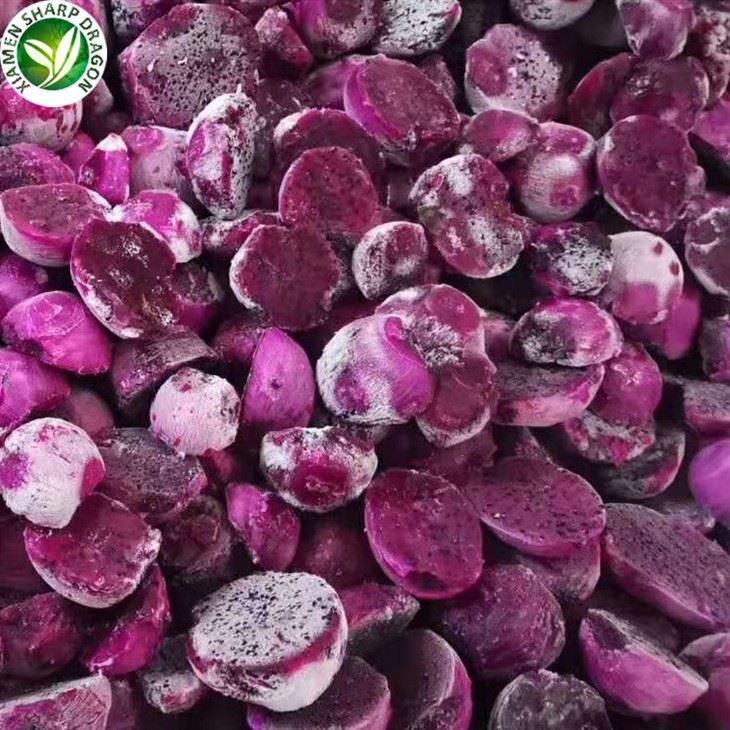
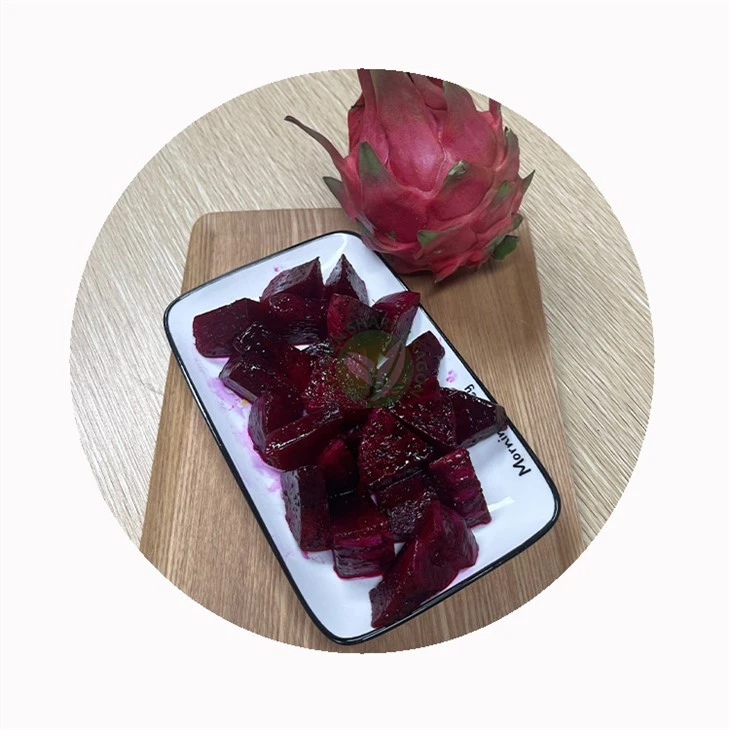
Whole peeled fruit or large chunks retain localized color and a strong fruit identity. They fit bowls, dessert garnish and recipes where a visible piece can be handled gently. The tradeoff is portion variation, longer thaw time and greater risk of breakage or surface juice during handling.
Dice distribute pieces and seeds more evenly. A specified size range helps portioning, but nominal dimensions alone do not describe fines, broken edges, clumps or thaw softness. A colorful dice may still disappear structurally after high-shear mixing.
Pulp and puree spread pigment efficiently and support pumping or dosing. Their performance depends on consistency, seed treatment, soluble solids, acidity, added ingredients and frozen block or bag format. A smoother material gives fewer visible fruit cues, so the product may rely more heavily on flavor and declaration for identity.
The frozen dragon fruit range provides starting directions for whole, cut, pulp and puree formats. Translate the catalog direction into a request containing flesh color, size or consistency, seed preference, ingredient statement, pack unit, quantity and trial process.

Match the Ingredient to the Food Matrix
A smoothie base usually rewards rapid color release and tolerates dispersed seeds. Low-temperature blending can protect a bright shade, yet the trial still needs a defined fruit loading, blending time, ice or water ratio, serving delay and light exposure. Compare the drink at preparation and at the end of its realistic holding period.
Yogurt introduces acidity, protein, fermentation variables and refrigerated storage. A 2024 study demonstrated that a specifically stabilized fermented red-dragon-fruit preparation maintained color well in its tested stirred-yogurt system.[3] The finding supports product-development potential, not universal equivalence between that preparation and ordinary frozen puree.
Frozen desserts offer low-temperature storage, which can favor pigment retention. The mix may still undergo pasteurization before fruit addition, aeration during freezing and repeated temperature changes during distribution. Adding fruit after the hottest stage may reduce thermal exposure, provided hygienic design and the validated process permit that sequence.
Bakery fillings and heated sauces impose a tougher color challenge. Time-temperature history, oxygen, water movement and neighboring ingredients can shift the hue. Use a trial that includes baking or cooking, cooling, pack closure and intended shelf storage. A bench mix viewed before heating answers the wrong question.

Build a Color Trial That Can Be Repeated
Start with a written target rather than "bright enough." Record a reference lot, fruit addition rate, viewing background, container, lighting and target observation times. Instrumental L*a*b* readings can supplement photographs, but the method, instrument geometry and sample preparation must remain constant.
Run a small screening design around the variables that matter in the plant. That may mean three fruit doses, two addition points and two packaging options. Keep the base formula and batch scale controlled. Record pH before and after addition, product temperature, mixing energy, entrained air, heat history and fill conditions.
Measure more than shade. Note aroma, fruit identity, seed distribution, sedimentation, serum separation, viscosity, piece survival and staining of adjacent layers. A darker sample can fail if it creates excessive bleed, an unfamiliar flavor balance or a texture defect.
Set observation points from the real selling cycle. A refrigerated cup might be assessed after filling and at several shelf checkpoints. A frozen smoothie portion might be examined in frozen condition, immediately after blending and after a defined service hold. Retain an unopened control at each interval where feasible.
Calculate color change only from paired measurements. Delta E can summarize distance in a chosen color space, while separate L*, a* and b* values reveal whether the sample became lighter, less red or more yellow. The acceptable difference must be linked to sensory review and brand expectation, not copied from an unrelated study.
Control Freeze-Thaw Juice Instead of Treating It as Waste
Freezing disrupts fruit tissue to a degree that depends on raw material, freezing conditions and subsequent handling. During thawing, colored juice can leave the piece. In a smoothie that liquid contributes desired color; in a pale topping it may create uncontrolled staining. The same drip has opposite value in two designs.
Define whether the pack enters the recipe fully frozen, partly tempered or completely thawed. If thawed, specify time, temperature, container and whether released juice remains with the fruit. Draining before weighing changes both yield and color dose. Comparing drained fruit from one supplier with undrained fruit from another produces misleading results.
Use mass balance in the trial. Weigh the frozen sample, recovered pieces and separated liquid. Report retained-piece percentage and liquid percentage alongside appearance. For a 1,000-gram sample yielding 890 grams of pieces and 110 grams of liquid, the liquid fraction is 110 ÷ 1,000 × 100 = 11%. The decision then asks whether that 11% is useful, acceptable or lost in the chosen process.
Temperature abuse can create larger ice crystals, clumping and extra structural damage. Inspect the unopened pack for free ice, fused units and deformation, then repeat the defined thaw. Surface color cannot prove that the cold chain was controlled; combine observation with shipment records and any agreed temperature evidence.

Decision Scenario 1: Release a Chilled Yogurt Shade
Practical example: In this representative chilled-yogurt scenario, the decision function is selecting an addition rate and process point that preserve an approved color through shelf life. A developer compares red dragon fruit puree at 4%, 6% and 8%. Half of each dose enters before the final high-temperature stage; the paired half enters in a validated hygienic step after cooling.
The team records pH, L*a*b* values, visual shade, seed distribution, viscosity and whey separation on filling day and at planned refrigerated checkpoints. All cups use the same base, fill volume, package opacity and storage condition. A light-exposed display set is kept separate from the protected control.
Eight percent produces the strongest initial shade but moves flavor and viscosity beyond the brief. Four percent remains too pale near the end of storage. Six percent added after cooling holds the approved balance in the tested line. The action is to lock that dose and process point, then repeat it at pilot scale before commercial release.
This is a formulation-and-process decision. It does not establish a health claim, legal color-additive status or equivalence to another supplier's puree. Those reviews retain their own evidence and approval owners.
Decision Scenario 2: Choose Dice or Puree for Smoothie Portions
Worked example: In this representative café scenario, the decision function is choosing the ingredient form that gives repeatable color and dosing during high-volume service. The program prepares 300-gram frozen portions. The candidate forms are 15-millimeter dice and puree blocks. Both are tested at equal fruit mass with the same liquid, blender and cycle.
Dice give a recognizable ingredient story but vary more when clumps bridge the scoop and individual portions capture unequal numbers of pieces. Puree distributes shade evenly yet needs a pack geometry that releases quickly without prolonged tempering. Staff record portion weight, blend time, final color and residue left in each bag.
The puree wins the base-color role. A small measured quantity of dice is retained as a visible topping only where the service design can control it. Packaging shifts from one large block to single-batch units sized for the blender load. The team approves the two forms against different functions rather than forcing one to do both jobs.
Unlike the yogurt scenario, the main variable here is operational repeatability, not refrigerated pigment retention. The useful result comes from weighing portions and timing service, then matching pack unit to the equipment cycle.
XMSD Experience: Approve Color with a Defined Viewing Method
In our XMSD sample reviews, a phone photograph is a useful record but a weak color specification by itself. Camera processing, screen settings, room lighting, background and exposure can make one sample look dramatically different. We pair images with a written preparation and viewing method.
For red dragon fruit, we record flesh type, lot, form, sample mass, thaw route, retained juice, container and observation time. When instrumental readings are available, the method travels with the values. When they are not, a physical retain and controlled visual panel provide a more honest comparison than edited sales pictures.
We also separate color strength from usable yield. A deeply colored lot may carry extra surface liquid or excessive broken material. The sample record includes solid recovery, released liquid, piece integrity, flavor and aroma so the visual advantage is judged with the whole application.
The dragon fruit color, Brix and yield guide extends that measurement logic. Set order limits only after the candidate format has passed the customer's actual preparation route.
XMSD Experience: Pack Size Is Part of Pigment Protection
A separate lesson from our XMSD frozen-fruit work is that repeated partial thawing can defeat a sound ingredient choice. A foodservice kitchen may open a large bag many times, expose the surface to warm air, remove an uneven portion and return the remainder to cold storage. The resulting clumps, frost and color variation are handling outcomes, not simply raw-fruit defects.
We match the inner unit to one batch, shift or controlled thaw event. A smaller bag can reduce exposure and simplify mass balance; a larger unit may reduce packaging and labor when the full amount enters a closed production system. Seal strength, oxygen barrier, light protection and code legibility are reviewed with the operational pattern.
Color monitoring continues after packing. Retains from the first, middle and final production stages can reveal whether long tank residence or repeated air contact creates drift. The release record links each retain to the production code, packaging batch and storage condition.
Use the frozen packaging framework to structure pack and cold-chain questions. Final material, unit weight, labeling and pallet decisions remain order-specific.
Write a Specification Around the Served Result
Build your specification from identity: red or white flesh, commercial type where relevant, origin, ingredient statement and frozen form. For pieces, add nominal size, size distribution, shape, seed appearance, peel absence, defect categories, broken-piece policy and free-flow expectation. For pulp or puree, define consistency, screen treatment, seed policy, soluble-solids reporting and any added ingredients.
Next describe the application test. State dose, base matrix, pH range, mixing sequence, time-temperature treatment, fill, storage and reading schedule. Attach the approved reference result and define how a disputed sample will be prepared. A color limit without sample preparation invites disagreement.
Add safety, quality and documentation requirements appropriate to the product and destination. Microbiological criteria, foreign-material controls, pesticide or contaminant expectations, traceability, certificate needs and legal labeling belong in the order file. Pigment performance never substitutes for food-safety approval.
Finally, align the pack with use. Record inner unit, net weight, liner or bag construction, seal, carton, code format, pallet pattern and transport temperature. The sample and commercial production should follow the same agreed handling logic closely enough that the application result remains meaningful.
A Practical Answer to Dragon Fruit Use
Dragon fruit works as a visible fruit, a seed-speckled inclusion, a puree base and a strong natural color contributor. Red flesh is especially useful where a pink-purple shade supports product identity; white flesh serves designs that want the recognizable seeds without broad color migration.
The winning form depends on the matrix and line. Cold blended drinks, chilled dairy and frozen desserts often provide promising conditions, while long heat exposure, oxygen, light and unsuitable pH can erode the expected shade. Pieces, dice and puree need separate trials because their color release, texture, yield and dosing behavior differ.
Approve dragon fruit through a repeatable sequence: identify the flesh and form, define the desired visual job, reproduce the plant process, measure color and yield through realistic storage, check legal status, and lock the pack around actual use. That turns a striking fruit into a controlled ingredient.
Share the flesh color, cut or puree direction, recipe, processing temperatures, storage period, monthly volume and pack unit. XMSD can review the frozen format and sample plan against the intended use.
References
- U.S. Food and Drug Administration. Color additives: definitions, approval and labeling questions.
- Cortez and colleagues. Betalains and their applications in food: processing, stability and industrial opportunity. Food Chemistry: Molecular Sciences, 2022.
- Kamaludin and colleagues. Stabilised betacyanins from fermented red dragon fruit drink in stirred yogurt. Future Foods, 2024.
- Muhamad and colleagues. Betacyanin stability in dragon fruit pulp and peel powders during storage. Food Science & Nutrition, 2024.
- Choo and colleagues. Dragon fruit postharvest profile, processing and food-product applications. Foods, 2023.