


Fresh vs Dried Apricots: Nutrition and Serving Weight
Jan 16, 2019

Fresh and dried apricots come from the same fruit, but water removal makes them very different servings. Dried apricots pack more fruit solids into each gram and bite. Compare realistic weights, ingredients and intended use-not equal cups or equal 100-gram piles-before deciding which form fits.
Health boundary: This article provides general food and sourcing information. People with kidney disease, dialysis, a prescribed potassium restriction, diabetes managed with a defined carbohydrate plan, sulfite sensitivity or recurring digestive symptoms should use personal advice from a qualified professional.

The Short Answer
Neither fresh nor dried apricot is automatically "better." Fresh apricot gives you more water and food volume for a given amount of energy. Dried apricot is portable, shelf-stable and concentrated, so a smaller serving supplies more calories, carbohydrate, fiber and potassium than the same weight of fresh fruit. The right choice depends on portion, ingredients, tolerance and application.
A useful published comparison is 70 grams of fresh apricot-about two medium fruits-versus 33 grams of dried apricot-about a quarter cup. The fresh reference provides approximately 34 calories, 1.4 grams of fiber and 181 milligrams of potassium. The dried reference provides about 78 calories, 2.4 grams of fiber and 378 milligrams of potassium. These are different serving weights, not proof that drying "adds" nutrients.
Drying removes much of the water and leaves a concentrated matrix. That makes it easy to eat the equivalent of several fruits quickly. Read the label for added sugar and sulfites, weigh the portion when accuracy matters, and keep medical claims out of the comparison.
A Serving-to-Serving Comparison
The table uses the serving weights in the South Dakota State University Extension apricot fact sheet. The values are approximations for education, not a legal declaration for every product. Commercial labels need the actual product description, formula, approved data source and destination-market method.
| Reference | Fresh apricots | Dried apricots | Why it differs |
|---|---|---|---|
| Serving description | 2 medium | 1/4 cup | Count and volume are not equivalent measures |
| Serving weight | 70 g | 33 g | Drying removes water |
| Energy | 34 kcal | 78 kcal | More fruit solids per gram in dried fruit |
| Fiber | 1.4 g | 2.4 g | Concentrated solids and different portion basis |
| Potassium | 181 mg | 378 mg | Mineral concentration rises as water falls |
| Vitamin C | 7 mg | 0 mg in this sheet | Vitamin C is sensitive to processing and storage |
The comparison answers a serving question, not a per-gram question. If you compare both forms at 100 grams, dried apricot looks far more concentrated because 100 grams dried represents much more original fruit. If you compare one piece with one piece, piece size and final moisture can still differ. State the weight every time.
Also decide whether your question is nutrition, satiety or formulation. For nutrition, the gram weight and actual food entry control the answer. For satiety, fresh fruit's water and volume may matter. For formulation, the water introduced into a batter, cereal, sauce or dairy product can change texture and shelf life. One table cannot collapse those decisions into a single winner.
If a serving table uses cups, translate the portion to grams before comparing suppliers or recipes. Cup measures depend on piece size, packing and whether fruit is whole, halved or diced. Weigh five normal portions, calculate the average and record the range. That small check prevents a loose "quarter cup" from drifting between operators and production days.

Water Removal Explains Most of the Difference
Fresh apricot is water-rich. Drying lowers moisture so the fruit can be stored and transported differently. Energy, carbohydrate, fiber and minerals occupy a larger share of each gram after water leaves. This is concentration, not creation. The same principle explains why a handful of raisins represents more grapes than a handful of fresh grapes.
Utah State University Extension gives a home-preservation estimate in which desired dried apricot weight is approximately fresh fruit weight multiplied by 0.175. That ratio is a planning value, not a universal industrial yield. Variety, ripeness, stone removal, trimming, drying method and target final moisture all change actual recovery.
This is why "equal weight" and "equal fruit-equivalent" are different comparisons. Equal weight tells you what 100 grams of each product contains. Fruit-equivalent asks how much original fruit was used. A normal eating comparison asks what someone is likely to serve. Choose one question and label it clearly.
Worked Example: Estimate Drying Yield and Portion Count
Worked example: A test kitchen has 20 kilograms of sound whole fresh apricots. After removing stones and damaged material, it records 86% edible yield:
20 kg × 0.86 = 17.2 kg fresh edible apricot
Using the Utah State planning factor of 0.175, estimated dried output is:
17.2 kg × 0.175 = 3.01 kg dried apricot
At a 33-gram menu portion, the theoretical portion count is:
3,010 g ÷ 33 g = 91.2, or 91 complete portions
Actual output must be measured after drying and cooling. Final moisture, pieces that fail quality inspection, handling loss and portion overfill reduce saleable count. Do not use the 0.175 factor as a purchase guarantee. Run a representative trial, record final weight and moisture or water activity according to the product plan, and calculate from approved output.
Carbohydrate and Sugar: Concentrated Does Not Mean Added
Dried apricot contains more carbohydrate per gram because water has been removed. This does not prove sugar was added. Unsweetened dried apricot can contain only the fruit's intrinsic sugars. A sweetened dried product or fruit preparation may include added sugar. Read the ingredient list and nutrition label instead of judging from sweetness alone.
"No added sugar" is also not "sugar free" or "carbohydrate free." The fruit's natural carbohydrate remains. For diabetes meal planning, include the dried portion in the total carbohydrate plan. The compact form makes weighing useful because visual estimates vary widely.
Fresh apricot can feel more filling at a lower energy density because it brings more water and volume. Dried apricot is useful when portability, shelf life or concentrated fruit flavor matters. The decision is not moral. It is a trade-off between volume, concentration, convenience and intended use.

Potassium, Vitamin A Activity and Vitamin C
Dried apricots are a concentrated potassium source. NIH lists dried apricots among potassium-containing fruits, and the 33-gram reference above provides about twice the potassium of the 70-gram fresh reference. Healthy kidneys generally regulate food potassium, while some kidney conditions and medicines require a personal limit. Do not turn the higher number into a treatment claim.
Both forms can contain carotenoids associated with vitamin A activity. Older tables may report vitamin A in international units, while current nutrition work often uses micrograms of retinol activity equivalents. Keep the units and source visible. Our guide to apricot potassium, vitamin A and carbohydrate numbers explains why IU and mcg RAE should not be mixed casually.
Vitamin C is more sensitive to processing and storage than minerals. The cited extension sheet reports 7 milligrams in the fresh reference and 0 milligrams in the dried reference. Treat that as a value for those entries, not proof that every dried apricot everywhere contains exactly zero. Product, process, method and rounding affect the result.
Sulfites, Color and Label Reading
Dried apricots may be treated with sulfur dioxide or another sulfiting agent to help protect color and quality. FDA materials describe sulfur treatment in dried-apricot processing, and FDA has posted recalls involving undeclared sulfites in dried apricots. That history makes ingredient and allergen-related label control a real procurement issue.
Bright orange dried apricot often signals sulfite treatment, while untreated fruit commonly darkens. Color alone cannot confirm the formulation or concentration. Ask for the ingredient statement, process description and applicable sulfite test or declaration. People with sulfite sensitivity, including some people with asthma, need accurate labeling rather than a color guess.
"Natural," "unsulfured" and "no preservatives" are claims that need evidence and the correct legal meaning in the destination market. An untreated darker color is not automatically a defect if it matches the agreed product. A bright color is not automatically superior if the customer requires an unsulfured specification.
Digestive Tolerance Changes With Dose
Apricots naturally contain sorbitol and fiber. Dried fruit makes it easy to consume more fruit solids quickly, so a large portion can cause gas, bloating, urgency or loose stool in a sensitive person. This is not evidence that dried apricots are harmful for everyone. It is a reason to define the portion and respect individual tolerance.
If symptoms recur, record grams, product form, ingredient list, surrounding foods and timing. Our focused guide to apricot fiber, sorbitol and digestion tolerance explains why a measured observation is more useful than a permanent self-diagnosed ban.
Two Choice Examples
Example 1: a high-volume snack
Example 1: A person wants a snack with more food volume and is eating it immediately during fresh apricot season. Two or three fresh fruits may fit better than a small dried portion because the water-rich fruit takes longer to eat. Wash it, remove the stones and use a real edible weight when carbohydrate planning matters.
Example 2: a shelf-stable ingredient
Example 2: A cereal producer needs concentrated fruit pieces without frozen storage. Dried apricot fits the logistics, but specify piece size, final moisture or water activity basis, allowed clumping, sulfite status, added sugar, foreign-material limits and pack barrier. Approve the ingredient in the finished cereal, because a piece that is acceptable alone may become too hard or too soft after storage.
Fresh, Dried or Frozen for a Commercial Application?
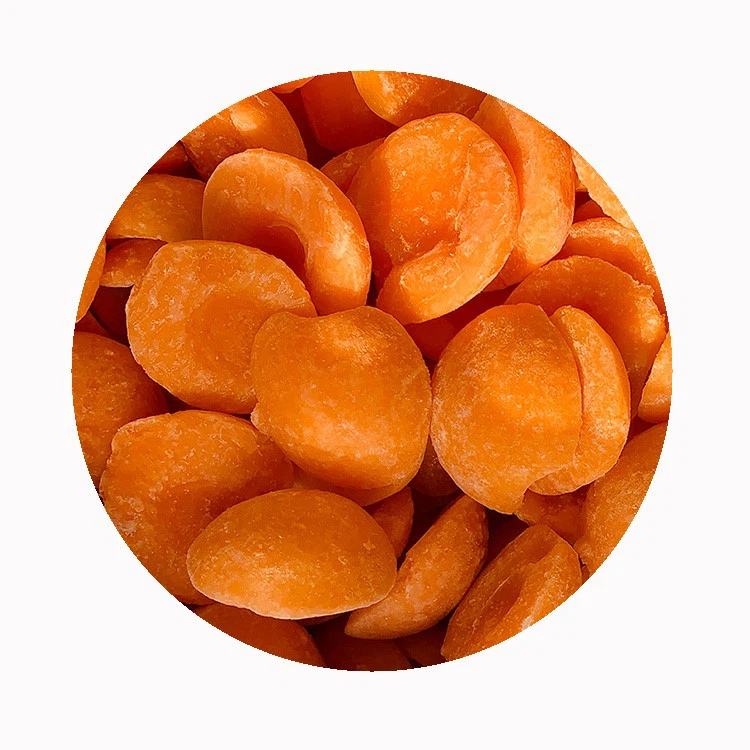
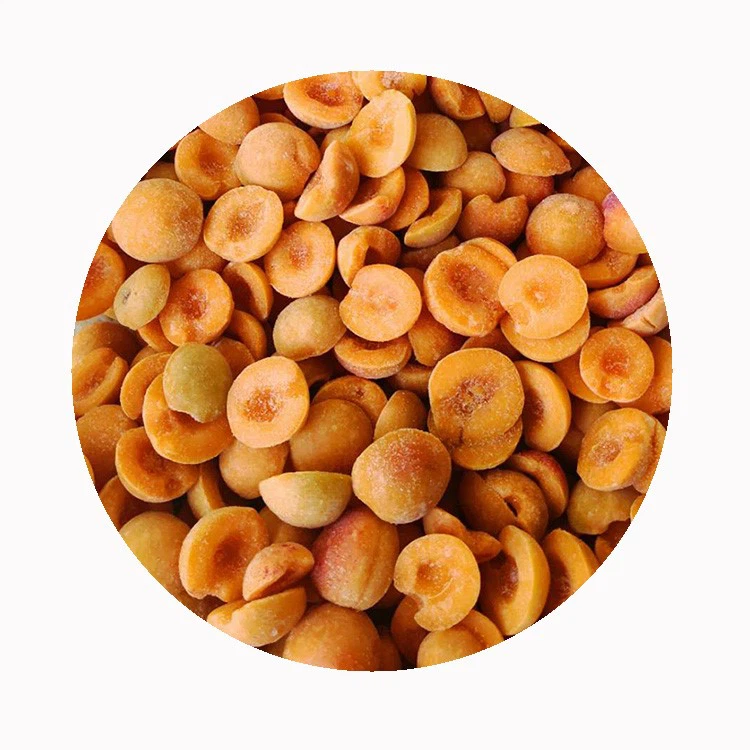
Fresh apricot suits direct fresh service and products that require raw-fruit texture, but seasonality, ripeness, stone removal and short handling life create labor and waste. Dried apricot suits trail mixes, cereals, bakery inclusions and shelf-stable snacks, but concentration, chew, sulfites and final moisture need control. Frozen apricot suits smoothies, sauces, yogurt preparation, bakery fillings and year-round foodservice where thawed softness is acceptable.
The XMSD IQF frozen apricot range covers halves and cut formats for frozen applications. Do not present it as dried apricot supply. If your project is specifically dried fruit, state that clearly and verify whether the proposed supplier, facility and process actually cover the product.
Compare total usable cost
Purchase price per kilogram hides yield and workflow. Fresh fruit includes stones, trimming, ripeness loss and labor. Dried fruit is concentrated but may have a higher unit price and different portion cost. Frozen pitted fruit requires cold storage but can reduce preparation loss. Calculate cost per approved serving or finished batch.
Specify packaging for the failure mode
Fresh fruit needs ventilation and careful handling. Dried fruit needs a pack that manages moisture transfer, oxidation, infestation risk and seal integrity. Frozen fruit needs a freezer-suitable inner bag, carton and continuous cold chain. Review frozen-food packaging options only for the frozen form; use a dried-fruit-specific pack assessment for dried apricot.
Storage Changes the Decision After Purchase
Fresh apricots continue to soften and can bruise, ferment or mold when maturity and temperature are poorly controlled. Plan receiving frequency, ripeness sorting, stone removal and daily use. A lower fresh purchase price can disappear if a significant share never reaches the plate. Record incoming weight, edible yield and discarded weight for at least several deliveries.
Dried apricots avoid the fresh ripeness window but have different failure signals. Moisture pickup can increase stickiness, clumping and microbial risk; moisture loss can make pieces harder. Oxygen and light can change color and flavor. Infestation and foreign material also need controls. Use the supplier's specified storage condition and unopened shelf life, then validate performance after opening under your real workflow.
Frozen apricot needs continuous frozen handling and becomes soft after thawing. It is often the practical middle option when you need pitted fruit, repeatable dosing and year-round use but do not need shelf stability at room temperature. For the broader nutrition boundary, see the measured apricot portion guide. Then compare storage cost, usable yield and final-product quality rather than nutrition alone.
Buyer Checklist for Dried Apricot
For dried product, define cultivar or grade where relevant, whole halves or dice, piece-size tolerance, color range, final moisture or water activity basis, sulfite status, added sugar, foreign-material and pit-fragment limits, texture, flavor, pack and shelf life. Specify the test methods and sampling plan for any numeric acceptance limit.
Request the ingredient and allergen-related declaration, product specification, COA format, lot code, traceability record, microbiological and chemical criteria, pesticide-residue plan, storage condition and destination documents. Verify the actual legal entity, facility and product scope. A generic certificate logo does not prove dried apricot coverage.
Approve a representative sample in the real recipe and after the intended storage period. Measure piece count, chew, color migration, clumping and moisture transfer into adjacent ingredients. If your application is frozen instead, use a separate IQF specification rather than copying a dried-fruit checklist.

FAQ
How many fresh apricots equal a dried serving?
There is no exact universal piece count because fresh fruit size and dried moisture vary. Use weight. A cited reference compares 70 grams fresh with 33 grams dried as practical portions, while a home-drying estimate suggests dried weight near 17.5% of prepared fresh weight.
Do dried apricots always contain added sugar?
No. Unsweetened dried apricot can contain only intrinsic fruit sugar, although it is concentrated. Check the ingredient list. A sweetened product or syrup-treated preparation has a different formula.
Why are some dried apricots bright orange and others brown?
Sulfite treatment can help preserve bright color, while untreated fruit often darkens through drying and storage. Variety and process also matter. Confirm the ingredient statement and specification instead of deciding from color alone.
Can frozen apricot replace fresh or dried apricot?
Frozen pitted fruit can replace fresh in many cooked, blended and filling applications, but thawed texture is softer. It does not replace dried fruit in a shelf-stable cereal or trail mix without reformulating moisture, texture and storage.
The Practical Bottom Line
Fresh apricot gives more water and volume; dried apricot gives concentrated fruit solids, portability and shelf stability. A 70-gram fresh reference and a 33-gram dried reference are useful practical portions, but neither number is universal. Compare serving weight, ingredients, sulfites, tolerance and intended use.
For sourcing, treat fresh, dried and frozen as separate specifications. Verify edible yield, final moisture, piece size, ingredients, pit-fragment control, pack, storage, documents and application performance. Calculate cost per approved serving or finished batch rather than per kilogram alone.
XMSD sourcing note: For frozen apricot projects, share the application, form, cut, skin option, Brix or color target, pack, destination, volume and documents. We can review a suitable IQF specification and sample plan.
References
- South Dakota State University Extension: Apricot Lesson Plan and Nutrition Fact Sheet
- Utah State University Extension: How to Preserve Apricots
- NIH Office of Dietary Supplements: Potassium Fact Sheet for Consumers
- U.S. FDA: Macroanalytical Procedures Manual for Fruits and Dried Fruits
- U.S. FDA: Undeclared Sulfites in Dried Apricot Recall Notice
- Journal of Food Science: Effect of Canning and Freezing on the Nutritional Content of Apricots
- XMSD operational experience in frozen-fruit specification review, edible-yield comparison, packaging and application testing.