


Frozen Apricots for Smoothies, Bakery and Foodservice
Jan 16, 2019

IQF apricot can reduce pitting, ripeness sorting and daily preparation, but the correct cut depends on the product you make. Smoothies need predictable dosing and blending. Bakery fillings need controlled water release and fruit identity. Foodservice needs pack sizes, portions and thaw handling that work during service.

The Short Answer
Choose frozen apricot halves when the fruit must remain visible, slices when distribution and presentation both matter, and dice when dosing, blending or dispersion matters most. The cut name is only the start. Specify dimensions and tolerance, skin option, pitting, maturity or Brix where relevant, color, ingredients, defect limits, stone-fragment control, pack and cold-chain condition.
Frozen apricot will not return to fresh table-fruit firmness after thawing. Ice crystals disrupt the fruit tissue, so thawed pieces become softer and release liquid. That is a poor fit for a crisp fresh-fruit display but often useful for smoothies, sauces, fillings, compotes, yogurt preparation and desserts. Approve the product in the real process, not from a frozen photograph.
The XMSD IQF frozen apricot range includes halves and cut formats for project discussion. Send the target variety or sensory range, cut, pack, volume, destination and schedule so we can check the current crop, processing route, document scope and realistic delivery plan.

Match the Apricot Form to the Job
Competitor pages often list halves, slices and dice without explaining the decision. Start from the final product and its process. A cut that looks premium in a sample bowl may block a depositor, blend unevenly or disappear during baking. A smaller dice may dose well but lose visible fruit identity.
| Form | Best starting applications | Main risk | Approval check |
|---|---|---|---|
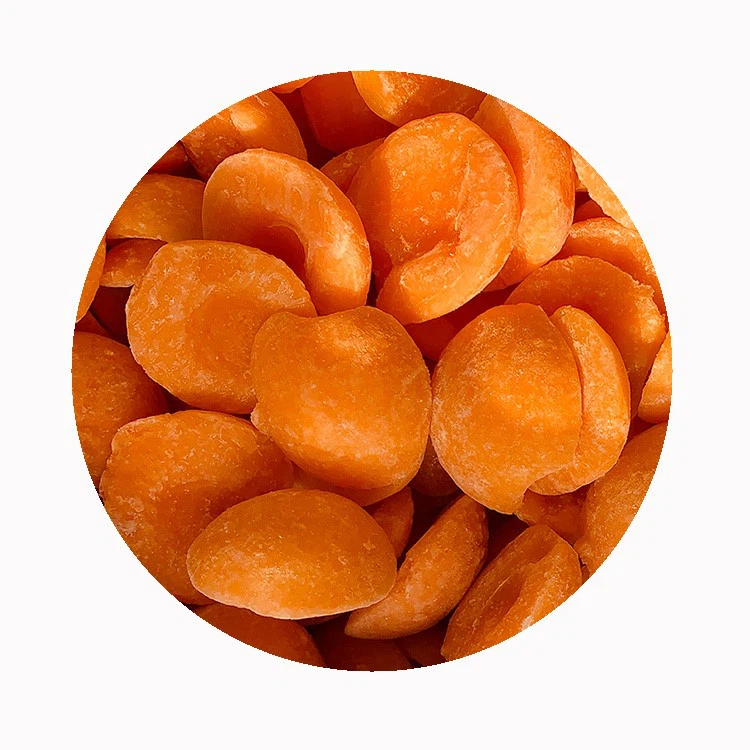
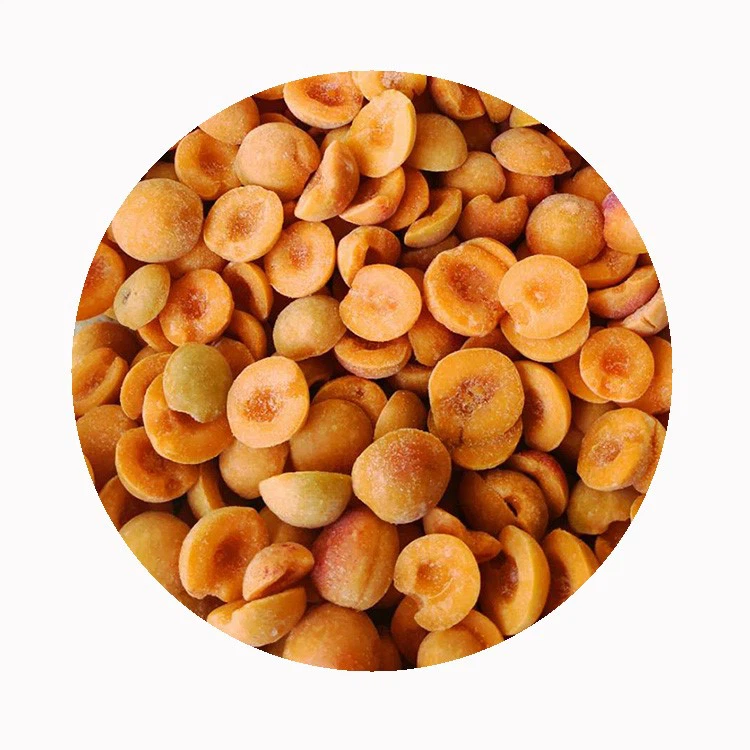
| Pitted halves | Tarts, plated desserts, compotes, visible toppings | Size variation, breakage, stone fragments | Count, symmetry, intact rate and post-bake shape |
| Slices | Pastries, desserts, fruit layers, garnish | Thickness drift and edge damage | Thickness range, distribution and hold texture |
| Dice | Yogurt, smoothie, fillings, sauces, inclusions | Small pieces lose identity or release water quickly | Nominal cut, tolerance, fines and dosing variation |
| Puree or pulp | Beverage, sauce, dairy base, bakery formula | No visible pieces; solids and viscosity vary | Brix, consistency, color, ingredients and pack |
USDA's frozen-apricot grade standard evaluates color, defects, character and-for halves-size and symmetry. You do not need to adopt a U.S. grade in every market, but the categories are useful. Convert subjective words such as "nice halves" into an agreed sampling and acceptance method.
Cut tolerance changes both function and value. A bag of nominal 10-millimeter dice with many fines may still weigh correctly but produce a puree-like result in yogurt. Halves with a high broken-unit rate may be acceptable for jam and unacceptable for a plated dessert. Write the application beside the defect rule so both sides understand the consequence.
The product form also changes equipment. Confirm hopper opening, auger or pump limits, depositor nozzle, blender capacity and portioning tool before approving the cut. If a 20-millimeter piece blocks the line, the supplier cannot solve the problem by improving color. Mechanical fit is part of product quality for that application.

Smoothies: Dose, Blend and Color
For smoothies, smaller pieces or broken halves may be acceptable when the blender can process them safely and consistently. Define the apricot dose by weight, not scoop volume. Piece separation matters because a frozen block slows service and creates portions with different fruit content.
Test the complete formula at operating scale. Record apricot weight, liquid ratio, other frozen ingredients, blender model, cycle time, final temperature, Brix if it is a product target, color after holding and sensory balance. An apricot that tastes pleasantly tart alone may need a different dose when combined with yogurt, citrus or berries.
Do not thaw apricot on the counter to make blending easier. Use the product from frozen when the equipment and recipe allow, or follow a controlled thaw procedure with time and temperature limits. Keep the intended-use and food-safety instructions in the operating standard.
Failure signals in a smoothie trial
Look for excessive ice, clumped pieces, slow cycle time, pale or brown color, weak apricot aroma, unstable thickness and separation during the normal hold. If the formula needs extra sugar to hide inconsistent maturity, review the apricot specification before changing the finished product permanently.

Bakery: Control Water Release and Visible Fruit
Bakery performance depends on the product. A tart may need intact halves that hold shape. A muffin needs dice that distribute without sinking or bleeding too much liquid. A filling may use smaller pieces or puree and rely on starch, sugar, acid and heat to reach the target viscosity.
Test apricot from frozen and after controlled thawing if both methods are possible. Record drip loss, fruit-to-filling ratio, bake time, internal temperature where relevant, spread, boil-out, color, piece integrity and texture after cooling. Repeat after frozen or ambient storage of the finished item if that is part of the commercial cycle.
Brix can help describe fruit maturity or soluble solids, but it does not predict the whole bake result. Pectin, acids, cell structure, cut size and heat treatment matter. Specify the property that changes your product and use an application trial to set the acceptance range.
Failure signals in bakery
Watch for watery filling, soggy crust, pieces that disappear, tough skin, hard fragments, excessive browning and different portion weights across units. A successful frozen sample photograph cannot predict these outcomes. Approve the apricot in at least one full batch under normal line conditions.
Foodservice: Pack Size and Daily Workflow
Foodservice success is often decided by workflow rather than a laboratory number. A 10-kilogram inner bag may suit a commissary that uses it quickly but create repeated opening and slow turnover in a small café. A smaller foodservice pack can reduce handling and portion drift while adding packaging cost. Match bag size to daily consumption and freezer space.
Define whether staff portion from frozen, partially thawed or fully thawed product. Document where thawing occurs, the maximum time, temperature control, container, labeling and discard rule. The National Center for Home Food Preservation explains that thawed fruit becomes softer because freezing disrupts cells; commercial procedures still need the product instructions and applicable food code.
For menu and distributor programs, use the XMSD foodservice sourcing framework to state serving dose, kitchen method, pack, annual use, delivery frequency and destination. Those inputs are more useful than asking for the "best" frozen apricot without context.
Worked Example: Fresh Receiving Weight Versus IQF Dose
Worked example: A central kitchen plans 1,000 smoothies and uses 80 grams of edible apricot per cup. Finished apricot need is:
1,000 cups × 80 g = 80,000 g = 80 kg edible apricot
The kitchen's fresh-fruit trial records 86% edible yield after stones, trimming and rejects, plus 6% loss from ripeness and demand mismatch. Usable fresh yield is:
0.86 × 0.94 = 0.8084, or 80.84%
Required fresh receiving weight is:
80 kg ÷ 0.8084 = 98.96 kg fresh whole apricots
If pitted IQF apricot is edible product and the kitchen measures 1% handling loss, required frozen receiving weight is:
80 kg ÷ 0.99 = 80.81 kg IQF apricot
The 18.15-kilogram receiving-weight difference does not prove frozen has a lower total cost. Compare purchase price, pitting labor, waste disposal, freezer energy, pack waste, cold-chain capacity, fresh ripeness loss and final smoothie quality. Replace the assumed yields with measured data from your site.
Two Application Examples
Example 1: café smoothie program
Example 1: A café uses 70 grams apricot, 80 grams berries, yogurt and water in a 350-milliliter smoothie. It chooses dice because the blender cycles faster than with large halves. The trial checks piece separation, 30 consecutive doses, cycle time, final Brix, color after 15 minutes and customer-facing texture. The approved cut is the one that performs consistently, not the one that photographs largest.
Example 2: bakery filling
Example 2: A bakery wants visible apricot pieces in a 20-kilogram filling batch. It tests 15% fruit dose using dice and broken halves, then records cook time, water release, depositor flow, piece count per pastry, boil-out and cooled texture. Dice flow better but halves create stronger fruit identity. The bakery chooses the cut after deciding which outcome matters more.
Build an Order Specification That Can Be Inspected
Product identity and sensory range
State product name, variety if required, origin, crop or production period where relevant, halves/slices/dice/puree, nominal dimensions, tolerance, skin option, blanching, maturity or Brix target if used, color, flavor, texture and ingredient statement. Define the condition for assessment-frozen, partially thawed, fully thawed or after cooking.
Defects and foreign material
Set limits and sampling for pit or stone fragments, peel where not allowed, bruised or discolored pieces, soft or broken units, off-size pieces, clumps, foreign vegetable material and extraneous matter. USDA grade language can help define color, defects, character, size and symmetry, but use the standard only when it fits the contract and market.
Food safety and documents
Define applicable microbiological, pesticide-residue, contaminant and allergen-related criteria, plus COA format, lot coding, traceability and destination documents. Verify the actual production site, certificate scope and validity through the XMSD certification overview and current controlled copies. Do not copy unverified limits from another buyer's specification.
Packaging and cold chain
State inner bag, net weight, carton, case mark, pallet pattern, storage temperature, transport condition, shelf life and temperature-record requirement. XMSD's frozen-food packaging overview shows formats to discuss, but the order needs the selected structure and acceptance criteria.
Sample Approval: Test the Conditions That Can Fail
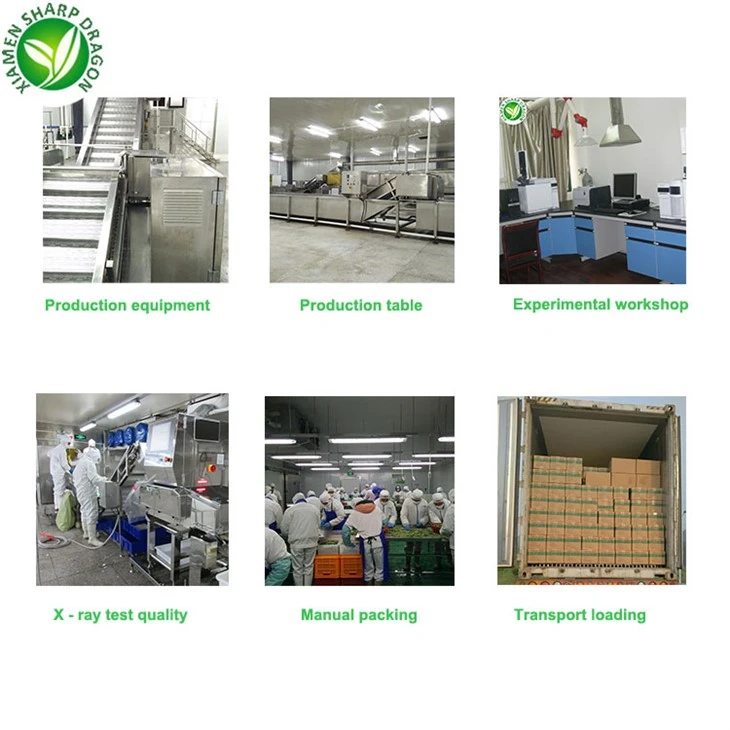
Ask for a representative sample from the intended process and specification. Photograph the unopened pack and frozen product, then record net weight, temperature, clumping, frost, color, cut distribution, defects and stone fragments. After controlled thawing, measure drip loss and inspect aroma, flavor and texture.
Move the sample into the real recipe. Use normal equipment, batch size, mixing order, heating profile and hold time. Record the result with a simple pass/fail limit or numeric range. If the sample only receives a comment such as "looks good," the next lot cannot be evaluated consistently.
Retain an approved reference where practical and document any change in variety, crop, facility, process, cut or ingredient statement. Reapproval conditions belong in the supplier agreement. This protects both sides when a visually similar product behaves differently in production.
Run an Arrival and Thaw Trial Before the First Full Order
A pre-shipment sample and an arrival lot answer different questions. The pre-shipment sample shows whether a proposed specification can work. The arrival trial shows what survived packing, storage and transport. Build the same inspection into both stages so the comparison is fair.
At arrival, record container or vehicle condition, seal where applicable, product and ambient temperatures at the agreed locations, carton damage, wet cases, crushed corners and label accuracy. Select cartons using the agreed sampling plan rather than only the easiest pallet position. A cold reading at the door does not prove the middle of the load stayed within the same range.
Open the inner pack and weigh a representative sample while frozen. Measure clumped mass, free pieces, fines, broken halves, off-size units, discoloration and visible foreign material. For halves, count intact, off-suture and misshapen units if those categories affect acceptance. Photograph the sample beside a scale and lot code.
For a simple thaw-loss check, place 1,000 grams of frozen apricot on the defined screen or container, thaw under the specified time and temperature, and weigh the drained fruit and liquid separately. If drained fruit weighs 870 grams, measured mass loss from the fruit sample is 130 grams, or 13%. That result is not automatically a defect; compare it with the agreed method and application limit.
(1,000 g − 870 g) ÷ 1,000 g × 100 = 13% measured thaw loss
Finish with the actual recipe. A 13% result may be manageable in a sauce where the liquid remains in the batch and unacceptable in a pastry topping that wets the crust. Record pass or fail against use, not a number copied from another product. Escalate a failed lot before mixing it with accepted stock.
Plan Pack Count, Daily Use and Freezer Handling
Suppose a café uses 17.14 kilograms of frozen apricot per day from the worked example and receives 2.5-kilogram inner bags. Daily use is 6.86 bags. Operationally, the café will open seven bags and carry a controlled remainder only if its food-safety plan allows. A ten-kilogram inner bag reduces bag count but creates a large partial pack after one day.
17.14 kg ÷ 2.5 kg per bag = 6.86 bags per day
Use the result to compare labor, inner-pack waste, resealing practice and freezer picking. Then check case configuration and pallet dimensions against the facility. A nominally lower pack price can create extra handling, while a very small bag can create unnecessary waste. Choose the size that supports the approved daily process.
If you are deciding between fresh, dried and frozen forms, the fresh-versus-dried apricot serving guide clarifies why equal kilograms are not always equal portions. For this frozen decision, keep the comparison on usable yield, workflow and final quality.
FAQ
Should frozen apricots be thawed before smoothies?
Usually they can be blended from frozen when the blender, piece size and liquid ratio support it. Test cycle time and final texture. Follow the product instructions and do not use uncontrolled counter thawing.
Which cut is best for bakery fillings?
Dice usually distributes and pumps more easily; halves or larger pieces provide stronger fruit identity. Choose after testing water release, depositor flow, bake stability and the desired visible piece count.
Why do thawed apricots become soft?
Ice crystals disrupt fruit cells during freezing, so thawed tissue releases liquid and loses fresh firmness. Use that softness in blended or cooked applications and approve hold texture for visible uses.
What should be included in a frozen apricot RFQ?
Include application, form and cut, skin option, maturity or Brix target, color and texture, ingredients, defect and stone-fragment limits, pack, volume, destination, documents, required tests, private-label needs and shipment timing.
The Practical Bottom Line
Frozen apricots work well in smoothies, bakery and foodservice when the cut and thaw behavior match the process. Halves preserve visible fruit identity, slices balance presentation and distribution, and dice improve dosing and mixing. None is universally best.
Build the decision from edible yield, cut tolerance, Brix or maturity where relevant, color, drip loss, stone-fragment control, ingredients, pack, cold chain and real-recipe performance. Compare total usable cost and approve a sample under operating conditions before the order.
XMSD sourcing note: Tell us your application, required cut, skin option, Brix or maturity expectation, target portion, pack, destination, volume and document list. We can review a suitable frozen apricot specification and sample plan.
References
- USDA Agricultural Marketing Service: Frozen Apricots Grades and Standards
- USDA: United States Standards for Grades of Frozen Apricots
- National Center for Home Food Preservation: Freezing Apricots
- National Center for Home Food Preservation: Thawing and Preparing Foods for Serving
- Utah State University Extension: Food Preservation-Freezing Basics
- Journal of Food Science: Effect of Canning and Freezing on the Nutritional Content of Apricots
- XMSD operational experience in frozen-fruit specification review, edible-yield analysis, packaging, sample approval and application testing.