


What Is Pitaya Used For? Food and Product Applications
Jul 26, 2019

Pitaya, or dragon fruit, is useful wherever you need mild fruit flavor, edible black seeds, a fresh or frozen fruit portion, or a vivid red-to-magenta color from red flesh. It can be eaten fresh, frozen for bowls and smoothies, cut as an inclusion, blended into pulp or puree, or used in drinks, dairy products, frozen desserts, sauces, fillings, and bakery decoration.
The best form depends on the job. IQF dice provide recognizable pieces but soften after thawing. Puree distributes color and fruit solids evenly but cannot remain as an inclusion. White flesh gives a lighter visual effect with visible seeds, while red flesh gives stronger color. Juice, sweetened bases, dried powder, and extracts are separate ingredients with different composition and labeling implications.
Pitaya can contribute fruit, fiber, micronutrients, and plant compounds, but an application guide should not turn those facts into treatment claims. Questions about general nutrition belong in the evidence-based pitaya benefits guide. Here, the practical question is what pitaya can do in a meal, formulation, production line, and commercial specification.
The short answer: Use fresh or plain frozen pitaya when the fruit itself should remain recognizable; use dice for visible inclusions; use pulp or puree for uniform color and flow; and assess juice, sweetened, dried, or extracted forms as different formulations. Approve the chosen form by yield, dose, sensory result, handling, and label data.

Fresh Eating and Simple Frozen Uses
For fresh eating, pitaya is normally cut lengthwise and the flesh is scooped or peeled away from the skin. The flesh can be cubed, sliced, or eaten with a spoon. Its flavor is generally mild, so it works well with more aromatic or acidic fruits, yogurt, oats, citrus, lime, or mint rather than overpowering them.
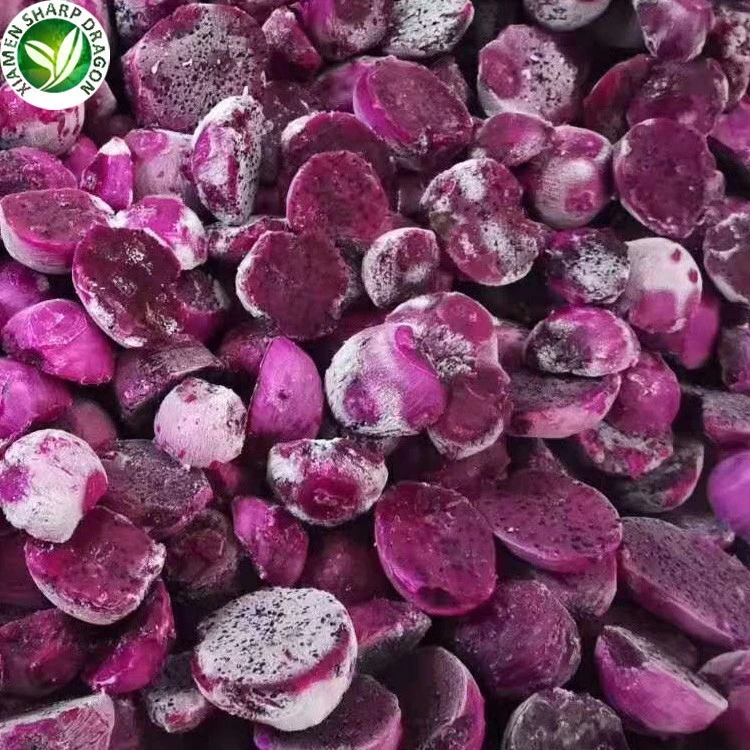
Plain frozen pieces are practical for smoothie packs, blended drinks, breakfast bowls, desserts, and portion-controlled foodservice. They remove peeling and cutting at the point of use and can improve year-round availability. Frozen does not mean ready for every application without testing: pieces usually soften as ice melts, and red flesh can release strongly colored drip.
For a smoothie, texture softening is usually acceptable because the fruit will be blended. For a chilled fruit cup, the same softening may be a failure. If pieces remain visible, define the thaw method and serving window. Review shape retention, surface ice, fused clusters, broken pieces, drip, aroma, and texture after the intended preparation rather than judging only the frozen bag.
Set a preparation method that another kitchen or laboratory can repeat. Record the frozen sample mass, thaw temperature, elapsed time, drainage time, and whether the fruit is served immediately or held. A sample thawed overnight in a covered refrigerator will not behave like fruit placed directly into a blender or left at room temperature. Without one method, two reviewers can reach different conclusions about the same lot.
Portion format matters in foodservice. A pre-portioned inner bag can shorten preparation and reduce repeated opening, but it adds packaging. A bulk bag can suit high-throughput smoothie production, yet it may become inconvenient when a site uses only a small amount per shift. Match pack unit to daily use, freezer space, opening practice, and whether partial bags can be protected and coded after opening.
Flesh type changes the visual result. White-flesh pieces preserve the black-seed pattern without coloring the whole recipe strongly. Red-flesh pieces can turn a smoothie or yogurt magenta. The dragon fruit varieties and flesh-color guide helps separate skin color, flesh color, and commercial naming before you choose an application.

Choose the Form by the Function You Need
A fruit name is not a complete ingredient specification. Start with the function in the finished food, then select the form. This prevents a common failure: approving a puree because its color looks good, then discovering that the product brief required visible fruit pieces.
| Pitaya form | Best-fit functions | Main checks |
|---|---|---|
| Whole or halved flesh | Fresh presentation, manual cutting, premium garnish | Ripeness, edible yield, flavor, peel removal, visual defects |
| IQF dice or chunks | Visible inclusions, smoothie packs, bowls, topping | Cut distribution, separation, fines, thaw drip, breakage |
| Pulp or puree | Uniform beverage, yogurt, sorbet, sauce, filling, color | Seed status, consistency, Brix method, dose, color stability |
| Juice, sweetened base, powder, extract | Specialized beverage, dry mix, flavor or color systems | Full ingredient list, carrier, added sugar, concentration, label basis |
Piece size affects both appearance and process survival. Smaller dice distribute more evenly but have more cut surface and may show more fines or color release. Larger chunks are recognizable but can bridge in a hopper, separate unevenly in a filling system, or exceed the target bite. Run the actual cut through your mixer, pump, depositor, and pack format.
Pulp and puree solve a different problem. They remove the need for visible-piece integrity and can spread fruit solids, seeds, and color consistently. Define whether seeds remain, whether the material is single-strength or concentrated, and how viscosity or flow will be assessed. Brix alone does not prove purity, sweetness, or performance; it must be tied to a measurement method and temperature.
Beverages, Smoothies, and Dairy Applications
Pitaya works in smoothies because its flesh blends easily and red types give strong visual identity without needing an intense fruit aroma. White types can add seed-speckled appearance with less color transfer. Pairing pitaya with banana can increase body; pineapple, citrus, or berries can add acidity and aroma. The final result depends on the entire formula, not on pitaya alone.
For a bottled drink, define whether you need suspended seed particles, a smooth base, or a clear juice-style result. Puree can settle or separate depending on particle size, stabilizers, shear, and storage. Red pigment can change with pH, heat, oxygen, light, dilution, and other ingredients. Test the exact process and packaging at the planned shelf-life checkpoints.
In yogurt, pitaya can be a stirred preparation, a fruit-on-the-bottom layer, or a visible inclusion. A stirred red puree colors the whole base; dice provide recognizable pieces but face mechanical stress during mixing and filling. In plant-based drinks, the same questions apply, along with protein interactions, pH, heat treatment, and sedimentation.
Design the beverage trial around a fixed control. Keep batch mass, pitaya dose, other fruit, sweetener, acid, stabilizer, mixing sequence, thermal process, and fill package constant while changing only the pitaya form or supplier sample. Photograph color under the same lighting and record instrumental color when it is commercially important. Measure separation or sediment at named time points instead of relying on a freshly mixed glass.
Taste pitaya in the complete recipe. A puree with acceptable flavor on its own may become almost invisible beside passion fruit or berry concentrate, while an earthy or fermented note can become more obvious in a mild dairy base. Compare aroma, sweetness, acidity, aftertaste, seed perception, and color together. Increasing the dose to strengthen flavor may overshoot the color target or change cost, so flavor and appearance cannot always be solved with one adjustment.
Practical example: A dairy developer wants pale yogurt with visible magenta cubes. Puree fails the visual brief because it colors the entire cup. The team trials 10 mm IQF red-flesh dice, records breakage after mixing, measures drip after a fixed thaw, and checks color migration after 1, 7, and 21 days. Dice remain the preferred direction only if the pieces survive filling and the surrounding yogurt stays within the approved color range.

Desserts, Frozen Products, Sauces, and Bakery
Puree is often the logical starting point for sorbet, ice pops, gelato ribbons, mousse, panna cotta layers, sauces, and fruit fillings because it distributes color and solids. Dice can be added where a visible bite matters, but ice crystals and repeated freeze-thaw exposure can weaken texture. Evaluate the fruit after the complete production and storage cycle.
In bakery, fresh-looking decoration and bake-in filling are different uses. Pitaya color may not remain equally vivid after high heat, long exposure, or a pH change. A puree that works in a cold glaze may perform poorly in a baked dough. Trial the ingredient in the final moisture, sugar, acid, and temperature conditions rather than approving color in a cup.
For sauces and dessert preparations, decide whether seed visibility is positive or distracting. Seeds can signal recognizable fruit identity, yet they can conflict with a smooth premium texture. Sieving changes the product and usable yield. Specify the desired seed status before sampling so that a technically acceptable puree is not rejected for a sensory expectation that was never stated.
Frozen-dessert performance also depends on the surrounding system. Sugar concentration, total solids, acidity, fat, protein, stabilizer, overrun, freezing rate, and storage temperature influence hardness and ice-crystal perception. Pitaya puree supplies fruit solids and water but is not a complete sorbet or ice-cream formula. Approve scoopability, meltdown, color, flavor, and ice texture after realistic frozen storage, not only on the day of production.
A layered dessert creates another trade-off. Red puree can produce a clean magenta band, but diffusion into a pale mousse may blur the edge during storage. A gelled layer can improve definition while changing bite and ingredient declaration. Test layer order, temperature at deposit, viscosity, contact time, and pack movement. The right pitaya form is the one that preserves the intended eating experience through the stated shelf life.
Red pitaya can support a clean, distinctive color story, but "natural color" language needs to match the ingredient, processing, and local rules. Do not treat darker color as proof of superior nutrition or a clinical antioxidant effect. The pitaya color, Brix, and usable-yield guide gives a measurement-led way to compare color and output.

Portion, Dose, and Yield Change the Commercial Answer
A technically suitable ingredient can still fail economically if you compare purchase price instead of usable output. Whole fruit includes peel and trimming loss. Frozen dice may include fines or drip that matters to a visible-piece application. Puree may be easy to dose but require more or less product to reach the target color. Define usable yield from the function you buy, not from gross incoming weight alone.
Worked example: A 1,000 kg beverage batch uses red pitaya puree at 8.0% of finished weight. Net puree in the formula is 1,000 × 0.08 = 80 kg. If a documented pilot shows 3% additional allowance for transfer and line hold-up, planned issue quantity is 80 × 1.03 = 82.4 kg per batch. At 25 batches, the planning quantity is 2,060 kg. The 3% is illustrative; measure your own line loss rather than copying it into a specification.
For IQF pieces, calculate cost per kilogram of accepted inclusion. Begin with the thawed mass used in the recipe, then record fines, rejected pieces, drip, and line loss by a repeatable method. For whole fresh fruit, record peel and trim separately. For puree, record pack residue and transfer loss. The same method makes two quotes comparable even when their gross prices and formats differ.
Dose also affects the label and sensory result. A strong red color at 3% inclusion does not mean the same fruit contribution as an 8% formula. A pitaya image on the front of a multi-fruit drink does not reveal its percentage, added sugar, or nutrition. Review the final ingredient list, serving, nutrition calculation, and destination-market requirements together.

How to Specify Pitaya for B2B Use
Write the application before the specification. State whether the ingredient must remain visible, blend smoothly, deliver a target shade, show seeds, survive mixing, or support a named ingredient statement. Then define flesh type, product form, cut or consistency, ingredient status, and pack unit. The current XMSD frozen dragon fruit range shows whole, cut, pulp, and puree directions as starting points.
Build acceptance around measurable failure signals. For dice, check cut distribution, separation, fines, surface ice, color consistency, aroma, thaw drip, texture, and breakage through the real equipment. For pulp or puree, check identity, seed status, consistency, color, aroma, Brix method, pack condition, and flow after a controlled thaw. A photo can support visual review but cannot replace lot, temperature, document, and application evidence.
Separate food safety and traceability from sensory acceptance. Required microbiological, chemical, residue, allergen, origin, and traceability controls follow the destination and intended use. Frozen state, color, texture, and drip describe quality. Recipe performance describes fitness for use. Keep these decisions separate so that a vivid sample does not hide missing documentation or a compliant lot does not automatically pass a demanding inclusion test.
Choose packing from batch size, thaw plan, and handling. A small inner bag can reduce repeated exposure when only part of a carton is used. A larger unit may reduce packaging and labor when the entire pack enters a closed process. Review seal integrity, code legibility, carton strength, pallet pattern, and route risk through a frozen-food packaging assessment.
Use a sample plan that represents the commercial decision. A small hand-picked cup can show color and basic identity but may not reveal cut distribution, fines, fused masses, or pack-level variability. For a piece application, inspect enough frozen material to characterize the lot, then draw a recorded portion for the thaw and recipe tests. Retain photographs, masses, time-temperature records, and the accepted reference so later lots can be compared consistently.
Add change-control triggers to the approved brief. A different flesh type, cut range, puree concentration, seed status, carrier, harvest profile, recipe dose, pack unit, or thaw process may require another application test. A label or nutrition calculation may need review when the formula or serving changes. This prevents an approval earned by one format from being applied silently to a materially different ingredient.
What Pitaya Is Not Good For
Pitaya is not a treatment for cancer, stroke, hardened arteries, heavy-metal exposure, liver disease, stomach disease, skin pigmentation, obesity, or anemia. Its fiber, vitamin C, iron, pigments, and other compounds have normal nutritional or food-science relevance; their presence does not prove those medical outcomes.
It is also not automatically suitable for every food system. Mild flavor can disappear beside stronger ingredients. Red pigment can migrate or change during processing. Thawed dice can soften. Seeds may be desirable in one product and unwanted in another. Puree cannot provide piece identity, and whole fruit creates peel and trim loss. These are selection variables, not defects when the form is matched correctly.
The useful question is specific: good for which recipe, at what dose, in which form, through which process, with what acceptable result? Once those inputs are written down, pitaya becomes much easier to evaluate without health exaggeration or vague ingredient storytelling.

XMSD sourcing note: Share your application, flesh color, form, cut or consistency, target dose, process, pack, destination, and sample test. We can review a frozen pitaya direction against the function and acceptance result you need.
Final Application Decision
Pitaya is good for fresh portions, frozen blends, visible inclusions, uniform puree applications, desserts, and distinctive color when the correct flesh type and format are chosen. Its mild flavor makes it flexible, while its seeds and red pigment can create recognizable visual identity.
Choose from the finished product backward. Define the desired bite, flow, color, seed appearance, dose, process survival, usable yield, pack, and label basis. Then compare samples under one recorded method. That approach gives pitaya a clear job in the formulation and turns "good for" into a result you can test.
References
- Cleveland Clinic: Dragon Fruit-What It Is and Ways to Use It.
- World Health Organization: Healthy Diet.
- Postharvest Profile, Processing and Waste Utilization of Dragon Fruit, Foods, 2023.
- Dragon Fruit: Review of Nutrients, Research, and Product Context, 2023.
- XMSD operational experience in frozen-fruit form selection, application trials, yield review, packing, and B2B specification.