


Corn Health Benefits: Nutrients, Forms and Claim Limits
Dec 12, 2019

Yes, plain sweet corn can contribute to a healthy diet. It supplies carbohydrate, some fiber and protein, and several micronutrients. That answer has limits: corn is not a complete diet, and detecting a nutrient in a kernel doesn't prove that eating corn will prevent cancer, lower blood pressure, improve intelligence or treat a digestive problem. A credible health explanation must connect the exact corn form and serving to a measured nutrient, explain the nutrient's normal physiological role, and stop before the support becomes a medical promise.
The short version: use plain corn as one useful food among vegetables, grains, legumes and protein foods. Describe its real nutrient contribution on a defined serving basis. Judge a buttered, salted, sweetened or fried corn product by its finished formulation rather than borrowing the reputation of the original kernel.

Begin with a Defined Food and Serving
Corn is a crop family, not one nutritional object. Tender sweet-corn kernels, an ear of corn, whole-grain cornmeal, nixtamalized masa, refined corn starch, corn syrup, corn oil and a fried corn snack have different compositions and eating roles. Even within sweet corn, raw, cooked, frozen and canned database entries may use different moisture, drained-weight or preparation bases. A health statement that never identifies the food is too loose to guide a consumer or support a product brief.
USDA MyPlate places fresh and frozen yellow or white corn among starchy vegetables. It counts one large ear or one cup of fresh or frozen kernels as one cup from the vegetable group. That classification is useful for meal planning, but it doesn't mean that corn resembles leafy vegetables in carbohydrate content. It also doesn't transfer to every corn-derived snack or sweetener. The identity and the serving still come first.
USDA SNAP-Ed gives a defined serving example of one cup, or 145 g, for plain corn. The record reports energy, carbohydrate, dietary fiber, protein, fat and sodium on that stated basis. Use the linked source to read the individual figures, then select the matching database entry or laboratory result for the product and market being evaluated. Our separate corn composition and label guide handles the detailed numerical comparison.
Carbohydrate Supplies Food Energy; It Is Not an Energy Cure
Most of the energy in plain sweet corn comes from carbohydrate. After digestion, usable carbohydrate can contribute glucose for normal metabolism. That is a genuine food function. It doesn't justify saying that corn cures fatigue, creates all-day energy or performs better than every other carbohydrate food. Energy experience depends on the full meal, serving, activity, individual metabolism and medical context.
Thiamin, or vitamin B1, is relevant to the explanation but easy to exaggerate. NIH's Office of Dietary Supplements states that thiamin plays a critical role in energy metabolism and in cell growth, development and function. Its active form acts as a cofactor for enzymes involved in glucose, amino-acid and lipid metabolism. This means the vitamin participates in normal biochemical pathways. It doesn't mean that a serving of corn produces happiness, makes a child smarter or treats low mood.
For a menu or finished-food project, ask what corn replaces. If it replaces some other starch, the meal's total carbohydrate may change modestly or not at all. If a large corn portion is added on top of rice, bread or pasta, total carbohydrate rises. If a smaller amount adds color and texture to a mixed vegetable side, its role is different. These are formulation consequences, not moral judgments about the crop.

Fiber Is a Contribution, Not a Treatment Promise
The USDA reference above lists 3 g of dietary fiber per 145 g cup. That makes fiber part of corn's nutritional value. The intact food matrix also differs from purified corn starch or syrup, where much of the original kernel structure is absent. Still, one fiber figure can't establish that corn will treat constipation, repair the gut or create the same response for every person.
Digestive response depends on the amount eaten, habitual fiber intake, fluid, the rest of the diet and personal tolerance. A person who increases fiber rapidly may not feel the same as someone accustomed to a fiber-rich diet. Some consumers also notice visible outer kernel material after digestion. That observation doesn't prove that all nutrients passed through unabsorbed; digestion can release nutrients while tougher plant structures remain recognizable.
We deliberately keep the boundary narrow here because the separate queued XMSD article on corn and bowel movements will own stool-specific mechanisms, portions and cautions. On this health page, the defensible wording is simple: plain sweet corn contributes dietary fiber on a stated serving basis, and fiber is one reason it can fit a varied dietary pattern. It is not a prescribed digestive treatment.
Protein Helps the Total, but Corn Is Not a Complete Meal
Five grams of protein in the USDA 145 g example is a real contribution. It is also modest compared with many typical portions of legumes, eggs, dairy, fish or meat. A food can contribute protein without being the main protein food. Calling corn a fully balanced or complete food because it contains amino acids would conceal that distinction.
Amino acids are required for normal protein synthesis and other functions, but the presence of glutamic acid or another amino acid doesn't prove a special intelligence effect. A composition table identifies material in a food; it doesn't establish a cognitive outcome. Claims about brain development require support about the actual intervention, population, dose and measured result. A casual sentence that jumps from amino acids to smarter children skips all of that work.
The practical meal response is variety. Pair corn with a suitable protein food and other vegetables rather than asking corn to supply everything. In a plant-based menu, legumes can raise protein and add a different nutrient pattern. In a prepared meal, the nutrition calculation must cover every ingredient. That whole-formula result is more meaningful than displaying a single attractive nutrient from the corn fraction.
Folate Supports Normal Cell Processes without Proving Disease Prevention
Folate is another nutrient whose biological importance can be misused in marketing. NIH's Office of Dietary Supplements explains that folate functions as a coenzyme or cosubstrate in single-carbon transfers involved in nucleic-acid synthesis and amino-acid metabolism. The body needs folate to make DNA and other genetic material and for cells to divide. Those are established physiological roles.
The next sentence must remain disciplined. A folate-containing food doesn't therefore prevent cancer, reverse aging or guarantee healthy pregnancy outcomes. Disease risk and pregnancy guidance involve overall intake, fortified foods or supplements where advised, health status, timing and professional recommendations. NIH's review also describes cancer support as complex; folate biology can't be reduced to a promotional line for one vegetable.
For product information, state a folate value only when the chosen data source or test applies to the exact form and serving. Do not write "rich in folate" merely because an ingredient list includes corn. In regulated markets, a nutrient-content claim normally depends on defined criteria and a substantiated finished-product value. The responsible health narrative explains the nutrient role, gives the measurement basis and avoids a disease outcome.
Minerals and Plant Compounds Need the Same Support Discipline
Corn can provide minerals and colored varieties contain plant compounds, but a general nutrient list is not a clinical trial. Potassium, for example, is involved in normal body function and is relevant to dietary patterns. That doesn't make corn porridge an antihypertensive treatment. Blood-pressure outcomes depend on the full diet, sodium and potassium intake, medication, kidney function and other factors. A single food should not be positioned as a substitute for care.
Yellow corn contains carotenoid pigments, including compounds discussed in eye-health research. Their presence can be reported when supported by an applicable data source. It is still a leap to promise that a serving will prevent cataracts or age-related disease. Observational associations, nutrient mechanisms and clinical outcomes are different levels of support. Your copy should name which level it actually has.
This rule protects both consumers and buyers. If the only support is a generic review of maize phytochemicals, use it as background, not as proof for the tested content or outcome of one frozen sweet-corn lot. If a finished pack needs a quantitative nutrient claim, use an approved calculation or representative testing, document serving and rounding decisions, and review the destination rule before artwork release.

Freezing Does Not Turn Corn into a Different Nutritional Species
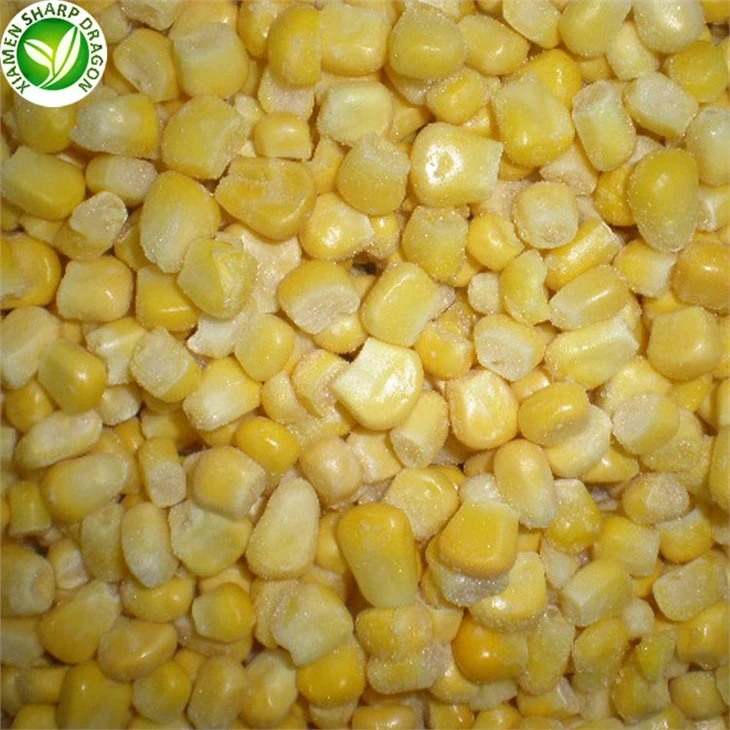
Plain frozen sweet corn remains recognizable corn. Commercial preparation commonly includes harvest, husking or shelling, sorting, washing, blanching where appropriate, cooling, freezing, packing and cold storage. Time, temperature, blanching and storage can affect individual quality attributes and nutrients, but the word frozen alone doesn't make a product nutritionally empty or automatically superior to fresh.
The comparison needs matched bases. Fresh corn may spend time in distribution before cooking. Frozen corn may be processed near harvest and stored for later use. Canned corn may include brine and is often evaluated on a drained or as-packaged basis. A cob includes inedible cob weight, while loose kernels are directly portionable. Compare the edible product, ingredient statement, serving and preparation that the consumer actually receives.
Operational consistency can support a healthier formulation decision without becoming a health claim. Free-flowing kernels make recipe percentages easier to control. Plain product lets a developer choose the seasoning. A stable cut and maturity specification helps cooking repeatability. None of those advantages proves a personal medical benefit, but all can reduce the gap between a recipe calculation and the food delivered.
Run a Nutrient Contribution Calculation before Writing Claims
A finished product may feature corn visually while containing a relatively small amount per serving. Convert the formula percentage into grams, then scale the relevant nutrient data to those grams. This step doesn't replace the approved label method, but it tells the development team whether its story is plausible and where stronger support is needed.
Worked example: a 1,000 kg mixed-vegetable batch contains 30% plain sweet corn. It therefore requires 300 kg corn. If the declared serving is 120 g and the component ratio remains uniform, each serving contains 36 g corn.
Scale the USDA SNAP-Ed 145 g reference to 36 g. The corn portion contributes an estimated 31.0 kcal, 6.70 g carbohydrate, 0.74 g fiber and 1.24 g protein: 36 ÷ 145 multiplied by 125, 27, 3 and 5 respectively.
Those are development estimates for this specific reference. The finished serving also contains the other vegetables, sauce and any added ingredients. Final label values may require a market-accepted database process, yield and retention factors, representative laboratory testing and applicable rounding rules.
The example exposes weak language early. The corn fraction adds food energy and small amounts of fiber and protein; it doesn't make the 120 g blend a high-protein food or a digestive treatment. If a planned claim needs a threshold, calculate the complete formula on the regulated serving and check the applicable rule. If the claim fails, change the formula or change the copy rather than stretching the support.

Separate the Kernel from the Finished Formula
Plain kernels can start with low sodium, but a butter sauce, cheese seasoning or brine can change the finished sodium and saturated-fat profile. Added sugar can enter a glaze or sauce. Frying changes energy density. A front image of yellow kernels doesn't disclose these additions. Health assessment belongs to the complete food as sold and eaten.
Practical example: a retail developer plans to describe a frozen corn side as "heart healthy" because the raw-material sheet lists little sodium. The finished sauce adds salt and butter, and the pack contains two servings although consumers often eat all of it. The decision is to pause the front claim, calculate the finished recipe per declared serving and per likely eating occasion, then test the relevant market criteria. The raw kernel alone can't approve the pack.
FDA's Nutrition Facts guidance tells consumers to start with serving information and then review calories and nutrients. FDA also identifies saturated fat, sodium and added sugars as nutrients many people consume too much of. For U.S. labeling, FDA's updated "healthy" claim has food-group and nutrient criteria. Everyday speech and a regulated front-of-pack claim are not interchangeable. The claim, food and market must be checked together.
Our newly updated good-or-bad corn decision guide owns the broader identity, ingredient, serving and meal framework. This health article stays focused on what nutrients contribute and why a biological role is not a guaranteed outcome.
Reject the Inherited Medical Shortcuts Explicitly
| Shortcut | Why it fails | Defensible replacement |
|---|---|---|
| Corn makes children smarter | Amino acids or B vitamins do not prove a cognitive result | State measured nutrients and normal roles only |
| Corn is a happy food | Energy metabolism is not support of a mood treatment | Describe carbohydrate and thiamin without emotion claims |
| Corn lowers blood pressure | One food doesn't establish an antihypertensive effect | Discuss the food within a complete dietary pattern |
| Corn prevents cancer or aging | Nutrient mechanisms do not prove disease prevention | Keep nutrient roles separate from clinical outcomes |
| Corn treats constipation or urination problems | Fiber content doesn't establish treatment or a diuretic effect | Report fiber on a serving basis and avoid therapy language |
| Corn nourishes the gallbladder | The phrase lacks a defined outcome and clinical support | Remove the claim and refer medical questions to clinicians |
Removing these lines doesn't make corn less valuable. It makes the useful facts easier to trust. Plain corn supplies food energy and measurable nutrients. It can add vegetable variety, color, texture and convenient portioning. Those benefits are strong enough without turning the ingredient into medicine.
When you review inherited copy, trace each promised outcome backward. Identify the measured result, study population, corn form, dose, duration and comparison. If those details are missing, a nutrient mechanism can't fill the gap. Remove the outcome and retain only the composition or normal physiological role that the cited source actually supports.
Medical context also changes the action. A person with persistent symptoms, diagnosed disease, prescribed medication or a therapeutic diet needs individualized professional advice, not a stronger corn slogan. Product copy should not tell that reader to replace care, change medication or use corn as treatment. The safe commercial result is a precise food description with an support-matched nutrient statement.

Translate Health Intent into a Product Specification
If plain corn is the intended starting point, preserve that identity in the order file. Define yellow, white or mixed color; kernel or cob form; maturity and tenderness; blanch or cooking status; ingredients; acceptable defects; foreign material; broken kernels; free-flow expectation; net weight; inner pack; carton; storage temperature and required lot documents. Review the applicable XMSD frozen corn range to narrow the physical form before nutrition or claim review.
Then test the approved sample in the real recipe. Record sample mass, cook method, time, temperature, drainage, hold time and scoring conditions. Corn for soup, fried rice, pizza, a retail side and a mixed vegetable bag faces different water-release and texture demands. A nutrition concept can still fail commercially if kernels become tough, clump in dosing or release unexpected water.
Use the frozen corn yield and recipe-control guide for operational conversion and trial logic. Protect the result with an order-specific pack and cold-chain plan; our frozen-food packaging overview provides the starting questions. Health wording should be the last step after identity, formula, serving, data and market rules are stable.

Frequently Asked Questions
Is it healthy to eat sweet corn every day?
Plain sweet corn can fit a regular diet, but daily suitability depends on portion, the rest of the menu and individual needs. Repeating corn should not crowd out other vegetables, legumes, whole grains or suitable protein foods. A clinician or dietitian should guide disease-specific diets.
Is frozen corn less healthy than fresh corn?
Not automatically. Compare the edible form, ingredients, preparation and serving. Plain frozen kernels remain a useful food and can offer consistent portioning. Fresh storage time, frozen processing and cooking can affect particular attributes differently; the label or applicable nutrient data is more useful than the word fresh or frozen alone.
Does corn count as a vegetable or a grain?
Tender sweet corn is commonly placed among starchy vegetables in meal guidance. Mature dry corn and qualifying whole-corn products can be treated as grains in other contexts. State the product form before applying a classification; a corn chip, starch or syrup should not inherit the conclusion for plain sweet-corn kernels.
Does the carbohydrate in corn make it unhealthy?
No. Carbohydrate is a normal source of food energy. The amount, complete meal and personal context matter. A large corn portion added to another starch is different from a measured corn component in a varied vegetable blend. For a menu comparison, record the grams of corn and every other starch before judging the balance. This guidance doesn't set individualized diabetes or weight-management portions.
Can corn lower blood pressure or prevent cancer?
Do not present it that way. Nutrients participate in normal physiology, but their presence in corn doesn't establish treatment or prevention by that food. Blood pressure and cancer risk are medically complex. Use support-based dietary and clinical guidance rather than relying on one ingredient.
What should a buyer verify before using a corn health claim?
Verify the exact corn form, full recipe, edible serving, applicable nutrient data, calculation or test method, destination-market criteria and final artwork. Keep the support file with the approved formulation. If the claim changes, repeat the review instead of assuming the raw material sheet still supports it.
XMSD sourcing note: Share the intended corn form, recipe dose, serving basis, pack, destination and acceptance priorities. XMSD can compare a matching frozen format and sample route before quotation.