


XMSD Frozen Corn Benefits: Yield and Recipe Control
May 21, 2019

For a food operation, the most useful frozen corn benefits are measurable: a high share of purchased kernel weight can enter the recipe, loose kernels support repeatable dosing, and a plain ingredient leaves seasoning under your control. Those advantages can reduce preparation work and variation, but only when the lot remains free-flowing, meets the cooked specification, and costs less per approved serving after frozen storage is included.
Those benefits do not mean frozen corn is always healthier, lower-cost, fresher-tasting, or lower in calories than every fresh or canned product. A fair comparison must use the same corn type, edible weight, preparation state, and ingredient basis. Plain kernels are different from corn packed with butter sauce, cheese sauce, sugar, or heavy seasoning, and frozen kernels are different from whole cobs or cob segments.
Quick answer: The strongest benefits of frozen corn are dependable availability, low preparation waste, flexible portioning, simple ingredient control, and useful nutrition in a familiar food. Freezing can preserve many nutrients well, but it does not preserve every nutrient completely and it does not make every frozen product nutritionally identical.

The Benefits That Stand Up to Scrutiny
A useful benefit should change a real choice and survive comparison with the alternatives. For frozen corn, that means separating evidence-based nutrition from operational advantages, then stating the condition that can weaken each advantage. The table below connects each benefit with both its use and its limit.
| Benefit | Why it matters | Important limit |
|---|---|---|
| Year-round access | Frozen inventory can bridge the short fresh-corn season and support a more stable menu or production plan. | Availability still depends on crop planning, storage capacity, and an uninterrupted cold chain. |
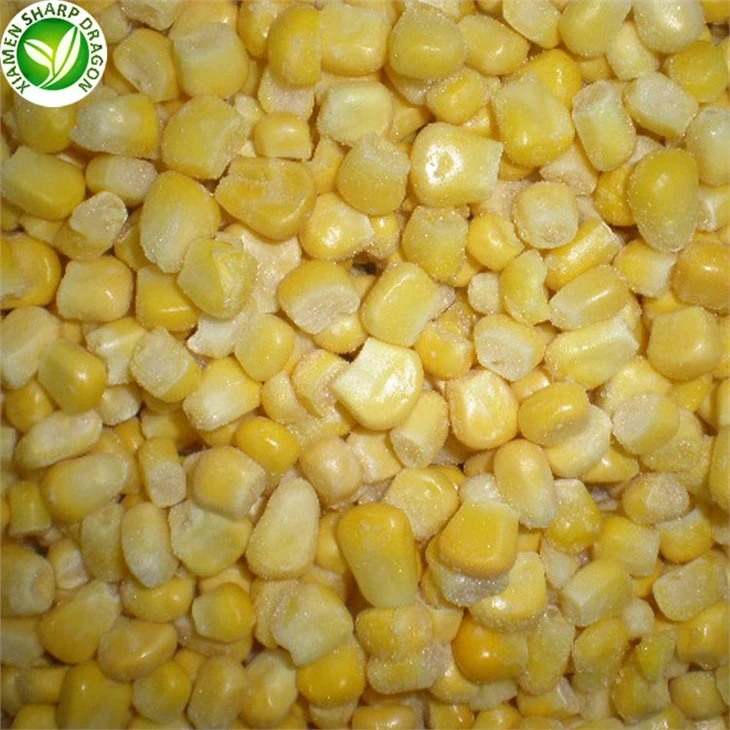
| Portion control | Free-flowing IQF kernels can be weighed or scooped without opening a cob or draining packing liquid. | Heavy clumping or a frozen block reduces this advantage and can indicate temperature fluctuation. |
| Low trimming loss | Kernel packs arrive without husk, silk, and cob waste, so more of the purchased weight can enter the recipe. | Whole frozen cobs still include an inedible core; compare products on edible yield. |
| Ingredient control | A plain corn-only product lets the cook or formulator set the final sodium, fat, sweetness, and seasoning. | Sauced and seasoned frozen products must be judged from their full ingredient list and Nutrition Facts panel. |
| Useful nutrition | Sweet corn contributes energy, fiber, folate, potassium, vitamin C, and carotenoids within an overall dietary pattern. | It is not a treatment for disease, and nutrient values vary by variety, processing, storage, cooking, and serving size. |
Convenience becomes a nutritional advantage only indirectly. A freezer staple may make it easier to add a vegetable to a meal, but the health effect depends on the complete eating pattern, portion, cooking method, and accompanying ingredients. Corn also contains more starch than many non-starchy vegetables, so it should not be presented as nutritionally interchangeable with leafy greens, broccoli, or peppers.
What Nutrition Does Plain Frozen Sweet Corn Provide?
The USDA FoodData Central entry for yellow sweet corn, frozen, cut from the cob, and unprepared reports the following values per 100 grams of edible product. This is a defined reference basis, not a promise for every commercial lot or a suggested serving size.
| Nutrient | Amount per 100 g | Responsible interpretation |
|---|---|---|
| Energy | 88 kcal | Corn is an energy-providing starchy vegetable, not a calorie-free food. |
| Carbohydrate | 20.71 g | Carbohydrate is the largest macronutrient component in this entry. |
| Dietary fiber | 2.1 g | It contributes to daily fiber intake but is not an exceptionally concentrated source. |
| Protein | 3.02 g | This is a modest contribution, not a replacement for a primary protein food. |
| Potassium | 213 mg | Potassium is needed for normal cell, nerve, and muscle function; corn supplies part of the day's total. |
| Folate | 36 micrograms | Folate is required for DNA production and cell division; this amount should be viewed within total dietary intake. |
| Vitamin C | 6.4 mg | It makes a modest contribution; heat and storage can affect the final amount eaten. |
| Lutein plus zeaxanthin | 672 micrograms | These are natural carotenoids, but the database value does not establish a disease-prevention claim. |
The physiological roles are real, but the evidence boundary matters. Folate and potassium are essential nutrients, and vitamin C has established functions including antioxidant activity and collagen formation. That does not mean a serving of frozen corn prevents heart disease, treats high blood pressure, improves immunity by itself, or corrects a nutrient deficiency. Those outcomes depend on total intake, health status, and the broader diet.

What Freezing Preserves-and What It Does Not
Commercial frozen corn is commonly harvested, husked, cleaned, sorted, blanched, cooled, cut or portioned, frozen, and packed. Freezing greatly slows deterioration, while blanching helps control enzymes that would otherwise damage color, flavor, and texture during storage. The process is useful, but it is inaccurate to say it "locks in all nutrients." Some nutrients can change during blanching, frozen storage, thawing, and final cooking.
Two controlled studies from the University of California, Davis compared refrigerated and frozen forms of eight fruits and vegetables, including corn. Overall vitamin content was comparable and sometimes higher in frozen samples, while mineral, fiber, and phenolic retention depended on the commodity and was often not significantly different. These findings support a moderate conclusion: well-produced frozen vegetables can remain nutritionally useful, but retention is nutrient-specific and cannot be reduced to "frozen always wins."
Final preparation also matters. Prolonged cooking in excess water can reduce water-soluble vitamins, and sauces can add more calories, sodium, saturated fat, or added sugar than the plain corn contributes. Follow the product label, use an appropriate cooking time, and evaluate the finished dish rather than the frozen ingredient in isolation.
Frozen, Fresh, or Canned Corn: Which Is Better?
There is no universal winner. Frozen corn is often attractive for portioning and texture; fresh corn is useful when seasonal flavor and on-the-cob presentation are central; canned corn is valuable when room-temperature storage and immediate use matter. Nutrition comparisons are meaningful only when the foods have the same preparation state and are compared by equal edible weight or a clearly defined serving.
| Decision point | Frozen corn | Fresh corn | Canned corn |
|---|---|---|---|
| Storage | Requires continuous frozen storage | Shorter refrigerated life | Shelf-stable before opening when the container is intact |
| Preparation labor | Minimal for loose kernels; follow cooking directions | May require husking, silk removal, washing, and cutting | Open and drain or rinse if the recipe requires it |
| Common texture | Often firmer than canned after correct cooking | Can be crisp and juicy when used promptly | Usually softer because of the canning heat process |
| Added ingredients | Plain products may contain only corn; sauced products vary | Usually none before cooking | Packing liquid may contain salt or sugar; check the label |
| Best fit | Portioned cooking, vegetable blends, ready meals, and frequent use | Seasonal service and fresh cob presentation | Shelf-stable stock and formulas built around a softer kernel |
University of Florida Extension gives a practical example: about one-half cup of canned or frozen sweet corn is around 55 calories, although actual labels vary. This is why a blanket claim that frozen corn has fewer calories than fresh or canned corn should be removed. Water content, drained state, variety, added ingredients, and serving weight can reverse the comparison.

Practical Benefits in Kitchens and Food Production
Loose kernels are easy to dose into soups, fried rice, salads, casseroles, bakery fillings, vegetable mixes, and ready meals. A cook can use only the amount required and return the unopened portion of the pack to proper frozen storage. At larger scale, free-flowing kernels can improve weighing repeatability and help a factory maintain a defined vegetable ratio across batches.
Frozen corn can also reduce raw preparation work. There is no husk or silk removal for kernel packs, no cob cutting, and no can opening or draining. These savings are application-specific: a small restaurant, a high-volume ready-meal line, and a retail private-label program have different labor rates, equipment, pack sizes, and acceptable waste. The useful question is whether frozen corn lowers the total cost of an approved finished serving.
Frozen corn is also flexible in formulation. Plain kernels let the recipe developer build a low-sodium, mildly seasoned, spicy, buttery, or sweet profile from the same base ingredient. Corn can be blended with peas, carrots, green beans, or other vegetables; XMSD's frozen mixed vegetable range shows how kernel color, size, ratio, and cooking behavior must work together rather than being evaluated separately.
Practical example: A ready-meal team wants corn to represent 15% of a 600 kg finished batch. That means the required cooked corn contribution is 90 kg. Its line trial measures a 93% cooked yield for the proposed frozen kernels, so the planned frozen input is 90 ÷ 0.93 = 96.8 kg. In a 240 g tray, the target cooked corn portion is 36 g.
The first 30-tray check averages 39 g of corn per tray. That is 3 g, or 8.3%, above the target portion. The team should adjust the depositor or mixing time, run another 30-tray check, and record both the mean and the spread before approving the setting. The benefit is not that IQF kernels guarantee perfect dosing; it is that loose, consistently sized kernels make the deviation easier to measure and correct. If clumping or excess surface ice prevents stable feeding, the lot has lost an important operational advantage.
Quality caution: A little loose frost can occur, but severe clumping, large ice masses, torn packaging, dehydration, wet cartons, or obvious thaw-refreeze damage require investigation. These observations do not replace temperature records, sampling, and the agreed product specification.
What to Specify and Test Before Approval
A useful frozen corn specification begins with the final application. Define whether the project needs loose kernels, whole cobs, cob segments, yellow or white corn, and a particular sweetness or size range. Then agree on ingredient statement, blanching and cooking status, kernel color, Brix or sensory sweetness, broken-kernel tolerance, foreign-material limits, packaging format, storage condition, shelf life, microbiological criteria, residue requirements, and destination-market documentation.
The XMSD frozen corn range includes kernels, whole cobs, and segments. Those forms should not share one acceptance test. For a kernel project, review the proposed frozen sweet corn kernel format, then set limits for free flow, broken rate, color distribution, size, and dosing accuracy. Cob projects also need length, diameter, kernel fill, missing kernels, cut quality, tenderness, and edible yield.
Run a representative cook test before approval. Measure cooked yield, water release, kernel integrity, color, sweetness, firmness, and hold performance in the real recipe. A kernel that looks acceptable while frozen may soften too quickly in soup, dry during hot holding, or release too much water in a pizza topping. Use the relevant checkpoints in our frozen sweet corn quality standard as a starting point, then make the final acceptance criteria describe your finished use, not only the unopened bag.

Ask for evidence that matches the claim being made. A nutrition panel or laboratory report supports nutrient values; a certificate supports only the scope and validity stated on that document; a product specification defines commercial acceptance; and temperature records help assess cold-chain control. Factory photographs are useful context, but they do not replace current audit, test, traceability, and shipment records.

How to Calculate the Cost Benefit Correctly
Compare cost per usable kilogram and cost per approved serving, not the shelf price of unlike packs. For fresh corn, include husk, silk, cob, trimming, seasonal loss, and preparation labor. For canned corn, use drained edible weight and include opening, draining, and container disposal. For frozen kernels, include freezer space, electricity, temperature monitoring, possible surface-ice loss, and cooking yield.
Then add the cost of quality variation. A lower-priced kernel that breaks, clumps, releases water, or fails color and texture targets can be more expensive after rework and complaints. The correct comparison uses the same recipe, serving weight, acceptance limits, labor boundary, and distribution route. This is why frozen corn may reduce cost for one operation but increase it for another.
Worked example: Treat the following figures as a test scenario, not a market-price claim. An operation compares 1,000 kg of frozen kernels at 1.18 local currency units (LCU) per purchased kilogram with 1,000 kg of fresh in-husk corn at 0.76 LCU/kg. Its own trials measure 97% approved usable yield for frozen kernels and 54% edible yield after husking, silk removal, cob removal, trimming, and rejection for the fresh corn.
Frozen handling, storage, and test costs add 90 LCU. Total frozen cost is therefore (1,000 × 1.18) + 90 = 1,270 LCU, divided by 970 kg usable output, or 1.31 LCU per usable kilogram. Fresh preparation labor and waste handling add 375 LCU. Total fresh cost is (1,000 × 0.76) + 375 = 1,135 LCU, divided by 540 kg edible output, or 2.10 LCU per usable kilogram.
At an 80 g serving, the ingredient-plus-handling cost is about 0.105 LCU for frozen and 0.168 LCU for fresh, a difference of 0.063 LCU per serving in this scenario. Do not transfer that result to another operation. Replace every assumption with your quote, measured yield, labor minutes and rate, energy cost, reject rate, and approved cooked output. If a frozen lot yields only 88% after ice and quality rejection, its cost becomes 1.44 LCU per usable kilogram; that sensitivity is exactly why the lot test matters.
Packaging and load condition protect the value calculated at the factory. Review bag seal strength, carton condition, pallet pattern, reefer loading, temperature set point, route risk, and arrival inspection. XMSD's frozen packaging guidance outlines the pack variables that can be aligned with retail, foodservice, and industrial channels.

XMSD sourcing note: Share the intended dish or process, corn form, target sweetness, kernel or cob specification, pack size, annual volume, and destination market. We can discuss an appropriate frozen corn specification and sample plan for your project.
FAQ About Frozen Corn Benefits
Is frozen corn healthier than canned corn?
Not automatically. Plain frozen corn often makes it easy to control added salt and seasoning, while no-salt-added canned corn can also fit a balanced diet. Compare equal edible weights, ingredient lists, sodium, added sugars, sauces, serving sizes, and the role each product plays in the complete meal.
Does frozen corn have fewer calories than fresh or canned corn?
There is no reliable universal ranking. USDA's reference entry lists 88 calories per 100 grams for one unprepared frozen yellow sweet corn item, while Extension guidance gives about 55 calories for a half-cup of canned or frozen sweet corn. Different weights, varieties, water content, drained states, and added sauces change the result, so check the exact label.
Does frozen corn need to be cooked?
Follow the package directions. Blanching during processing does not automatically mean a frozen vegetable is ready to eat. For soups and hot dishes, kernels can often cook from frozen when the label permits. For cold applications, complete the directed cooking step, cool promptly, and handle the finished dish safely.
Final Thoughts from XMSD
Frozen corn's strongest case is practical and measurable: useful nutrition, year-round access, portion control, little preparation waste, and flexible seasoning. Its value becomes credible when comparisons use the same edible basis and when the actual product performs in the intended recipe. Avoid absolute claims about calories, price, freshness, or nutrient retention; read the label, test the cooked result, and define the purchasing specification before choosing the format.
References
- USDA FoodData Central: Corn, sweet, yellow, frozen, kernels cut off cob, unprepared
- University of Florida IFAS Extension: Sweet Corn-It's a Vegetable and a Grain!
- Bouzari, Holstege, and Barrett: Vitamin retention in refrigerated and frozen produce
- Bouzari, Holstege, and Barrett: Mineral, fiber, and phenolic retention in refrigerated and frozen produce
- NIH Office of Dietary Supplements: Folate Fact Sheet for Consumers
- NIH Office of Dietary Supplements: Potassium Fact Sheet for Consumers
- NIH Office of Dietary Supplements: Vitamin C Fact Sheet for Consumers
- U.S. Food and Drug Administration: What's on the Nutrition Facts Label
- XMSD operational experience in frozen corn form selection, application testing, packaging, cold-chain handling, and B2B export coordination.