


Can You Freeze Opened Canned Pineapple? Batch Guide
Aug 21, 2026

Yes. After a commercial can, pouch or foodservice pack of pineapple has been opened, you can transfer the unused fruit and liquid into clean freezer-suitable containers, divide it by the quantity your recipes use, label it and freeze it under your site's controlled handling procedure. Decide before packing whether the later application needs drained fruit, fruit with its packing medium, crushed pineapple, or juice. The choice determines portion mass, headspace, thaw method and the result you should expect.
Freezing is useful for controlled surplus; it does not restore an unknown or abused opened product. Keep the original lot identity, opening time and temperature history. Discard a leaking, swollen, badly damaged or suspicious can according to applicable guidance rather than tasting it. If the opened pineapple has remained outside your approved time-temperature control, freezing cannot make it acceptable. This scope starts after a sound commercial container is opened and inspected; it does not recommend intentionally freezing an unopened can.
Direct answer: Transfer opened pineapple promptly into food-grade freezer containers; choose a drained, liquid-pack or juice basis; portion for one future use; leave expansion space; close and label; freeze quickly; thaw under refrigeration or another approved method; and release it by condition and recipe performance. Freezing pauses the storage clock but does not erase the handling history before freezing.
If you are still deciding which commercial supply format to purchase, use the separate frozen-versus-canned pineapple buyer guide. The method below begins only after canned, crushed or juice product has already been selected and opened.
Identify what came out of the container
Record the exact product before different opened containers are combined. Useful fields include supplier and brand, product name, pineapple style, ingredients, packing medium, net content, declared drained weight where applicable, original lot or can code, best-before information, opening date and time, and the person or station that opened it. Keep allergen or recipe-specific information attached if the pineapple came from a compound product rather than a single-ingredient can.
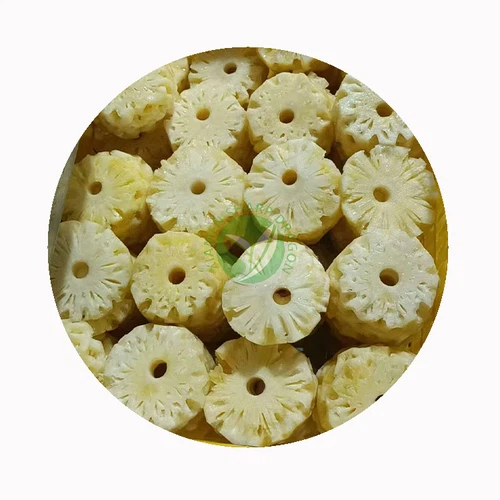
Codex CXS 319-2015 recognizes several canned pineapple styles, including slices, half slices, quarter slices, spears, fingers, chunks, cubes or dice, pieces, tidbits, chips and crushed pineapple. It also distinguishes regular liquid packs, heavy packs and solid packs. Those names affect how much free liquid you see and what can be measured after thawing. They do not mean that every brand has the same cut, soluble solids, fruit-to-liquid ratio or texture.
Do not merge water-packed, juice-packed and syrup-packed products into one unlabeled freezer tub. The liquid changes sweetness, viscosity, formula water, label calculation and drained yield. Two cans with the same pineapple style can therefore produce different batters, sauces or beverage bases. If several original lots must be consolidated, your traceability and recall procedure must permit it; otherwise keep portions separated by source lot.

Choose drained, liquid-pack or separated portions
Freeze the portion on the same mass basis your later recipe uses. For a bakery formula written in drained fruit kilograms, drain by a defined method and freeze the fruit separately. For a sauce, smoothie, sorbet or glaze that uses both fruit and liquid, portion them together at the approved ratio. If your operation uses the fruit and packing liquid in different recipes, separate and label both streams at opening rather than trying to recover an unknown ratio after thawing.
A drained basis needs a repeatable drain method: stated screen or colander, product mass, drain time, temperature and whether gentle movement is allowed. A liquid-pack basis needs a mixing instruction so settling does not create one portion with more solids than another. Crushed pineapple requires particular attention because fine fruit and juice can separate during standing, freezing and thawing. Homogenize only to the extent allowed by the product and recipe; aggressive blending changes the particle definition.
Practical example: Your pizza topping specification uses 750 g of drained tidbits per tray, while the sauce department uses pineapple liquid in 250 g additions. After opening, the prep station drains with the agreed screen and time, weighs 750 g fruit portions and 250 g liquid portions, and labels both with one source lot. Freezing whole cans' contents as mixed blocks would force the next shift to thaw, drain and reweigh a large mass, increasing delay and handling.
Pack chunks and slices for the later recipe
Canned pineapple has already received a heat process. Its tissue may soften further after freezing and thawing because ice formation and liquid movement disrupt structure. Expect the change to matter most when intact appearance and bite are central, such as visible rings, fruit cups or cold garnishes. It often matters less in cooked fillings, purees, sauces, smoothies or products where the pineapple will be chopped again.
Use a shallow, single-use container or a well-sealed freezer bag for drained pieces. Remove avoidable air without crushing the fruit. A tray-freeze method can keep pieces more separable, but drained canned fruit carries surface liquid and may still adhere. Test the real style instead of promising IQF-like separation. If a recipe always uses a complete frozen block, packing one measured portion together is simpler and reduces repeated opening.
Preserve the style name in the freezer label. Rings, chunks, tidbits and irregular pieces are not interchangeable on a visible topping. If the fruit was cut after opening, record the new dimensions or recipe designation. Do not label manually diced canned pineapple as an original supplier dice specification; it is a preparation step performed by your site.
Portion crushed pineapple and juice with expansion space
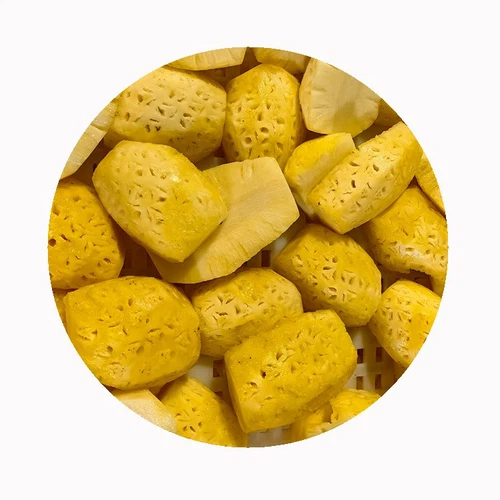
Crushed pineapple, solid pack and puree-like material freeze into a dense block unless divided. Portion them in shallow rigid containers, straight-sided freezer jars suitable for freezing, or measured freezer bags laid flat. Juice can be packed in rigid containers or in smaller recipe units. Never fill a sealed rigid container to the rim. Water-rich product expands during freezing and can distort a lid or break an unsuitable glass container.
The National Center for Home Food Preservation publishes headspace references for household freezing. For liquid-packed or crushed fruit in a wide-top container, it lists 1/2 inch for a pint and 1 inch for a quart; narrow-top references are 3/4 inch and 1 1/2 inches. Its juice row lists 1/2 inch and 1 inch for wide-top pint and quart containers, and 1 1/2 inches for narrow-top sizes. These values explain the expansion principle; a foodservice or industrial operation should use the container manufacturer's fill guidance and its own package validation rather than assuming every tub has the same geometry or strength.
Label every portion with the product and medium, source lot, drained or undrained basis, portion mass or volume, opening time, freezing time, intended recipe and site review or discard code. If juice is frozen in cubes, trays or dosing molds, protect the frozen units in a closed secondary container after hardening. An uncovered tray is a temporary freezing step, not long-term packaging.
| Opened format | Useful portion basis | Main thaw check |
|---|---|---|
| Slices, rings or chunks | Drained recipe mass or fruit-plus-medium ratio | Shape, softness, breakage and drainage |
| Crushed or solid pack | Shallow single-batch mass | Liquid separation and particle distribution |
| Juice or reserved liquid | One beverage, sauce or formula addition | Settling, remixing, flavor and volume |
Do not let freezing hide the opened-product clock
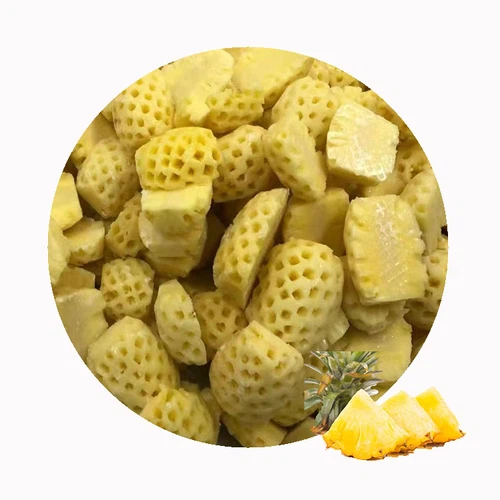
Opening removes the protection of the sealed commercial process and introduces handling, utensils, air and the surrounding environment. USDA FSIS currently places high-acid canned goods such as fruit, pineapple and fruit juices in a five-to-seven-day refrigerated category after opening. Another FSIS answer recommends a glass or plastic storage container for better quality. Those are U.S. household handling references, not permission to hold every foodservice batch for seven days.
Your operation may need a shorter limit because of local law, manufacturer directions, recipe additions, vulnerable users, repeated service exposure or site policy. Start the record when the pack is opened. If you decide to freeze at hour 20, the portion does not become "new" food with no history. Carry the opening record forward and define the allowed thawed hold. Do not add the full refrigerated allowance before freezing to another full allowance after thawing without a validated site basis.
FDA advises refrigerating or freezing prepared food and leftovers promptly and discarding suspicious canned products. Inspect before opening and at transfer. Swelling, leakage, severe seam damage, forceful spurting, mold, unusual discoloration or abnormal odor requires the applicable discard and incident procedure. Freezing is not a salvage step for a questionable can, and acidity is not a substitute for hygienic handling.
Freeze quickly and verify the real package
Chill product before loading the freezer if your procedure requires it, then spread new portions where cold air can circulate. Do not stack a large quantity of warm or refrigerated liquid so tightly that the center freezes slowly. Use a freezer capable of maintaining the required condition and avoid overloading it. The University of Minnesota advises household freezers at 0°F (-18°C) or lower and notes that smaller packages freeze faster; commercial limits, loading rules and monitoring should be set for the actual equipment.
Check the chosen tub, lid, bag, tray or glass jar at the intended fill mass. Examine expansion, leakage, seal opening, brittleness, stacking, label adhesion and freezer odor transfer. Verify that the label remains readable after condensation. A lightweight takeaway tub that survives refrigeration may crack, deform or lose its lid in frozen storage. Package suitability is a material and temperature question, not a visual guess.
Set your quality review period through actual thaw trials. Household fruit guidance often gives long quality windows for correctly packed fresh fruit, but already-canned pineapple has a different heat history, texture, medium and open handling. For a new program, you may choose 30-, 60- and 90-day checks, evaluating seal, odor, appearance, separation, drained yield and recipe performance. Those are example review points, not universal shelf-life claims.

Thaw by application, then remix or drain deliberately
Refrigerator thawing gives the clearest control for fruit that will be held or used cold. Cold-water or microwave methods may be appropriate under food-safety guidance when the package and immediate use fit the method. For a cooked sauce or filling, your validated process may permit adding a small frozen portion directly. Record the route; two samples cannot be compared if one is slowly thawed overnight and another is heated from frozen.
Expect liquid separation. Thawed chunks may release more juice and feel softer. Crushed pineapple can form a fruit-rich layer and a clearer liquid layer. Juice may show suspended-solids settling. Decide whether to stir, fold, drain, strain or use the entire portion. The correct action comes from the recipe basis. Remixing a portion intended for drained topping changes the mass; discarding clear liquid from a sauce portion changes solids, sweetness and yield.
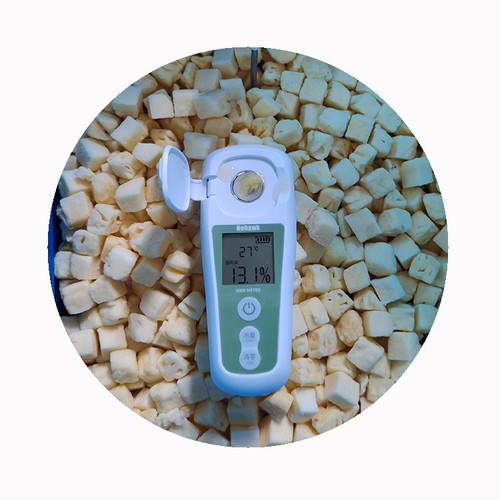
Measure the result that matters. For toppings, record intact pieces, softness, breakage and drip. For crushed filling, measure homogeneous portion mass and cook behavior. For juice, compare volume, settled solids, flavor and any Brix or acidity requirement using a defined method. A visible refractometer number in a photograph is not a specification or lot result. Instrument temperature compensation, calibration, sample preparation and product medium all influence interpretation.
Use a mass balance to prevent hidden waste
Track fruit and liquid separately when recipes use them separately. Begin with net opened mass, then record drained fruit, recovered liquid, screen loss, spill or discard, portions packed and residual balance. The totals should reconcile within an agreed weighing tolerance. This exposes a common problem: staff freeze all liquid with the fruit, but the next recipe discards it and loses usable value.
Worked example: An opened foodservice batch contains 12.0 kg of pineapple and packing liquid. Your defined drain method gives 7.2 kg fruit and 4.8 kg liquid. One production recipe uses 600 g fruit and 150 g liquid. The fruit supports 7.2 ÷ 0.6 = 12 complete recipe portions. Those portions consume 12 × 0.15 = 1.8 kg liquid, leaving 3.0 kg. You freeze twelve paired fruit-and-liquid sets and, if another approved recipe can use the remaining liquid, twelve separate 250 g liquid portions because 3.0 ÷ 0.25 = 12. All values are hypothetical; the real allocation must use your measured drain result and recipe.
After thawing one pilot set, compare recovered fruit and liquid with the packed mass. If a 600 g fruit portion yields only 540 g of usable topping, the application yield is 540 ÷ 600 = 90%. That does not prove spoilage; it may reflect drainage, breakage, adhesion to the package or a stricter topping standard. Identify the loss before changing portion size, because simply packing more can hide the process problem and distort cost.
Decide whether a thawed portion may be refrozen
Avoid routine refreezing by packing single-use quantities. FDA states that food which still contains ice crystals or is 40°F (4.4°C) or below can be safe to refreeze or cook after a power interruption, but product-by-product evaluation is still required. FSIS also explains that refrigerator-thawed food may be refrozen safely, although quality can decline. Those rules do not approve a portion with unknown service exposure, contaminated utensils or missing time records.
Use a written decision: confirm source lot, thaw method, highest observed temperature, time outside control, package integrity, cross-contamination risk, sensory condition and intended use. If any critical history is unknown, hold or discard according to site policy. If refreezing is approved, update the label and expect more separation and texture loss. Do not combine a refrozen portion with a new portion and preserve only the newer date.
Never apply opened-product instructions to an accidentally frozen sealed can without checking official guidance. Can seams may be damaged and contents expand. FSIS has a specific decision path for frozen cans, including discarding burst or suspect containers. The safer operating design is to keep unopened cans in their specified shelf-stable storage and freeze only transferred product in suitable packaging.
Approve the method with a small application trial
Run the trial with one representative opened lot before freezing a large surplus. Create parallel portions for the intended methods: drained fruit, fruit plus medium, crushed product and juice where relevant. Record container, fill mass, headspace, freeze time, storage period, thaw route, separated liquid, recovered mass, flavor, texture and application result. Keep one refrigerated control only within the approved holding rule.
Approve by use, not by a generic "still good" judgment. A softened chunk may fail a cold fruit cup but pass a cooked cake filling. Separated crushed pineapple may be restored for a sauce after measured remixing but remain unsuitable for a visible layer. Juice with harmless settling may pass after controlled mixing, while abnormal odor, package leakage or an uncertain handling history requires the safety decision before any sensory trial.
Practical example: A bakery tests three 1 kg portions from the same opened lot. One is drained before freezing, one is packed with all liquid, and one is packed at the recipe's fruit-to-liquid ratio. After a fixed refrigerator thaw, all three enter the same batter formula. The ratio-controlled portion gives the target deposit weight without draining or formula correction, so the bakery adopts it and rejects the easier but less repeatable "freeze the remainder" instruction.
| Later use | Preferred trial basis | Release evidence |
|---|---|---|
| Visible topping or fruit cup | Drained, shallow single-use portion | Piece integrity, softness and drip |
| Cooked filling or sauce | Recipe fruit-to-liquid ratio | Deposit weight, cook yield and flavor |
| Beverage, sorbet or smoothie | Measured juice or homogenized crushed portion | Volume, solids, sweetness and blend result |
Match the unopened supply format to the way your site portions and uses pineapple. Review XMSD canned food formats and the frozen pineapple range. For recurring surplus, a smaller can, foodservice pouch, drained specification or direct frozen format may reduce handling better than repeatedly freezing opened product.
Our foodservice route and frozen packaging information can support the discussion. We can review product form, packing medium, portion pattern, destination and expected monthly use with an available supply and partner-factory route.
Frequently Asked Questions
Can canned pineapple be frozen in the opened metal can?
Transfer it to a clean food-grade container suitable for freezing. Leaving expansion space, sealing, portioning and labeling are easier to control outside the can. FSIS says refrigerated canned leftovers can remain in the can but recommends glass or plastic for optimum quality; freezing adds expansion and package-suitability concerns.
Should I drain canned pineapple before freezing?
Drain it when the later recipe is written on a drained-fruit basis. Keep fruit and medium together when the approved formula uses both. If different recipes use each stream, portion and label them separately at opening.
Can crushed pineapple and pineapple juice be frozen?
Yes, in single-use freezer containers with adequate expansion space. Expect settling or separation after thawing. Define whether to remix, drain or use the complete portion according to the recipe.
How long does opened canned pineapple last after freezing?
There is no universal commercial quality period for every canned style, packing medium, freezer and application. Freezing does not reset unsafe pre-freeze handling. Set the period through applicable rules, manufacturer information, package validation and dated thaw trials for texture, separation, flavor and recipe yield.
Can a thawed pineapple portion be frozen again?
It may be possible when the complete time-temperature and handling history remains acceptable under your rules, but quality will usually decline. Avoid the decision by freezing one-use portions. Never refreeze to rescue an unknown or contaminated portion.
Final Decision
Freeze opened canned pineapple only as a controlled portioning step. Preserve product and lot identity, choose the recipe mass basis, separate fruit and liquid when needed, use freezer-suitable containers with expansion space, label the opening and freezing history, freeze quickly, thaw under control and release by the intended application. Reject suspicious or uncontrolled product before it reaches the freezer.
The best method reduces future handling rather than postponing it. A single-use drained fruit portion, a paired fruit-and-liquid set or a measured juice portion gives the next shift a defined ingredient. One anonymous frozen block gives it another problem to solve.
Review the root cause of recurring opened-product surplus.
Send your pineapple style, packing medium, drained basis, can or pouch size, recipe portion, monthly use and destination through the XMSD inquiry form. We will separate available product and packing options from the food-handling decisions that remain under your site's approved procedure.
References
- USDA Food Safety and Inspection Service. After you open a can, how long can you keep the food in the refrigerator? Updated January 27, 2025.
- USDA Food Safety and Inspection Service. Freezing and Food Safety.
- U.S. Food and Drug Administration. Are You Storing Food Safely?
- National Center for Home Food Preservation. Headspace to Allow.
- University of Minnesota Extension. How to Freeze Fruit Safely. Reviewed in 2025.
- Codex Alimentarius. CXS 319-2015 Standard for Certain Canned Fruits.