


XMSD Corn Food Guide: Forms, Labels and Better Choices
May 28, 2019

Corn is not automatically good or bad for you. Plain sweet-corn kernels are a starchy vegetable that provides carbohydrate, fiber, protein and micronutrients. Whole-grain corn foods can also make a useful contribution. A heavily salted, sugar-coated or fried corn product is a different food because its ingredients, water content, serving and preparation change the result. Judge the exact form and the complete meal, not the word "corn" alone.
Our practical rule: name the corn product, read its ingredient list and Nutrition Facts per serving, then decide what role it plays. Plain frozen kernels in a vegetable side, air-popped popcorn, a whole-corn tortilla and cheese-flavored fried chips should never receive one nutritional verdict.

Start with Product Identity, Not a Moral Label
The word corn covers several foods. Sweet corn is harvested while the kernels are tender and is commonly treated as a starchy vegetable in meal guidance. Mature dry corn can be milled into meal or flour, treated with lime to make masa, or used as popcorn. Corn starch, syrup and oil are separated fractions with very different composition. A snack can contain corn yet derive much of its energy, sodium or sweetness from oil, cheese seasoning, sugar or other ingredients.
USDA MyPlate places fresh or frozen yellow and white corn among starchy vegetables and counts one large ear or one cup of kernels as one cup of vegetables. USDA food-program guidance also recognizes whole corn, whole cornmeal and properly identified masa products as grain ingredients in relevant settings. These classifications answer different questions; neither means every corn-derived product has the same nutritional value.
For a package or purchase order, use a precise identity: IQF yellow sweet-corn kernels, frozen cob segments, canned kernels in brine, whole-grain cornmeal, nixtamalized masa, air-popped popcorn or fried flavored chips. Once identity is clear, the useful questions become measurable: What else is added? How much is one serving? What does it replace in the meal? How often is it eaten?
Plain Sweet Corn Has Food Value without Being a Complete Meal
USDA SNAP-Ed displays a one-cup, 145 g corn serving with about 125 kcal, 27 g carbohydrate, 3 g dietary fiber, 5 g protein, 2 g total fat, 22 mg sodium and no added sugar. Treat those values as one referenced food-and-serving example, not a universal specification. Variety, maturity, preparation, drained weight and database entry can move the numbers.
That profile makes plain corn a carbohydrate-containing food with some fiber and protein. It is not nutritionally empty, but neither is it a substitute for every vegetable or protein food. A plate made almost entirely from corn misses the variety delivered by leafy vegetables, legumes, other colored vegetables and suitable protein foods. The sensible normal case is to use corn as one component of a varied meal.
Our separate corn nutrition and frozen-kernel guide owns the detailed nutrient and label basis. The decision here is simpler: plain corn has nutritional value; its goodness is not unlimited and does not erase the rest of the recipe.

Processing Is Not One Single Good-or-Bad Switch
Freezing, canning, grinding, popping, nixtamalization, extrusion and frying all count as processing, but they do different jobs. Freezing plain kernels preserves a convenient vegetable form. Canning produces shelf stability and may add brine. Grinding changes particle size. Nixtamalization changes corn structure and nutrient availability. Frying adds oil; flavor systems can add salt, sugar and other ingredients. Calling all processed corn bad discards information you need to make a decision.
Use three questions. First, which parts of the kernel remain? Whole-grain identity matters differently from refined starch or syrup. Second, what was added? Oil, sodium, added sugar and coatings can dominate a small serving. Third, what happened to water and serving density? Dry snacks concentrate solids per gram, so an equal weight is not an equal eating volume compared with cooked kernels.
Practical example: compare 100 g of plain thawed kernels with 100 g of fried corn chips. The kernels contain substantial water and remain recognizable pieces. The chips are dried, fried and seasoned; the package label may show much more energy and sodium per 100 g. The correct action is to compare the actual labels at both the declared serving and a common 100 g basis, not to transfer the kernel's reputation to the snack.
Read the Finished Label in a Fixed Order
FDA's Nutrition Facts guidance emphasizes serving size, calories, nutrients and percent Daily Value. Start with servings per container and serving weight; an appealing front label is not useful if the amount you eat is two or three declared servings. Then read calories and the nutrients most relevant to the decision. FDA identifies saturated fat, sodium and added sugars as nutrients many Americans consume too much of. Fiber and other beneficial nutrients belong in the same review.
Next read the ingredient list. Plain frozen corn may list only corn. Butter sauce, cheese powder, salt, oil, sugar, starches and flavor systems change the finished product. A corn image on the front does not disclose their amounts. If the item claims whole grain, verify how the grain ingredient is named and what other grain ingredients are present. If a nutrition claim is material to approval, keep its calculation and applicable rule with the artwork file.
| Read in this order | Decision | Failure signal |
|---|---|---|
| Identity and ingredients | Know whether it is plain corn or a prepared food | A broad corn claim hides oils, coatings or sweeteners |
| Serving weight and count | Match the label to the amount actually served | A pack routinely eaten at once declares several servings |
| Calories and carbohydrate | Place the item within the full meal | Corn is added without adjusting another starch |
| Sodium, saturated fat, added sugar | See what formulation added to the base | Seasoning dominates the finished nutrition |
| Fiber, protein and micronutrients | Describe real contribution without making a cure claim | One nutrient is used to call the whole product universally healthy |
FDA's updated U.S. "healthy" claim has defined food-group and nutrient criteria; ordinary conversation and regulated labeling are not identical. Do not assume that a product can carry a front-of-pack claim merely because sweet corn can fit a healthy dietary pattern. Evaluate the exact food, serving and market rule before artwork approval.
Portion and Meal Role Change the Answer
Corn is a starchy vegetable, so it often contributes more carbohydrate per serving than non-starchy vegetables such as leafy greens or cucumber. That is not inherently bad. It means the meal designer should know whether corn is the starch, one vegetable within a mixed side, a garnish or an additional ingredient on top of rice, pasta or bread.
If your tray already contains a full rice portion, adding a large corn portion increases total carbohydrate and energy. If corn replaces part of the rice while adding color, texture and vegetable variety, the result changes. Our corn-versus-rice product guide compares those roles rather than declaring one ingredient universally better.
Frequency matters as well. One serving in a varied weekly menu is different from using corn at every meal while excluding other vegetables. Medical needs can change the decision, but this page does not prescribe a diabetes, kidney, allergy or weight-management plan. It provides the food-identification method that must come before individualized advice.

Convert a Recipe Percentage into a Real Serving
A percentage on a formulation sheet does not tell the eater's exposure until it is connected to serving weight. This conversion also reveals whether corn is a visible feature, a small inclusion or the dominant starch. Use the finished serving, not the batch headline, when comparing nutrition and claim language.
Worked example: a 2,400 kg frozen ready-meal batch contains 14% plain sweet corn. The batch requires 2,400 × 0.14 = 336 kg corn. Each 320 g tray contains 320 × 0.14 = 44.8 g corn.
Using the USDA SNAP-Ed example of 125 kcal, 27 g carbohydrate and 3 g fiber per 145 g, the corn fraction contributes an estimated 38.6 kcal, 8.34 g carbohydrate and 0.93 g fiber per tray: 44.8 ÷ 145 multiplied by each reference value.
These are development estimates for the named reference basis. The finished meal includes every other ingredient and may require an approved database method, laboratory data, retention factors and destination-market rounding before the label is released.
The calculation prevents two opposite mistakes. It stops a developer from calling the whole tray nutritious merely because corn appears in the recipe, and it stops another developer from rejecting corn as "too starchy" without seeing that the actual inclusion supplies only 8.34 g carbohydrate in this example. Compare the complete tray against its intended meal role.
Frozen, Canned, Cob and Mixed Forms Need Different Checks
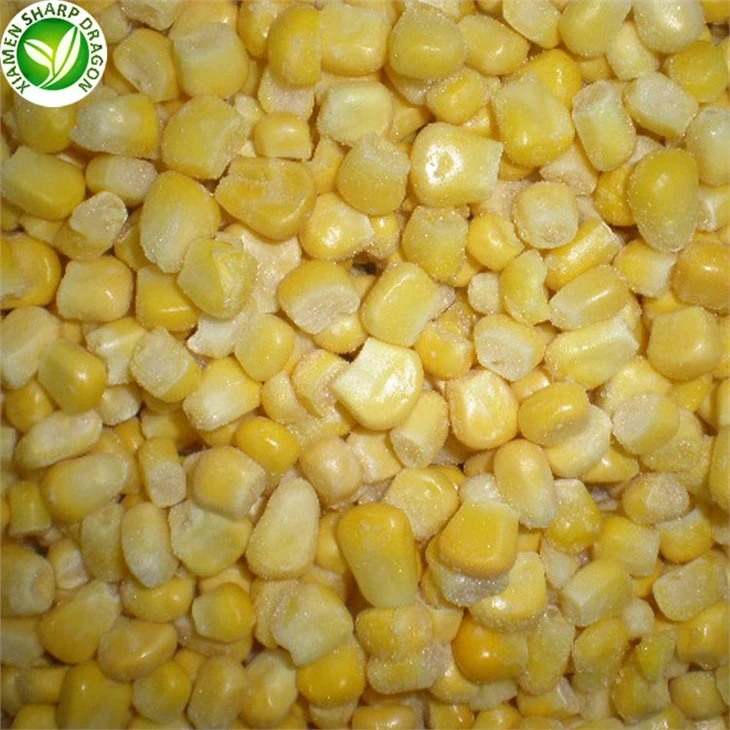
Plain frozen kernels let you control seasoning and portion in the finished recipe. Review ingredient statement, kernel maturity, color, tenderness, breakage, free flow, surface ice, off-odor, cooking behavior and pack condition. USDA's frozen whole-kernel corn standard evaluates varietal characteristics, flavor and odor, tenderness, color and defects. It is a useful evidence model, though the applicable commercial specification must match the actual contract and destination.
Canned corn offers ambient shelf stability before opening, but brine, added ingredients, drained weight and softer texture can change use. Compare nutrition on the label's stated basis and decide whether the recipe uses drained kernels or the packing liquid. Cob segments add inedible cob weight and need length, diameter, kernel fill and edible-yield controls. A mixed vegetable bag requires component ratios and compatible cook times; the corn cannot be judged in isolation from peas, carrots or beans.
XMSD's frozen corn yield and recipe-control guide owns the operational benefit calculation. Here, the lesson is that a suitable product form supports a better choice only when portion, ingredients and intended use remain visible.

Reject the Old Medical Shortcuts
Corn does not make children smarter merely because it contains amino acids or B vitamins. Its nutrients participate in normal physiology, but that is not proof of a cognitive outcome from corn porridge. Corn is not a "happy food" treatment. Plain kernels do not independently lower blood pressure, prevent cancer, reverse aging, treat constipation, act as a diuretic or improve gallbladder disease. Those promises require clinical and regulatory evidence far beyond a composition table.
The same discipline applies in the other direction. Carbohydrate does not make corn inherently bad. Visible kernel hulls after digestion do not prove that the food supplied no nutrients. A genetically modified crop question cannot be answered from the appearance of frozen kernels, and a non-GMO or organic claim needs the relevant identity and certification evidence rather than assumption.
Use modest truthful wording: the product contains corn; a declared serving supplies specified nutrients on a defined basis; the food can fit the described meal; and the recipe was assessed for the relevant label criteria. Do not convert those statements into disease prevention or guaranteed personal outcomes.
Build a Commercial Decision That Survives Scale-Up
For frozen sweet corn, start with the exact application and choose kernels, cobs or a blend. Define color type, maturity and tenderness, kernel or cob dimensions, defects, foreign material, broken material, free-flow expectation, blanch or cooking status, ingredient statement, net weight, inner pack, carton, storage and required lot documents. Review the current XMSD frozen corn range by form before narrowing the specification.
Run the approved sample through the real process. A soup needs flavor and tenderness after simmering; fried rice needs separation and kernel integrity; a pizza topping needs controlled water release; a retail side needs appearance after reheating. Record sample weight, cooking method, hold time, temperature, drainage and scoring conditions so the next lot receives the same test.
Practical example: a central kitchen sees bright frozen kernels and approves the lot visually. During a 30-minute hot hold, the kernels become tough and the tray loses moisture. The failure is not proof that corn is bad; it shows the approval method was incomplete. Add a representative cook-and-hold test with agreed tenderness, water-release and appearance limits before the next release.
Packaging protects the result after approval. Match bag size to the quantity opened per production cycle, then check seal integrity, coding, carton strength, pallet stability and route temperature evidence. Our frozen-food packaging overview frames these choices; the order file should identify the exact configuration and acceptance method.

Use a Five-Part Final Test
First, name the product. Second, read ingredients and nutrition per the amount actually eaten. Third, place it in the complete meal rather than evaluating one ingredient in isolation. Fourth, account for frequency and any individual medical constraint. Fifth, for a commercial food, verify that specification and application performance match the claim. If all five are clear, the good-or-bad question becomes a practical choice instead of a slogan.
For most ordinary uses, plain fresh or frozen sweet corn can be a reasonable food component. A prepared corn product with high sodium, saturated fat or added sugar may be an occasional choice or need reformulation. The conclusion comes from the exact label and meal, not from fear of corn or from an exaggerated cure story.

XMSD sourcing note: Send the corn form, recipe, serving, annual volume, pack, destination and quality priorities. We can review an order-specific frozen-corn option, representative sample plan and the documents needed before commercial confirmation.
Frequently Asked Questions
1. Is plain frozen corn good or bad?
Plain frozen sweet corn can be a useful starchy-vegetable component. Check the ingredient statement, serving and complete meal; freezing alone does not make it bad.
2. Is canned corn worse than frozen corn?
Not automatically. Compare added ingredients, sodium, drained weight, texture, storage and intended use. A no-salt-added canned product and a heavily sauced frozen product reverse the usual assumption.
3. Are corn chips the same as sweet corn?
No. Chips have a different process, water content, ingredient list, serving density and often added oil and salt. Use the finished snack label.
4. Does corn count as a vegetable or grain?
Sweet corn is commonly grouped as a starchy vegetable in meal guidance, while mature dry corn is a cereal grain. Name the exact product instead of forcing every form into one label.
5. Is corn bad because it contains carbohydrate?
No. Carbohydrate is one part of corn's food value. Portion, meal composition, frequency and individual needs determine whether the amount fits.
6. Can a product be called healthy because it contains corn?
No. Evaluate the finished food, serving, food-group contribution, nutrients and applicable market rules. One ingredient does not approve the whole claim.
Final Answer from XMSD
Corn is neither universally good nor universally bad. Plain sweet corn has real food value and can fit a varied meal. Whole-corn grain foods can also contribute usefully. Refined fractions and prepared snacks must be judged as their own products, especially when oil, sodium, added sugar, serving density or large portions change the outcome.
Name the form, read the label, calculate the actual serving and decide its role in the full meal. For commercial frozen corn, add a reproducible application test and an order-specific specification. That method gives a defensible answer without turning corn into either medicine or a dietary villain.
Disclaimer: This article provides general food and procurement information, not medical, dietetic or legal advice. Review individual dietary needs, claims, labels, product specifications, safety controls and destination requirements for the actual use.
References
- USDA Food and Nutrition Service SNAP-Ed. Corn nutrition information.
- USDA MyPlate. Vegetable Group and starchy-vegetable cup equivalents.
- U.S. Food and Drug Administration. Use of the "Healthy" Claim on Food Labeling.
- U.S. Food and Drug Administration. How to Understand and Use the Nutrition Facts Label.
- USDA Agricultural Marketing Service. Frozen Whole Kernel Corn Grades and Standards.