


XMSD Banana Benefits: Nutrients, Meal Value and Product Decisions
May 27, 2019

The realistic benefits of eating bananas are straightforward: they provide carbohydrate, dietary fiber, potassium and vitamin B6, and they can help make fruit convenient to include in a varied diet. Those are useful contributions, not promises that one banana prevents high blood pressure, treats constipation, changes mood, stops a cough or produces weight loss. Benefit depends on the edible amount, the product form, the rest of the meal and the needs of the person eating it.
The useful answer: treat banana as a food ingredient with measurable nutrient and functional contributions. Keep a nutrient fact separate from a disease promise, and keep the consumer benefit separate from the role banana performs in a smoothie, bakery filling, dairy cup or frozen dessert.

What Benefits Can a Banana Actually Provide?
A banana contributes food energy because most of its calories come from carbohydrate. It contributes fiber, although it is not one of the most concentrated fiber foods. It contributes potassium and vitamin B6, while also supplying smaller amounts of several other nutrients. Its soft texture, mild flavor and natural sweetness can make fruit easier to use in meals and formulated foods. These benefits are additive: the fruit contributes to a dietary pattern; it does not replace vegetables, legumes, protein foods, whole grains or medical care.
Our related guide asks whether bananas are a good fruit in different portions and forms. This page has a narrower job. It maps each claimed benefit to the nutrient, amount or product function that could support it, then shows where the claim becomes too strong.
That distinction matters for both readers and buyers. "Contains potassium" is a composition statement. "Potassium participates in normal muscle and nerve function" describes an established nutrient role. "This banana prevents cramps or high blood pressure" predicts a personal health outcome and needs much stronger evidence. A food page should not slide from the first statement to the third because the words sound related.

Carbohydrate Provides Available Energy, Not a Performance Guarantee
USDA legacy composition data for raw banana report about 89 kcal and 22.84 g carbohydrate per 100 g edible portion. Eating carbohydrate provides substrate the body can use for energy. That supports a modest statement: banana can contribute carbohydrate to a meal or snack. It does not prove that one serving will deliver "instant and long-lasting energy," cure fatigue or improve athletic performance for every person.
Duration depends on the amount and on what accompanies the fruit. A banana eaten with yogurt, nuts or another protein- and fat-containing food creates a different meal from banana juice or a sweetened banana dessert. Activity, meal timing and individual glucose response also matter. If a brand wants an energy statement, calculate the serving accurately and use the destination market's permitted nutrition wording rather than turning a metabolic fact into a performance claim.
Practical example: a breakfast operator can compare two 180 g bowls using the same 60 g banana portion. One combines it with unsweetened yogurt and oats; the other adds sweetened syrup and confectionery pieces. Banana contributes the same mass to each, but the finished nutrition, added-sugar position, satiety experience and label are not the same. The benefit belongs to the complete bowl, not to the banana name alone.
Fiber Is a Contribution to the Diet, Not a Constipation Cure
The same USDA basis reports about 2.6 g dietary fiber per 100 g raw banana. Fiber is one reason intact fruit is different from a filtered drink, but a banana does not supply a full day's fiber. NIDDK advises adults to obtain adequate fiber across the diet and drink enough liquids to help fiber work. Its guidance describes a pattern that includes fruits, vegetables, legumes, whole grains and nuts; it does not identify one fruit as a guaranteed remedy.
Banana ripeness and personal tolerance can also change the experience. Some people find a certain form helpful, while others report bloating or do not see the expected result. Our separate evidence review answers the narrower question of whether bananas help bowel movements. Here, the defensible benefit is simply that banana can add some fiber to an adequate, hydrated diet.
Processing changes the calculation. Sieving can remove fibrous material; dilution reduces banana solids per serving; drying concentrates solids per gram; and a formulated product may add other fibers. Ask whether the nutrition number describes raw banana, the supplied ingredient or the finished food. Otherwise, a truthful source fact can become an inaccurate package claim.

Potassium Supports Normal Physiology, but the Whole Diet Sets the Claim
Potassium is required for normal cellular function. NIH's Office of Dietary Supplements describes roles in nerve transmission, muscle contraction and kidney and heart function. Higher dietary potassium, especially within eating patterns rich in fruits and vegetables and lower in excess sodium, is associated with blood-pressure benefits. That evidence supports adequate dietary intake; it does not show that a banana independently prevents hypertension or "undoes" a high-sodium diet.
Raw-banana legacy data list about 358 mg potassium per 100 g, while actual values vary with cultivar, maturity, growing conditions and analytical source. Use the correct database and serving basis for the target label. Do not present potassium as proof that banana prevents muscle cramps: cramps have multiple potential causes, and a banana serving is not a diagnostic or treatment plan.
More is not automatically better for every consumer. People with impaired potassium excretion, including some with advanced chronic kidney disease or those receiving dialysis, may need individualized limits. Product copy should not tell that group to increase banana intake. A general food benefit and a clinical nutrition instruction are different communications.
Vitamin B6 Has Defined Roles; "Happy Food" Is Not One of Them
NIH ODS lists about 0.4 mg vitamin B6 in one medium banana, equal to 25% of the U.S. Daily Value in the referenced table. Vitamin B6 coenzyme forms participate in more than 100 enzyme reactions, mainly in protein metabolism, and are involved in carbohydrate and lipid metabolism, hemoglobin formation, immune function and neurotransmitter biosynthesis. This makes banana a useful food source of the vitamin.
It does not make the fruit a sedative, pain reliever or mood treatment. Saying that the body uses vitamin B6 in neurotransmitter pathways is not evidence that eating a banana produces a predictable serotonin surge, pleasure, calmness or drowsiness. ODS also notes that trials of vitamin B6 supplementation have not established improved mood or cognitive function in the broad way such claims imply. Food-level copy should stop at the nutrient contribution unless product-specific evidence supports more.
The Substitution Benefit Can Matter More Than One Nutrient
A banana's practical benefit often comes from what it replaces. Ripe banana can provide sweetness, moisture, aroma, color and body. In a tested recipe, it may allow a developer to reduce some added sugar or fat, replace part of another fruit preparation, or create thickness without relying on the same amount of starch. None of those outcomes is automatic. The recipe must still meet taste, texture, processing, safety, shelf-life and labeling requirements.
Substitution should be evaluated on the finished formula. Replacing 20 kg of sugar with 20 kg of banana puree does not preserve soluble solids, water, sweetness, freezing point or microbial behavior. Banana brings substantial water and plant solids; sugar is far more concentrated. A sensible trial uses several inclusion levels, holds the other variables deliberately, then measures Brix, pH, viscosity, color, flavor and yield.
Practical example: a bakery team testing a 12% banana filling may find that a ripe puree improves flavor and binding but makes the baked center darker and softer after storage. A firmer-ripeness material may hold pieces better but deliver less banana aroma. The "benefit" becomes a controlled balance among fruit identity, sweetness, moisture and texture-not a generic promise that more banana makes every product better.
Quantify the Banana Contribution in a Finished Product
Ingredient percentages can sound impressive while producing a small per-serving contribution. Convert the formula to edible banana grams in the declared serving before approving benefit copy. Then apply an appropriate nutrient value and account for processing, added ingredients and laboratory needs. This step prevents raw-fruit numbers from being pasted onto a diluted food.
Worked example: a 6,000 kg dairy-style product contains 8% unsweetened banana, so the batch uses 480 kg. A 150 g serving contains 150 × 0.08 = 12 g banana.
Using 2.6 g fiber and 358 mg potassium per 100 g raw-banana reference basis, that banana fraction contributes an estimated 12 ÷ 100 × 2.6 = 0.312 g fiber and 12 ÷ 100 × 358 = 42.96 mg potassium per serving.
Those calculations are planning estimates, not the finished label. The final food includes other ingredients, and its legal nutrition declaration may require an approved database method, retention factors, rounding rules or laboratory analysis for the destination market.
The example shows why "made with banana" and "meaningful source of fiber or potassium" are separate propositions. Approve the ingredient statement, quantitative ingredient declaration where applicable, nutrition panel and any front-of-pack language as one evidence set. If the banana percentage changes, recheck every connected claim.
Frozen Banana Can Preserve Convenience, but Verify the Supplied Form
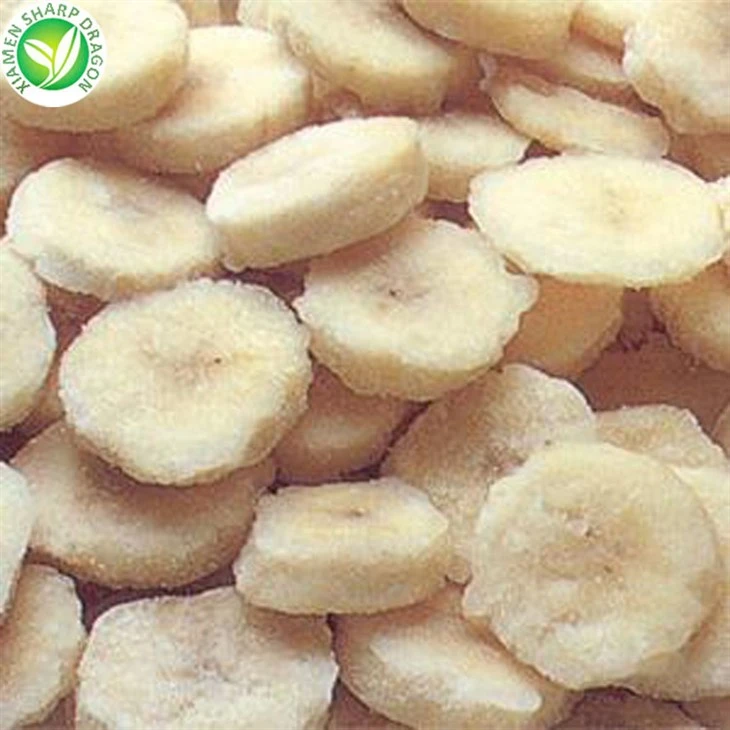
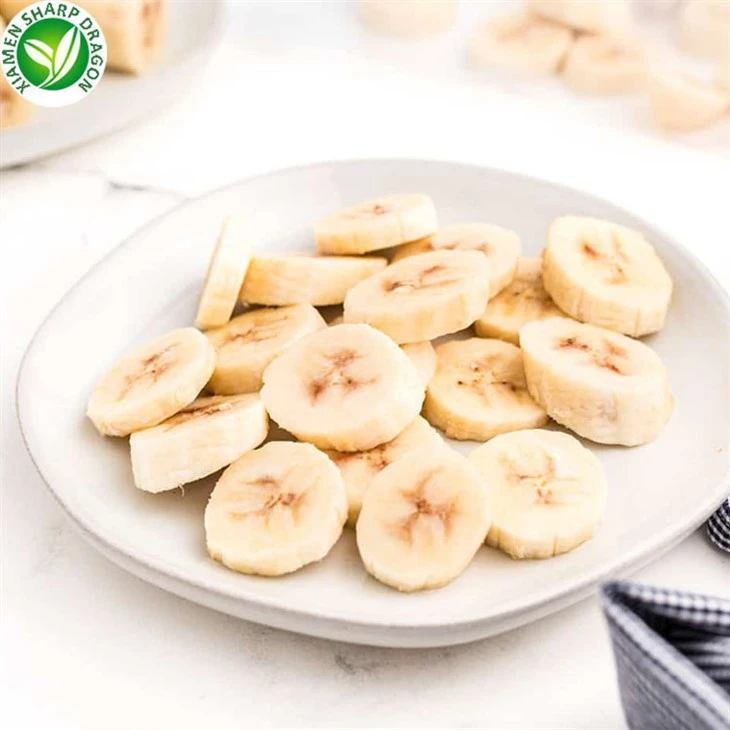
Plain frozen banana pieces can provide year-round portioning, reduced peeling labor and easier recipe dosing. Freezing does not convert fruit into an empty food, but it can change texture and processing can affect some nutrients. Our focused review explains what freezing may change in banana nutrition.
For a commercial order, confirm whether the item is whole, sliced, chunked or pureed; the ingredient statement; ripeness or color target; piece dimensions and tolerance; broken and mashed material; foreign-material controls; net weight; pack; storage; and intended use. A frozen slice designed for blending is not automatically acceptable for a visible fruit topping. A sweetened banana preparation is not nutritionally interchangeable with unsweetened IQF fruit.
Review the current XMSD frozen banana formats as a starting point, then place the approved identity and tolerances in the specification. Web images show direction; the representative sample and controlled order documents decide acceptance.

Approve Benefit, Function and Claim as Three Separate Lines
| Statement type | Example | Evidence needed |
|---|---|---|
| Composition | Contains carbohydrate, fiber, potassium and vitamin B6 | Correct food, basis, serving and data source |
| Nutrient function | Potassium contributes to normal muscle function | Permitted destination wording and qualifying amount |
| Ingredient function | Adds sweetness, fruit flavor, body or moisture | Application trial and measurable specification |
| Health outcome | Prevents hypertension, constipation or weight gain | Do not infer from banana nutrients; regulatory and clinical substantiation required |
Use the weakest accurate statement that still helps the customer. This is not timid marketing; it is durable claim control. A brand can communicate fruit content, a permitted nutrient claim and verified recipe advantages without promising disease prevention. Keep the source, calculation, laboratory record and approval date connected to the final artwork.
Set a trigger for reapproval. A change in fruit percentage, puree concentration, cultivar range, added ingredients, serving size, nutrient source, manufacturing site or target market can break the evidence chain even when the front label looks unchanged. Freeze the approved formula and artwork together; when one trigger moves, recalculate the contribution and route the claim through nutrition and regulatory review before printing.
Practical example: a retailer approves "contains vitamin B6" using a 15% banana recipe and one declared serving. The next season's product moves to 9% banana and a larger serving while adding another fruit puree. Keeping the old sentence without rerunning the calculation creates avoidable risk. The correct action is to update the formula basis, identify every vitamin source, apply the destination threshold and retain the signed result with the new artwork.
Build the Buyer File Around the Intended Benefit
Start with the finished application and the benefit you actually need. For a smoothie, prioritize ripe flavor, dispersion, solids, color and blend time. For a bakery inclusion, review moisture, bake stability, browning, piece survival and flavor after shelf life. For a visible topping, tighten cut size, intact-piece percentage, surface defects and thawed appearance. For a retail bag, include piece separation, pack weight, seal, storage instructions and serving communication.
Then request product identity, ingredient statement, specification, process summary, traceability, applicable certificate scope, microbiological and chemical criteria, nutrition basis, sample, pack details, shelf life and change-notification agreement. Align the inner bag and carton with how much your line opens per shift; our frozen-food packaging overview helps frame that decision.
At receiving, check lot code, quantity, temperature evidence, carton and seal condition, piece separation, color, odor, cut distribution and representative thawed performance. Release food safety against the agreed controls, then approve quality against the application trial. A nutrient table cannot compensate for fermentation odor, severe clumping, excessive mash, wrong ripeness or a pack that does not protect the fruit.
Retain the approved sample and record the thawing method used in the comparison. Without the same time, temperature and drain procedure, two teams can reach opposite conclusions from the same lot. A reproducible test turns a general benefit into an ingredient result you can release, investigate and buy again.

XMSD sourcing note: Tell us the application, banana form, target ripeness or color, cut, annual volume, pack, destination and claim direction. We can review the current frozen-banana option, sample plan and order-specific documents before commercial confirmation.
Frequently Asked Questions
1. What is the main benefit of eating a banana?
It conveniently contributes carbohydrate, fiber, potassium and vitamin B6 as part of a varied diet. There is no single main benefit that makes banana necessary or medicinal.
2. Does banana give instant and long-lasting energy?
Banana carbohydrate supplies food energy, but speed and duration depend on portion, the rest of the meal, activity and the individual. Avoid a guaranteed performance or duration claim.
3. Can bananas prevent high blood pressure?
Bananas contribute potassium, and potassium-rich dietary patterns can support blood-pressure management. One food does not independently prevent or treat hypertension, and people with some kidney conditions need individualized potassium advice.
4. Do bananas improve mood or help sleep?
Banana contains vitamin B6, which participates in neurotransmitter metabolism. That fact does not establish a predictable mood, pain-relief or sleep effect from eating a banana.
5. Is frozen banana as beneficial as fresh banana?
Plain frozen banana remains fruit and can retain useful nutrients and convenience. Compare the ingredient list, edible amount, processing, storage and intended use; do not assume a sweetened preparation or fried chip is equivalent.
6. Does adding banana make a product healthy?
No ingredient name decides the finished product. Calculate banana grams per serving, review every ingredient and the complete nutrition panel, and substantiate each claim for the destination market.
Final Answer from XMSD
Bananas can contribute convenient carbohydrate, some fiber, potassium, vitamin B6 and useful food functions such as sweetness, body and moisture. The credible benefit is the measured contribution within a varied diet or tested formula. It is not a guarantee of lower blood pressure, easier bowel movements, better mood, cough relief, weight loss or universal suitability.
For procurement, define the banana form, edible inclusion, ripeness, cut, ingredients, application test, nutrition basis, pack and receiving criteria. That evidence lets you communicate real fruit value without asking the word "banana" to support a claim it cannot carry.
Disclaimer: This article provides general food and procurement information, not medical, dietetic or legal advice. Review individual dietary needs, label rules, specifications, claims, safety controls and documents for the actual consumer, product, facility, destination market and intended use.
References
- USDA Agricultural Research Service. FoodData Central / National Nutrient Database legacy record for bananas, raw.
- NIH Office of Dietary Supplements. Potassium: Fact Sheet for Health Professionals.
- NIH Office of Dietary Supplements. Vitamin B6: Fact Sheet for Health Professionals.
- National Institute of Diabetes and Digestive and Kidney Diseases. Eating, Diet, & Nutrition for Constipation.