


Lychee Nutrition by Edible, Drained and Recipe Weight: A Calculation Guide
Dec 11, 2019

Raw lychee pulp is mostly water and carbohydrate, with vitamin C as its most prominent listed micronutrient. USDA FoodData Central's legacy entry for raw litchis reports about 66 kcal, 16.53 g carbohydrate, 15.23 g total sugars, 1.3 g fiber, 0.83 g protein, 0.44 g fat and 71.5 mg vitamin C per 100 g edible portion. Peel and seed are excluded from that basis.
Those figures are a reference, not a finished label for every lychee food. Whole-fruit purchase weight, peeled pulp weight, drained canned fruit, unsweetened frozen pulp, syrup-packed fruit and recipe servings use different denominators. First identify what was weighed; then scale the nutrient values; then account for other ingredients, processing, yield and the labeling rules of the destination market.
Fast rule: Do not multiply a 100 g edible-pulp value by whole lychee weight. Remove the inedible fraction or use measured pulp yield. For a mixed food, multiply each ingredient's nutrient value by its grams in one finished serving and add the results.

Start with the Reference Food and Its Measurement Basis
A food-composition record names both the food and the basis. "Litchis, raw" describes raw edible flesh; its 100 g row is not a whole-fruit analysis that includes shell and seed. The spelling litchi is a standard botanical and trade variant of lychee. It does not identify another nutrient profile by itself.
Per-100 g data make products comparable, while per-serving data describe what is eaten or sold. Convert with a simple factor: edible grams divided by 100. For 80 g of pulp, multiply every 100 g value by 0.8. For 125 g, multiply by 1.25. Keep more decimal places during calculation and round only at the stage required by the labeling system.
Food databases also describe representative samples, not a guaranteed concentration in every cultivar and lot. Growing conditions, maturity, storage and processing create variation. A database supports early formulation and education. A claim-critical nutrient may require supplier evidence, calculation under accepted rules or laboratory analysis of the defined product.
Edible Yield Connects Whole Fruit to Pulp Nutrition
Whole lychee includes peel, edible aril and seed. The edible fraction changes with cultivar, fruit size, seed size, maturity, trimming and damage. A generic yield assumption may be useful for a rough forecast, but receiving and menu costing are stronger when the operation measures its own representative lot.
Worked yield example: A kitchen weighs 20.0 kg of sound whole lychees. After peeling, pitting and removing rejected flesh, it records 12.2 kg of usable pulp. Edible yield is 12.2 divided by 20.0, or 61%. The lot supplies 122 portions of 100 g pulp before service loss. Nutrient estimates use 12.2 kg, while purchase cost and labor planning begin with 20.0 kg.
If the same purchase produced 13.0 kg in another cultivar, the edible yield would be 65%. That difference changes portion cost and waste, even if the pulp nutrient value per 100 g were identical. Whole-fruit size alone does not reveal pulp yield because seed and shell proportions also move.
Peeled frozen product changes the receiving basis. The supplier has removed shell and seed, so the delivered kilogram is much closer to usable fruit mass. Specifications still need allowances for fragments, residual seed material, excess surface ice or other nonconforming pieces. Compare usable pulp cost with usable pulp cost, not whole fresh kilograms with peeled frozen kilograms.

What the Main Nutrient Numbers Mean
At 66 kcal per 100 g, raw lychee's energy comes mainly from carbohydrate. Total sugars are part of total carbohydrate, not an additional amount to add on top. Fiber is another carbohydrate component but is declared separately in many labeling systems. Protein and fat occur in much smaller amounts in the USDA reference.
The 15.23 g total-sugars figure describes sugars present in the raw edible fruit. "Total sugars" and "added sugars" are not synonyms. An unsweetened single-fruit product can contain natural total sugar while having no sugar added during processing. Syrup, sucrose or another sweetener changes the formula and may create an added-sugars declaration under applicable rules.
Vitamin C is water soluble and supports physiological functions including collagen formation and antioxidant activity. That role explains why the nutrient is relevant; it does not make lychee a treatment for infection, skin disease or another condition. The amount eaten, overall diet and individual health context remain separate from a food-composition number.
The U.S. Daily Value for vitamin C is 90 mg for adults and children aged four years and older on Nutrition Facts labels. A 100 g raw reference amount containing 71.5 mg is mathematically about 79% of that DV before regulatory rounding. A legal claim must use the defined serving, substantiated product value and applicable labeling rules, not the convenient 100 g example alone.

Serving Size Is a Label Basis, Not a Suggested Intake
On a U.S. Nutrition Facts label, serving size reflects the amount customarily consumed for the product category and is shown with a household measure and metric grams. It is not a recommendation for how much fruit every person ought to eat. Other markets apply their own serving and declaration rules.
A recipe developer may use three different weights without contradiction: 10 kg of ingredient added to a kettle, 9.7 kg retained after transfer, and 24 g of lychee present in one finished serving. The first controls purchasing, the second supports yield, and the third supports the serving calculation. Label files become fragile when those numbers are copied without names.
For each nutrient line, preserve a short audit trail: source food, source amount per 100 g, lychee grams per serving, multiplication factor, contribution before rounding and rule used for declaration. When the recipe or serving changes, the arithmetic can be updated without reconstructing the assumptions.
Drained, Undrained, Frozen and Thawed Weights Answer Different Questions
Fruit packed in liquid can be described by net contents, drained solids or the complete food as consumed. Syrup contributes its own water and sugars. A value for drained lychee cannot be assigned to the combined fruit-and-syrup serving without adding the packing medium. Conversely, using undrained mass as though it were all fruit overstates the pulp contribution.
Frozen lychee may be weighed as received, after tempering or after complete thaw and drainage. Thaw liquid comes from surface ice, cell release and any declared medium or treatment. The correct basis follows the way the ingredient enters the formula. A smoothie that uses fruit and released liquid needs a different mass record from a plated dessert that drains before portioning.
In our sample reviews, we label every bowl and spreadsheet column with state-frozen gross, frozen net, thawed total, drained pulp and drained liquid-before calculating yield. That simple habit prevents a kilogram from changing meaning halfway through the trial. We also retain the time and temperature of thawing because longer exposure can increase liquid release and softness.
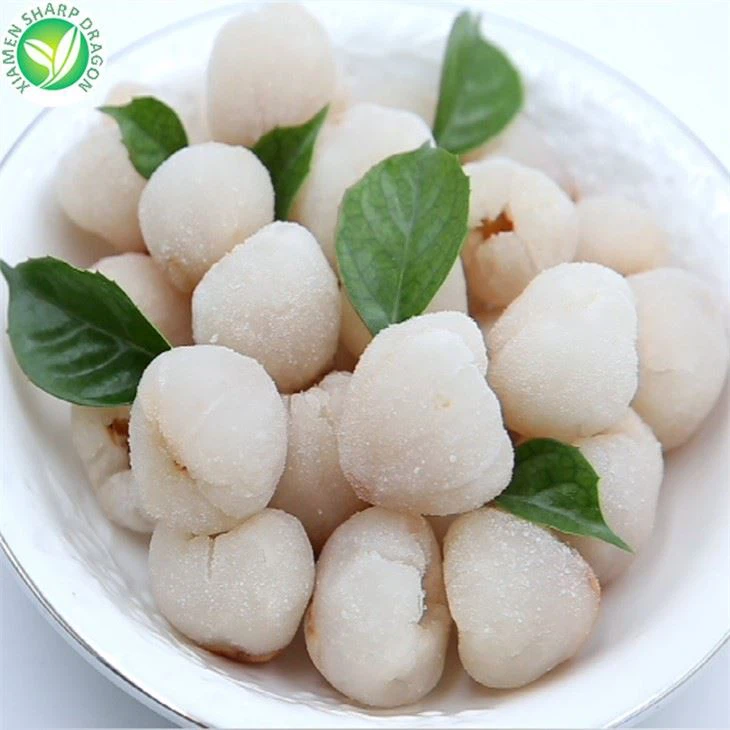
The XMSD frozen lychee range establishes a peeled, frozen commercial route. For a comminuted application, the frozen litchi pulp form shifts attention from whole-piece count toward texture, color, flavor, ingredient declaration and discharge behavior.

Recipe Math Starts with Ingredient Grams per Finished Serving
Worked formulation example: A 120 g frozen dessert serving contains 18% unsweetened lychee pulp, or 21.6 g. Using the USDA raw reference only for early estimation, the lychee fraction contributes about 14.3 kcal, 3.57 g carbohydrate, 3.29 g total sugars, 0.28 g fiber and 15.44 mg vitamin C. Each result equals the 100 g value multiplied by 0.216.
That calculation does not describe the full dessert. Dairy, coconut base, sugar, stabilizers and other fruit add their own nutrients. Processing and shelf life may change a sensitive vitamin. Final serving weight can differ from theoretical batch weight through transfer or evaporation. The complete label therefore uses the complete recipe, actual finished yield and evidence appropriate to the claim.
Compare this with the 20 kg whole-fruit example. That case converted purchase weight to usable portions and waste. The dessert case converts recipe inclusion to a nutrient contribution. One supports procurement and labor costing; the other supports formulation and label preparation. Both use weight, but they solve different decisions.
If the formula uses sweetened lychee, replace the raw reference with the supplied product data and include added sweetener. If it uses drained fruit from syrup, document whether the serving retains any liquid. If the product claim relies on vitamin C, choose a substantiation plan that reflects processing and the declared shelf period.
Natural Sugar, Added Sugar and Brix Must Stay Separate
Raw lychee naturally contains glucose, fructose and sucrose captured within total sugars. Added sugars arise when sugars or qualifying sweetening ingredients are introduced during processing under the relevant regulatory definition. A product can therefore declare total sugar while containing no added sugar. The formulation record proves which route applies.
Brix estimates soluble solids by refractive index. Sugars are a major part of fruit soluble solids, but acids, minerals and other soluble components also contribute. A 17° Brix reading cannot be copied as 17 g total sugar per 100 g without a justified method. Use Brix for maturity or batch consistency when appropriate; use composition data or analysis for nutrient declaration.
A sweet taste is equally incomplete as a measurement. Acidity and aroma change perceived sweetness. Frozen temperature suppresses flavor perception, while thawing can intensify it. Compare samples at a defined temperature and dilution. A nutrition file and a sensory file may reference the same lot, but each needs its own method.

Processing and Storage Can Move the Analytical Result
Peeling removes inedible mass. Pitting changes yield. Cutting exposes tissue. Heating, oxygen, storage time and thawing can affect sensitive nutrients, including vitamin C. Water gain or loss also changes concentration per 100 g even when the absolute amount in a batch changes little. "Frozen" alone does not quantify any of these movements.
At XMSD review points, we match the evidence to the proposed statement. A general ingredient estimate can begin with a recognized database. A supplier specification may provide a declared range for the delivered item. A front-of-pack nutrient claim calls for stronger substantiation and a plan for lot and shelf-life variability. We do not use a fresh reference value as a silent certificate for every frozen shipment.
Processing evidence also includes identity and contamination control, not nutrition alone. The XMSD food-processing overview gives operational context, while the frozen packaging framework helps define liner, carton, net weight and cold-chain protection. These records support the physical product behind the calculation.

Sample the Product that the Nutrition File Describes
A laboratory result is only as representative as the sampling plan. Select increments across the lot or production run, combine or keep them separate according to the purpose, and preserve product identity. Record cultivar or commercial type where known, process date, treatment, pack, frozen state and preparation before analysis.
For whole peeled pieces, include natural size and color distribution rather than sending only the largest pale fruit. For pulp, homogenize using a defined method so the analytical portion represents the batch. For syrup-packed food, state whether the sample is drained and how. For a recipe, analyze the finished food or maintain a validated calculation built from every ingredient and actual yield.
The peeled frozen lychee form makes the physical receiving unit visible. Size, seed removal, breakage and thaw behavior still need their own tolerances; they do not emerge from a nutrient panel.
Build a Six-Line Nutrition Basis Before Approving Copy
Record six items: product identity, physical state, weight basis, nutrient source, serving or inclusion amount, and rounding jurisdiction. Add the formula and date. If any line is blank, pause the claim. A number without a named basis can look precise while being attached to the wrong food.
Use whole purchase weight for procurement yield, edible or drained weight for the ingredient actually consumed, recipe grams for formulation, and finished serving grams for the label. Separate total sugars from added sugars and Brix. Treat a database as estimation evidence and a representative analysis as product evidence. That sequence keeps calculations reproducible.
Finally, read the proposed wording beside the evidence. "Contains lychee" needs identity and formulation records. A quantified nutrient statement needs the amount and basis. A regulated content claim needs the destination rule and substantiation. A medical promise is not created by finding a nutrient in the fruit.
Choose Evidence in Proportion to the Decision
A recognized food database is efficient for screening a concept. It can answer whether a proposed lychee percentage is likely to make a small or large contribution and reveal which nutrients deserve attention. It cannot capture every cultivar, treatment or storage interval. Mark every early calculation as an estimate and preserve the exact food record used.
Supplier data move the estimate closer to the delivered product when the identity, method, date and basis are clear. Ask whether values describe unsweetened peeled fruit, pulp, a composite sample or a single lot. Check whether water, syrup or treatment ingredients are included. A specification range can support purchase comparison, but a regulated claim may call for another level of substantiation.
Laboratory analysis is strongest when the sample and method represent the marketed item. One excellent result from a selected pack does not describe production variation. Build the sample from the defined lot or run, retain chain-of-custody records, use an appropriate accredited method where required and decide how often the result must be refreshed. Your evidence plan should address variability, not just analytical precision.
Label review adds a legal layer. Serving basis, mandatory nutrients, rounding, tolerance, claim thresholds and record retention differ by jurisdiction and product. A mathematically correct spreadsheet can still produce noncompliant copy if it uses the wrong serving or rule. Route the final declaration through qualified regulatory review for the destination.
Use the lightest evidence that safely answers the actual decision. A menu cost model may need a measured edible yield and a database estimate. A business-to-business technical sheet may need agreed product data. A front-label vitamin claim may need representative analysis across its declared life. Escalation is deliberate: more consequential wording receives stronger product-specific support.
Reconcile Three Totals Before Releasing the Calculation
First reconcile mass. Ingredient additions minus documented loss should align with finished batch yield within the process tolerance. Second reconcile portions: finished net batch weight divided by serving grams should align with the planned number of servings. Third reconcile nutrient contribution: ingredient grams across all servings should return to the batch ingredient total. A mismatch exposes a lost denominator before it reaches packaging.
For example, 240 kg of lychee distributed across 10,000 equal servings means 24 g per serving. If the declared serving contains only 20 g in the spreadsheet, 40 kg has disappeared from the nutrient model. Either the finished serving count, lychee addition or loss record is wrong. Reconciliation does not prove the analytical value, but it proves that the selected value was applied to a coherent mass flow.
Lock units beside every entry. Kilograms at batch scale, grams per serving and milligrams for vitamin C are easy to confuse when copied between systems. Write conversion factors explicitly: 1 kg equals 1,000 g, and a 24 g fruit amount equals 0.24 of the 100 g reference. Protect formula cells and require a second-person check of changed inputs.
Share the required lychee form, recipe use, serving basis, claim market, pack and quantity through the XMSD product inquiry route. The data request can then match the supplied product and decision.
References
- USDA FoodData Central. Litchis, raw, FDC ID 169086. SR Legacy food-composition record.
- U.S. Food and Drug Administration. Serving Size on the Nutrition Facts Label.
- U.S. Food and Drug Administration. Added Sugars on the Nutrition Facts Label.
- NIH Office of Dietary Supplements. Daily Values for food and supplement labels.
- Codex Alimentarius. Standard for Litchi, CXS 196-1995.