


What Are the Benefits of Eating Carrots? An Evidence-Based Food Guide
Jul 08, 2019

Eating carrots can make a useful contribution to a balanced diet because plain carrots provide provitamin A carotenoids, dietary fiber, potassium, and food volume for relatively few calories. Their strongest nutrition distinction is beta-carotene, which the body can convert to vitamin A. Vitamin A is required for normal vision, immune function, cell growth, and the maintenance of several tissues. Whole carrots also supply intact plant fiber, which helps make a meal more filling and supports normal bowel function as part of an adequate overall fiber intake.
Those facts do not mean carrots cure eye disease, prevent cancer, lighten skin, or guarantee weight loss. Nutrient composition establishes what the food can contribute; it does not prove a clinical outcome from one ingredient. Portion, preparation, the rest of the meal, and what the carrots replace determine the practical benefit. Plain raw, steamed, roasted, or frozen carrots are different choices from sweetened juice, butter-glazed sides, fried snacks, or carrot cake.
For most adults, a normal meal portion is a sensible way to use carrots, while variety across red, orange, dark-green, starchy, and other vegetables remains more valuable than trying to maximize one food. If you need personalized advice for kidney disease, diabetes, a food allergy, or another medical condition, use your clinician or registered dietitian's plan rather than a generic carrot target.
The short answer: Carrots are most useful as a low-energy vegetable source of provitamin A carotenoids and fiber. Eat them in a form and portion that fit the complete meal. Give the strongest health claims to the dietary pattern, not to carrots alone.

What a Measured Portion of Raw Carrots Provides
A reliable benefits discussion starts with a defined food form. USDA FoodData Central's SR Legacy entry 170393 describes raw carrots on a 100-gram edible basis. It reports about 41 kilocalories, 9.58 grams of carbohydrate, 2.8 grams of dietary fiber, 4.74 grams of total sugars, 0.93 gram of protein, and 0.24 gram of fat. The same amount contains about 320 milligrams of potassium, 835 micrograms of vitamin A as retinol activity equivalents, and 8,285 micrograms of beta-carotene.
These are reference values, not a certificate for every carrot. Variety, maturity, growing conditions, edible trim, analytical method, and water content create natural variation. Cooked and frozen entries may also appear more or less concentrated per 100 grams because heating, blanching, draining, or moisture uptake changes the weight basis. Use the raw values to understand scale, then use the correct database entry or a product-specific analysis for the food you actually serve or label. For a broader composition breakdown, see XMSD's carrot nutrient values and forms guide.
| USDA raw-carrot value | Per 100 g | What the number can tell you |
|---|---|---|
| Energy | 41 kcal | Plain carrots add substantial food volume without much energy. |
| Dietary fiber | 2.8 g | Carrots can add to, but do not complete, the day's fiber requirement. |
| Vitamin A | 835 mcg RAE | This estimates vitamin A activity from carotenoids; it is not an absorption guarantee. |
| Potassium | 320 mg | It is a useful contribution, not a treatment-level dose. |
Worked example: USDA lists one medium raw carrot at about 61 grams. Scaling the 100-gram values gives roughly 25 kilocalories, 1.7 grams of fiber, 195 milligrams of potassium, and 509 micrograms RAE of vitamin A. NIH gives adult vitamin A recommendations of 900 micrograms RAE for men and 700 micrograms RAE for women, so the database value equals about 57% and 73% of those respective daily amounts. That percentage describes nutrient activity on paper. It does not mean every person absorbs the same share, nor does it justify treating a carrot as a vitamin A prescription.

Benefit 1: Carrots Contribute Provitamin A Carotenoids
Orange carrots contain beta-carotene and alpha-carotene, pigments that can be converted into vitamin A. NIH explains that vitamin A is involved in normal vision, immune function, reproduction, growth and development, and the normal formation and maintenance of the heart, lungs, eyes, and other organs. This is the strongest physiological reason carrots are nutritionally distinctive.
The evidence boundary matters. Adequate vitamin A helps prevent problems caused by deficiency, including impaired low-light vision. Extra carrots do not sharpen normal eyesight, correct refractive error, or treat cataracts, glaucoma, or retinal disease. Carotenoid-rich dietary patterns may be associated with some favorable health outcomes, but an association across a diet is not proof that one number of carrots prevents a specific disease. The focused question about night vision, deficiency, and eye conditions belongs in the carrots and vision evidence guide.
Carrots also differ from high-dose beta-carotene supplements. NIH reports that trials of high-dose beta-carotene supplements increased lung-cancer risk in people who smoke or formerly smoked and in people exposed to asbestos. That finding is not a warning against a normal carrot side dish, and a carrot's healthy-food status is not evidence that a concentrated supplement is safe or useful. Keep food, fortified products, and supplements separate whenever you interpret a claim.
Food structure changes carotenoid availability
Carotenoids sit inside a plant matrix. Chopping, cooking, and pureeing can disrupt that structure and make beta-carotene more accessible for absorption. A small human study in eight ileostomy volunteers compared meals containing 15 milligrams of beta-carotene from cooked, pureed carrots with raw, chopped carrots; both meals included yogurt with 40 grams of added sunflower oil. The calculated absorbed share was higher for cooked puree, about 65.1% versus 41.4% under those test conditions.
That experiment shows why "raw always has more nutrition" is too simple, but it does not establish a universal percentage for ordinary meals. The sample was small, the participants had ileostomies, the beta-carotene dose was controlled, and the meal contained a substantial amount of added fat. In practice, both raw and cooked carrots can be useful. A modest amount of fat from the overall meal can support absorption of fat-soluble carotenoids; it is not a reason to turn a low-energy vegetable into a heavily oiled dish.

Benefit 2: Whole Carrots Add Intact Dietary Fiber
Fiber is the second practical benefit because whole carrot tissue supplies naturally occurring, intact plant fiber. FDA recognizes intrinsic and intact fibers in vegetables as dietary fiber. Across the diet, fiber can contribute to more frequent bowel movements, slower nutrient absorption, lower calorie intake, and favorable blood-glucose or cholesterol responses. Those are properties of adequate dietary fiber patterns, not proof that one carrot prevents constipation, diabetes, or heart disease.
NIDDK gives adults a broad fiber target of 22 to 34 grams per day depending on age and sex, recommends increasing fiber gradually, and advises adequate fluid. One medium carrot's roughly 1.7 grams therefore contributes about 5% to 8% of that range. It helps, but the rest must come from vegetables, fruits, legumes, whole grains, nuts, seeds, or other fiber-containing foods. If you move from a low-fiber diet to several large raw-carrot servings, you may experience gas or bloating; a smaller cooked portion and a gradual increase are often more sensible than declaring carrots "bad for digestion."
Food form changes the fiber benefit. Chewing a whole or cut carrot retains the plant tissue and slows eating. Pureeing reduces particle size but usually retains most of the original edible material. Juicing separates much of the pulp, so a glass of juice should not automatically be counted as fiber-equivalent to the carrots used to make it. Commercial beverages may also include fruit juice, sweeteners, or a serving larger than the nutrition panel's reference amount. Read the actual label instead of transferring the raw-carrot table.
Practical example: Suppose a snack contains two medium raw carrots, approximately 122 grams in total. Using the USDA baseline, that provides about 50 kilocalories and 3.4 grams of fiber. If you juice the same starting amount and discard the pulp, the final beverage no longer has the same intact-fiber basis. If the goal is chewing satisfaction and fiber, keep the whole pieces and pair them with an appropriate protein-containing food. If the goal is a beverage ingredient, evaluate its own serving size, fiber declaration, and added sugars.

Benefit 3: Carrots Fit a Vegetable-Rich Eating Pattern
A plain carrot's combination of water, fiber, color, mild sweetness, and low energy density makes it easy to add vegetables without relying on a supplement or specialty product. CDC's current healthy-meal guidance emphasizes a variety of vegetables and fruits in their original form and says frozen, dried, or canned options without added sugar and with low sodium can also be good choices. The benefit is partly nutritional and partly behavioral: a convenient vegetable is more likely to be served consistently.
USDA MyPlate classifies carrots among red and orange vegetables. Its food-group table counts two medium carrots or one cup of fresh, cooked, or frozen carrot slices or pieces as one cup of vegetables. That is a food-group equivalence, not a prescription to eat exactly two carrots every day. Adult vegetable guidance varies broadly with age, sex, height, weight, and activity. Rotate carrots with dark-green vegetables, beans, peas, lentils, starchy vegetables, and other choices so the diet is not built around one pigment or nutrient.
Potassium is a smaller but useful part of the same pattern. NIH describes potassium as necessary for normal kidney and heart function, muscle contraction, and nerve transmission. Adult recommended amounts are 3,400 milligrams for men and 2,600 milligrams for women. One medium carrot's roughly 195 milligrams is therefore a contribution, not a dominant source and not a treatment for high blood pressure. If you have chronic kidney disease or take medicines that impair potassium handling, follow an individualized plan even for ordinary foods.
The complete dish can strengthen or erase the practical advantage. Steamed carrots alongside beans, fish, eggs, tofu, poultry, or another protein food can add color and vegetable volume. If you limit added sugar or saturated fat, a thick butter-and-sugar glaze works against that goal. Carrot cake is a dessert whose flour, sugar, oil, icing, and portion determine most of its nutrition profile. A carrot ingredient does not convert every final product into a vegetable serving.
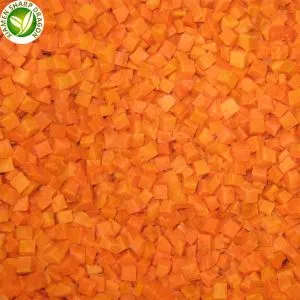
Raw, Cooked, Frozen, and Juiced Carrots Are Different Choices
No single form wins every nutrition and use comparison. Raw carrots offer crunch, intact tissue, and no cooking loss, but the firm structure makes carotenoids less accessible. If chewing or swallowing is limited, use an appropriately softened texture from an individual care plan. Cooking softens tissue and can improve carotenoid accessibility, while heat and cooking water can reduce or redistribute some heat-sensitive or water-soluble nutrients. Retaining cooking liquid in a soup changes that loss compared with boiling and discarding the water.
Plain frozen carrots are normally washed, cut, blanched, cooled, and frozen. They remain a vegetable and can be convenient for portioning, but "frozen" does not mean nutritionally identical to raw. Blanching history, cut size, storage time and temperature, packaging integrity, thawing, and final cooking all affect the result. XMSD's separate review of frozen carrot nutrition and use addresses that product-specific decision without treating freezing as either perfect preservation or automatic nutrient destruction.
| Carrot form | Main advantage | Decision-changing limit |
|---|---|---|
| Raw whole or cut | Crunch, intact fiber, snack convenience | Firm texture and lower carotenoid accessibility from intact tissue |
| Cooked pieces or puree | Softer texture and greater matrix disruption | Time, temperature, water, and added ingredients change the result |
| Plain frozen | Pre-cut, portionable, and available beyond the fresh season | Blanching, frozen storage, ice, and final cooking need product-specific review |
| Juice | Easy beverage use and concentrated carrot flavor | Less intact fiber, rapid intake, and possible added ingredients |
The best practical choice follows the application. Choose raw sticks when crunch and hand-held portioning matter. Choose steamed or roasted pieces when tenderness and flavor fit the meal. Choose puree when a smooth texture is intentional and safe for the diner. Choose frozen cuts when preparation consistency and usable inventory matter. Choose juice as a beverage form, not as an automatic substitute for the fiber and eating experience of whole carrots.

How to Use Carrots Without Turning Benefits into Hype
Start with a food-group purpose. If lunch lacks vegetables, add a measured carrot portion rather than adding carrot juice after an already complete meal. If a snack is mostly refined starch, replace part of it with raw carrot pieces and a suitable protein-containing food. If dinner already includes several vegetables, carrots can add color and texture, but they do not need to dominate the plate. Substitution usually matters more than simply adding another food.
There is no evidence-based carrot clock. Breakfast, lunch, dinner, and snacks can all work. There is also no universal carrot-only daily target. MyPlate's two-medium-carrot cup equivalence is useful for measuring the vegetable group, while age, body size, activity, and the complete diet change the suitable total. If you build a daily routine, preserve variety rather than treating one carrot count as an optimal dose.
Use gentle preparation when it fits the dish. Steam, roast, sauté, or cook frozen carrots directly in soups and mixed dishes until the intended texture is reached. A small amount of fat already present in the meal can help with carotenoid absorption. Avoid using that mechanism as an excuse for excessive butter or oil. For packaged sides, compare serving size, sodium, added sugars, and saturated fat; the word "carrot" does not disclose the complete formulation.
If your objective is fullness, keep the whole or cut form and eat it as part of a balanced meal. If your objective is higher carotenoid accessibility, cooking and tissue disruption can help, but dietary variety still matters. If your objective is digestive comfort, test a smaller cooked portion before a large raw one and increase fiber gradually. Persistent pain, vomiting, bleeding, unintended weight loss, or a suspected allergy is not a normal nutrition trade-off and deserves medical assessment.
What about skin color and "glowing skin" claims?
Very high, repeated carotenoid intake can produce carotenemia, a yellow-orange change that is usually benign and fades after intake falls. It is not evidence of better skin health. Carrots have not been shown to lighten skin or reliably correct skin tone, acne, dryness, or sun damage. Yellowing of the whites of the eyes, unexplained persistent discoloration, or other symptoms needs professional assessment because jaundice and other conditions require a different response.

For Frozen-Carrot Menus and Products, Specify the Form You Need
A nutrition-led product concept still succeeds or fails on specification. For soups, small dice distribute evenly and allow a measured carrot weight per serving. Slices create a stronger visual identity in side dishes, while strips suit stir-fries and noodle applications. Crinkle and flower cuts can improve presentation, but their thickness and surface area change heating rate and texture. The XMSD frozen carrot range shows the cut forms that can be discussed; the final specification should name cut dimensions, blanching status, defect tolerances, ingredient statement, pack, and intended cooking method.
Do not copy the USDA raw-carrot values onto a frozen retail bag or prepared-meal panel. Nutrition labeling must follow the destination market's rules and the actual product basis. Establish whether the declared serving is frozen as sold or prepared, whether any sauce or seasoning is included, and whether laboratory analysis or an accepted database calculation supports the panel. A claim such as "supports vision" may also face market-specific wording and substantiation rules even when vitamin A is present.
Example: A hypothetical ready-meal developer wants 80 grams of carrots in each of 5,000 portions. The net carrot requirement is 80 g × 5,000 = 400,000 g, or 400 kg. If a validated line test shows 4% loss from handling and cooking, the starting requirement is 400 ÷ 0.96 = 416.7 kg. Run the calculation with the approved cut and actual process; changing from 10-millimeter dice to thick crinkle slices can change heat penetration, breakage, drain loss, and visible piece count even when the incoming weight is identical.
Packaging also affects the usable benefit. Repeated opening exposes product to moisture and temperature fluctuation, encouraging frost and fused pieces that make portioning less consistent. Match inner-pack weight to the quantity opened per shift, verify seal integrity, and test the pallet and carton system for the actual frozen route. XMSD's frozen-food packaging options provide a starting point for discussing foodservice, bulk, and retail formats, but pack approval should follow the serving plan and distribution test rather than a generic bag size.
During sample review, inspect frozen color, cut uniformity, free-flowing condition, frost, broken pieces, peel residue, green shoulder, and foreign material. Then cook representative samples by the intended method and record time, tenderness, flavor, piece integrity, drained yield, and color. A bright photograph cannot tell you how the batch behaves in a soup kettle or ready-meal reheat. Acceptance should be tied to the application and a repeatable test.
Frequently Asked Questions
Are cooked carrots healthier than raw carrots?
Neither is universally healthier. Raw carrots retain crunch and intact tissue. Cooking softens the matrix and can increase beta-carotene accessibility, while some water-soluble or heat-sensitive nutrients may fall or move into cooking liquid. Choose the form that fits the meal, texture needs, and preparation method.
Can carrots prevent cancer or heart disease?
Do not make that conclusion from carrot composition. Vegetable-rich dietary patterns are associated with health advantages, and carotenoids and fiber have plausible physiological roles. Carrot intake alone has not been proven to prevent or cure cancer or cardiovascular disease. NIH also distinguishes beta-carotene-containing foods from high-dose supplements, which produced harm in some high-risk groups.
Are frozen carrots still nutritious?
Plain frozen carrots remain a useful vegetable, but their composition is not automatically identical to raw carrots. Raw material, blanching, cut, frozen-storage history, packaging, thawing, and cooking affect nutrient retention and eating quality. Use the frozen product's nutrition basis and evaluate added salt, sugar, sauce, or fat separately.
XMSD sourcing note: If your project uses frozen carrot dice, slices, strips, or decorative cuts, send the application, serving weight, cooking method, pack size, destination, and labeling needs. We can review the specification and sample questions before quotation.
Final Practical Judgment
The evidence supports a useful but proportionate answer: carrots contribute provitamin A carotenoids, intact fiber, potassium, vegetable volume, and practical meal color. Their benefit is strongest when plain carrots replace a less nutrient-dense component or help you eat a more varied vegetable pattern. Raw, cooked, frozen, pureed, and juiced forms differ in texture, fiber structure, carotenoid accessibility, convenience, and added-ingredient risk.
Use a measured portion, match preparation to your diner and dish, and keep claims within the evidence. Carrots support normal nutrition; they do not replace eye care, medical treatment, dietary variety, or a form-specific product analysis. That distinction preserves both the real benefits and the credibility of the final food.
References
- USDA FoodData Central: Carrots, raw, SR Legacy FDC ID 170393
- NIH Office of Dietary Supplements: Vitamin A and Carotenoids Fact Sheet for Consumers
- NIH Office of Dietary Supplements: Potassium Fact Sheet for Consumers
- U.S. Food and Drug Administration: Questions and Answers on Dietary Fiber
- National Institute of Diabetes and Digestive and Kidney Diseases: Eating, Diet, and Nutrition for Constipation
- USDA MyPlate: Vegetable Group
- Livny et al.: Beta-carotene bioavailability from differently processed carrot meals in human ileostomy volunteers
- U.S. Centers for Disease Control and Prevention: How to Have Healthier Meals and Snacks
- XMSD operational experience in frozen-carrot cut selection, sample evaluation, packaging, and application planning.