


Does Okra Clean Out Your System? Fiber and Digestion Guide
Jul 05, 2019

No. Okra does not "clean out" your blood, liver, kidneys or intestines in the sense promised by a detox or cleanse. Your liver processes many substances, your kidneys filter wastes and extra water from blood, and your digestive tract moves unabsorbed food material into stool. A serving of okra does not take over those functions or pull an undefined collection of toxins out of the body.
Okra can still play a useful food role. Whole pods provide dietary fiber, water and other nutrients. Fiber can contribute to softer, easier-to-pass stool when the total diet contains enough fiber and fluid, but the response varies with portion, preparation, usual intake, medications and digestive conditions. A bowel movement after an okra meal may reflect normal digestion; it is not evidence that the body has been detoxified.
The useful distinction: "Supports a fiber-containing diet" is a defensible food statement. "Flushes toxins," "cleans the colon," "balances hormones" and "detoxifies the liver" are different claims, and ordinary okra consumption does not establish them.

What "Clean Out Your System" Actually Means
The phrase combines at least three different questions: whether okra relieves constipation, whether okra water empties the bowel quickly, and whether okra removes chemicals from the blood or "cleans" the liver. Each question requires different evidence, so a simple yes hides more than it explains.
For bowel function, the relevant facts are the food's fiber, the amount you eat, your fluid intake, the rest of your diet and your normal pattern. NIDDK defines constipation by features such as fewer than three bowel movements per week, hard or difficult-to-pass stool, or a feeling of incomplete emptying. Having no bowel movement on one particular day is not automatically constipation, and passing stool after a meal is not proof of a cleanse.
For detoxification, the claim needs a named substance, an exposure, a measured biological outcome and competent evidence. "Toxins" without a definition cannot be tested. NCCIH reports that evidence does not support broad detox diets for eliminating toxins and warns that some cleanse programs use laxatives or severe restriction that can cause diarrhea, dehydration or electrolyte problems. Okra as an ordinary vegetable is not the same as such a program, but it should not inherit the program's promise.
The practical answer is therefore two-part. Eat okra because it is a vegetable that can contribute fiber and culinary variety. Do not use it as a treatment for poisoning, liver disease, kidney disease, constipation with warning symptoms or another diagnosed condition. If a product or social post uses "cleanse," ask what exact outcome was measured and in what food form. Without that information, the word is marketing rather than a physiological result.
Okra Fiber Can Support Bowel Function, Not Detoxification
USDA FoodData Central lists 3.2 grams of total dietary fiber, 89.58 grams of water and 33 kilocalories per 100 grams of raw okra. The same entry lists 7.45 grams of carbohydrate, 1.93 grams of protein, 23 milligrams of vitamin C and 299 milligrams of potassium. These figures describe a defined raw edible sample on a 100-gram basis; they are not a guaranteed analysis for every cultivar, cooked dish or frozen lot.
Fiber is relevant because different fractions interact with water and the contents of the digestive tract. Okra's characteristic mucilage is part of why a cut pod thickens soups and stews. That texture can make the food feel slippery, but a visible gel is not a toxin-binding test. The pod walls, seeds and other structural material also remain part of whole okra and contribute to the physical food matrix.
NIDDK gives a general adult fiber range of 22 to 34 grams per day, depending on age and sex, and recommends increasing fiber gradually so the body can adjust. It also advises enough liquid to help fiber work better. One okra portion is therefore a contribution to a whole-day pattern, not a complete bowel program. Our separate okra nutrition and product-form guide covers the wider nutrient picture without turning composition into a detox promise.
Worked example: Suppose a meal contains 150 grams of raw-weight okra. Using the USDA reference, 150 g × 3.2 g fiber ÷ 100 g = 4.8 g fiber. That is about 22% of a 22-gram daily reference and about 14% of a 34-gram reference. It is a meaningful contribution, but it does not equal the whole day's fiber and it does not quantify toxin removal. Use the nutrition data for the actual cooked or packaged form when available.

Whole Okra and Okra Water Are Not Nutritionally Equivalent
Okra water is usually made by soaking cut pods and then removing the solid pieces. That procedure creates a slippery liquid, but there is no standardized pod-to-water ratio, soak time, temperature, cultivar or final nutrient analysis across internet recipes. A thick appearance does not tell you how much fiber, vitamin or other compound entered one glass.
A 2026 MD Anderson review described promoted okra-water benefits as anecdotal because direct evidence is very limited. It also noted a simple physical difference: drinking the strained liquid leaves behind much of the solid pod and seed structure. Medical News Today's current review likewise says scientists have not established the nutritional profile of okra water or how much of the pod's nutrients transfer to it. Those are important limits before anyone calculates a benefit from raw-pod data.
Whole okra gives you the actual edible pod. Okra water gives you water plus an unknown amount of material released during soaking. Neither form has been shown to wash a defined toxin from the body. If you enjoy the drink, treat it as an unstandardized food beverage rather than a concentrated medical preparation. Do not replace prescribed care, a balanced meal or ordinary hydration with it.
Practical example: You compare 100 grams of whole raw okra with a glass made by soaking 100 grams of sliced pods and discarding them. The whole-okra side has a USDA entry for its complete edible portion. The strained-water side has no measured recovery percentage. Reporting 3.2 grams of fiber for both would assume a 100% transfer that has not been shown. Keep the drink unquantified until the finished beverage is analyzed.

The Effect Depends on the Complete Meal and Your Tolerance
A change in bowel habit after okra can be real without being a cleanse. Adding a fiber-containing vegetable to a low-fiber meal may change stool consistency or frequency. The same serving can produce little noticeable change when the usual diet already contains plenty of vegetables, legumes and whole grains. Hydration, physical activity, travel, stress and medication can also change the result.
More is not automatically better. A sudden increase in fiber can bring gas, bloating, cramping or loose stool for some people. Okra also contains fermentable carbohydrates that may be uncomfortable for an individual with a sensitive gut. Start with a normal food portion within a meal rather than a large "cleanse" dose, and change one variable at a time if you are trying to understand your response.
Preparation changes the experience. Cut okra exposes more mucilage and thickens a wet dish. Whole pods release less cut surface. Frying, breading, sauces and seasoning change the final product's fat, sodium, energy and portion pattern. Our okra texture and cooking guide explains how cut size, moisture and heat affect viscosity; those changes explain a cooking result, not a detox effect.
Tolerance and safety also need separate handling. Mild gas after a larger-than-usual portion is different from immediate swelling, breathing difficulty or another possible allergic reaction. Persistent digestive symptoms may have causes unrelated to okra. Use the okra tolerance and side-effect guide to distinguish food-form questions, allergy signals and complaint checks.
Fresh, Frozen, Cooked and Fried Okra Are Different Forms
The word "okra" can describe several foods with different analytical and culinary properties. Raw-pod data should not be pasted onto boiled, frozen, breaded, fried, pickled or seasoned products. Water gain or loss changes values per 100 grams. Added coating, oil, salt and sauce change the complete dish even when the vegetable identity remains recognizable.
| Okra form | What remains measurable | What you cannot assume |
|---|---|---|
| Whole or cut plain pods | Serving weight, ingredient identity and form-specific nutrition data | A guaranteed bowel response or removal of toxins |
| Strained okra water | Finished volume and a laboratory result if the beverage is tested | Complete transfer of fiber or vitamins from discarded pods |
| IQF whole or cut okra | Frozen serving, ingredient list, cut distribution and finished data | That freezing preserves every nutrient unchanged |
| Breaded, fried or seasoned okra | Finished recipe, serving size, oil, sodium and nutrition panel | The composition or portion of plain pods |
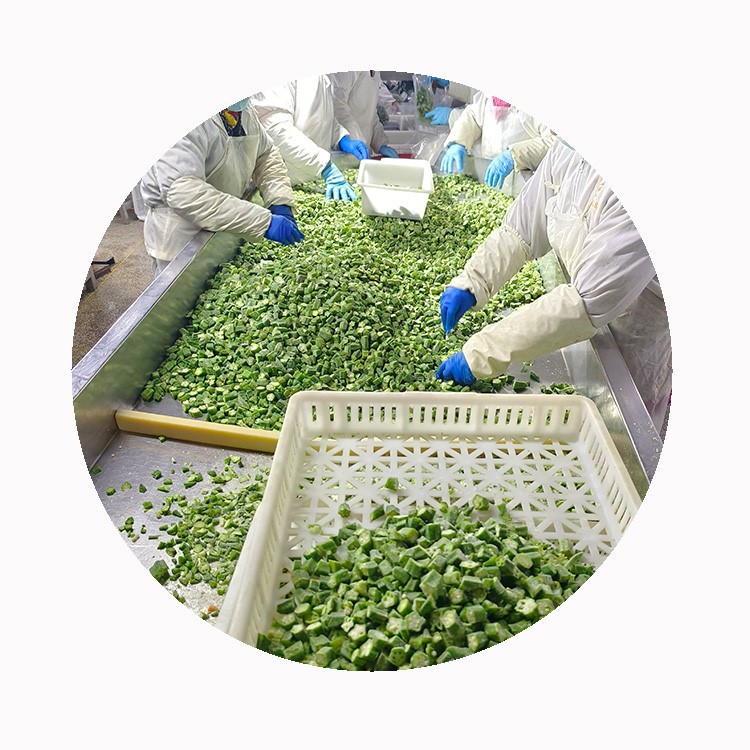
Frozen okra can make portioning and year-round menu use more practical. It may be supplied whole or cut, and both forms retain the edible pod structure that strained water discards. The XMSD frozen okra reference shows both commercial forms. Evaluate either one as a frozen ingredient, not as a physiological cleanse.
A useful comparison holds the basis constant. Compare the same serving weight, edible state and recipe position. If one product is tested frozen and another after boiling and draining, water change alone can move the per-100-gram result. If one is plain and another fried, the comparison now includes the added ingredients. Record the exact form beside every nutrition number or claim.

A Bowel Movement Is Not Proof That Toxins Were Removed
NIDDK explains that waste products of digestion, including food material that remains too large to absorb, become stool in the large intestine. Stool therefore reflects digestion, microbial activity, intestinal secretions, water balance and unabsorbed material. It does not provide a laboratory inventory of undefined toxins removed by one vegetable.
Other organs have their own jobs. NIDDK states that healthy kidneys filter blood, remove wastes and extra water, and help maintain the balance of water, salts and minerals. MedlinePlus describes the liver as an organ that helps digest food, store energy and remove poisons. Saying "okra supports a varied diet" does not mean okra mechanically scrubs either organ or repairs a disorder affecting it.
Diarrhea is also not proof that a cleanse worked. It can reduce fluid and electrolyte balance and may signal intolerance, infection, medication effects or another problem. Do not chase a stronger response by increasing okra water, laxatives or restrictive detox products. The goal is a comfortable, adequate diet-not forced emptying.
Safety note: Seek prompt medical advice for constipation with rectal bleeding, blood in stool, constant abdominal pain, inability to pass gas, vomiting, fever or unintentional weight loss. NIDDK lists these as warning symptoms; an okra experiment should not delay evaluation.
Use a Short Food-and-Symptom Test, Not a Cleanse
If your question is simply whether okra agrees with you, use an ordinary-meal comparison. Keep the okra form, cooked weight and preparation consistent for several occasions. Record the rest of the meal, fluid intake, bowel comfort and any bloating or pain. Change only one major variable at a time. That will not diagnose a medical condition, but it is more informative than calling every change "detox."
Example: On three separate lunches, you use 100 grams of plain cooked okra with similar meals and normal hydration. The first two occasions are comfortable; the third includes a large bean portion and produces bloating. The observation does not prove okra caused the symptom, because the total fermentable load changed. Return to the prior meal structure or discuss persistent symptoms with a qualified professional instead of removing several foods at once.
Measure the cooked edible portion, not an imprecise number of pods. Pod length and maturity can vary, and a bowl of thick slices weighs differently from the same bowl filled with whole pods. For packaged food, use the label serving and note whether the value applies frozen, prepared or drained. A consistent basis makes your observation easier to interpret.
Stop the test if symptoms are strong, persistent or accompanied by a warning sign. Constipation can arise from low fiber or fluid, but NIDDK also lists medication, functional digestive disorders, pelvic-floor problems and other health conditions among possible causes. One vegetable cannot distinguish among them.
Detox Claims Create a Product and Label Risk
For product copy, separate three levels of wording. "Contains okra" is an ingredient identity statement. "Contains X grams of dietary fiber per serving" is a quantitative composition statement when your finished product and applicable label rules support it. "Cleans your system" implies a physiological effect without naming the substance, organ, dose or outcome. The third statement cannot be justified by the first two.
FDA distinguishes nutrient-content claims, health claims and other label statements. In the United States, disease-related health claims require a defined legal basis and scientific review; other markets apply their own rules. Wherever you sell, approve the exact words against the destination rule and the finished product, not against a generic raw-okra article.
Worked example: A 400-gram frozen meal contains 15% okra, so one pack contains 400 g × 0.15 = 60 g okra before cooking. Using the raw USDA reference only as a rough development check gives 60 g × 3.2 g fiber ÷ 100 g = 1.92 g fiber from the okra input. The complete meal may contain fiber from other ingredients, and processing changes the final basis. Analyze or calculate the finished recipe by the accepted market method; do not turn 1.92 grams into "detox meal."
Keep the product records aligned. The formula, ingredient specification, nutrition calculation or laboratory report, artwork, serving declaration and outer carton should describe the same recipe and batch route. If the okra ratio, coating, oil, sauce or serving changes, reopen the nutrition and claim review before printing. Our overview of frozen packing formats and artwork variables helps define the physical pack; it does not replace destination-market claim approval.

Evaluate Frozen Okra by Measurable Food Quality
For a frozen ingredient, "detox" tells you nothing about whether the food will work. Start with the form: whole pods for visible-piece applications, or a defined cut for soups, stews, curries and prepared meals. Then evaluate pod maturity, cut distribution, visible seeds, excessive stems, frost, clumping, breakage, color and foreign material. Cook the sample in the intended recipe before approval.
Maturity and cut size change viscosity and texture. Large or mature pieces may stay fibrous; very small cuts expose more surface and can release more mucilage into a wet system. Neither outcome is automatically good or bad. A gumbo may value thickening that a dry sauté rejects. Define the desired sauce body, piece visibility and cooked bite, then use a representative production trial rather than a health slogan.
Arrival checks should connect the received lot to the approved sample. Record product temperature, carton and bag integrity, codes, separation and visible condition before rough handling creates new damage. Draw from more than one carton position, cook a retained portion with the approved method and classify failures separately. A total reject percentage gives the commercial effect; separate maturity, breakage, clumping and texture categories tell you what needs correction.
Use the same controls for nutrition wording. Test a representative finished sample whenever a declared value requires laboratory support. Keep the laboratory sample identity, recipe code, line, date and pack linked. If your application changes from plain whole pods to breaded cuts, treat it as a new nutritional and functional product, not a silent extension of the same okra claim.

XMSD sourcing note: We can review your whole-or-cut okra format, application, serving basis, packing brief and sample plan without turning a food specification into an unsupported detox claim.
Final Thoughts
Okra does not clean toxins from your system. Whole pods can contribute dietary fiber, water, nutrients and culinary variety, and that contribution may support comfortable bowel function as part of an appropriate diet. The effect is not guaranteed, does not empty the entire digestive tract and does not prove that the liver, kidneys or blood have been cleansed.
Choose the form that fits the real job. Eat whole or cut okra when you want the edible vegetable matrix. Treat okra water as an unstandardized beverage unless it has its own analysis. Compare fresh, frozen and prepared products on the same serving basis. For a commercial product, approve measurable composition, cooking performance and accurate wording-never an undefined detox promise.
References
- USDA FoodData Central API: Okra, raw, FDC ID 169260
- NCCIH: "Detoxes" and "Cleanses"-What You Need To Know
- NIDDK: Your Digestive System & How It Works
- NIDDK: Eating, Diet, & Nutrition for Constipation
- NIDDK: Symptoms & Causes of Constipation
- NIDDK: Your Kidneys & How They Work
- MedlinePlus: Liver Diseases and Liver Functions
- MD Anderson Cancer Center: Okra Water-Should You Be Drinking It?
- U.S. FDA: Label Claims for Conventional Foods and Dietary Supplements