


XMSD Okra Cooking Guide: Less Slime, Better Texture
Jun 03, 2019

You can make okra feel less slimy by matching the product form to the dish, limiting unnecessary cut-surface contact with water, using enough hot surface and space for a dry method, and controlling the point at which wet ingredients enter the recipe. You cannot honestly promise "slime-free" okra in every dish. The material people call slime is natural okra mucilage, and the same thickening behavior may be useful in gumbo, curry or sauce.
For a restaurant group, vegetable brand or prepared-meal plant, the right result is not a viral trick. It is a repeatable combination of whole or cut format, surface condition, pan or tray loading, heat recovery, recipe sequence and service endpoint. This guide gives you that decision method while keeping food safety, sensory preference and commercial specification separate.
Practical answer: For a relatively dry side dish, start with dry-surfaced whole pods or a controlled cut, cook in one uncrowded layer with a preheated high-surface-area method, and avoid a long wet hold. For stew, accept mucilage as a formulation variable and control cut size, addition point and agitation. With frozen okra, follow the product instruction and trial the intended cook-from-frozen route before adopting it; do not turn "never thaw" into a universal safety or quality rule.

First decide what "not slimy" means in your dish
Okra pods contain water-soluble polysaccharide-rich mucilage. Cutting exposes internal tissue; water contact, heating, mixing and time then change how much viscous material is released and how noticeable it becomes. A visible strand between pieces is not proof of spoilage. It is also not automatically a quality failure. The decision depends on the named application.
Write the target in sensory terms that two evaluators can use. A roasted side might require distinct pieces, browned dry-looking surfaces, tender skin, no woody bite and no pooled viscous liquid after five minutes on the plate. A gumbo might require intact green pieces plus a measurable increase in sauce body. A frozen ready meal may look acceptable after the first cook but release more liquid after freezing and reheating, so its endpoint belongs after the complete route.
Avoid a zero-slime promise. Natural raw-material variation, cut distribution, frost, pan load and recipe composition make that language hard to substantiate. "Lower visible mucilage under the approved method" is measurable. Attach a reference photograph, a score anchor and a waiting time. That converts a subjective complaint into a trial result.
| Application | Useful endpoint | Do not confuse it with |
|---|---|---|
| Roasted or sautéed side | Separate browned pieces, little pooled liquid | Complete absence of natural mucilage |
| Soup, gumbo or curry | Defined sauce body and intact pieces | A dry-pan endpoint |
| Prepared meal | Pass after holding, freezing and reheating | Appearance at the first cook only |
Choose whole or cut okra deliberately
Whole pods keep more internal tissue enclosed. Slices expose more cells and distribute mucilage through the recipe more quickly. That does not make sliced okra defective; it makes slice thickness and broken-piece distribution part of recipe design. Thin coins may work in a sauce that needs body, while intact small pods or longer segments can be easier to keep visually separate in a dry side.
Check maturity as well as dimensions. Oversize or mature pods can remain fibrous even when the surface softens. Extra cooking may then increase tissue breakdown and mucilage without solving the woody bite. USDA frozen-okra standards distinguish styles and quality attributes, while its grading material gives buyers a structured way to examine defects. Your purchase specification should add the application-specific size distribution and tenderness test that matter to your dish.
The earlier XMSD frozen okra cut-size and defect guide owns the detailed incoming-quality decision. Use that framework when the question is whether a lot meets the ordered style. Here, the point is narrower: lock the form before you compare cooking methods, because a whole-pod result cannot validate a sliced product.

Control surface water before changing ingredients
For fresh okra, wash under potable water according to your produce-handling procedure, drain it and dry the exterior before cutting when the target is a dry method. Leaving washed cut pieces in water gives soluble material more opportunity to move into that water. Drying is a texture step, not a substitute for hygienic handling.
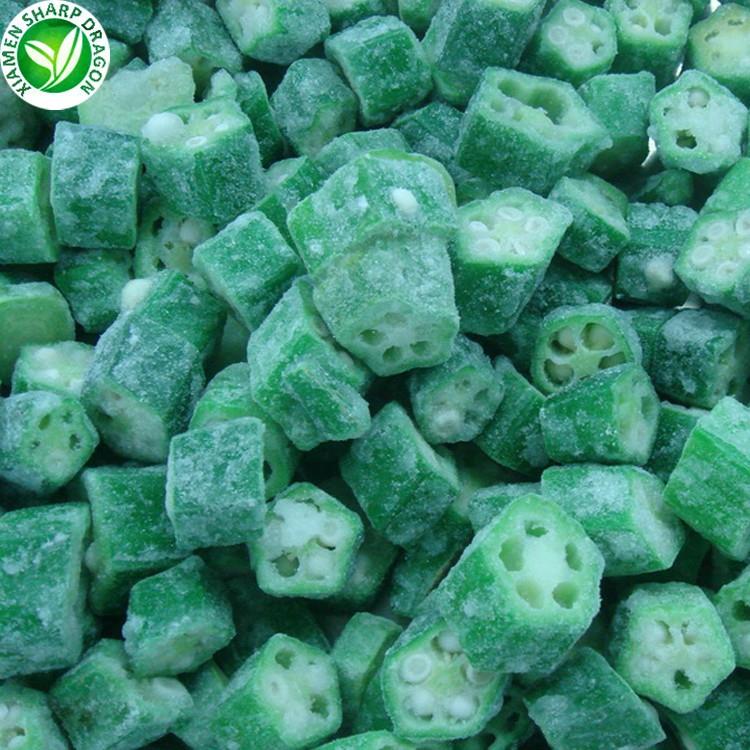
Frozen okra needs a product-specific decision. Freezing changes tissue structure, and frost or clumps add water to the equipment. Many commercial routes perform better when the product enters a preheated pan or oven from frozen, but the supplier's instruction, cut size, blanch status and equipment load still govern. If your operation thaws for portioning or recipe assembly, validate the thaw condition, drain, time and temperature rather than concealing that step.
Record visible frost and clumping on arrival. An extra film of ice can turn a nominal sauté into steaming. If one lot produces more free water than the approved lot, do not immediately blame the cook. Compare frozen condition, pack integrity, temperature history, piece distribution and blanch statement. A method can only be repeatable when the incoming state is bounded.

Use heat and surface area as one system
"Cook on high heat" is incomplete advice. What matters is whether the loaded equipment can supply enough energy and exposed surface to remove released moisture instead of trapping it around the pieces. A preheated sheet tray, grill or wide sauté surface can support that route. A deep crowded pan at the same dial setting cannot.
Define surface loading as product mass per tray area or per pan. Keep piece depth, oil addition, mixing frequency and product state constant during comparison. Watch the recovery curve: a large frozen load can sharply reduce surface temperature. Starting a timer at product addition while recovery varies produces misleading "same-time" trials.
Labeled example 1 - tray loading: One production test distributes 18 kg of frozen cut okra across 12 identical trays, or 1.50 kg per tray. A rushed run puts the same 18 kg on eight trays, or 2.25 kg per tray, a 50% higher surface load. If the second run steams and shows more pooled viscous liquid, the evidence does not prove a different raw material. Repeat at 1.50 kg per tray before opening a supplier complaint.
A low-mucilage dry method also needs an endpoint. Browning alone can hide a fibrous interior; tenderness alone can allow severe collapse. Score surface dryness, color, bite, piece integrity, loose seeds and liquid after a fixed rest. Use the same serving temperature because viscosity and sensory perception change as samples cool.
Treat acid, salt and agitation as recipe variables
Tomato, vinegar, citrus and other acidic ingredients are common in okra dishes, and acidity can change plant-tissue texture and the rheology of mucilage. But "add acid and the slime disappears" is too absolute. Acid type, concentration, addition time, sugar, salt, heat exposure and the rest of the formula can alter the result. A change that reduces visible strands may create sour flavor, tougher tissue or a sauce that fails another target.
Run a controlled recipe comparison. Keep the okra lot, cut, load, heating and sampling time fixed. Change only the acid condition, then measure pH where it matters and score the final product. Do not publish a precise acid dose copied from an unrelated recipe as if it were a universal process specification. The approved dose belongs to the named formula and destination requirements.
The same caution applies to salt and stirring. Repeated mixing can break pieces and distribute released material; too little mixing can create uneven heating. Salt affects flavor and the complete food system, but it is not a dependable stand-alone "anti-slime" guarantee. Lock the mixing tool, frequency and sequence with the recipe instead of relying on cook memory.

Choose a method by the role of mucilage
Roast, grill or wide-pan sauté: choose these when separation, surface dryness and browning are priorities. Use a defined single-layer load and enough venting. Test whole and cut styles separately. Oil may improve heat contact and eating quality, but record its mass because it changes nutrition, cost and label calculations.
Boil or blanch: choose these when the next process needs a wet heat step or when the dish accepts released mucilage. Control water-to-product ratio, recovery, time, drain and any later holding. If you only need a basic timing starting point, the existing fresh and frozen okra boiling guide addresses that intent.
Stew, gumbo or sauce: decide how much thickening you want. Compare addition point, cut size, agitation and total wet exposure. The target may be controlled viscosity rather than minimal mucilage. If you remove all thickening behavior from a recipe designed around it, you may solve the wrong problem.
Fry: frying can give a dry or crisp sensory result, but oil management, breading, thermal validation, allergen controls and nutrition labeling become part of the product. Do not use a household frying observation to approve an industrial snack or prepared-food process.
| Method | Control first | Likely failure |
|---|---|---|
| Roast / sauté | Surface load and recovery | Crowded pieces steam |
| Boil / blanch | Recovery, time and drain | Soft pieces and viscous liquid |
| Stew / sauce | Addition point and agitation | Too much or too little body |
| Prepared meal | Full hold/reheat route | Passes early, fails at service |
Build a low-slime trial without hiding the variables
Start with a representative lot and write the supplied state: product code, whole or cut, dimension distribution, blanch statement, frost, clumps, pack condition and frozen temperature. Then define the dish, equipment, load, oil or liquid addition, timing start, endpoint and hold. A trial sheet should make it possible for another cook to reproduce the run without asking what "medium-high" or "not too much" meant.
Compare no more than one major decision at a time. For a dry dish, treatment A might use 1.50 kg per tray and treatment B 2.25 kg per tray with every other condition fixed. A second round can compare whole and cut at the winning load. An acid comparison belongs in another round. This sequence is slower than changing everything at once, but it reveals which control actually changes the result.
Measure immediate and held results. Use a simple anchored mucilage scale, for example 1 for no visible strand or pooling, 3 for visible strands that do not coat the whole serving and 5 for continuous coating or pooled viscous liquid. Add photographs, drained or serviceable mass, piece-integrity score and the percentage of fibrous pieces. The scale is an internal method, not a universal okra grade.

Calculate usable portions after the real hold
A visually drier method may lose more water, so compare texture with usable yield and portion economics. Weigh the frozen input, the cooked product after the defined drain, and the acceptable product after the intended service hold. Remove pieces only under a written defect rule. Otherwise one evaluator can make a method look better by sorting more aggressively.
Worked example: batch and portion calculation using illustrative trial data
A dry-method trial starts with 120.0 kg of frozen sliced okra. After cooking and the defined 20-minute service hold, 110.4 kg meets the texture, piece-integrity and mucilage limits.
Usable yield = 110.4 ÷ 120.0 = 92.0%.
At a 160 g finished portion, serviceable portions = 110.4 ÷ 0.160 = 690 portions.
If the plan calls for 1,000 portions, required frozen input before a separately approved contingency = (1,000 × 0.160) ÷ 0.920 = 173.91 kg. Replace 92.0% with the yield from your approved lot and method; it is not a catalog promise.
The XMSD frozen okra cooking-trial guide covers the wider method, holding and yield-validation framework. Use that page when your main decision is production scale-up. This page keeps its distinct role: diagnosing and reducing unwanted visible mucilage.
Keep food safety separate from slime control
Low visible mucilage does not show that food is safe, and visible mucilage does not show that food is spoiled. Follow the product's cooking instruction and the validated time-and-temperature controls for your jurisdiction and operation. Use calibrated equipment and a sampling plan appropriate to the process. Freezing does not sterilize vegetables.
Once heat-treated plant food enters hot holding, cooling or reheating, apply the controls relevant to that route. The FDA Food Code is a useful model for retail and foodservice operations in the United States, but local adoption and product classification must be confirmed. Do not shorten a validated safety process merely because a shorter time gives a drier surface.
Investigate unexpected sour odor, package damage, loss of frozen condition, shared illness complaints or abnormal discoloration through your food-safety and traceability procedure. Those signals belong in a different lane from a normal sensory preference about mucilage. Hold the affected lot and retain codes and samples as your plan requires.
Translate the winning method into a purchase specification
A kitchen cannot control low-mucilage performance if the incoming product changes without notice. Specify the product style, nominal dimensions, acceptable size distribution, broken pieces, loose seeds, fibrous or tough pieces, frost and clumping, blanch or preparation statement, pack size, lot coding, cold-chain conditions and required documents. Connect each limit to the approved method.
Ask the supplier which values are guaranteed and which are descriptive. Confirm representative pre-shipment or approval samples against the real formula. If a cut, blanch setting, crop maturity or pack format changes a critical result, require notification and reopen the affected trial. A product photograph alone cannot approve cooking performance.
When comparing offers, calculate cost per acceptable cooked kilogram or portion. Include sorting loss, cooking loss, lower equipment loading and extra labor. A low invoice price can disappear if the product forces smaller batches or produces more fibrous rejects. The current XMSD frozen okra range shows available format starting points, while a named specification and trial decide application fit.

Diagnose a slimy result in the right order
First confirm that the result is normal mucilage rather than a spoilage or temperature-control concern. Then compare the incoming lot with the approved reference: whole or cut identity, size distribution, broken fraction, frost, clumps, temperature and preparation statement. Only after the product state matches should you examine load, preheat, recovery, wet ingredients, agitation and holding.
If a pan steams, reduce surface load at the same heat and area. If the center stays fibrous while surfaces soften, check maturity and size before extending time. If the dish passes immediately but fails after 30 minutes, test the real hold and lid condition. If a tomato-based batch differs from the dry control, investigate the complete formulation and addition sequence instead of crediting or blaming acid alone.
Practical example: Two lots both score 2 on a five-point mucilage scale at service, while a third scores 4. The third lot also carries more frost and needs two extra minutes for the tray surface to recover. Repeat that lot at the approved frost condition or lower load. If the score returns to 2, recovery and surface water are the leading causes; if it remains 4, compare cut and maturity evidence with retained samples.
Questions to close before approval
Should frozen okra always go straight into the pan? No universal rule fits every product and process. Follow the supplier instruction and validate the actual cook-from-frozen or controlled-thaw route. The important controls are supplied state, water release, load, recovery, safety and final quality.
Does acid guarantee non-slimy okra? No. Acid can change the food system, but dose, timing and formula determine the result. Trial it against a control and judge flavor, texture, pH and final viscosity together.
Is mucilage a defect? Not automatically. It is natural to okra and can be functional in wet dishes. It becomes a defect only when the named application and agreed sensory limit say it is unacceptable.
Can a low-slime method solve tough okra? Not reliably. Toughness may come from maturity or size distribution. Longer heating can soften some tissue while increasing collapse or release. Check the incoming product before changing the cooking window.
What should a supplier sample include? Request the product code, lot, style and dimensions, preparation statement, pack, cold-chain condition, specification, required certificates and enough mass for the intended equipment load. Use identical recipes and score sheets across suppliers.
Prepare an application-matched okra request
Tell us whether you need whole or cut frozen okra, the intended dish, equipment, batch load, mucilage endpoint, pack format, destination and required documents. Review the bulk frozen okra format and relevant processing and quality evidence before sample approval.
Send those inputs through the XMSD inquiry form. We will review product fit and coordinate the specification and sample route; the representative production trial remains the basis for approving your cooking result.
References
- USDA Agricultural Marketing Service, Frozen Okra Grades and Standards
- USDA Agricultural Marketing Service, Grading Manual for Frozen Okra
- Codex Alimentarius, Standard for Quick-Frozen Vegetables, CXS 320-2015
- U.S. FDA, Food Code 2022
- U.S. FDA, Selecting and Serving Produce Safely
- Dantas et al., Okra as a Potential Functional Food Source of Mucilage and Bioactive Compounds
- Review of okra polysaccharides: extraction, structure and functional properties