


Can I Eat Carrots at Night? Timing, Portions, and Practical Choices
Jul 09, 2019

Yes. Most people can eat carrots at night, either raw or cooked. The clock does not turn carrots into a harmful food, and there is no general rule that they must be cooked simply because the meal is in the evening. A normal serving can work as part of dinner or as a planned snack. What matters more is the amount, the complete preparation, how close you eat to lying down, and whether you have a condition or treatment plan that changes meal timing.
"At night" can mean a 7 p.m. dinner, a 9 p.m. snack, or eating immediately before bed. Those are not equivalent situations. People with nighttime reflux may benefit from finishing meals at least three hours before lying down, according to NIDDK. A person using insulin or certain diabetes medicines may need meal and snack timing coordinated with medicine, activity, and a clinician's plan. Raw pieces, cooked carrots, carrot juice, and carrots in a rich sauce also produce different portions and eating experiences.
The short answer: You do not need a special "best time" for carrots. Choose a form and serving that fit the complete meal, leave more time before bed if reflux is a problem, and follow your individual diabetes plan if carbohydrate or medicine timing matters.

Why the Time on the Clock Is Not the Main Question
Carrots keep the same identity at breakfast and dinner. USDA FoodData Central's SR Legacy entry for raw carrots reports about 41 kilocalories, 9.58 grams of carbohydrate, 2.8 grams of fiber, 4.74 grams of total sugars, 0.93 gram of protein, and 0.24 gram of fat per 100 grams. One medium carrot is listed at 61 grams, which works out to about 25 kilocalories and 5.84 grams of carbohydrate. Those figures do not change when the sun sets.
Your context can change, however. Late eating may happen after a full dinner, while distracted in front of a screen, or immediately before lying down. The carrot serving might be plain, paired with a dip, glazed with sugar and butter, blended into a drink, or built into a balanced meal. The useful question is therefore not "Are carrots allowed after a certain hour?" but "What am I eating, how much, why am I eating it, and what happens next?" The broader evidence guide to eating carrots covers general nutrition; nighttime decisions need a narrower timing and form check.
| Situation | Usually reasonable approach | What deserves attention |
|---|---|---|
| Carrots included in dinner | Treat them as one vegetable component of the meal | Balance of the full plate and preparation |
| Planned evening snack | Keep the serving visible and count dips or drinks | Actual hunger, portion, and personal meal plan |
| Food immediately before bed | Consider a smaller serving or an earlier eating time | Reflux, comfort, sleep routine, and medicine timing |
It is also sensible to separate "safe to eat" from "proven to improve sleep." Carrots contain nutrients needed in a healthy dietary pattern, but that does not make a carrot serving a sleeping pill. Observational research that links certain dietary patterns or nutrients with sleep cannot prove that eating carrots before bed will make an individual fall asleep faster. If the reason for choosing carrots is simply that you enjoy them and they fit the meal, that is enough; a night-specific health promise is unnecessary.

An Evening Meal and the Minutes Before Bed Are Different
For a person without a relevant medical restriction, carrots at an ordinary evening meal do not require special treatment. Raw sticks can be part of a snack plate. Steamed, boiled, roasted, or frozen carrots can be a dinner side. Diced carrots can go into soup, rice, a filling, or a mixed vegetable dish. No evidence-based rule says every evening carrot must be boiled, and cooking does not neutralize a fictional nighttime danger.
The practical advice changes when dinner ends shortly before you lie down and you regularly have reflux symptoms at night. NIDDK advises that people who have gastroesophageal reflux disease symptoms at night or while lying down may improve symptoms by eating meals at least three hours before lying down or going to bed. That guidance applies to the timing of the meal, not to a universal claim that carrots cause reflux. Individual triggers vary, and NIDDK lists common possibilities such as high-fat, spicy, acidic, caffeinated, chocolate, mint, and alcoholic items. A buttery or spicy carrot dish may therefore deserve a different review from plain carrots.
Worked example: Dinner finishes at 7:30 p.m. and bedtime is 10:30 p.m. The interval is 3 hours. If dinner finishes at 7:30 p.m. and you lie down at 9:30 p.m., the interval is only 2 hours.
For someone managing nighttime GERD symptoms, the first schedule matches NIDDK's "at least 3 hours" condition; the second does not. Practical options include finishing dinner earlier or moving the bedtime snack earlier. The arithmetic does not identify carrots as the trigger and does not diagnose reflux.
Portion size and the rest of the dish also affect comfort. A few carrot sticks after an early dinner are not the same eating occasion as a large late meal with fried food, a creamy dip, dessert, and a sweet drink. If a small plain serving feels comfortable but a heavy sauced dish does not, keep that distinction. If reflux, chest pain, swallowing difficulty, persistent nausea, or unexplained symptoms recur, food experiments are not a substitute for clinical assessment.

Raw, Cooked, Whole, and Juiced Carrots Need Separate Decisions
Raw carrots are not prohibited at night. Their crisp structure requires more chewing, and some people like a small raw portion when they want a snack with texture. Others find a large raw serving uncomfortable or simply prefer a softer food late in the day. Cooking softens the tissue and changes moisture and texture; it can make a portion easier for some people to eat, but it is not medically required for everyone at night. Choose the form you tolerate, and use safe preparation and storage practices at every hour.
Preparation matters more than the label "cooked." Plain steamed carrots and butter-glazed carrots are both cooked, yet their complete formulations differ. Roasting with a measured small amount of oil differs from pouring oil without measuring. Soup made with carrot dice differs from a large bowl of creamy carrot soup. If your concern is energy intake, review the full serving; XMSD's focused answer to whether carrots can make you fat explains why replacement and addition lead to different totals.
| Form | Useful nighttime check | Common mistake |
|---|---|---|
| Raw sticks or rounds | Comfortable serving and amount of dip | Assuming raw is forbidden after dinner |
| Steamed, boiled, or plain frozen | Cooked weight, tenderness, and added ingredients | Assuming every cooked dish is nutritionally identical |
| Roasted, glazed, or creamed | Oil, butter, sugar, sauce, spice, and final portion | Counting only the vegetable |
| Carrot juice or drink | Milliliters, label serving, pulp, concentration, and added sugar | Treating a large glass as equivalent to a few pieces |
Juice deserves its own decision because a drink can contain the carrot equivalent of more food than you would chew, and some products add other juices or sweeteners. Do not estimate the carbohydrate or energy in a specific bottle from the raw-carrot figure. Read its Nutrition Facts panel or applicable local label, note the serving size and servings per container, and inspect the ingredient list. Whole carrot, pure juice, a juice blend, and a sweetened carrot beverage are not interchangeable.
Commercial frozen carrots are sold in defined cuts, and many specifications include washing and blanching before freezing; confirm the actual product rather than assuming every pack is identical. Plain frozen cuts can often be cooked into an evening meal according to the product instructions or tested recipe, without a separate thawing step. Freezing does not give carrots a special bedtime effect, and a database value for raw carrot should not be copied blindly onto a finished frozen dish. Moisture, blanching, cook yield, and added ingredients affect the correct comparison. The explanation of frozen carrot nutrition and processing gives that form-specific context.

Blood Glucose Depends on the Serving and the Individual Plan
Carrots contain carbohydrate, so a person who counts carbohydrates should count the actual carrot amount and any dip, sauce, grain, milk, fruit, dessert, or drink eaten with it. The CDC explains that carbohydrate counting tracks grams of carbohydrate in foods and beverages and uses about 15 grams as one carbohydrate serving for diabetes meal planning. Its example food list gives eight baby carrots as 7 grams of carbohydrate. This does not make carrots off-limits at night; it makes the serving measurable.
Worked example: USDA lists 9.58 grams of carbohydrate in 100 grams of raw carrots. Using the CDC planning convention, 9.58 g ÷ 15 g = 0.64 carbohydrate serving, approximately. A 61-gram medium carrot works out to 9.58 × 0.61 = 5.84 grams of carbohydrate, or about 0.39 of a 15-gram serving. These are reference calculations, not an insulin dose or an individual snack prescription. Use the data for the food and weight actually consumed and follow the plan agreed with your diabetes care team.
NIDDK notes that what, how much, and when you eat can all be parts of a diabetes meal plan. The best time for a meal or snack can depend on diabetes medicines, physical activity, work schedule, and other health conditions. Insulin and some medicines that increase insulin release can contribute to low blood glucose when a meal is skipped or delayed. That is why a universal instruction such as "never eat carrots after 8 p.m." is unhelpful, but so is telling every person with diabetes to eat a carrot snack at bedtime.
If a clinician has prescribed a bedtime snack, use the specified timing and carbohydrate amount. If low blood glucose occurs, follow the treatment plan; do not assume carrots are a suitable rescue food. NIDDK's hypoglycemia guidance uses 15 to 20 grams of fast-acting glucose or carbohydrate for many people, followed by a recheck after 15 minutes, but individual instructions and medicines can change the response. Carrots have structure and fiber and are not a reliable replacement for the fast-acting treatment your care team recommends.
The same care applies to juice. A liquid serving may be larger and easier to consume quickly, and a blend may add carbohydrate from fruit or sweetener. Check the actual label rather than assuming that a vegetable-led name makes the beverage negligible. If nighttime blood glucose readings are repeatedly outside your target range, review the full dinner, snack, medicines, activity, illness, and monitoring data with a qualified professional instead of trying to correct the pattern with one vegetable.
Use Hunger, Comfort, and the Full Meal to Set the Portion
A fixed nighttime carrot allowance is less useful than a repeatable decision. First identify the reason: physical hunger, a planned meal, habit, or an effort to stay awake. If dinner was small or early and hunger is genuine, a planned snack may fit. If eating becomes automatic while watching television after an adequate meal, pre-portioning the snack or changing the cue may be more useful than debating whether carrots are "good" or "bad."
Second, make the full serving visible. Put the carrots and dip on a plate rather than eating from a large bag or tub. Include oil, butter, hummus, dressing, sauce, cheese, crackers, and beverages in the decision. A modest carrot portion does not erase the rest of a high-energy snack, and an ordinary nighttime serving does not automatically cause fat gain. Total intake and the repeatable pattern matter more than the clock alone.
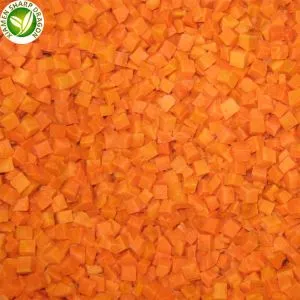
Third, select a texture that you enjoy and tolerate. Raw sticks offer crunch; steamed rounds are softer; dice mix into soups and grain dishes; strips fit noodle bowls and stir-fries; crinkle cuts hold sauces and stay visually distinct. A small cooked portion can be more appealing on a cold night, while raw pieces may be convenient when no cooking is wanted. There is no nutritional prize for forcing the form that feels least comfortable.
Practical example: One diner adds 100 grams of carrots after finishing an unchanged dinner. Using the USDA raw reference, that is about 41 additional kilocalories before any dip. Another diner replaces a 150-kilocalorie snack with the same 100 grams of plain carrots. That eating occasion is about 109 kilocalories lower: 150 − 41 = 109. The time and carrot amount are identical, but addition and substitution produce opposite energy changes. Neither calculation predicts an individual's future weight.
Finally, notice persistent patterns. Repeated severe hunger at bedtime may mean that dinner timing, meal composition, activity, medicines, or another issue needs attention. Repeated discomfort may call for a smaller or earlier serving, a different preparation, or clinical advice. Carrots can be one practical food choice, but they cannot diagnose why you are hungry, treat insomnia, correct reflux, or replace an individualized diabetes plan.

Frozen Carrots Make Evening Portioning Easier, Not Magical
Plain frozen carrots can reduce preparation work in home kitchens, restaurants, hospitals, schools, and prepared-meal lines. The usable cuts are already defined, portions can be weighed from frozen, and unused product can remain in controlled frozen storage rather than leaving trimmed fresh carrots in the refrigerator. That convenience can make it easier to include a measured vegetable portion in an evening meal. It does not make frozen carrots superior at night, and it does not remove the need to check the ingredient statement, storage instructions, and cooking performance.
For procurement, the cut should follow the application. Dice distribute through soup, rice, sauces, fillings, and mixed dishes. Round slices create a recognizable side. Crinkle cuts offer more visible surface and sauce pickup. Strips fit stir-fries, noodles, and bowls. Compare the cut names in the XMSD frozen carrot range, then write a usable specification with dimensions, tolerances, broken-piece and defect limits, blanching status, ingredient statement, pack basis, and destination-market requirements.
For foodservice, cook the sample in the real process. A cut that works in a kettle may soften too far during a tray reheat; a thin slice may cook faster than a thick crinkle cut; dice may portion accurately but lose visibility in a sauce. Use the foodservice and catering application guide for operating context, then record starting weight, cooked yield, temperature, holding time, piece integrity, sauce pickup, and final served weight instead of relying on one universal cooking time.
Worked example: A kitchen plans 2,400 dinner trays with 75 grams of cooked carrot per tray. Net cooked demand is 2,400 × 75 g = 180,000 g, or 180 kg. In the kitchen's verified trial, 100 kg of frozen product produces 96 kg of served cooked carrot, a 96% yield.
Required frozen starting quantity is 180 kg ÷ 0.96 = 187.5 kg. If the kitchen orders only 180 kg because it ignores the measured yield, the expected cooked output is 180 × 0.96 = 172.8 kg, enough for 2,304 portions at 75 grams-96 portions short. The calculation belongs to that tested product and process; another cut, cooking method, or hold can produce a different yield.
Prepared-food developers should keep health language proportionate. "Includes a measured vegetable portion" can be supported by the formulation. "Improves sleep," "safe for everyone before bed," or "controls nighttime blood sugar" would require evidence the meal does not have. If the menu is intended for a healthcare setting, dietitians and the responsible clinical team should establish nutrient, allergen, texture, sodium, carbohydrate, and service-time requirements. The supplier's job is to deliver the agreed carrot specification consistently, not to prescribe the patient's meal.
Quality acceptance should cover free-flowing condition, frost and clumping, color, cut distribution, defect limits, foreign-material controls, pack integrity, traceability, and cold-chain history. A dinner program that doses product automatically should test whether pieces bridge in the hopper or vary enough to disturb portion weight. A restaurant should test how long an opened pack remains practical during service. A retailer should check that serving instructions and the declared basis are clear to the consumer.

A Practical Nighttime Carrot Decision
Begin with the direct answer: most people can eat carrots at night. Then classify the occasion. At dinner, carrots can be one vegetable on a balanced plate. For a planned snack, choose a visible portion and count the dip or drink. Immediately before bed, consider comfort and whether reflux guidance applies. If a diabetes plan sets carbohydrate, medicine, or snack timing, follow that plan instead of a general internet rule.
Next, identify the form. Raw carrots are not forbidden, and cooked carrots are not mandatory. Juice needs its own serving and label check. A rich sauce can matter more than the carrot. Plain frozen cuts offer measurable convenience, but preparation and yield still need verification. None of these forms becomes a sleep aid or a weight-control treatment because it is eaten in the evening.
That leads to a sensible conclusion without a timing myth. Eat carrots at the time they fit your meal pattern, leave an appropriate interval before lying down if nighttime reflux is an issue, and use individual professional guidance when medicines or health conditions affect meal timing. For commercial meals, translate the same logic into a defined portion, cut, recipe, cooked yield, label basis, and service schedule.
XMSD sourcing note: If you are building an evening meal, catering side, soup, bowl, or retail vegetable pack, send the target carrot cut, portion, recipe, cook-reheat method, pack size, destination, and annual volume. We can review the specification and sample questions before quotation.
References
- USDA FoodData Central: Carrots, Raw, SR Legacy FDC ID 170393
- National Institute of Diabetes and Digestive and Kidney Diseases: Eating, Diet, and Nutrition for GER and GERD
- Centers for Disease Control and Prevention: Carb Counting
- National Institute of Diabetes and Digestive and Kidney Diseases: Healthy Living with Diabetes
- National Institute of Diabetes and Digestive and Kidney Diseases: Low Blood Glucose (Hypoglycemia)
- American Diabetes Association: Non-Starchy Vegetables