


Roses as Food: Petals, Hips and Fruit Applications
Nov 30, 2020

Rose petals and rose hips are different food ingredients. Petals contribute a floral note and, when suitable for eating, a delicate visible element. Hips are the fleshy structures that develop on the plant after flowering; their prepared flesh can be used in preserves, sauces and other fruit preparations. A recipe calling for one cannot be reproduced simply by substituting the same weight of the other.
Both identity and growing history matter. Use positively identified roses supplied or grown for food, with appropriate handling information. A florist's rose, an unknown garden cutting or dried petals sold for decoration should not enter a recipe merely because the flower looks familiar. The red rose used in a floral arrangement illustrates the plant's ornamental role; a food purchase needs a different basis for acceptance.
Rose hips can contain substantial vitamin C, but the amount in a particular food depends on the material and what happens to it. A fresh hip, dried powder, strained infusion and sweetened preserve are not equivalent servings. For a useful food decision, start with the plant part, preparation and intended eating role, then assess the actual ingredient in the finished dish.

Petals, hips and rose-flavored liquids have different jobs
NC State places Rosa rugosa in the rose family, Rosaceae, and describes its red-to-orange hips and wrinkled leaflets. Record the botanical name and plant part together when comparing a petal preparation with a hip preparation.
Rose water and rose syrup are processed ingredients. University of Alaska Fairbanks describes their use in pastries and confections. When buying either, read the ingredient statement and intended food use. A sweetened syrup contributes sugar and liquid as well as flavor, while a food rose-water product may have a very different composition and strength.
| Form | Recipe role | Main assessment |
|---|---|---|
| Petals | Visible floral element or infusion | Food growing history, supplied form and sensory result |
| Prepared hip flesh | Fruit base for a sauce or preserve | Removal of seeds and hairs, usable yield and texture |
| Food rose water | Dispersed floral flavor | Composition, strength and the specified product dose |
| Rose syrup | Sweetened liquid flavor component | Sugar contribution, added liquid and full recipe balance |
For a dessert, decide whether the rose component should be visible, aromatic or fruit-like. Petal pieces may be appropriate when their texture is welcome. A specified liquid flavoring is easier to distribute through a smooth preparation. Prepared hip flesh has a different role again: it contributes a fruit component rather than just the scent associated with the flower. Write that role into the recipe before selecting the form.
Choose petals for flavor as well as appearance
Iowa State and Illinois Extension both describe edible uses for rose petals and note that the pale base can taste bitter. Removing that base may improve a particular petal preparation. Assess the trimmed petals in a small food trial before deciding how much to use.
Flower appearance varies substantially among roses. NC State documents single, semi-double and double forms among rugosa cultivars. A cluster of small double flowers supplies a different petal shape from a broad single bloom. If petals will remain visible in the food, specify the desired appearance through a sample and a photograph of the finished portion, rather than relying on a flower color alone.

Taste food-suitable petals in the intended base. An aroma that seems pleasant by itself can dominate a lightly flavored cream, or become hard to notice beside a strongly flavored fruit preparation. Keep a portion without petals for comparison. Compare the flavor with the pastry, dairy or other ingredients included in the same mouthful.
For intact petals used as a garnish, also check whether they can be separated without tearing, whether their edges remain attractive after handling and whether they stain the surface they touch. These observations matter most on pale icing or cream, where a small amount of transferred color can change the presentation. Keep the preparation and contact time consistent during the comparison.
For receiving, distinguish whole food flowers from separated petals. The work remaining in the kitchen changes: removing stems and unwanted flower parts, checking the material, handling fragile petals and recording the accepted amount. If the supplier changes the species, cultivar or supplied form, repeat the relevant sensory and preparation checks before carrying the existing recipe dose forward.
A rose hip is more than its outer flesh
Whole hips should be evaluated as raw material with preparation work still to do. Their outer size can be misleading because part of the received weight is in seeds, internal hairs and material removed during trimming. Cut and inspect a representative sample rather than judging the lot from its largest fruit.

The University of California's rose-hip guidance describes cutting hips open and removing the seeds and hairy fibers before using the flesh. Alaska's guidance likewise calls for removing unwanted parts or separating them through the appropriate preparation method. Keep that separation explicit. Blending an entire hip into a fine-looking mixture is not the same operation as removing its internal material.
The cut hip shows the substantial space occupied by seeds. For purchased puree, review its refining method and assess the supplied texture. Compare material that has reached the same preparation stage.


Firmness also changes the work. Alaska notes that very soft hips can be difficult to separate manually, while very green material may offer little usable pulp. Choose the maturity and preparation route together. A kitchen planning small pieces has a different requirement from one preparing a sieved base. Record whether the accepted endpoint is firm pieces or a fully refined base, then use that endpoint consistently when assessing the next sample.
Measure clean-flesh yield before scaling a batch
Worked example: Suppose a preserve kitchen assesses 2.00 kg of received rose hips. In this illustrative balance, it removes 0.15 kg of stems, blossom ends and rejected material, separates 0.65 kg of seeds and internal material, and obtains 1.20 kg of cleaned flesh. The clean-flesh yield is 1.20 ÷ 2.00 × 100 = 60%. The three fractions account for the original 2.00 kg.
If the planned recipe needs 6.00 kg of cleaned flesh, the theoretical received quantity at that yield is 6.00 ÷ 0.60 = 10.00 kg. This gives procurement a useful starting point. Repeat the measurement across the material the kitchen expects to buy, using the same preparation method each time.
We would keep later water additions on a separate line. If the kitchen adds 0.40 kg of water to the 1.20 kg of flesh and obtains a 1.60 kg mixture before further processing, it has not increased the amount of fruit recovered. Calling that mixture an 80% fruit yield would combine two different measurements. Record clean fruit recovery, added ingredients and final prepared mass separately.
The same distinction helps compare a whole-hip offer with a prepared-pulp offer. For whole hips, purchase cost must be related to the clean flesh obtained, with preparation labor considered separately. For pulp, read its composition and supplied state before treating every kilogram as the equivalent of a kilogram of cleaned fruit. A diluted preparation and an undiluted one need different calculations.
Keep the test method repeatable: initial sample mass, trimming rule, separation method, rejected fraction and accepted endpoint. If one operator presses a sieve much harder than another, the final texture and recovered mass may differ. Agree on an acceptable food result before trying to maximize the number on the yield sheet. A higher recovery is useful only if the resulting material meets the recipe's needs.
Read vitamin C figures on the correct basis
Rose hips have a well-established association with vitamin C, but a single headline figure cannot describe every rose ingredient. A 2026 study by Raal and colleagues found marked differences among the Rosa species and processing conditions examined. Use the finding to ask which material was measured, rather than choosing the largest published number.
Check what a reported number measures. Is it per 100 g of fresh material, per 100 g of dry material, per serving of a finished food or per volume of an infusion? Those denominators are not interchangeable. Drying removes water, while a recipe may add water and sugar. Either operation changes the basis on which a concentration is expressed, even before nutrient retention is considered.
NIH explains that vitamin C can decrease during prolonged storage and cooking. For a commercial food, base the nutrient description on evidence for its actual formulation, process and relevant point in shelf life.
For an illustrative serving calculation, suppose a finished product has a supported value of 40 mg vitamin C per 100 g. A 25 g portion would contain 40 × 25 ÷ 100 = 10 mg on that stated basis. The 40 mg figure here is an arithmetic input, not a measured value for rose-hip jam. The calculation shows why both concentration and portion size belong in the answer.
A strained drink raises another question: what transfers into the liquid that is actually consumed? The weight of dried material placed in a filter cannot by itself establish the vitamin C in the cup. Use product-specific information where available. Choose an enjoyable food for its intended role without turning the presence of rose hips into an unsupported therapeutic or nutritional promise.
Dried petals, infusions and preserves need separate instructions
Dried petals have a different handling pattern from fresh petals. A spoonful may contain intact petals, fragments or fine material, each packing differently into the spoon. For repeat production, weigh the dose and record the supplied form. Record petal texture and appearance after the specified preparation, including any softening or visible fragments in the finished food.


Decide whether the floral material remains in the food or is removed after infusion. If it is removed, the straining step and the quantity of liquid recovered belong in the recipe. If it remains, its texture and distribution need approval. These are different product designs, and a kitchen should not switch between them simply because a finer or coarser bag of petals arrives.
For a rose-water product, use the food supplier's instructions and composition as the starting point for trials. A cosmetic water, fragrance preparation or essential oil is a different purchase and should not be substituted into a food recipe. Even between food products, compare concentration and formulation before transferring a successful dose from one bottle to another.
Preservation needs its own decision. Alaska's home guidance specifically directs readers to freeze rose-hip puree for long-term storage and says home canning is unsuitable for that puree. That is a boundary for the described home preparation, not a blanket statement about every professionally developed product. A commercial preserve needs a process appropriate to its own formulation and packaging; a jar that closes successfully does not establish it.
Keep fruit identity clear when adding a floral note
We would select the fruit component before increasing the rose flavor. The desired bite might contain visible berries, a spreadable fruit layer or a smooth sauce. Each offers a different background for the floral ingredient. Establish the fruit's contribution to flavor, texture and appearance first, then adjust the rose component without simultaneously changing several other parts of the recipe.
The XMSD frozen raspberry range is relevant when recognizable berry character is part of the brief. Assess the supplied fruit in the state used by the recipe. We would measure the recognizable pieces remaining after mixing and portioning, then look for uneven distribution across finished servings.

For a continuous fruit layer, a strawberry puree format provides a different starting point. Review the complete ingredient information and the way it moves through the recipe. The recipe must establish the finished consistency, behavior during dispensing and texture when eaten.
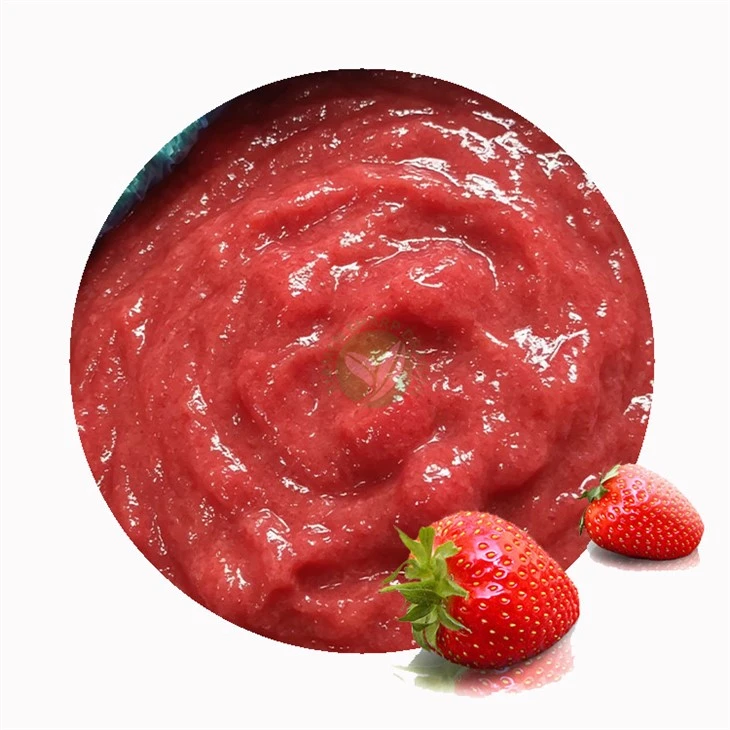
These fruit products are separate from the floral ingredient. Keep their identities and preparation instructions separate in the receiving record, then connect them through the approved recipe. That makes a later fruit substitution easier to assess: the team can check the changed fruit while holding the rose component constant, rather than losing track of which change affected the result.
Compare floral doses in a complete tartlet
Practical example: Suppose a pastry team plans 100 tartlets, each with 18 g of a finished fruit component. The required component is 1.80 kg before dispensing losses. The team has selected a food rose-water product and, within its supplier's use instructions, prepares three final 500 g bench batches: a control without rose water, one with 1 g and one with 2 g.
Keep the final mass at 500 g in each batch. The additions therefore replace the same masses of base, giving 500 g base for the control, 499 g base plus 1 g rose water, and 498 g base plus 2 g rose water. The illustrative inclusion levels are 0%, 0.2% and 0.4% by final mass. These are trial inputs for that specified product, not universal recommendations for every rose-water preparation.
Fill identical tart shells with the same 18 g portion and assess them at the intended serving condition. The decision is whether the floral note complements the fruit and pastry at an acceptable intensity. Record the team's sensory observations, any lingering floral dominance and whether the fruit remains recognizable in the complete bite. Do not select a formula only from the aroma rising from the mixing bowl.
If the actual tasting approves the 0.2% version, the nominal 1.80 kg component would contain 1,800 × 0.002 = 3.6 g of that rose water and 1,796.4 g of the remaining base. A suitable scale and a recorded mixing method are needed to reproduce such a small addition. Measure actual dispensing losses separately when deciding how much finished component to prepare.
We would test fruit form in a separate comparison after settling the floral dose. Hold the selected rose-water product and final inclusion constant while comparing the chosen berry preparation with a smooth fruit preparation. That separation gives each trial a clear purpose. If texture or appearance changes, the team can attribute the observation to the changed fruit system rather than to an unrecorded increase in floral flavor.
Approve the recipe at its final processing stage
A filling added before baking faces a different process from a fruit layer applied after the pastry has cooled. Follow the route the product will actually take and judge the result at the point it will be eaten. The XMSD guide to fruit selection for bakery fillings can support the fruit-form discussion when the floral component is part of a baked product.
In a trial record, identify the ingredient lots, final recipe masses, addition sequence and intended storage and serving conditions. Photograph the portion and note the observations that determined acceptance. A later team should be able to tell whether the approved result used visible petals, an infused liquid or a specified rose-water product without reconstructing the recipe from a menu description.
Review working-pack needs alongside the recipe. The relevant frozen ingredient packaging options should fit the amount opened and prepared for the production run. Keep unused ingredients under their own supplier instructions. The approved fruit-and-floral recipe gives the buyer a concrete basis for comparing pack arrangements and reviewing any proposed replacement material.
Develop the fruit component for a rose-flavored food
Share the finished product, preferred fruit form, preparation route and portion target. We can review relevant XMSD frozen-fruit options for your sample plan. Keep the separately sourced floral ingredient and its use instructions with the recipe. Discuss a fruit application.
References
- Iowa State Extension: Selecting and using roses
- Illinois Extension: The incredible, edible rose
- NC State Extension: Rosa rugosa
- UC ANR: What are rose hips?
- University of Alaska Fairbanks: Wild roses
- Raal et al. 2026: Species and processing variation in rose-hip ascorbic acid
- NIH Office of Dietary Supplements: Vitamin C