


Agave in Food: Plants, Syrup and Fruit Applications
Nov 30, 2020

Agave is a group of succulent plants, some of which provide raw materials for processed foods and drinks. In a food ingredient list, agave usually refers to a prepared ingredient such as agave syrup, rather than a piece of the ornamental plant. Traditional use of selected agave hearts as food does not establish that an unidentified garden agave, its leaves or its sap can be eaten directly.
That distinction answers the most important practical question. Buy an identified food ingredient for cooking; do not use the appearance of a succulent or the word "agave" as an edibility test. NC State Extension identifies the leaf sap of Agave americana as a source of contact dermatitis. A bottle of processed syrup and a freshly cut leaf have different histories and compositions.
Agave syrup supplies sweetness, but its plant origin does not make the sugars disappear. For a fruit dessert, drink or filling, the useful questions are how much syrup enters the recipe, how it changes the eating experience, and whether the finished product still performs as intended. Measuring those changes gives a better basis for choosing it than a broad claim that one sweetener is automatically healthier or suitable for every recipe.

What the plant name tells you
Agaves commonly form rosettes: leaves radiate from a central growing point. Their thick leaves and sculptural outline make them familiar garden and container plants. The genus includes different species and cultivars, so leaf color, striping and size vary. Describe those features when comparing garden plants. For food purchasing, the useful description adds the exact ingredient identity, supplied form and preparation status.
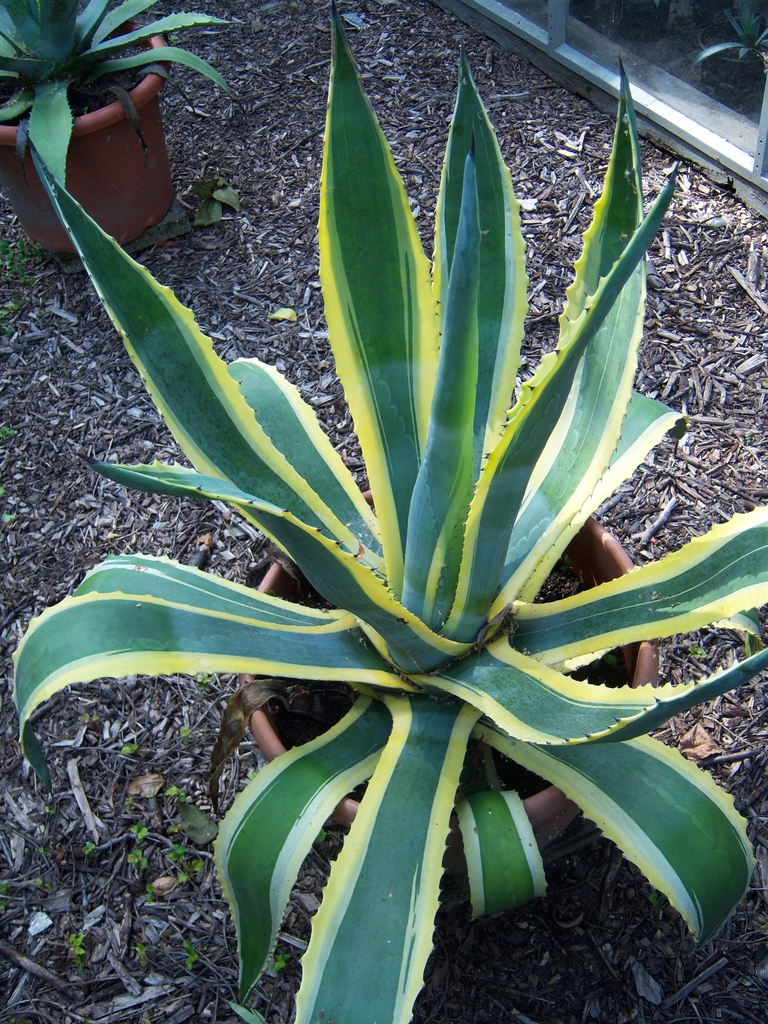
Agave americana belongs to the asparagus family, Asparagaceae. Although one of its common names is "American aloe," that common name is not a reason to substitute it for a product labeled aloe. For a plant purchase, use the botanical identity; for a food purchase, use the actual ingredient name and specification. A common name can carry several associations without making the materials interchangeable.
The nickname "century plant" is also easy to take too literally. NC State explains that A. americana can flower after many years of growth, and the main plant dies after flowering while offsets can remain. The century nickname describes a long wait rather than a fixed hundred-year schedule. The large flowering structure is a stage in the plant's life, not a signal that the surrounding leaves have become a kitchen vegetable.

Traditional food use involved selected material and preparation
University of Arizona Extension describes pit-roasted agave hearts as a traditional food resource. This is a useful correction to the idea that agave is only decorative. It also identifies preparation as part of the food use. The reference concerns a selected plant part treated by a particular cooking practice; it does not describe eating any available leaf raw.
Keep the plant part in the description. "Heart," "leaf," "flowering stalk," "sap" and "syrup" do not name the same material. Removing that distinction from a food history can turn an accurate observation into poor cooking advice. A historical account may tell us what a community prepared without giving the identity, maturity, selection and processing information needed to reproduce it safely elsewhere.
For a cook who wants agave flavor or sweetness, a commercially supplied food ingredient is the practical starting point. Its label should identify what is in the package and how it is intended to be used. An ornamental nursery label serves another purpose. It identifies a horticultural product, rather than supplying a food-use instruction or a food-production record.
For a specialist prepared agave food, ask which plant part is supplied, whether preparation is complete, and what the kitchen still needs to do. Those answers define a usable purchase. A general account of traditional roasting is valuable food history, but a commercial preparation instruction must belong to the actual material being delivered.
Why leaf sap and bottled syrup need separate treatment
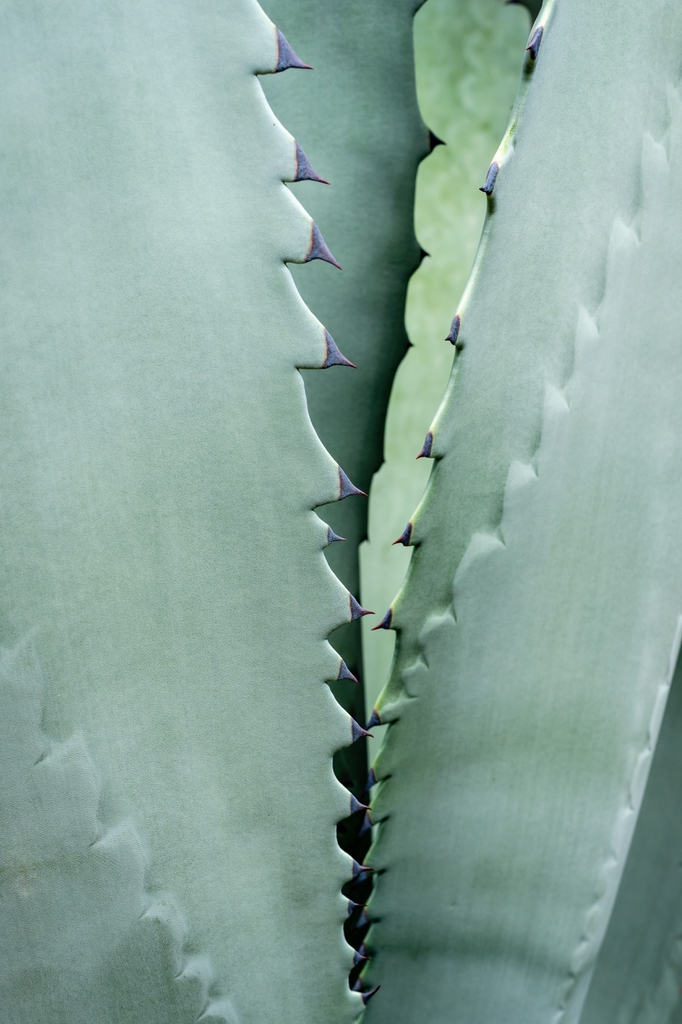
The sharp leaf margins are visible, while sap exposure is less obvious. NC State lists calcium oxalate crystals in its discussion of the irritant characteristics of A. americana leaf sap. This supports keeping raw ornamental material out of casual kitchen experimentation. It does not mean every product derived from an agave plant has the same exposure or should be evaluated as a raw leaf.
A purchasing question can therefore be quite simple: what is the material actually being offered? A supplier describing agave syrup should be able to identify a food product, its ingredients and its processing category. The accompanying specification should distinguish the product from raw sap and from a separately sold fructan ingredient. Keeping those names separate avoids ordering one material while planning a recipe around another.
This distinction matters when botanical images appear on menus and product packs. A plant illustration can explain origin, but the ingredient statement must describe the food that entered the recipe. If the dish uses agave syrup, name the syrup. Do not imply that the plate contains fresh agave leaves, flowers or a minimally prepared garden plant when that is not what was used.
How agave becomes a sweetener
Agave contains stored carbohydrates called fructans, which are chains built from sugar units. Processing can break these chains into smaller sugars. In a 2012 study, Michel-Cuello and colleagues extracted fructans from Agave salmiana juice and used an enzyme preparation to hydrolyze them. The experiment demonstrates the conversion; its laboratory conditions are not a recipe for producing a food ingredient at home.
Commercial syrup should consequently be understood as a processed sweetener, not simply water collected from a flower. The word "nectar" on a food product can sound botanical and fresh, but it does not by itself describe the process, sugar composition or concentration. Use the ingredient information to establish the supplied form and processing description.
Agave syrup and a separately supplied agave fructan ingredient also require different specifications. Breaking a carbohydrate chain into smaller sugars changes what the ingredient contains. A claim or study concerning an extracted fructan cannot automatically be transferred to a syrup made by hydrolyzing it. Ask for the composition relevant to the purchase instead of treating "from agave" as a complete description.
Research on commercial agave syrups has found differences associated with species and carbohydrate profiles. Velázquez Ríos and colleagues compared 29 agave syrups within a larger set of sweeteners and used analytical fingerprints to distinguish groups. This supports examining actual composition when identity matters. For a formulation calculation, obtain the sugar composition of the specific syrup being used and retain its stated measurement basis.
For recipe development, start with the syrup's declared ingredients, dry matter or soluble-solids information where supplied, and the way it tastes in the food. Record the product code and lot. If the syrup changes later, you then have a meaningful reference for comparison rather than a note that simply says "agave."


Plant origin does not remove added sugars
Under the US FDA's explanation of the Nutrition Facts label, added sugars include sugars supplied by syrups, while sugars naturally present in fruit are treated differently. Total sugars include both. Adding agave syrup to plain fruit therefore changes the formulation even though both ingredients come from plants. The word "natural" is not a calculation of the amount of sugar in the finished serving.
Syrup mass and sugar mass are also different quantities. If a recipe contains 200 g of syrup, that tells you the ingredient addition. To calculate its sugar contribution, you need the syrup's composition on a compatible basis. Do not enter all 200 g as sugar merely because the product tastes sweet, or enter zero because the sweetener is plant-derived.
For example, if a hypothetical ingredient declaration gives 75 g of sugars per 100 g of syrup, 200 g supplies 150 g of sugars. That number is illustrative, not a specification for agave syrup generally. A nutrition calculation for the finished food must also account for other ingredients, serving size and changes in final batch yield.
For US labels, FDA describes special presentation provisions for single-ingredient sugars and syrups. Those provisions do not turn the syrup into an unsweetened ingredient when it is added to another food. A manufacturer should apply the rules for the actual product and market, using the full formula rather than copying the layout of a retail syrup bottle.
Taste offers a separate decision. A smaller dose may give the sweetness you want in one fruit base and fail to balance another. Comparing products at the same spoon volume can obscure both dose and concentration. We would weigh trial additions and taste the complete prepared food at its intended serving condition before choosing a working level.
Measure a fruit dessert trial before scaling it
Fruit brings its own flavor, sweetness, acidity and texture to a dessert. Start by preparing the fruit without added syrup, using the intended production method. This first sample shows whether a sweetener is needed at all and gives the team something specific to compare with later versions. A syrup trial without that reference can become an exercise in choosing between two unnecessarily sweet samples.
For pieces, include texture and liquid release in the observation. A portion can taste pleasantly sweet while leaving an unattractive pool in the cup. Evaluate coating and released fruit liquid separately: each can change the way a spoonful looks and feels. Keep the same fruit lot, preparation method, portion size and serving condition across the trial so the comparison answers one question at a time.
Worked example: Suppose a foodservice kitchen has 10.00 kg of prepared melon for a dessert development trial. It wants to compare no syrup with additions of 2% and 4%, measured against prepared fruit mass. For a full batch, these treatments require 0 g, 200 g and 400 g of syrup respectively. The theoretical combined masses are 10.00 kg, 10.20 kg and 10.40 kg before handling losses.
Those percentages are fruit-basis additions. In the 2% version, syrup represents 200 ÷ 10,200 × 100, or about 1.96% of the combined mixture. The difference is small here, but naming the denominator prevents confusion when the recipe is transferred to a system that expresses all ingredients as percentages of the final batch.
At bench scale, use three equal 500 g fruit portions with 0 g, 10 g and 20 g of syrup. Taste coded samples under the same conditions and record fruit character, sweetness balance, coating, free liquid and portion appearance. Select the lowest addition that meets the agreed sensory target, or retain the unsweetened version if it already works. The outcome is a measured formulation choice, not a prediction that the middle dose must win.
The XMSD cantaloupe cube format is one relevant starting point for a piece-based fruit application. Establish the preparation and intended-use requirements of the supplied lot before tasting or service. The example's 10 kg means prepared fruit available to the recipe; it is not an assumption that every received carton provides exactly that amount after your process.

We would investigate fruit handling before increasing syrup to correct a weak dessert. If one operator drains the fruit and another includes all released liquid, the formula has already changed. Record which fraction goes into the bowl. Keeping that decision stable makes the syrup trial repeatable and helps distinguish a sweetness problem from a fruit texture or dilution problem.
Replacing dry sugar changes more than sweetness
In a fruit filling, syrup enters a mixture with fruit, water and the other ingredients chosen by the developer. A syrup-for-sugar substitution starts with a solids balance because part of the incoming syrup mass is water. A liquid sweetener contains a liquid fraction, and its sugar profile may differ from sucrose. Matching one measurement does not necessarily match sweetness, thickness or performance inside a pastry.
Worked example: Suppose a filling developer wants to compare a syrup with a declared 75% dry-matter content against 1.00 kg of dry sugar. On a dry-matter basis, the starting calculation is 1.00 ÷ 0.75 = 1.333 kg of syrup. That syrup contributes approximately 1.00 kg of dry matter and 0.333 kg of water. These are hypothetical composition values selected to show the calculation.
If the original recipe contains adjustable added water, the developer could begin a controlled comparison by reducing that water by 0.333 kg. If it does not, there is no separate water line from which to subtract the amount. Reducing fruit puree instead would also change fruit flavor, color and fruit content. The formula needs redesign rather than a hidden subtraction from whichever liquid ingredient is convenient.
This is a mass-balance starting point, not an approved sugar substitution ratio. Dry matter is not necessarily all sugar, and equal sugar mass is not a guarantee of equal perceived sweetness. Use the actual syrup analysis and compare the finished filling with the original recipe. If the product must retain visible fruit pieces, examine those pieces after mixing, depositing and the intended finishing process.
For a smooth fruit phase, strawberry puree offers a different format from cubes. We would select the fruit form for the required texture before adjusting the sweetener. A smooth red base and a filling with recognizable pieces are different development briefs, even when both use strawberries and agave syrup.
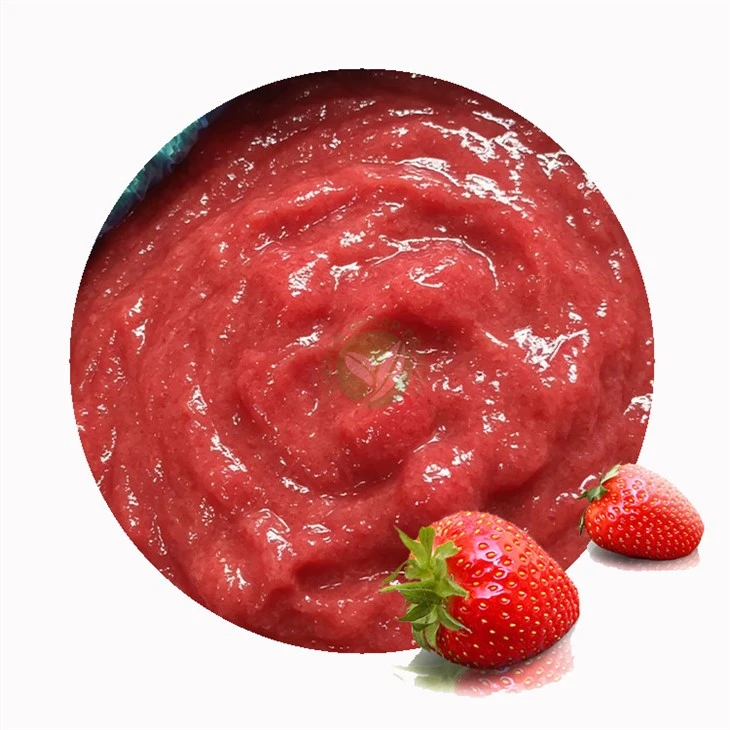
Run the comparison through the actual intended use. For a pastry filling, weigh the deposit, observe spread or leakage, and assess the fruit-dough boundary after the normal finishing and storage route. The XMSD fruit filling specification guide develops those fruit and process checks further. Keep the syrup change visible in the trial record so a later texture difference can be traced to the formula rather than attributed automatically to the fruit.
Keep preservation and ingredient handling in the decision
A sweet-tasting mixture is not evidence of shelf stability. Utah State University's home-preservation guidance does not recommend agave as a canning substitute. That is a specific warning against treating sweeteners as freely interchangeable in a tested home-canning recipe. It is not a statement that a commercial manufacturer can never formulate a food with agave syrup; commercial products require their own appropriate process and safety validation.
For an ordinary kitchen trial, follow the food ingredients' preparation and storage instructions and the operation's established food-safety controls. Do not extend the holding period because syrup was added. Similarly, a frozen fruit ingredient needs an intended use compatible with the dish. Complete the preparation required for each ingredient before evaluating the blended, chilled or sweetened result.
Pack choice should support the rate at which each ingredient is used. A fruit pack and a syrup container may be opened at different frequencies and stored under different instructions. Keep their lot codes and opening records distinct. For the fruit side, reviewing frozen food packaging options alongside batch consumption helps avoid choosing a pack that repeatedly leaves an awkward remainder.
When a replacement ingredient arrives, compare it with the approved reference under the same method. Record the syrup identity, fruit lot, prepared quantities, mixing order, yield and sensory result. Investigate unexpected changes in color, flavor or consistency before altering the recipe to compensate. That sequence preserves the useful distinction running through agave food applications: know the ingredient first, measure its role in the complete food, and approve the result you actually intend to serve or manufacture.
Match the fruit to your dessert or filling trial
Share the fruit form, intended preparation, batch size, desired piece or puree texture and packing requirement. We can review the XMSD frozen-fruit options for that application and organize the sample discussion around the comparisons your team needs. Discuss a frozen-fruit trial.
References
- NC State Extension: Agave americana
- NC State Extension: Agave genus
- University of Arizona Extension: Agaves
- Michel-Cuello et al.: Enzymatic hydrolysis of Agave salmiana fructans
- Velazquez Rios et al.: Analytical profiles of agave syrups
- FDA: Added sugars on the Nutrition Facts label
- Utah State University: Reduced sugar and sugar-free food preservation