


Is Eating a Lot of Strawberries Bad for You? Portion, Symptoms and Form
May 20, 2025

You feel uncomfortable after a large strawberry smoothie and wonder whether the fruit was the problem. There is no universal strawberry limit that answers that situation. The useful first check is the actual fruit weight, the full recipe and the symptoms. Fullness after a large drink, a reaction after a small exposure and illness after a shared product require different responses. Do not use a smaller serving to test a suspected allergy.
Check the symptom pattern before counting berries. Mild fullness may relate to volume or the recipe, but timing alone does not establish a cause. Hives or swelling after a small amount raises a possible allergy question; throat tightness, breathing difficulty, fainting or a suspected severe allergic reaction requires emergency help immediately. Several people becoming ill after the same product also warrants preserving the lot information and a food-safety investigation.
When the Question Becomes an Emergency
A serious allergic reaction can occur after a small exposure and is not measured by the number of strawberries eaten. If anaphylaxis is suspected, call emergency services immediately and use an already prescribed adrenaline or epinephrine auto-injector according to its instructions and the person's emergency plan. Do not wait for the reaction to resolve or deliberately eat more to investigate it. A food article cannot diagnose the reaction or replace emergency assessment.
Foodborne illness is another pathway. If multiple people report vomiting, diarrhea, fever or other illness after sharing one frozen or prepared product, keep the original pack, lot code and purchase information. Do not keep tasting the product to prove a cause. The supplier, public-health authority or food-safety team needs the traceable evidence.
Practical example: imagine a person feels full after a large smoothie while another develops swelling and wheezing after a small strawberry dessert. These are hypothetical situations, not customer reports. Review the first person's already consumed portion and complete recipe without diagnosing a cause. The second person needs urgent action for a possible serious allergic reaction. A blanket instruction to eat fewer berries would miss the decision that matters.
Strawberries contribute water, fibre and natural acids, while a smoothie may also contain juice, yoghurt, cream or sweeteners. Record the complete foods and amounts already eaten, when symptoms began and whether there were other exposures. This history can support a healthcare professional's assessment. Persistent or recurring symptoms deserve advice; it is not necessary or appropriate to deliberately repeat a suspected allergic exposure to create a better record.
A Simple Way to Judge Whether Your Amount Is Reasonable
Use the smallest useful set of facts rather than a dramatic online number. Weigh the serving if the amount is uncertain, include strawberries in a smoothie or dessert calculation, and note whether the fruit was fresh, frozen, drained, dried or freeze-dried. Then consider how quickly it was eaten and whether the person normally tolerates that form.
If the person feels well and the portion fits the meal, there may be no problem to solve. If there is mild fullness, reduce the next serving and review the recipe. If there are hives, swelling, breathing difficulty, repeated vomiting or severe symptoms, stop treating the situation as simple overeating and follow appropriate medical advice.

There Is No Universal Strawberry Limit
A serving recommendation is a planning tool, not a toxicological threshold. One person may eat a portion with lunch, another portion in a smoothie and a strawberry dessert later without the same effect as someone eating a large bowl in a few minutes. Age, activity, total energy needs, digestive tolerance, medicines and medical advice all change the appropriate amount.
USDA MyPlate fruit guidance can help frame variety across the whole diet, but it does not turn strawberries into a stand-alone prescription. If a consumer asks whether two cups are "too much," ask what else was eaten, whether the fruit replaced another food, and whether symptoms or a clinician-directed restriction are involved.
Worked portion example: assume three products each actually contain 150 g of strawberries. The day's strawberry input is 150 g × 3 = 450 g. This is a hypothetical exposure calculation, not a recommended daily maximum or proof of tolerance. A 150 g finished dessert with only 30 g fruit contributes 30 g, not 150 g, to that total. Record the actual ingredient basis rather than treating the whole dish as strawberry weight.
For commercial recipes, write the portion in grams rather than "a handful." A weighed portion improves nutrition calculations, ingredient ordering, sensory consistency and complaint investigation. Keep raw fruit mass, thawed fruit mass, drained liquid and added ingredients separate in the batch record.

What Can Happen When the Portion Is Too Large?
The most ordinary issue is digestive discomfort. A large volume of fruit adds water and dietary fiber, and eating it quickly may lead to fullness, bloating, loose stools or abdominal discomfort in a sensitive person. These symptoms do not prove that strawberries are poisonous. They indicate that the amount, speed, combination or individual tolerance may not be suitable.
Some people react to the natural acidity or to the complete recipe rather than the fruit alone. A strawberry dessert can include cream, sweeteners, sugar alcohols, chocolate or a large amount of fat. When reviewing a symptom, record the complete food, portion, timing and preparation. Removing strawberries while leaving the rest of the recipe unchanged may not identify the real trigger.
Persistent or severe symptoms, dehydration, blood in stool, repeated vomiting, difficulty swallowing, breathing difficulty or swelling require appropriate medical attention. This article is a food and product guide, not a diagnosis or an individualized treatment plan.
Put Nutrition Figures on the Same Serving Basis
The USDA raw-strawberry reference lists 32 kcal, 2 g fibre and 4.89 g total sugars per 100 g edible fruit. On that reference basis, 150 g gives 48 kcal, 3 g fibre and about 7.34 g total sugars. This calculation makes the amount visible; it does not establish an individual's medical allowance or represent an analysis of a particular frozen, dried or formulated product.
For a dried snack, read the actual pack rather than multiplying a fresh-fruit figure by an assumed drying ratio. Moisture, added sugar and other ingredients change the comparison. A small-looking handful can have a different mass and composition from fresh berries. Use the declared serving mass and the values for that food, then include the rest of the meal when planning intake.
For a strawberry yoghurt, separate fruit weight from finished-product weight. A cup containing 35 g fruit is not a 150 g strawberry portion merely because the complete cup weighs 150 g. Its other ingredients also contribute nutrients and may be relevant to a symptom history. A recipe sheet therefore helps both the formulation calculation and the factual information provided when a consumer has a concern.
Natural Sugar Is Different from a Sweetened Product
Plain strawberries contain naturally occurring sugars with water and fiber. Eating more fruit increases total carbohydrate and energy intake, but the finished product matters. Strawberry jam, syrup fruit, sweetened yogurt, bakery filling and dessert drinks can contain added sugar that is not present in plain fruit. Use the complete formula for nutrition and label decisions.
Freezing does not add sugar. It can make fruit available in larger portions and may change how quickly it is eaten. A smoothie can contain several hundred grams of fruit plus juice, syrup, yogurt or ice cream without looking like a large fruit portion. Use a recipe sheet and a scale when the product is sold as a controlled serving.
Drying removes water and concentrates mass per gram. A 30 g dried-fruit serving is not comparable with 30 g of fresh strawberries. Freeze-dried pieces may be coated, sweetened or used as inclusions in a higher-calorie product. Check ingredient statement, moisture basis, serving mass and added ingredients before making a portion or health statement.
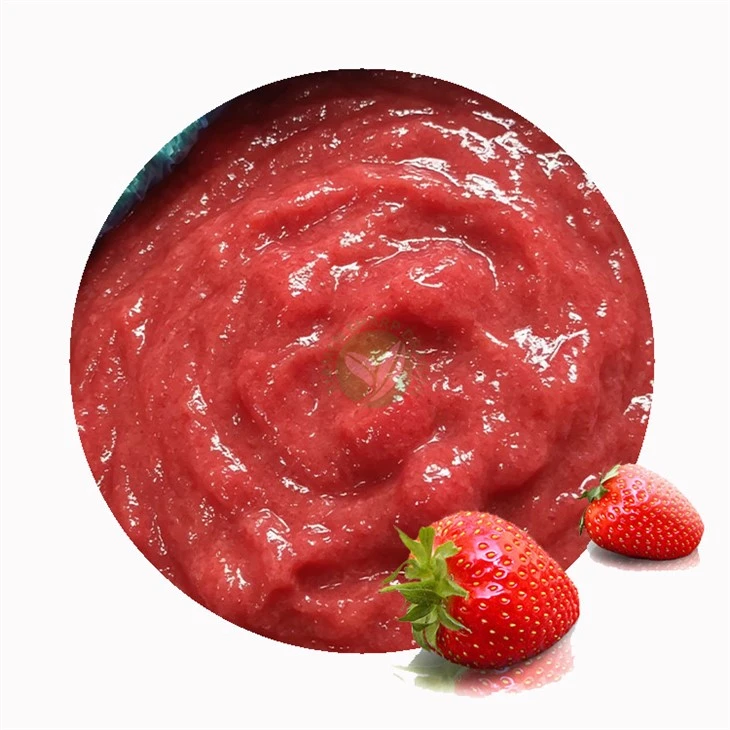
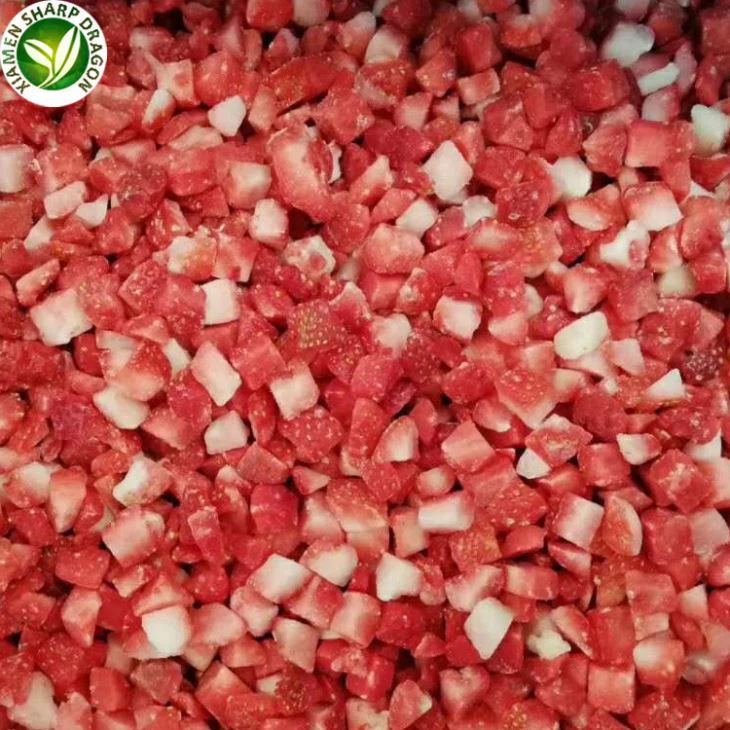
Our XMSD frozen strawberry range shows how whole, sliced, diced and puree forms serve different applications. Form is a procurement decision as well as a nutrition decision because it controls concentration, thaw loss, portioning and exposed product.

The strawberry nutrition and product-form overview develops the food-composition question separately. Use it with the actual ingredient label and serving basis rather than as an individual limit.
Allergy and Individual Tolerance Are Separate Decisions
A food allergy is different from eating too much. It can involve itching, hives, swelling, vomiting, wheezing or a more serious reaction after a small amount. Oral allergy syndrome can cause mouth or throat symptoms in people who react to certain pollens. Anyone with suspected allergy should follow a qualified clinician's evaluation and emergency plan rather than testing a larger portion.
For a food business, identify strawberry as an ingredient even when the finished product is a mixed dessert or beverage. Prevent cross-contact under the facility hazard plan, keep lot identity and do not promise "allergy safe" based only on a supplier photograph or a general certificate. We need the product specification, facility controls and applicable labeling review before release.
Medical diets may also change the answer. A person managing diabetes, kidney disease, gastrointestinal disease or a prescribed elimination diet may need a different portion or product choice. The correct commercial response is to provide composition, serving and lot information and direct the individual to personal medical advice, not to publish a blanket claim that strawberries are always unrestricted.
Portion Math Changes with Product Form
Fresh and frozen fruit are usually measured by the portion placed into the recipe. Dried and freeze-dried fruit needs a separate basis because water has been removed. Syrup-packed fruit needs drained weight and added-sugar information. Puree needs solids, viscosity, and any carrier or sweetener recorded. A label that says "strawberry" is not enough to compare these forms by weight.
For a product developer, distinguish frozen input from prepared usable mass. In a hypothetical calculation, a formulation needs 120 kg drained strawberry pieces and the agreed preparation-and-drain method gives an assumed 93% usable yield. Required input is 120 ÷ 0.93 = about 129.03 kg before any justified reserve. This is not an XMSD yield specification. A puree recipe that retains all fruit and liquid uses a different basis, so the drain factor should not be carried across unchanged.
The same discipline helps a consumer avoid accidentally turning a small-looking dry snack into a much larger fruit intake. A 25 g pack of freeze-dried pieces is light and compact, while a fresh serving contains far more water. The correct comparison is the product label and serving basis, not the number of pieces in a bowl.
Worked example: suppose a yoghurt line needs 35 g of usable strawberry dice in each of 8,000 cups. That is 35 g × 8,000 = 280 kg of usable fruit. At an illustrative 96% yield after the required preparation and defined losses, incoming quantity is 280 ÷ 0.96 = about 291.67 kg. These are assumed inputs, not an XMSD trial or offer. Check the prepared fruit mass before filling: buying only 280 kg would leave the line short under these assumptions.
What a Responsible Answer Should Not Claim
A general article cannot assign a universal maximum, diagnose an allergy, approve a prescribed diet or certify that a frozen lot is ready to eat. It can explain the variables that change the answer and identify the evidence needed for the next decision. That boundary is especially important when a reader asks about children, pregnancy, diabetes, kidney disease, medication interactions or repeated gastrointestinal symptoms.
For a commercial lot, the evidence should match the use. A product for cooking may have one process and label review; a product for direct consumption may require a more demanding risk assessment. Ask for the ingredient statement, specification, lot traceability, storage record, applicable certificate and destination-market requirements. Do not replace those documents with a generic web article or a photograph of attractive fruit.
For an individual, the next step follows the symptom rather than a fruit count. Pause eating when uncomfortable and review the already consumed meal; persistent, severe or concerning symptoms need medical advice. A possible serious allergic reaction requires emergency action. Suspected contamination calls for retaining the pack and lot details and contacting the relevant food-safety channel. Do not use a pleasant taste or a lower next dose as proof that the original problem was harmless.
That is why we keep health wording modest and product wording precise. Strawberries can be a useful fruit ingredient, but neither a nutrition benefit nor a pleasant sensory result proves suitability for every person or every application. The decision should remain tied to portion, form, handling, composition and the intended use.
Frozen Strawberries Are Not Automatically Safer
Freezing preserves a product but is not a universal kill step. FDA food-safety guidance has linked frozen berries with outbreaks and emphasizes that viruses may survive freezing. A frozen product intended to be eaten without cooking needs an appropriate supplier program, hygiene controls, traceability, recall readiness and destination-market review.
At home or in foodservice, keep frozen fruit at the specified temperature, prevent thaw-refreeze cycles, wash fresh produce as directed and discard visibly rotten fruit. In a factory, check lot, pack integrity, temperature record, abnormal clustering, surface ice and approved sensory condition. Do not use pleasant smell or bright color as proof of microbiological safety.
Thawing changes portion control. A pack may release juice and soften. Record frozen input, thawed solids, recovered liquid and waste. If a recipe uses both fruit and liquid, include both in usable yield; if an application drains liquid, calculate cost and serving on drained output.
Use Form, Portion and Application Together
Whole fruit works when visual identity matters. Slices and dice distribute more evenly through yogurt, bakery, cereal or dessert. Puree supports beverages and fillings where piece identity is less important. None of these forms is automatically "better"; the right choice is the one that passes the intended recipe, serving, hold time and quality test.
For example, an illustrative beverage plan uses 80 g usable strawberry in each of 2,400 cups, requiring 192 kg usable fruit. At an assumed 94% usable yield, the input would be 192 ÷ 0.94 = about 204.26 kg. Count retained juice in usable output if it goes into the drink; a drain-loss factor from a fruit-cup process would overstate this beverage requirement. Keep the actual process with the calculation rather than using one yield across every form.
For an ordinary portion-planning question, weigh the intended amount and record the form and other ingredients. If symptoms are involved, keep the already observed exposure history and seek appropriate advice rather than deliberately retesting a suspected reaction. In a factory, investigate inconsistent servings through the scoop, formula, pack and preparation record; changing a health claim does not correct a dosing problem.
Use the XMSD puree format page and the food-processing supply framework to compare application routes. Confirm exact product, ingredient status, packing, origin, specification, annual volume and destination before approving a sample.

A Practical Check before Eating or Releasing a Lot
- Identify the form: fresh, IQF, puree, syrup-packed, dried or freeze-dried.
- Weigh the actual portion and the total amount consumed in the day.
- List added sugar, dairy, sweeteners, oil and other ingredients in the full recipe.
- Watch for digestive or allergy symptoms and follow a clinician-directed restriction.
- Keep fresh and frozen products handled according to the relevant food-safety plan.
- For business use, record lot, thaw yield, serving mass, application result and disposition.
The goal is not to label strawberries as universally good or bad. Match amount, person, product and process. A moderate portion of sound plain fruit may be appropriate, while an oversized serving, concentrated snack, contaminated lot or allergenic reaction requires a different response.
A sound decision therefore has two outputs: a clear answer for the person eating the fruit and a traceable specification for the team supplying it. Keeping those outputs separate prevents a consumer-health question from being answered with a sales slogan or a procurement question from being answered with an unsupported medical promise.
Send XMSD your target form, serving or batch formula, cut, pack size, annual volume, destination market and application. We can align the sample, specification, yield test and cold-chain evidence with the product you actually need.
