


What Are the Health Benefits of Eating Strawberries? Evidence and Practical Use
May 20, 2025

A bowl of plain strawberries and a syrup-heavy strawberry dessert can share the same fruit name while contributing very different meals. Plain strawberries provide vitamin C, fibre, water and fruit variety. Their practical benefit comes from the portion and the food they replace, not a special daily dose that guarantees a health result. Fresh, unsweetened frozen, puree, freeze-dried and sweetened products need their own comparison basis.
Before comparing two choices, check the ingredient list, the actual serving mass and whether the stated nutrition is per portion or per 100 g. Then include the yoghurt, juice, syrup or coating in the finished dish. If the difference disappears once those ingredients and serving sizes are matched, the apparent advantage came from the comparison rather than the strawberry itself. This check is especially useful when a small dry-fruit portion is compared with a large bowl of water-rich berries.
What is genuinely useful? A plain strawberry serving can add fruit volume, familiar flavour, vitamin C, and fibre. Frozen fruit can extend availability and simplify portioning. The strongest daily advantage may be replacing a more energy-dense or highly sweetened option with a defined fruit portion-not repeating an unsupported claim about disease prevention.
What Happens After Strawberries Reach the Body?
Whole strawberries bring water and modest fibre to the digestive system, while the fruit's carbohydrates contribute energy. Chewing, portion size and the rest of the meal influence how quickly the serving is eaten and how satisfying it feels. A smoothie, puree, sweetened dessert or freeze-dried snack changes the exposure because processing and added ingredients change the finished food.
The practical body effect is therefore a chain: ingredient composition, serving mass, digestion, total meal, and personal response. Vitamin C has normal physiological roles; fibre can support digestive health; neither statement proves that strawberries cleanse blood, cure disease or work the same way for everyone.
Worked example: Suppose a snack uses 150 g of plain raw strawberries. Using the cited USDA raw-fruit reference, that is 1.5 × 32 = about 48 kcal and 1.5 × 2 = 3 g fibre. Those figures describe the reference fruit portion, not a prescribed dose or a guaranteed packaged-product analysis. Blending the same fruit into juice and syrup adds other ingredients, so compare the full recipe instead of assigning its energy to the berries alone.
What does eating strawberries every day actually mean?
"Every day" describes frequency, not a medical prescription. One person may eat fresh berries with breakfast; another may use unsweetened frozen fruit in a smoothie; a third may choose a sweetened dried snack. The ingredient form, portion, added ingredients, and total meal determine the practical result. If a clinician has set a specific diet or a person develops repeated symptoms, that advice takes priority.
For a commercial formulation, daily use also means repeatability. Record the strawberry form, serving mass, sugar basis, storage, lot, and finished recipe so a nutrition or quality statement describes the product actually eaten rather than a generic fresh berry.

The main advantages in plain strawberries
The first advantage is nutrient density relative to the food's physical volume. The USDA FoodData Central entry for raw strawberries gives a useful reference of about 32 kcal per 100 g, with approximately 7.7 g carbohydrate, 2 g dietary fibre, 0.7 g protein, 0.3 g fat, and about 59 mg vitamin C. Database values are reference values, not a guarantee for every variety or harvest. Still, they show why plain strawberries can provide a generous-looking portion with limited energy compared with many pastries, confectionery fillings, or cream-based desserts.
The second advantage is sensory balance. Strawberries combine sweetness with acidity and a recognisable aroma. That balance can make a yoghurt cup, smoothie, sauce, bakery filling, or dessert taste fruit-forward without requiring the same amount of added flavouring. The correct amount of sugar still depends on the cultivar, maturity, process, and finished product. We do not treat a generic sweetness claim as a formulation specification; we would compare soluble solids, acidity, colour, cut, and thaw behaviour in the intended application.
The third advantage is flexibility. You can choose whole berries for visible fruit, slices or dice for distribution, puree for smooth texture, or freeze-dried pieces for a dry inclusion. Each form solves a different production problem. A beverage plant may value fast blending and stable colour, while a bakery may need pieces that remain recognisable after baking. "Strawberry" identifies the ingredient; it does not by itself identify the correct cut, process, pack, or recipe performance. The strawberry product overview helps identify a form to evaluate; use the supplied specification for the actual order.
What the nutrition evidence can and cannot say
Vitamin C is needed for normal collagen formation, helps the immune system function and improves absorption of iron from plant foods, as NIH explains. Strawberries can contribute this nutrient as part of a varied diet. Fibre adds to the total fibre supplied by the meal. The useful distinction is between supporting normal nutrition and treating a diagnosed condition: the nutrient content of a serving does not make strawberries a substitute for medical treatment.
Human trials have also examined strawberry interventions and cardiovascular risk markers. A 2020 meta-analysis of eleven randomized trials found a reduction in C-reactive protein, but no overall effect on blood pressure, the lipid profile or fasting glucose in its main analyses. Some lipid findings differed by baseline levels. These are studied markers in defined groups and interventions, not proof that an ordinary serving prevents clinical disease. Use that research to keep claims proportionate while making the everyday choice from the food form and complete meal.
The evidence boundary matters because the amount eaten, the rest of the diet, and the product form all change the context. A 100 g raw-fruit database entry is not equivalent to a sweetened jam, a freeze-dried powder, or a smoothie containing juice and syrup. If a health professional has prescribed a specific diet, or if a person has an allergy or persistent digestive symptom, an article about general food advantages is not a substitute for individual advice.
The CDC describes fruits and vegetables as sources of vitamins, minerals, fibre, and other substances important for health, and notes that replacing more calorie-dense foods can reduce the total calories in a meal. That is a useful way to describe strawberries: they can be a practical substitution or ingredient choice. It is more accurate than saying that strawberries burn fat or guarantee weight loss. The advantage comes from how the fruit is used within the whole meal.
Fresh, frozen, and freeze-dried strawberries are not interchangeable
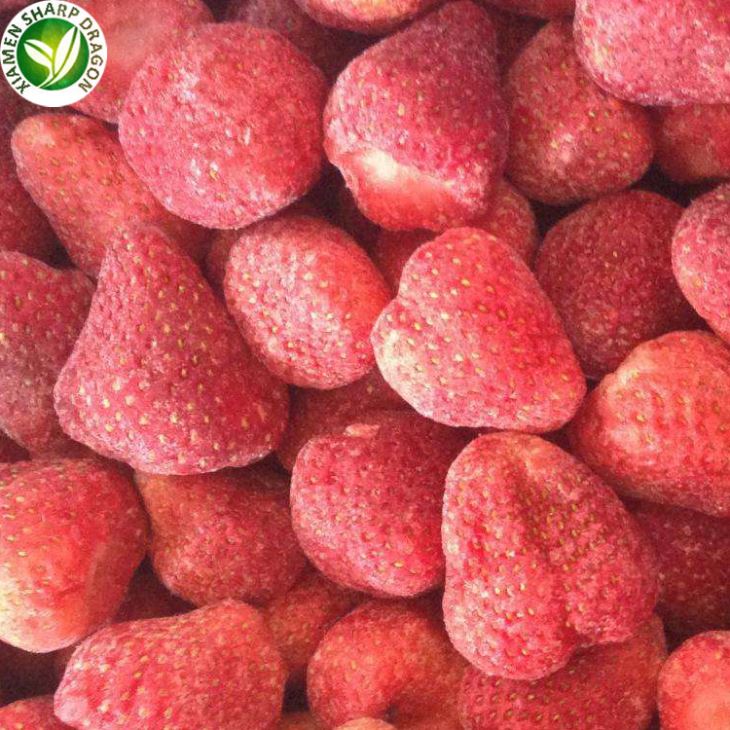
Fresh strawberries are attractive when the buyer wants immediate eating quality, bright surface colour, and a firm bite. Their weakness is perishability. Bruising, moisture, mould, and temperature abuse can reduce usable life quickly. FDA guidance recommends choosing produce without bruising or damage, refrigerating perishable fresh produce at 40°F or below, and washing it under running water before preparation. Soap, detergent, and commercial produce washes are not recommended.
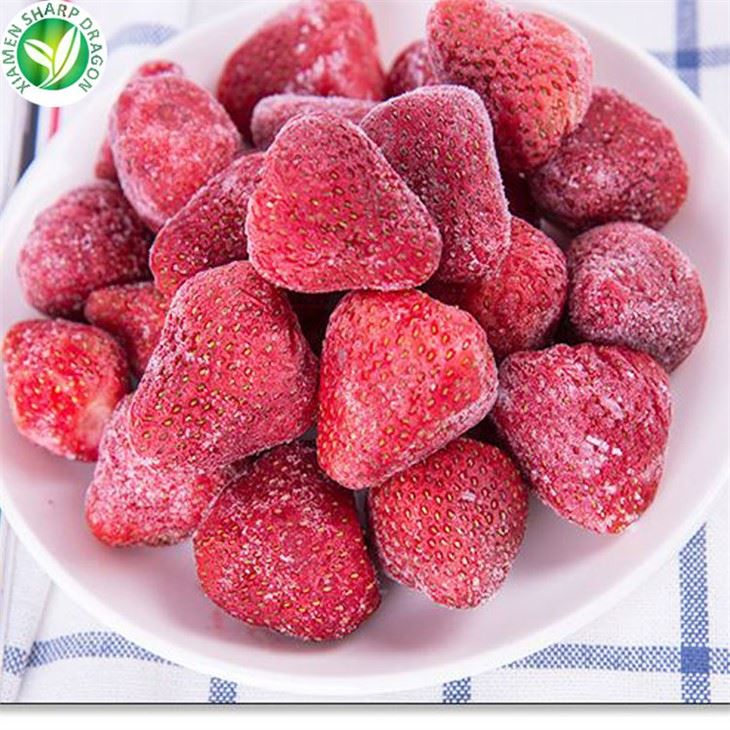
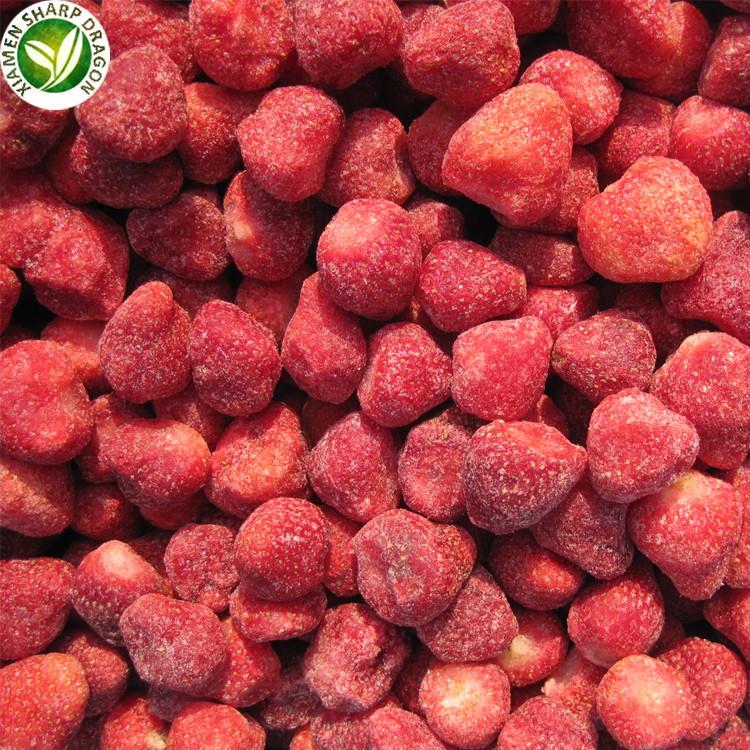
Unsweetened frozen strawberries offer a different advantage: they can decouple the production schedule from the fresh harvest window. Freezing does not make a product nutritionally identical to fresh fruit in every detail, but freezing itself does not automatically add calories. USDA guidance explains that freezing keeps food safe for a very long time when held at 0°F or below, while recommended storage periods are mainly about quality. The actual label and ingredient list remain decisive. Follow the pack's intended-use and cooking directions. The frozen-food thawing guide explains why preparation must match the ingredient rather than simply treating all fruit as ready to eat.
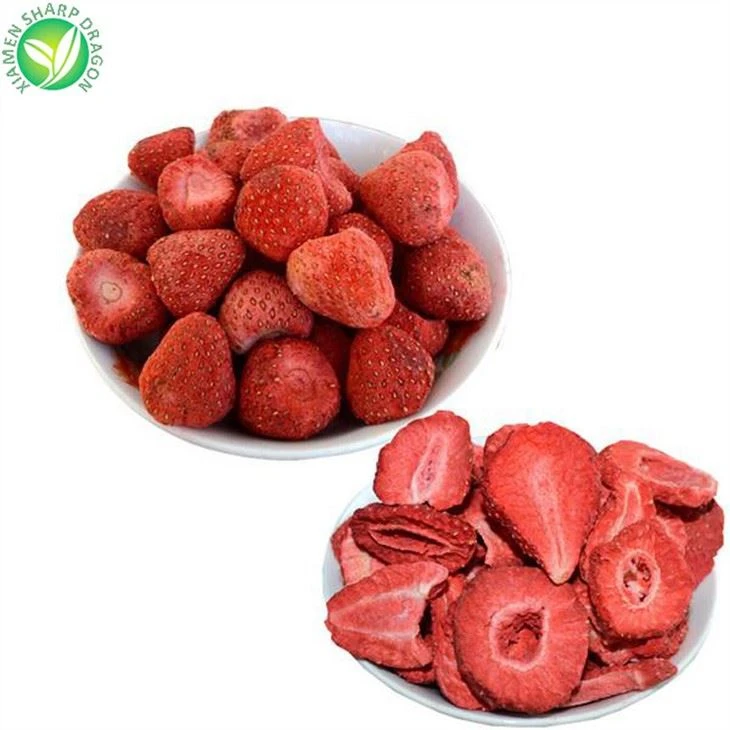
Freeze-dried strawberries have had most of their water removed. That makes them light, crisp, shelf-stable when properly packed, and useful for cereal, chocolate, snack, bakery, and decoration applications. It also concentrates the fruit per gram and makes it easy to overeat compared with a bowl of fresh berries. If sugar or a coating is added, the finished product must be evaluated from its own ingredient statement. The word "strawberry" is not enough to establish the nutrition of a processed product.
How strawberries can support practical eating patterns
Whole fruit can add volume and texture to a meal. That can be useful when it replaces a more energy-dense snack, or when it helps a foodservice operator build a visible fruit portion into breakfast and dessert. The word "replace" matters. Adding strawberries to an already large sweetened dish does not automatically make the dish light. A smoothie with fruit, sweetened yoghurt, juice, syrup, and ice cream is a different nutritional object from a bowl of plain berries.
Fibre and water also influence eating speed and mouthfeel. Whole berries require chewing and have a different eating experience from juice or a smooth sweetened puree. For some people, that makes a measured portion more satisfying. For others, acidic fruit may aggravate symptoms or an allergy may make strawberries unsuitable. Choose a suitable portion and preparation for your own tolerance rather than treating daily frequency as a prescription.
Practical example: Suppose a hotel plans 120 yoghurt cups with an illustrative 60 g strawberry component each, requiring 7.2 kg of fruit before relevant preparation losses. A watery topping may come from free liquid released during holding rather than insufficient fruit. Compare samples with a defined preparation and drainage method, then check color and liquid at the actual service point. Use fruit documented for the intended ready-to-eat application, or complete any required cooking and controlled cooling before assembly. Maintain the applicable cold-holding procedure; this is not a four-hour room-temperature allowance. The expected result is a reproducible portion and a clearer cause of excess liquid, verified in the trial. These are planning inputs, not an XMSD customer record.

Advantages in beverages, bakery, and prepared foods
Smoothies and fruit drinks
Strawberries give a smoothie a familiar colour, aroma, and acid-sweet profile. Frozen pieces can provide coldness and body without relying on as much ice, although the formula still has to control viscosity and separation. We would compare the fruit at the actual blend ratio, not from a small spoonful in isolation. Check seeds, fibre, colour after holding, sweetness after dilution, and the effect of thawed free liquid.
Bakery and fillings
Strawberries can bring visible fruit identity to cakes, biscuits, fillings, and toppings. The trade-off is water management. Whole or sliced frozen fruit may release juice during thawing and baking, while puree can change the viscosity and migration of a filling. I recommend defining particle size, fruit solids, colour after heating, target moisture, and whether the application needs a fruit preparation rather than plain fruit.
Yoghurt, desserts, and inclusions
In a chilled dairy or dessert system, strawberries can create contrast: soft fruit against a smooth base, bright colour against a pale matrix, and acidity against sweetness. In that trial, assess distribution, bleeding, thaw stability, and the time between filling and sale in the application test. A recipe can look excellent on day one and fail after storage if the fruit releases too much liquid or the colour migrates into the base.

What a buyer should check before calling a strawberry product "better"
Start with the application, not the marketing adjective. A whole berry can be the best choice for a retail display but the wrong choice for a high-speed beverage line. A puree can be efficient for blending but unsuitable when the finished product needs visible pieces. A freeze-dried inclusion can be visually strong but may soften in a high-moisture matrix. The advantage is always relative to the job the ingredient must perform.
For frozen strawberries, define the cut or form, colour range, maturity profile, seed and calyx expectations, foreign-material controls, free liquid tolerance, net weight, pack size, storage temperature, and intended destination. Then request a sample and test it under the real process. A supplier's certification and quality documentation can support the evidence file, but it does not replace an application trial or an agreed product specification. A certificate can support the supplier evidence file; it cannot replace the application trial or establish a nutrient value for the finished recipe.
Packaging is part of the advantage as well. Good packaging protects the fruit from moisture migration, freezer burn, odour transfer, and repeated opening. For a factory, a pack that can be opened, weighed, resealed, and traced cleanly may be more valuable than a slightly lower nominal price. Review the supplier's frozen packaging approach alongside the product form and shipping route.
Worked example: a dessert manufacturer plans 2,000 cups with 45 g strawberry pieces per cup. The nominal fruit requirement is 90 kg. If the process trial shows 8% unusable loss from thaw drip and trimming, the purchasing basis becomes 90 ÷ 0.92, or about 97.8 kg, before allowing for handling reserve. If the team instead changes to a puree, the calculation must be rebuilt around solids, viscosity, and finished yield. The advantage is not "frozen" by itself; it is the format that produces the required result with a controllable loss rate. This is a hypothetical planning calculation, not a measured XMSD trial. Use drained yield only when that is the material required by the recipe; if the juice stays in the food, it is not automatically waste.
Food safety and tolerance boundaries
Fresh produce can become contaminated during growing, harvesting, storage, handling, or preparation. FDA guidance recommends washing hands, rinsing produce under running water, cutting away damaged areas, and keeping produce separate from raw meat and seafood. Washing reduces surface bacteria but does not eliminate every hazard. In a commercial file, review the supplier's food-safety system, lot traceability, allergen controls, and recall procedure.
Frozen fruit is not a licence to ignore the cold chain. Keep the product at the specified frozen temperature, avoid damaged packs, and assess any lot that has thawed, leaked, or been exposed to unknown conditions. USDA notes that freezing preserves safety for long periods, but quality declines over time and thawing changes texture. A receiving record should distinguish a quality complaint from a potential safety issue and escalate both through the correct quality process.
Tolerance is personal. Some people may experience oral allergy symptoms, digestive discomfort, or irritation; others may need to manage a prescribed carbohydrate pattern or another medical condition. That does not make strawberries universally bad, and it does not justify a universal safety promise. The correct response to a serious or repeated reaction is to stop and seek qualified medical advice, while a commercial operator can follow its own allergen and incident procedures. The strawberry portion and tolerance guide addresses the separate question of eating larger amounts.
A clear way to use the advantages without overclaiming
For a household, choose a plain form when you want the fruit's own nutrition and flavour to remain visible. Wash fresh berries correctly, keep perishable fruit cold, and check the ingredient list on frozen, dried, or prepared products. For a foodservice or manufacturing team, define the application first, then compare fresh, frozen, puree, and freeze-dried options using the same portion, storage, and finished-product criteria.
For a supplier discussion, request information that can be measured: product form, variety or cultivar information where relevant, cut size, colour, Brix or acidity targets if part of the specification, moisture or solids basis for processed forms, pack format, storage requirements, certificates, and sample-trial conditions. XMSD's application solutions are a starting point for matching product form to use, not a replacement for a signed specification.
Strawberries can give a food recognizable fruit flavor, useful nutrients in a plain-fruit portion and several ingredient forms for different uses. Choose the form that works in the complete recipe and assess it under the actual preparation and holding conditions. A repeatable result is more useful than a broad promise attached to the fruit name.
Keep the approved sample, its preparation instructions and the final recipe together. For a frozen ingredient, record whether the measured weight is still frozen, prepared with all liquid retained, or drained before dosing. Those are different quantities. Repeating the same assessment point helps distinguish a change in the fruit from a change in the recipe or operator method.
In practice, that means keeping three records together: the nutrition basis, the physical specification, and the application result. The nutrition basis tells us what can be said about the plain ingredient. The physical specification tells us what arrives in the case or carton. The application result tells us whether the fruit still delivers colour, aroma, texture, and yield after the process. When one of those records is missing, the word "advantage" becomes too vague to guide a purchase.
XMSD sourcing note: For a strawberry trial, share the intended application, fruit form, target portion, pack format, destination, and document requirements so the sample can be evaluated against measurable use conditions.
References
- USDA Standard Reference: Strawberries, raw (SR26 report)
- CDC: Tips for Increasing Vegetables and Fruits in Your Diet
- FDA: Selecting and Serving Produce Safely
- NIH Office of Dietary Supplements: Vitamin C
- Gao et al.: Strawberry interventions and cardiovascular risk factors - meta-analysis
- FDA: Are You Storing Food Safely?