


Is Corn Good for Weight Loss? A Practical Meal and Portion Guide
Jul 04, 2019

Yes, plain sweet corn can fit a weight-loss eating pattern, but it does not cause weight loss by itself. The useful test is whether a measured portion replaces another energy source and helps you build a meal you can sustain. If you simply add corn to the rice, bread, fries, sauce and snacks you already eat, it adds energy. If it replaces part of a denser side and you keep the full meal balanced, it can be a practical carbohydrate choice.
Start with the finished food. Plain boiled kernels, an unbuttered cob, canned corn in brine, creamy corn, fried corn snacks and sweetened corn drinks are not interchangeable. USDA SNAP-Ed lists one 145 g cup of corn at 125 kcal, 27 g carbohydrate, 3 g fiber, 5 g protein and 2 g fat. Those figures give you a reference basis, not permission to apply the same numbers to every variety, recipe, drained product or branded pack.
The short answer: Use plain corn as a measured starchy component, not as a free vegetable and not as a slimming treatment. Decide what it replaces, count oils and sauces, add a meaningful protein food and non-starchy vegetables, and judge the whole meal rather than the crop name.

Corn Helps Only When the Meal Math Helps
Weight loss requires a pattern that brings energy intake below energy use over time. Corn cannot override that pattern. The 2025–2030 Dietary Guidelines for Americans tells you to eat the right amount for your age, sex, height, weight and activity level and to pay attention to portions of higher-calorie foods. CDC likewise describes a calorie deficit as the condition that produces weight loss, while NIDDK emphasizes an eating pattern you can maintain. These authorities do not identify sweet corn as a fat-burning food.
Substitution is therefore the first decision. When corn takes the place of another portion, the energy difference is the new portion minus the removed portion. When it is an addition, the full corn value joins the meal. You can use the same corn in two opposite ways: fit it inside a planned plate, or treat it as an unlimited vegetable beside an unchanged plate. Only the first approach defines what the corn replaces.
Worked example: Using the USDA reference, 72.5 g of corn is half of the 145 g serving and contributes about 62.5 kcal: 72.5 ÷ 145 × 125. If you add it to an unchanged dinner, that dinner rises by about 62.5 kcal. If it replaces a 100 kcal side portion, the dinner falls by about 37.5 kcal. The action is to record the removed food as carefully as the corn; "I added vegetables" does not establish a calorie reduction.
The reverse question-whether corn can make you gain weight-uses the same energy logic but belongs to our separate corn weight and energy guide. Here the practical focus is narrower: how you can include corn without turning a reasonable ingredient into an unmeasured extra.

What Plain Sweet Corn Contributes
Corn is a starchy vegetable in U.S. food-group guidance. That description is more useful for meal planning than calling it "good" or "bad." The starch supplies carbohydrate energy, the kernels contain some dietary fiber, and the food provides modest protein plus micronutrients. None of those facts proves a weight-loss outcome. They tell you what corn can contribute when you compare it with the rest of the plate.
The reference cup's 3 g fiber can contribute to daily fiber intake, but it is not an unusually large dose and it does not guarantee fullness for a fixed number of hours. Satiety depends on the portion, food structure, eating rate, protein and fat in the meal, total volume, prior intake and individual response. The 5 g protein in the reference cup is useful but usually not enough to make corn the sole protein anchor of an adult meal. Pairing it with beans, eggs, fish, poultry, tofu, yogurt or another appropriate protein food changes the meal more than praising one nutrient in isolation.
Water content and physical structure matter too. Tender kernels or a cob occupy more volume than a dry, fried corn snack of equal weight. That can make plain corn easier to portion into a meal, but the effect is not a clinical promise. A sweetened beverage made from corn, a refined cereal, corn chips and whole kernels have different water, fiber, fat and eating patterns. The word "corn" does not preserve the original food matrix after extensive processing.
Use food-form-specific data. The SNAP-Ed cup is a helpful transparent reference, while USDA FoodData Central also maintains entries for raw, cooked, frozen and canned forms. Your label or recipe should use the entry matching the product state and edible basis. Do not apply cooked-drained data to frozen input weight, or count the inedible cob as kernels. Our corn-versus-rice comparison explains why equal-looking scoops still require a common cooked-weight basis.

Build the Plate Before Debating the Portion
A useful corn meal has three jobs covered: a measured starchy component, a substantial protein component and enough non-starchy vegetables or other high-volume foods for the intended meal. Corn can fill the starch role or share it with another staple. It should not automatically occupy both the vegetable allowance and the grain or starch allowance while leafy vegetables disappear from the plate.
There is no universal gram portion for weight loss because energy needs differ. A workable starting method is more defensible than a rigid prescription: choose the food form, weigh the edible portion, calculate its contribution from a matching source, then adjust the portion until the full meal fits your plan. If you use the 145 g USDA cup as the starting reference, 80 g scales to about 69 kcal, 14.9 g carbohydrate and 1.7 g fiber. Those are estimates from proportional scaling; a compliant product label may round differently.
The variables that move the portion most are what else is on the plate, how often you eat that meal, your overall calorie target and your response to the meal. An 80 g garnish in a vegetable-and-protein bowl is not the same role as 200 g corn beside bread and a creamy entrée. If your meal leaves you persistently hungry, do not assume the answer is always more corn. Review protein, non-starchy vegetables, meal volume, eating schedule and the plan as a whole.
Practical example: You serve a bowl with 140 g corn because the scoop looks standard, but your plan was based on 90 g. On the 125 kcal per 145 g reference, the intended portion is about 77.6 kcal and the actual portion is about 120.7 kcal. The 50 g over-serve adds roughly 43.1 kcal before dressing. Mark the scoop fill, verify it on a scale during service and correct the portion system rather than removing corn entirely.
Preparation Can Change the Answer More Than Corn Does
Boiling, steaming, microwaving or reheating plain kernels usually lets you control additions after cooking. Grilling a cob can do the same if you measure the coating. Creamed corn, cheesy corn, battered kernels, fritters and fried snacks incorporate other energy sources into the finished food. Their recipe and label-not the reputation of sweet corn-determine whether they fit a particular plan.
Fat is especially easy to overlook because a small spoon changes mouthfeel without changing food volume much. Sugar-containing glazes, mayonnaise, cheese sauce and large amounts of dressing add another hidden layer. This does not make every condiment forbidden. It means you must count it and decide whether the flavor is worth its place in the meal. Herbs, pepper, lime, vinegar, salsa or a measured sauce can provide a clearer portion system than an unrestricted butter brush.
Cooking also changes weight through water uptake or loss. If your database entry is for cooked and drained kernels, weigh the product after the matching preparation when practical. If a factory formula begins with frozen input weight, establish the cooking yield before converting to served grams. A 5 kg bag does not become a fixed number of 100 g servings unless the usable cooked yield is actually 100%. Ice, drainage, overcooking and handling loss can change the result.
For a home meal, the action is simple: cook the plain corn, measure the edible portion and add toppings deliberately. For foodservice, write the cooked or drained basis into the recipe and train the actual utensil. For a packaged product, the Nutrition Facts label is the finished reference. FDA explains that serving size describes the amount people typically consume, not a recommended amount, and that eating two labeled servings doubles the listed calories and nutrients.

Compare Corn Forms on the Finished-Food Basis
Fresh and plain frozen sweet corn can both give you a simple ingredient with controlled seasoning. Canned corn can also fit, especially when the ingredient list is short, but you should compare drained weight, sodium, added sugar and actual serving size. Cob pieces make portions visible, yet cob diameter, kernel fill and edible yield vary. A piece count is less precise than kernel weight when calorie calculations matter.
Do not merge vegetable-style sweet corn with dry grain products. Popcorn, tortillas, polenta, breakfast cereal and corn snacks can all be made from corn, but they have different processing, water content, ingredients and serving behavior. High-fructose corn syrup is a sweetener derived from corn starch, not a serving of sweet-corn kernels. A sound weight-loss page should never transfer the fiber, volume or portion logic of whole kernels to a refined derivative.
| Corn form | Best weight-management use | Main check |
|---|---|---|
| Plain kernels | Weigh directly and use as the planned starch | Raw, frozen, cooked or drained basis |
| Corn on the cob | Visible side portion with controlled topping | Edible kernel mass, not gross cob weight |
| Canned corn | Convenient measured ingredient | Drained basis, sodium and added ingredients |
| Creamy, fried or snack form | Occasional planned portion if it fits | Finished label, likely portion and all additions |
Use the form that gives you the control you need. Loose IQF kernels suit precise dosing; a cob may suit a plated side; canned corn can suit ambient storage; a formulated product may suit convenience. Our frozen-versus-canned corn guide covers sodium, drained weight and application differences in more detail. The answer should change with the product evidence, not with a slogan.

What the Weight Evidence Can-and Cannot-Tell You
Composition data show what sweet corn contains. They do not show that corn causes fat loss. Mechanistic reasoning about fiber, chewing or meal volume can explain why a plain portion may feel satisfying, but it still cannot predict your later food intake or body-weight change. A direct corn-feeding weight-loss trial would need to define the corn form, amount, comparison diet, energy target, population and follow-up. General claims rarely do that.
A large 2023 BMJ prospective cohort analysis followed 136,432 U.S. adults through four-year intervals. Increased carbohydrate intake from a grouped starchy-vegetable category-peas, corn and potatoes-was associated with 2.6 kg more weight gain per 100 g/day increase, while whole grains, fruit and non-starchy vegetables showed different associations. This is a useful warning against treating starchy vegetables as unlimited. It is not proof that a measured serving of corn caused 2.6 kg gain: the exposure was grouped, the study was observational, diet and weight included self-report, and residual confounding can remain.
The proportionate conclusion is stronger than either extreme. Corn is not a slimming treatment, and it need not be banned. If you replace non-starchy vegetables with large corn portions, add corn to an unchanged diet or choose dense processed forms, the pattern may work against your target. If you measure plain corn, keep dietary variety and use it within an appropriate calorie plan, it can remain in the meal.
Do not use bowel movements, "detox," magnesium or visible kernel hulls as proof of fat loss. Stool, body water, glycogen and fat mass are different outcomes. A temporary scale change does not establish a change in body fat. If weight changes rapidly without explanation, or if you have diabetes, a digestive disorder, an eating disorder, pregnancy-related needs or weight-affecting medication, a qualified clinician or dietitian should adapt the plan to you.
Frozen Corn Can Improve Control, Not Cause the Outcome
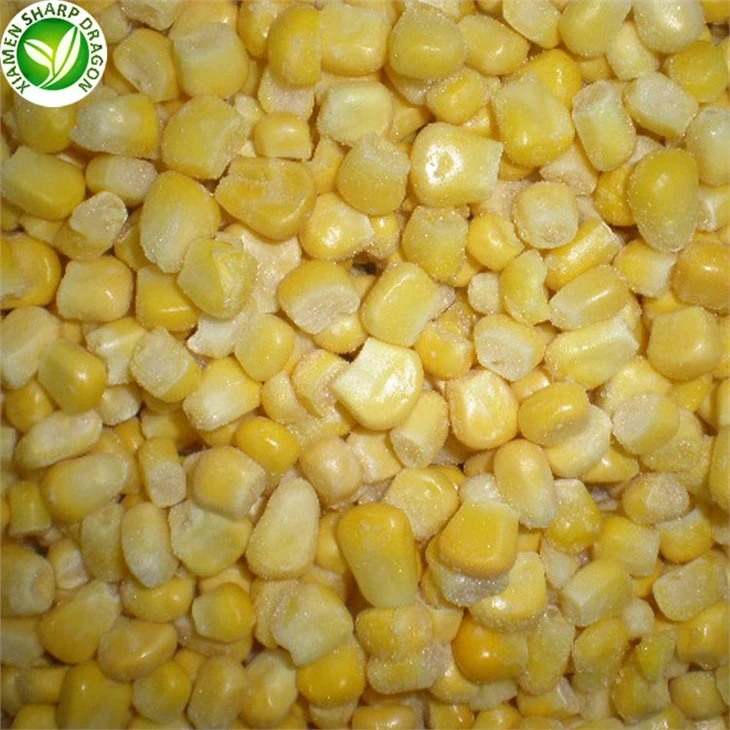
Plain frozen corn is useful because you can store it, take out a measured quantity and return the rest to frozen storage without trimming a cob. Individually frozen kernels can flow through a scoop or dosing system when the cold chain and product condition are sound. That operational convenience may support consistent portions; freezing itself does not create a weight-loss effect.
Before using a frozen product in a nutrition calculation, identify the ingredient statement, blanching or cooking status, frozen input basis, cooking method and drained yield. Ice accumulation, clumps, excessive broken kernels or variable kernel size can disrupt dosing. In a home kitchen, a scale resolves much of that problem. In production, run repeat portions through the actual equipment and compare the mean and spread with the recipe target.
The current XMSD frozen corn category shows kernel and cob formats, but the product name alone is not an acceptance specification. For a weight-managed ready meal, we would define the corn form, ingredient list, recipe percentage, portion basis, kernel condition, pack size, cooking yield and label-data source. Then we would test the sample in the intended cooking and filling process.
Packaging supports that control when it matches the quantity you open per production cycle. A small kitchen may portion more consistently from resealable retail packs; a factory may need bulk bags sized to one batch. If a bag remains open through repeated thaw exposure, kernels can clump and scoop weights can drift. Review the frozen-food packaging options alongside the batch size and handling plan, not after the recipe has been fixed.

Make Commercial Portion Control Auditable
For a ready meal, salad, soup, frozen blend or foodservice side, the defensible question is not "does this contain weight-loss corn?" It is "how many edible grams of which finished corn form reach one serving, and what does the complete formula declare?" Build one calculation sheet from batch formula to filled tray. Keep frozen input, cooked yield and served weight separate so that a yield change does not silently alter portion or nutrition values.
Worked example: A hypothetical 2,400 kg ready-meal batch contains 8% plain sweet corn, so it uses 192 kg corn. A 300 g tray contains 24 g corn on the same formula basis: 300 × 0.08. Using the 125 kcal per 145 g reference, that corn fraction contributes an estimated 20.7 kcal: 24 ÷ 145 × 125. Raising corn to 15% gives 45 g and about 38.8 kcal, an increase of 18.1 kcal per tray. The result does not predict weight loss; it tells you to recalculate the complete tray before changing the portion claim or front-of-pack message.
Validate the arithmetic with real production evidence. Compare the approved recipe with fill-weight records, cooked yield, component distribution and the finished Nutrition Facts basis. For a visible kernel claim, inspect multiple trays from different points in the run; small kernels can settle while larger vegetables bridge in the hopper. An acceptable total tray weight can still hide the wrong corn ratio.
For retail or menu wording, avoid "burns fat," "detox corn," "unlimited," or guaranteed satiety. Safer, testable language identifies the ingredient form, declared serving and applicable nutrient values. Any regulated nutrient-content or health claim must meet the destination-market rule and use the final product evidence. A supplier's generic corn data cannot substantiate a finished meal containing sauce, oil and several other ingredients.
At receiving, check package integrity, frozen condition, lot identity and the attributes tied to dosing, such as free flow and excessive ice. During use, compare actual portion weights with the target. If the mean is correct but individual portions range widely, improve the dosing method; averaging does not protect the eater or the label on every unit. This is where operational discipline adds more value than another claim about corn's metabolism.
Frequently Asked Questions
Can I eat corn every day while trying to lose weight?
You can include measured corn regularly if it fits your full eating pattern, but vary your vegetables and carbohydrate sources. Repeating corn should not displace non-starchy vegetables or turn a planned starch portion into an automatic extra. Individual medical or calorie needs may require a different frequency.
Is boiled corn better than roasted corn for weight loss?
The method name alone does not decide it. Plain boiled and dry-roasted corn may both fit. Compare edible grams, added oil or butter, sauces and the amount you actually eat. Roasting with a heavy coating can change the meal more than boiling, while unmeasured butter on boiled corn can erase that apparent advantage.
Is frozen corn as useful as fresh corn for portion control?
Yes, plain loose frozen kernels can be especially easy to weigh. Check whether the product is plain, whether the source data match the food state, and whether clumping or surface ice changes dosing. Fresh cob corn can also work, but calculate edible kernel mass rather than gross cob weight.
Does corn at night stop weight loss?
There is no defensible rule that the clock makes corn uniquely fattening. An evening portion can still be an added snack or part of an oversized meal, so count it within your daily pattern. Reflux, diabetes care, shift work or medication may change personal timing advice.
The Practical Verdict
Corn is good for weight loss only in the limited, honest sense that a measured plain portion can fit a sustainable reduced-calorie pattern. It works best when it replaces another energy source, keeps its additions visible and sits beside protein and non-starchy vegetables. It works poorly when "vegetable" becomes permission for unlimited portions, when corn is stacked onto an unchanged meal, or when a fried, creamy or sweetened product borrows the reputation of plain kernels.
Your decision method is concrete: name the final form, weigh edible grams, use matching nutrition data, count everything added, record what the corn replaces and test whether the full meal supports your plan. If you develop food products, carry the same logic through yield, fill weight, label evidence and receiving checks. That method gives you a result you can audit; a promise that corn itself causes fat loss does not.
XMSD sourcing note: Send us your corn form, recipe percentage, portion basis, pack, cooking process and destination. We can review a frozen-corn sample and the practical controls needed for consistent dosing.
References
- USDA Food and Nutrition Service SNAP-Ed. Corn nutrition information.
- USDA FoodData Central. Corn, sweet, yellow, cooked, boiled, drained, without salt.
- U.S. Department of Health and Human Services and U.S. Department of Agriculture. Dietary Guidelines for Americans, 2025–2030.
- U.S. Centers for Disease Control and Prevention. Physical Activity and Your Weight and Health.
- NIH National Institute of Diabetes and Digestive and Kidney Diseases. Eating and Physical Activity to Lose or Maintain Weight.
- U.S. Food and Drug Administration. Calories on the Nutrition Facts Label.
- Wan Y, et al. Association between changes in carbohydrate intake and long-term weight changes. BMJ. 2023;382:e073939.