


XMSD Corn Weight Guide: Energy, Portions and Real Formulas
May 28, 2019

Corn does not make you gain body fat simply because it is corn. Body-weight change reflects energy intake and expenditure over time, while medication, sleep, health conditions, age, genetics and behavior can alter that balance. Plain sweet corn contributes calories and carbohydrate, so amount and context still matter. A measured serving inside a varied meal is different from a large buttered cob, fried corn snack, creamy corn side or sweetened corn drink.
Use this rule: identify the finished corn food, measure the portion you will actually eat, count everything added, and decide whether corn replaces another energy source or is simply added to it. Do not promise weight loss from meal timing, fiber or one ingredient.

Weight Change Is an Energy-Balance Question, Not a Corn Verdict
Food provides energy and the body uses energy for basic functions, digestion, physical activity and adaptation. Over time, a sustained intake above expenditure can support weight gain; a sustained deficit can support weight loss. The response is dynamic rather than a perfect daily ledger, which is why NIH's NIDDK Body Weight Planner models changes in food intake and physical activity instead of assigning one permanent calorie number to every person.
NIDDK also explains that factors affecting weight and health include sleep, medicines, health conditions, environment, family history and genes. That does not erase energy balance. It means a person who is gaining weight unexpectedly deserves a broader review instead of being told to remove one vegetable. A clinician can evaluate rapid, unexplained or medically significant change.
For corn, the useful question is contribution. How many grams are served? What energy does that amount provide? What toppings, oil, sauce or other starch accompany it? Does it replace rice or chips, or sit beside them? Once those inputs are visible, you can make a realistic menu or product decision without calling corn fattening or slimming.
Put Plain Sweet Corn on a Measured Basis
USDA SNAP-Ed displays a one-cup, 145 g serving of corn with about 125 kcal, 27 g carbohydrate, 3 g dietary fiber, 5 g protein and 2 g fat. Use those numbers as one transparent reference entry, not a universal specification. Variety, maturity, cooking, added water, drained weight and the selected food-database entry can change the value for a particular product.
A 72.5 g half-cup portion would scale to about 62.5 kcal on that reference basis. Two full cups would scale to about 250 kcal before butter, oil, cheese or sauce. Neither number is automatically high or low; it has to be placed inside the person's meal and overall intake. The calculation is more honest than repeating "corn will not make you fat" as an absolute.
Corn is a starchy vegetable in USDA MyPlate guidance. That helps explain why it generally contributes more carbohydrate than non-starchy vegetables. It can still fit a meal, but you should not count a large corn serving as though it were nutritionally interchangeable with leafy greens. Our corn nutrition guide owns the detailed food-data and label basis.

Portion Size Changes the Answer Faster than the Ingredient Name
A serving declared on a label is a comparison basis, not necessarily the amount a person eats. FDA advises readers to check servings per container and serving size first. If a package contains two servings and is routinely finished at once, every listed calorie and nutrient amount effectively doubles for that eating occasion. The same reasoning applies to a large restaurant scoop whose weight is unknown.
Weighing removes guesswork. Record the edible grams after draining or cooking when that is the basis used. For cob corn, do not count the inedible cob as if it were kernels. For canned corn, distinguish the as-packaged and drained basis. For a frozen blend, verify the actual corn ratio rather than estimating from a photo of the bag.
Practical example: a cafeteria calls one scoop a half cup, but periodic checks show it ranges from 70 g to 135 g. Using the 125 kcal per 145 g reference, the corn energy ranges from about 60 to 116 kcal before sauce. The action is to set a gram target, train the utensil fill and recheck actual portions. Debating whether corn is fattening will not fix a 93% serving variation.
Replacement and Addition Lead to Different Meals
If corn replaces part of another starch or a higher-energy side, the complete meal may hold steady or decrease in energy. If corn is added without changing rice, bread, fries or sauce, energy rises. The crop is identical; the meal architecture changed. This substitution question is often more decisive than a debate about whether carbohydrate is inherently fattening.
Our corn-versus-rice guide compares their different product and meal roles. Neither ingredient is universally better for weight. A plate with measured corn, vegetables and a suitable protein food can be reasonable. So can a measured rice meal. A plate with full portions of both plus a rich sauce may exceed the intended energy budget.
For a commercial formula, document the control. If corn replaces 20% of a rice component, identify whether percentages refer to raw, cooked or finished weights. Record water pickup, drained yield and serving mass. Without a common basis, a reformulation can look lower in corn on paper while delivering more total energy after cooking.
Also compare what happens outside the tray. A satisfying meal that replaces a larger snack later in the day has a different total pattern from a small tray followed by unrecorded food. Product developers cannot guarantee compensation, but they can avoid pretending that a component percentage predicts the buyer's or eater's final weight. Keep the claim tied to the measured product rather than an assumed behavior.
Added Fat, Sugar and Dense Snacks Can Dominate
Plain sweet-corn kernels contain substantial water. Frying removes water and adds oil; a flavored snack can add salt, sugar and cheese powder. A creamy side can add butter, cream or mayonnaise. A sweet corn beverage can contain added sugar. Those products cannot inherit the calorie profile of plain kernels merely because corn appears in their name or image.
Compare labels on two bases. First use the declared serving to understand the likely eating occasion. Then compare per 100 g when you need a common product basis. Keep water content and eating volume in mind: a dry snack packs more solids into the same weight than cooked kernels. The ingredient list identifies where oil, sugar and seasoning enter.
Do not confuse package size with portion suitability. A resealable family bag may encourage repeated handfuls; a single cob can attract an unmeasured coating; a restaurant cup may be refilled. For buyer review, record the nominal serving, typical consumption and calories for both. If the likely occasion is twice the label serving, show the team that doubled figure before approving weight-sensitive language.
Practical example: a development team replaces a 100 g plain corn side with 100 g of fried corn bites and keeps the same "corn is light" marketing line. The new product contains a batter, frying oil and seasoning. The decision is to compare the finished Nutrition Facts, typical portion and ingredient list, then rewrite the claim. The raw-material reputation cannot cancel the added formula.

Fiber May Affect Fullness, but It Does Not Guarantee Weight Loss
Fiber and the intact food matrix are useful parts of whole or minimally processed corn. A measured portion may feel more satisfying than a refined corn fraction or a dry snack for some people. That possible meal effect does not prove that corn automatically reduces later intake, increases metabolism or causes fat loss. Appetite and compensation differ across people and eating occasions.
The old promise that corn "detoxes" the body by promoting bowel movements is not an evidence-based weight explanation. Stool weight, water shifts and body fat are different outcomes. A short-term movement on a scale can reflect food, fluid, glycogen or waste rather than a meaningful change in fat tissue. This page therefore does not use bowel function as proof of weight loss.
The next queued article on whether corn makes you poop will own the digestive mechanism and tolerance boundary. Here, the useful action is to count the corn portion and complete meal, then observe whether the chosen structure supports the person's planned intake. Do not assign a guaranteed appetite response to 3 g of fiber in a reference cup.
Eating Corn at Night Is Not a Special Fat-Gain Switch
The inherited page prohibited nighttime corn and prescribed a special daytime window. That advice was unsupported. The body continues to digest food at night. An evening meal can contribute to daily energy intake, but the clock does not transform the same corn calories into fat by itself.
Timing can matter indirectly. Late eating may be associated with larger portions, alcohol, snacks, short sleep or a schedule that makes intake difficult to monitor. Reflux symptoms, diabetes management, shift work and medication timing can also change individual advice. Those are reasons to assess the full pattern, not to publish a universal ban on evening corn.
Use a practical log if timing is a concern: record food, grams, additions, hunger, sleep schedule and total daily pattern for an appropriate period. If the late corn serving displaces a similar food, the effect differs from adding a buttery bowl after a complete dinner. A dietitian can help interpret a medical or persistent weight-management problem.
A product page should therefore avoid "best time to eat corn" instructions unless a credible intervention supports the exact recommendation. Manufacturing time, serving time and personal physiology are different subjects. State storage and preparation instructions for food quality; leave individualized weight timing to qualified guidance and evidence that actually measured the outcome.

Convert a Commercial Formula into Calories per Serving
A buyer cannot judge weight-related positioning from the percentage of corn in a batch headline. Convert that percentage to edible grams per serving, scale a suitable nutrient source and add every other ingredient. This gives the product team an auditable development estimate before it chooses a claim or serving presentation.
Worked example: a 3,000 kg frozen rice-and-vegetable meal contains 12% plain sweet corn. The batch uses 360 kg corn. A 350 g tray therefore contains 42 g corn.
Using the USDA SNAP-Ed reference of 125 kcal per 145 g, the corn contributes an estimated 36.2 kcal per tray: 42 ÷ 145 × 125. If development adds 8 g of oil to the tray, that oil alone contributes about 72 kcal using the conventional 9 kcal per gram of fat-roughly twice the corn estimate.
The comparison identifies the larger lever. It does not make oil forbidden; it tells the team to evaluate the complete 350 g tray rather than blame its 42 g corn fraction. Final label values need the approved formulation, yield and retention handling, suitable data or tests, and destination-market rounding.
Run a second calculation for the actual eating occasion. If a promotion bundles two trays or the product is commonly served with an additional sauce, the usage context can exceed the labeled single-tray estimate. If the intended weight-related message cannot survive a realistic portion, change the serving, formulation or message.
Keep uncertainty visible. The 36.2 kcal value is only the estimated corn fraction, not the tray total and not a predicted weight change. A person's body weight will not move by a fixed amount because one tray contains 36.2 kcal from corn. Repeated intake, substitutions, activity and adaptation matter. Use the arithmetic to control formulation, not to manufacture a personal promise.
Choose the Corn Form That Supports Portion Control
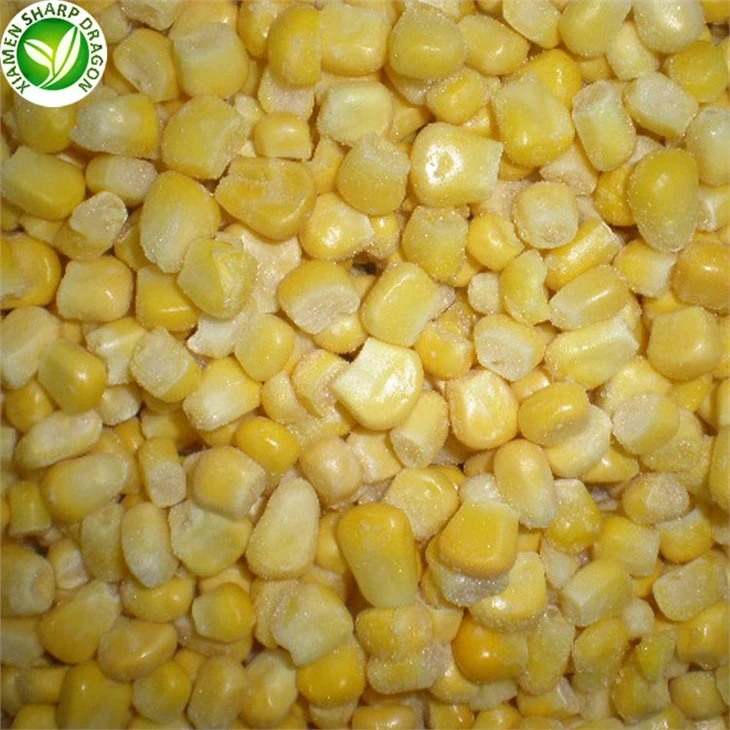
Loose IQF kernels can be dosed by weight and mixed at a controlled ratio. Cob portions offer visual familiarity but require an edible-yield basis and can attract variable toppings. Canned corn needs a drained-weight and brine review. Sauced or seasoned frozen corn shifts control from the kitchen to the supplier's finished formula. Select the form that gives your operation the measurement it can actually maintain.
For IQF kernels, define color, maturity, tenderness, kernel size where relevant, broken material, defects, free flow, ingredients, blanch or cooking status, pack, storage and lot documents. Review the current XMSD frozen corn range by form. Then run the sample through dosing, cooking, hot holding and the final serving method.
XMSD's corn yield and recipe-control guide provides the operational calculation logic. Packaging also affects control: an oversized bag left open across multiple production cycles can create ice accumulation, variable scoops and waste. The frozen-food packaging overview frames pack and cold-chain questions that should be fixed in the order file.

Use a Five-Point Check before Approving Weight Language
First, name the finished food and list additions. Second, state edible grams per serving and likely servings per eating occasion. Third, calculate the complete formula, not only corn. Fourth, identify the replacement: what is removed or reduced when corn is used? Fifth, match every claim to the destination rule and evidence file. This sequence turns an emotional "fattening" debate into a product decision.
Reject warning signs. "Eat as much as you want" ignores energy. "Never eat corn at night" invents a universal timing rule. "Fiber burns fat" confuses a nutrient with a clinical outcome. "Corn boosts metabolism" lacks a defined measurement. "Low calorie" needs an exact regulated basis, not an impression. "Weight-loss corn" places an outcome on a food without showing the complete intervention.
Use modest wording instead: this serving contains a stated amount of corn; the finished label declares the applicable calories; plain kernels let the formulator control additions; and the product is designed for a stated portion or meal role. Those statements can be checked. Personal weight results cannot be guaranteed from the ingredient alone.

Frequently Asked Questions
Can I eat corn if I am trying to lose weight?
A measured plain-corn portion can fit many weight-management plans. Its suitability depends on the total meal, overall intake and individual needs. Count toppings and sauces, and decide what the corn replaces. A clinician or dietitian should guide medically supervised plans.
How many calories are in sweet corn?
USDA SNAP-Ed provides one reference of about 125 kcal per one-cup, 145 g serving. Your product may differ with form, cooking, drained basis and additions. Use the exact edible grams and the applicable database or test result instead of relying on a generic cup.
Is frozen corn fattening?
Freezing does not create a special fat-gain property. Plain frozen kernels contribute energy like other food. Portion, finished ingredients and total pattern determine the practical answer. A sauced frozen side must be evaluated as the complete product, not as plain corn.
Does eating corn at night cause weight gain?
There is no defensible universal rule that nighttime corn uniquely causes weight gain. Evening portions can add energy, especially when they are extra snacks or heavily topped, but timing must be assessed within total intake, sleep, health and schedule.
Are corn chips equivalent to sweet-corn kernels?
No. Chips are dry, often fried and seasoned, and can have a very different energy density and serving pattern. Read the finished Nutrition Facts and ingredient list. Do not transfer the profile of plain kernels to a snack merely because both contain corn.
What should a buyer specify for portion-controlled corn?
Specify physical form, ingredients, edible or drained basis, kernel condition, pack size, dosing method, recipe percentage and target serving grams. Validate the commercial sample in the actual line and retain the calculation method used for the finished label.
XMSD sourcing note: Send the corn form, recipe percentage, target serving, pack, destination and quality limits. We can review an order-specific frozen-corn option, sampling plan and portion-control evidence before commercial confirmation.
References
- USDA Food and Nutrition Service SNAP-Ed. Corn nutrition information.
- NIH National Institute of Diabetes and Digestive and Kidney Diseases. Keeping a healthy weight.
- NIH NIDDK. Factors affecting weight and health.
- NIH NIDDK. Body Weight Planner.
- USDA MyPlate. Vegetable group and starchy-vegetable guidance.
- U.S. Food and Drug Administration. How to understand and use the Nutrition Facts label.