


How Much Broccoli Should You Eat a Day? A Measured Portion Guide
Jun 20, 2019

There is no official broccoli-only requirement that every adult should reach each day. A practical starting point is one vegetable serving of broccoli as part of a varied daily vegetable intake. Under the current U.S. Dietary Guidelines serving framework, one cup of raw or cooked vegetables counts as one vegetable serving, and the example 2,000-calorie pattern provides three vegetable servings across the day. That does not mean you need three cups of broccoli. One serving can be broccoli while the other servings come from vegetables with different colors and nutrient profiles.
The number changes when you use another national guide, measure a different product state, or plan for a specific person. Australia defines a standard vegetable serve as about 75 grams and gives half a cup of cooked green vegetables, including broccoli, as an example. Raw florets, cooked drained broccoli and frozen broccoli therefore should not be treated as interchangeable just because each fills the same scoop. For useful portion control, identify the guidance framework, write down the food state, then check the weight of the edible portion you actually serve.
The short answer: For general meal planning, one serving of broccoli on a day is a reasonable reference point, not a compulsory dose or a maximum. Depending on the framework, that might be one U.S. cup of raw or cooked vegetables or about 75 grams in the Australian system. Use the framework consistently, vary the rest of your vegetables, and adjust for appetite, tolerance, medical advice and the measured product state.

Start with a Vegetable-Serving Framework, Not a Broccoli Quota
A serving framework answers a different question from a medical prescription. It gives you a practical way to compose meals; it does not declare that the same quantity is ideal for every body. The 2025–2030 Dietary Guidelines for Americans show three daily vegetable servings in the 2,000-calorie pattern, with one vegetable serving defined as one cup raw or cooked. Energy needs, age, activity and clinical circumstances can lead to another pattern. The useful conclusion is that broccoli can occupy one place in your vegetable mix, not that broccoli itself has an official daily dose.
National systems also use different units. Australian guidance defines a standard vegetable serve as roughly 75 grams and illustrates it with half a cup of cooked green or orange vegetables. Neither system is inherently a conversion of the other. The cup and the 75-gram serve are labels within separate dietary frameworks. If you borrow the cup from one guide and the daily total from another, your calculation can look precise while answering no coherent standard.
| Reference | Displayed amount | What it means |
|---|---|---|
| U.S. 2,000-calorie pattern | 3 total vegetable servings per day; 1 cup raw or cooked vegetables per serving | A daily vegetable pattern, not three compulsory cups of broccoli |
| Australian standard serve | About 75 g; half a cup cooked green vegetables is one example | A different government framework with a smaller cup example |
| Pack or Nutrition Facts serving | The quantity stated on that product label | A reference for label information, not a personalized recommendation |
Practical example: Suppose you follow the U.S. 2,000-calorie example and choose one cup of broccoli at lunch. You could use carrots at dinner and another vegetable in a soup or side dish to complete the three-serving pattern. The planning logic is one broccoli contribution plus variety, rather than repeating broccoli until the vegetable total is filled. If you follow a different calorie pattern or professional advice, use that target instead of forcing the 2,000-calorie example to fit.

Use Grams When Cups Become Ambiguous
Cups are convenient in a kitchen, but broccoli does not settle into a cup uniformly. Large crowns leave more empty space than small florets. A cup packed tightly after chopping can contain more edible material than a cup filled loosely with large pieces. Stem percentage, ice glaze, breakage and whether the broccoli has been cooked also change the result. If repeatability matters, a scale gives you a clearer record than a visual scoop.
The USDA SNAP-Ed broccoli page displays one cup chopped, or 91 grams, as its reference serving. For that displayed amount it lists 31 calories, 6 grams of carbohydrate, 2 grams of fiber and 3 grams of protein. Those numbers are useful only when the food description and measure match what you are calculating. A nutrition value attached to raw chopped broccoli should not automatically be copied onto broccoli that is frozen, cooked, drained, salted or combined with sauce. Our separate frozen cooked broccoli nutrition reference shows why the database description belongs beside the figures.
For a household check, place the empty bowl on the scale and tare it to zero. Add only the edible broccoli you intend to serve, record the weight, and note whether it is raw, frozen, cooked or cooked and drained. Repeat the same method for several meals before deciding that your usual visual portion equals a particular number of grams. That small record prevents false comparisons between a fluffy raw cup and a compact cooked cup.
Worked example: For a five-lunch raw plan, if you deliberately use the USDA page's 91-gram raw chopped reference, the planned edible weight is 91 g × 5 = 455 g. That calculation does not prove that 455 grams of frozen input will give five equivalent cooked portions. If your product will be cooked and drained, run a yield test in that state and calculate from the actual output instead.

Raw, Cooked and Frozen Portions Are Different Measurement States
The word "broccoli" is too broad for a precise portion record. Raw broccoli may include a long stem or only trimmed florets. Frozen broccoli is commonly blanched before freezing and may be specified as florets, cuts or a floret-and-stem blend. Cooking can soften the structure, reduce the apparent volume and change retained water. Draining time can change the weight again. In our work with frozen broccoli, we treat a one-cup scoop at each stage as three different observations, not a controlled like-for-like comparison.
Choose one state according to the decision you are making. Use raw edible weight when you are recording raw intake. Use frozen input weight for purchasing and freezer inventory. Use cooked drained output when a caterer or meal producer promises a served portion. If you need nutrient figures, select a food-composition entry whose state matches as closely as possible. If you need cooking consistency, establish a standard method rather than assuming all appliances create the same yield; our frozen broccoli cooking guide compares practical methods and the process variables behind them.
Do not include surface ice, free water or sauce by accident when the specification calls for broccoli solids. For a basic yield trial, weigh the frozen sample, cook it by the intended method, drain it for a fixed time, and weigh the edible output. The yield percentage is cooked drained output divided by frozen input, multiplied by 100. Record the product lot, cut size, equipment, time and temperature alongside the result so another operator can repeat the test.
This distinction also explains why online answers ranging from half a cup to two cups are often less contradictory than they first appear. They may refer to different national guides, different preparation states or simply an author's meal suggestion. Before accepting the number, ask three questions: Which authority or method produced it? What food state does it describe? Is it a dietary target, a label serving or an observed portion?

Adjust the Portion for Tolerance and Medical Context
A general serving reference cannot tell you exactly what your digestive system will tolerate. The U.S. National Institute of Diabetes and Digestive and Kidney Diseases lists cruciferous vegetables, including broccoli, among foods whose carbohydrates may increase gas in some people. That is a reason to observe dose and preparation, not a reason to label broccoli unsafe. If a large raw bowl causes discomfort, a smaller portion, gradual increase or cooked form may be easier to evaluate. Persistent or severe symptoms deserve advice from a qualified clinician rather than repeated self-testing.
Medication context can be more important than the average serving number. Broccoli contains vitamin K, a nutrient involved in normal blood clotting. The NIH Office of Dietary Supplements advises people who take warfarin to keep vitamin K intake about the same from day to day because sudden changes can affect how the medicine works. The practical aim is consistency under the prescriber's guidance, not the unsupervised elimination of broccoli. If your current intake changes from occasional florets to a large daily portion, tell the clinician who manages the medication.
Broccoli and other brassica vegetables are also discussed online in relation to thyroid function. A 2024 systematic review concluded that most of the examined evidence did not support an antithyroid effect from reasonable dietary consumption when iodine intake is adequate, while also noting limitations in the human evidence and greater concern around unusually high raw intakes or inadequate iodine. That evidence does not create a universal "safe cup limit," and it should not replace individual clinical advice for a diagnosed thyroid condition.
When a general number is not enough: Ask a clinician or registered dietitian for an individualized amount if broccoli triggers ongoing symptoms, you take warfarin or another medicine affected by diet, you have a diagnosed condition that changes food choices, or you are planning a major and sustained change in intake.
For questions about frequency rather than measurement, see our focused explanation of whether broccoli can be eaten every day. The useful separation is simple: frequency asks how often broccoli fits your pattern; portion measurement asks what a stated serving actually weighs in the form you use.

Plain Broccoli Is Not the Same as a Broccoli Dish
A portion of plain broccoli and a portion of broccoli casserole can contain the same weight of florets but represent different dishes. Oil, cheese, cream sauce, salt, nuts and other ingredients change the energy, sodium, allergens and overall role of the serving. When your question is "how much broccoli," measure the broccoli component separately. When your question is "what does this meal provide," calculate the complete recipe and divide it by the number of actual portions.
Package serving information needs the same care. The U.S. Food and Drug Administration explains that a Nutrition Facts serving size reflects the amount people typically consume; it is not a recommendation of how much to eat. If you consume two stated servings, the listed calories and nutrients are doubled. A shopper can use that information to compare the chosen amount with the label, but the label does not settle a personal daily target.
Worked example: For portions per pack, a 400-gram pack provides four 100-gram portions because 400 g ÷ 100 g = 4. If a foodservice recipe specifies 80 grams of broccoli, the same pack provides five recipe portions because 400 g ÷ 80 g = 5. Neither result says that 80 or 100 grams is medically ideal. It tells you how many defined portions the pack can supply before accounting for process loss.
Once a sauce is included, the denominator matters. If a 1,000-gram finished dish contains 500 grams of broccoli and is divided into ten equal portions, each portion contains 50 grams of broccoli, not 100 grams merely because the finished serving weighs 100 grams. For menu claims, nutrition work or product development, keep the broccoli inclusion rate, finished weight and portion count visible in the same calculation.
Turn a Served Portion into a Foodservice Purchase Quantity
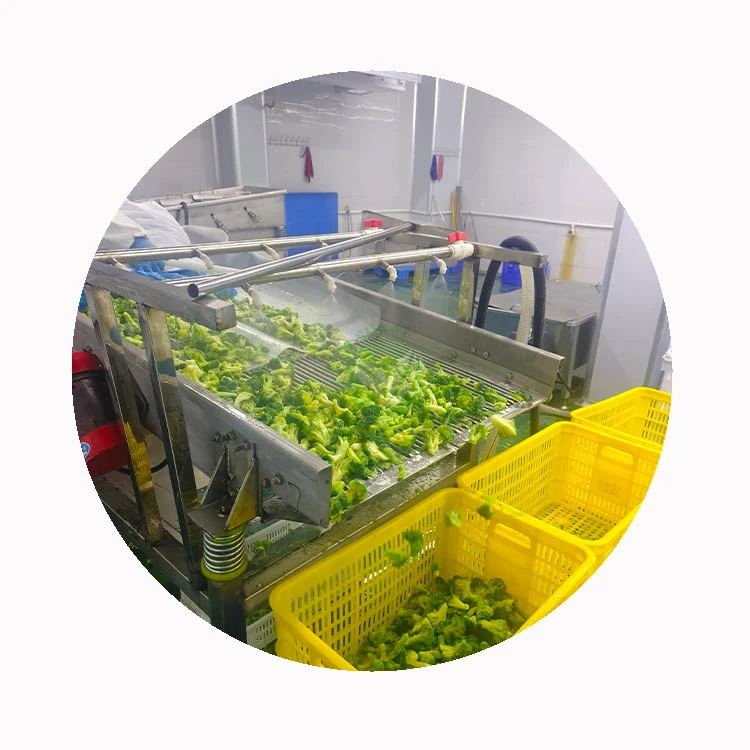
For a caterer, meal-kit company or prepared-food manufacturer, the useful daily amount is often a plated edible weight. When we review a portion brief, we calculate purchase quantity backward through actual cooked and drained yield. Using carton net weight alone can understate the input required if the process loses water or small pieces. Conversely, adding a large arbitrary buffer can inflate cost and leftovers. A controlled trial provides the more defensible basis.
A repeatable four-step calculation
- Define the served state. Write "cooked and drained broccoli" rather than "broccoli," and set the portion weight per meal.
- Run a representative yield test. Use the intended product, equipment, batch size, cooking method and drain time.
- Calculate the base input. Divide the required edible output by the decimal yield.
- Add only a justified operating allowance. Base it on recorded lot and process variation, then round to a purchasable pack or carton quantity.
Worked example: For 1,000 meals, a program chooses 75 grams of cooked drained broccoli per meal. Required edible output is 1,000 × 75 g = 75,000 g, or 75 kg. A representative trial records 88% cooked drained yield. The base frozen input is therefore 75 kg ÷ 0.88 = 85.23 kg, rounded to 85.3 kg before any operating allowance. If the verified allowance is 3%, the planned input becomes 85.23 kg × 1.03 = 87.79 kg. The 75-gram portion comes from the program's chosen standard; the 88% yield and 3% allowance are illustrative trial values, not universal XMSD product claims.
The yield result can change with floret diameter, stem ratio, breakage, frost, cooking intensity and drain time. Ask the supplier for the agreed product specification, but validate the serving result under your own process. A specification that controls cut-size distribution can improve scoop consistency; one that reports only "broccoli florets" leaves more room for variation. Temperature records and packaging condition also matter because clumped or partially thawed product is harder to dose consistently.

Build the Product Specification Around the Portion You Serve
A useful broccoli specification connects the buyer's portion to measurable product attributes. We would not approve a portion brief that says only "broccoli florets, 100 grams." State whether the product is florets, cuts or a blend; define the target size range and stem tolerance; agree the net weight basis; and specify how defects, foreign material, ice and broken pieces are assessed. For portioning, also record whether the declared weight is frozen input or cooked drained output. Without that state, two parties can both meet their own number and still disagree at the plate.
Pack configuration should follow the use case. A household pack may prioritize convenient meal portions and resealability. A foodservice pack may prioritize rapid handling and a clean number of portions per inner bag. A manufacturing line may need free-flowing pieces that meter reliably. Our overview of frozen-food packaging options explains the pack formats that can be matched to different channels, but the buyer still needs to confirm the final material, print, weight, case count and market requirements.
For an acceptance check, sample more than one bag and more than one carton. Weigh the frozen portion, examine piece-size distribution, run the agreed cook-and-drain method, and compare the output with the target. Record both the mean and the spread. An average of 100 grams can hide poor portion control if individual results range from 75 to 125 grams. The acceptance rule should state the permitted variation and sampling plan before shipment, not after a customer complaint.
Finally, keep dietary guidance and commercial specifications in their proper roles. A national dietary guide can help a menu planner choose a serving concept. The product specification then makes that concept repeatable in procurement and production. Neither document should be presented as individual medical advice.
XMSD sourcing note: If you are converting a plated broccoli portion into a frozen product specification, send us the cut style, target frozen or cooked weight, pack format, market and trial method. You can review a representative frozen broccoli product format before defining the points that need order-by-order confirmation.
The Practical Answer
For most general meal-planning questions, start with one serving of broccoli on a day and treat it as part of your total vegetable variety, not as a compulsory daily dose. State the framework you are following: one cup raw or cooked is one vegetable serving in the current U.S. system, while about 75 grams or half a cup cooked is an Australian standard-serve example. If the quantity must be repeated, move from cups to weighed edible portions and keep raw, frozen, cooked and cooked-drained states separate.
Your appropriate amount may be smaller or different because of appetite, digestive tolerance, medication or professional advice. For foodservice and manufacturing, we recommend making the defined served weight the controlling number, then supporting it with a representative yield test. That approach gives a clear answer without inventing a broccoli-specific requirement or pretending that every cup, bag and cooked portion is equivalent.
References
- Dietary Guidelines for Americans, 2025–2030
- Dietary Guidelines for Americans: Daily Servings by Calorie Level
- USDA SNAP-Ed: Broccoli
- Australian Government Eat for Health: Serve Sizes
- U.S. Food and Drug Administration: Serving Size on the Nutrition Facts Label
- NIH Office of Dietary Supplements: Vitamin K Fact Sheet for Consumers
- NIDDK: Eating, Diet, and Nutrition for Gas in the Digestive Tract
- Systematic Review of Brassica Vegetables and Thyroid Function, 2024
- XMSD operational experience in frozen-food sourcing, IQF processing, quality control, packaging, and B2B export coordination.