


Frozen Cooked Broccoli Nutrition Facts: 100 g Guide
Sep 25, 2023

For 100 grams of broccoli described by USDA FoodData Central as frozen spears, cooked, boiled, drained, with salt, the reference values are 28 kcal, 3.10 g protein, 0.11 g fat, 5.35 g carbohydrate, 3.0 g dietary fiber, 1.44 g total sugars, and 260 mg sodium. The same amount also contains 40.1 mg vitamin C, 99.5 micrograms vitamin K, 56 micrograms vitamin A RAE, 51 mg calcium, and 180 mg potassium. These figures describe one precisely defined database food, not every bag of frozen broccoli and not every cooked broccoli dish.
The wording after "broccoli" is essential. Frozen, cooked, boiled, drained, and salted each narrows the measurement basis. Remove the added salt and USDA's comparable entry reports only 24 mg sodium per 100 g, while energy, protein, fiber, and vitamin C remain very similar. Change the cut, cooking method, drain level, sauce, serving weight, or product formulation and the correct number can change again. Use this list to understand the reference food and perform transparent calculations; use the approved specification and destination-market labeling method for a commercial SKU.
The short answer: The 100 g reference serving provides 28 kcal and useful amounts of fiber, vitamin C, and vitamin K, but its 260 mg sodium belongs specifically to the salted preparation. Do not transfer that sodium figure to plain unsalted IQF broccoli or copy the whole table onto a product label without matching the exact SKU and serving basis.

Nutrition Facts per 100 Grams
The table below reproduces the useful reported values from USDA FoodData Central entry 168512. The basis is 100 g of edible broccoli after the frozen spears have been cooked by boiling, drained, and prepared with salt. "Reported" matters: an empty field in a food database does not prove that a nutrient is absent. For that reason, nutrients without a stated amount-such as iodine, choline, soluble fiber, and insoluble fiber-are not converted into zeroes here.
The approximate Daily Value column uses current U.S. FDA Daily Values for adults and children age four and older. It is an interpretation aid, not a finished Nutrition Facts panel. A legal label uses the serving size, rounding rules, nutrient declarations, ingredient statement, and market requirements that apply to the product being sold.
| Nutrient | Amount per 100 g | Approximate U.S. Daily Value |
|---|---|---|
| Energy | 117 kJ / 28 kcal | 1% |
| Protein | 3.10 g | 6% |
| Total fat | 0.11 g | Less than 1% |
| Saturated fat | 0.018 g | Less than 1% |
| Trans fat | 0 g | No established Daily Value |
| Cholesterol | 0 mg | 0% |
| Carbohydrate | 5.35 g | 2% |
| Dietary fiber | 3.0 g | 11% |
| Total sugars | 1.44 g | No Daily Value for total sugars |
| Sodium | 260 mg | 11% |
| Calcium | 51 mg | 4% |
| Iron | 0.61 mg | 3% |
| Magnesium | 20 mg | 5% |
| Phosphorus | 55 mg | 4% |
| Potassium | 180 mg | 4% |
| Zinc | 0.30 mg | 3% |
| Copper | 0.043 mg | 5% |
| Manganese | 0.325 mg | 14% |
| Selenium | 1.9 micrograms | 3% |
| Vitamin A | 56 micrograms RAE | 6% |
| Vitamin C | 40.1 mg | 45% |
| Vitamin D | 0 micrograms | 0% |
| Vitamin E | 1.32 mg alpha-tocopherol | 9% |
| Vitamin K | 99.5 micrograms | 83% |
| Thiamin (B1) | 0.055 mg | 5% |
| Riboflavin (B2) | 0.081 mg | 6% |
| Niacin (B3) | 0.458 mg | 3% |
| Pantothenic acid (B5) | 0.274 mg | 5% |
| Vitamin B6 | 0.130 mg | 8% |
| Folate | 30 micrograms DFE | 8% |
| Vitamin B12 | 0 micrograms | 0% |
| Water | 90.72 g | No established Daily Value |
Practical example: USDA lists one-half cup of this cooked, drained broccoli as 92 g. Multiply each 100 g value by 0.92: 28 kcal becomes 25.76 kcal, 3.10 g protein becomes 2.85 g, 3.0 g fiber becomes 2.76 g, and 260 mg sodium becomes 239.2 mg. Those are the values shown for the 92 g household measure before label rounding. If your actual portion is not 92 g, weigh the drained serving rather than assuming every half-cup has the same mass.

Why the Full Food Description Changes the Result
A nutrition number is only useful when the food identity and measurement state are clear. "Frozen" identifies the preservation form before preparation. "Spears" identifies the cut used in the database entry; a commercial floret specification may have a different stem-to-crown ratio and drain behavior. "Cooked, boiled" identifies the heat and water treatment. "Drained" means the retained water after cooking is part of the measured food, while discarded cooking water is not. "With salt" explains why sodium is much higher than in a plain unsalted reference.
USDA's comparable entry for frozen broccoli spears cooked, boiled, and drained without salt reports 24 mg sodium per 100 g. The salted entry reports 260 mg. That 236 mg difference is larger than the changes in energy or macronutrients, so salt status is the first distinction we would check when the numbers do not match. The unsalted entry is not automatically the correct value for a commercial product either; it is simply the better comparison when the ingredient is plain broccoli and no salt is added during preparation.
Do not combine values from different entries to create an apparently complete table. For example, taking sodium from the unsalted food, vitamin K from the salted food, and calories from a raw broccoli entry would produce a hybrid that USDA did not measure or calculate as one food. If the product in front of you is plain IQF florets, start with the closest plain entry, then decide whether your label or menu needs a supplier calculation, a recipe calculation, or laboratory analysis.
Worked example: Suppose a menu uses 150 g of the salted database food. The sodium calculation is 260 mg × 150/100 = 390 mg. Using the unsalted reference instead gives 24 mg × 150/100 = 36 mg. The 354 mg gap comes from choosing a different preparation basis, not from the weight calculation. Your action is to identify whether salt is added before, during, or after cooking and then use the entry or recipe that matches that process.
If you need the broader evidence on storage form, our guide to whether frozen vegetables are nutritious separates freezing effects from blanching, storage, and final cooking. That distinction matters more than a simple fresh-versus-frozen slogan.

What the Main Nutrients Mean-and What They Do Not Prove
Vitamin C: a composition fact, not a treatment claim
The USDA entry contains 40.1 mg vitamin C per 100 g, about 45% of the FDA Daily Value. Vitamin C normally functions as an antioxidant, supports collagen formation, helps the body absorb iron from plant foods, and contributes to normal immune function. Those physiological roles explain why the nutrient matters; they do not mean a serving of broccoli prevents infection, treats disease, reverses skin aging, or produces a guaranteed outcome.
Vitamin C is water-soluble and sensitive to processing conditions, so the food form must stay attached to the number. This value already reflects a boiled and drained preparation. It should not be described as the amount in raw broccoli, in the frozen product before cooking, or after a different household method. For practical meal planning, use the cooked value when the weighed serving matches this state; for a product claim, use evidence that represents the commercial product and its declared basis.
Vitamin K: nutritionally notable and clinically relevant for consistency
At 99.5 micrograms per 100 g, vitamin K is the most prominent vitamin relative to the FDA Daily Value in this list. Vitamin K is needed for normal blood clotting and has roles in bone metabolism. A high percentage does not turn broccoli into a medicine, and it does not mean that more is always better for every person.
Safety note: If you take warfarin, NIH advises keeping vitamin K intake reasonably consistent because sudden changes can affect the medicine's action. The useful step is not to ban broccoli automatically; discuss a stable eating pattern with your prescribing clinician or dietitian.
Fiber, protein, minerals, and energy
Three grams of dietary fiber per 100 g is about 11% of the FDA Daily Value. Fiber contributes to the structure of the food and can help make a vegetable serving more substantial, but tolerance varies with portion, the rest of the meal, and individual digestive conditions. The 3.10 g protein is useful as part of the food's composition, yet broccoli is not a concentrated protein source. The 28 kcal value is low because the cooked food remains more than 90% water by weight.
Calcium, iron, magnesium, phosphorus, potassium, zinc, copper, manganese, and selenium are present in smaller amounts. Listing them accurately is more useful than calling the vegetable "mineral-rich" without a basis. Under FDA's general guide, 5% Daily Value or less per serving is low and 20% or more is high. Most of these minerals are below 5% per 100 g, while manganese is about 14%. The complete meal-not one ingredient-determines overall nutrient adequacy.

How Serving Size Changes the Nutrition List
Per-100-gram data make foods easy to compare, but you may serve a household portion or a recipe amount. Convert with one formula: nutrient per 100 g × actual edible weight in grams ÷ 100. Keep the food state consistent. If you weigh the frozen product before cooking but use a value for cooked, drained broccoli, water gain or loss can make the result misleading even when the arithmetic is correct.
USDA supplies two household measures for this entry: one-half cup at 92 g and one package described as a 10-ounce package yielding 250 g after cooking. At 250 g, the reference calculation gives 70 kcal, 7.75 g protein, 7.5 g fiber, 650 mg sodium, 100.25 mg vitamin C, and 248.75 micrograms vitamin K. That is a mathematical extension of the database entry, not a statement that every 10-ounce retail bag produces exactly 250 g drained.
Daily Value percentages must follow the serving stated on the label, not an arbitrary 100 g comparison unless 100 g is the declared serving. A 92 g serving of the salted entry supplies about 10% of the 2,300 mg sodium Daily Value; a 150 g serving supplies about 17%. The same food can therefore appear different when two panels use different serving weights. Compare the amount per 100 g when evaluating formulations, then return to the declared serving for consumer-facing label interpretation.
Preparation instructions also affect the final weight. If you boil for longer, retain more water, or drain more thoroughly, the grams on the plate and the nutrient concentration per 100 g may shift. Our article on the best way to cook frozen broccoli focuses on method and texture; use the method you actually serve when you need a recipe-level nutrition calculation.
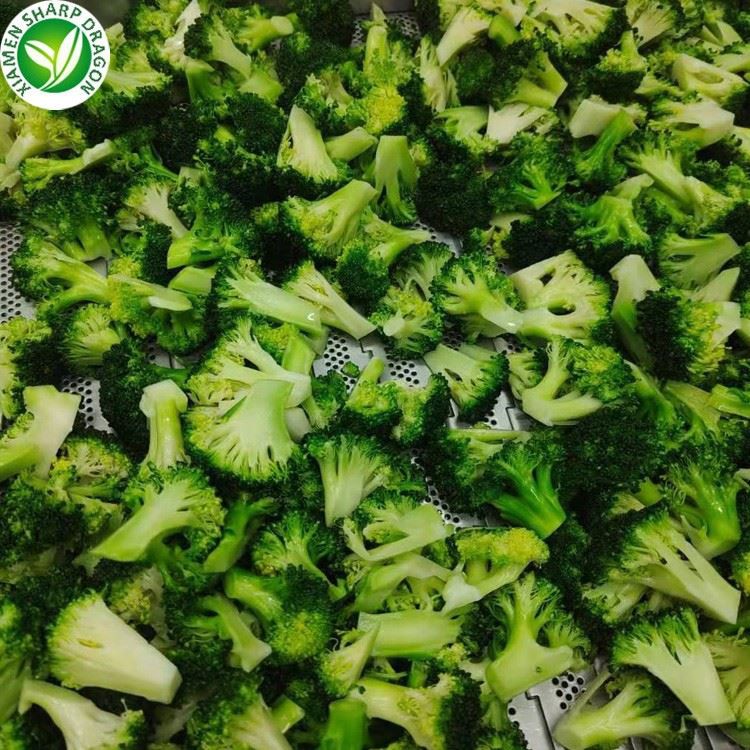
Frozen, Cooked, and Drained Is Not Raw, Unprepared, or Sauced
Freezing does not erase broccoli's nutritional value, but "frozen" is not a guarantee that every nutrient remains unchanged. Raw-material maturity, the time before freezing, blanching, frozen-storage duration, temperature stability, cooking, and draining can each affect a measured result. A comparative study of eight fruits and vegetables found that frozen products were generally comparable to refrigerated products for the vitamins measured, with results varying by commodity and nutrient. That evidence supports a qualified conclusion: frozen broccoli can remain nutritionally useful, but no study justifies saying that all nutrients are always fully retained.
Boiled and drained broccoli also differs from steamed, microwaved, roasted, or stir-fried broccoli. The database entry answers what was found for one defined preparation; it does not predict every cooking method. If your nutrition objective centers on a water-soluble nutrient such as vitamin C, choose data for the actual preparation or test the finished recipe. If your operational objective centers on texture, color, or yield, record time, equipment, batch size, starting temperature, and drain method so the trial can be repeated.
Plain broccoli must also be separated from a complete prepared dish. Cheese sauce, butter, oil, breading, seasoning, stock, or a formulated glaze changes the ingredient list and may change energy, fat, sodium, carbohydrate, allergens, and serving weight. Adding 10 g of oil to 100 g of broccoli does not create "broccoli nutrition plus a small detail"; it creates a different recipe whose oil contributes about 90 kcal before any other ingredient is counted. Use recipe analysis for the whole dish.
For plain IQF products, visible ice, broken crowns, excess stem, and inconsistent cut size are mainly quality and yield questions, not proof that a nutrient is missing. A damaged cold chain may affect texture and drip loss, yet appearance alone cannot quantify vitamin C or establish a legal nutrient value. Keep sensory acceptance, physical defects, microbiological safety, and nutrition evidence as separate controls.

Using the Data for Product Development, Menus, and Labels
In our frozen-food work, we start with product identity before discussing a nutrient panel. A name such as "IQF broccoli florets" is still incomplete for calculation purposes. We need to know whether the supplied food is raw or blanched, whether the values are for the product as sold or after preparation, the cut and stem ratio, any added ingredients, and the serving or recipe weight. You can use a bulk frozen broccoli format as the commercial starting point, but its technical file must supply the evidence used for the final SKU.
For a foodservice menu, measure the portion after the preparation step represented by the nutrition source. If the kitchen portions 120 g after heating and draining, calculate from 120 g cooked weight. If the kitchen instead issues 120 g frozen weight and the yield is 105 g cooked, drained weight, using 120 g against cooked data overstates the edible serving by about 14%. Record the yield test and use one basis consistently across the recipe, menu declaration, and cost calculation.
For retail or private-label work, a database value is a screening tool. The final route may use a compliant database calculation, recipe software, supplier documentation, laboratory analysis, or a combination, depending on the destination and claim. A product making a vitamin or nutrient-content claim needs evidence and wording that meet the destination rule; a general USDA value copied from a different cut or salted preparation is not enough. Review the intended market before approving artwork.
For an importer comparing the wider frozen broccoli range, separate nutrition acceptance from physical acceptance. Nutrition evidence should match the SKU and declared basis. Physical acceptance can address floret size, stem proportion, broken pieces, color, foreign material, ice, block formation, and cooking performance. If either side is vague, two lots can meet the same product name while behaving differently in a filling line or portion-controlled menu.
A repeatable five-part decision method
- Name the exact food state. Record frozen or prepared, cut form, added ingredients, cooking method, and drain condition.
- Choose the measurement basis. Decide whether the calculation is per 100 g, per declared serving, per package, or per finished recipe portion.
- Select matching evidence. Use the closest official database entry for early work, then obtain SKU-specific calculation or analytical support when the label, claim, or contract requires it.
- Test preparation and yield. Weigh the product before and after the defined cooking and draining method, and repeat enough batches to see whether the result is stable.
- Approve one controlled version. Align specification, ingredient statement, nutrition basis, artwork, recipe, and change-control record so a later salt, cut, or process change triggers review.
Example: A hypothetical ready-meal plant targets 100 g cooked, drained broccoli per tray but receives florets with a broad size range. A trial shows that the current heating program produces uneven tenderness and a variable drained yield. The useful response is not to alter the nutrient table by guesswork. Standardize the cut range, repeat the cook-and-drain test, calculate the average edible portion, and then update both recipe costing and nutrition analysis from the controlled result.
Packaging, Cold Chain, and Arrival Checks
Nutrition data remains meaningful only when the delivered product is the product that was approved. Check that the item code, ingredient declaration, lot code, net weight, storage instruction, and preparation statement match the purchasing specification. If the order is supposed to be plain broccoli, an unexpected seasoning declaration changes the product identity and requires a nutrition and allergen review before use.
At arrival, look for torn liners, wet or crushed cartons, unreadable lot marks, severe clumping, excessive loose ice, and evidence of temperature fluctuation. These signals help you decide whether to hold the lot for investigation; they do not allow you to calculate nutrient loss by sight. Record the shipment condition, product temperature according to your approved procedure, photos, affected pallet count, and sample findings. Then separate the disposition for safety, physical quality, weight, and documentation.
Pack size also affects how the product is handled after opening. A foodservice kitchen that uses 5 kg per shift may expose less product to repeated opening and moisture when the inner-pack quantity matches that usage. A retail program needs artwork control and seal performance that protect the declared product through distribution. Our overview of frozen-food packaging options can help frame the pack discussion, while the final material and format must be approved against the actual product, route, and market.

XMSD sourcing note: If you are evaluating frozen broccoli for a menu, retail pack, or prepared-food line, send us the cut, ingredient status, serving basis, packing format, destination, and intended preparation. We can align the product discussion with the evidence your approval process needs.
Final Thoughts from XMSD
The reliable answer is specific: 100 g of USDA's frozen broccoli spears, cooked, boiled, drained, and salted contains 28 kcal, 3.10 g protein, 3.0 g fiber, 40.1 mg vitamin C, 99.5 micrograms vitamin K, and 260 mg sodium. The sodium value is not a general frozen-broccoli value; USDA's unsalted comparison has 24 mg per 100 g. Keep the preparation words beside the numbers, scale them from the actual edible weight, and do not turn a reference database entry into an SKU promise. For commercial use, control the product identity, cooking and draining basis, evidence source, label market, and change record together.
References
- USDA FoodData Central: Broccoli, frozen, spears, cooked, boiled, drained, with salt (FDC 168512)
- USDA FoodData Central: Broccoli, frozen, spears, cooked, boiled, drained, without salt (FDC 170380)
- U.S. FDA: Daily Value on the Nutrition and Supplement Facts Labels
- U.S. FDA: Sodium in Your Diet
- NIH Office of Dietary Supplements: Vitamin C Fact Sheet for Consumers
- NIH Office of Dietary Supplements: Vitamin K Fact Sheet for Consumers
- Bouzari, Holstege, and Barrett: Vitamin retention in eight fruits and vegetables
- XMSD operational experience in frozen-food sourcing, specification review, packaging, cold-chain handling, and B2B application planning.