


How Much Broccoli Can You Eat a Day? Use a Portion Ladder
Oct 18, 2019

A practical daily amount of broccoli is often one modest serving within your total vegetable intake, not a broccoli-specific maximum. Start with about half a cup cooked when you want a small side, or use a full cup-equivalent when broccoli is the meal's main vegetable and the portion is comfortable. Measure the cooked edible amount, because cups of large florets, chopped pieces, and tightly packed stems do not contain the same weight.
The number must serve the decision. At home, it should help you build a plate that still includes other food groups and vegetable variety. In a kitchen or packaged meal, it should convert into grams per portion, cooked yield, case requirement, and acceptable waste. A nutrition-label serving, a food-group cup-equivalent, and the portion placed on a plate are three different quantities; confusing them creates false precision.
Working range, not a limit: use roughly 1/2 to 1 cup cooked broccoli as a meal-level starting range for many adults, then adjust for the whole vegetable plan, appetite, digestive comfort, recipe density, and medical advice.

Three Measurements Answer Three Different Questions
A household measure answers how much space the food occupies. A gram weight answers how much product is actually served. A food-group equivalent answers how the amount contributes to a dietary pattern. None of these, by itself, declares a safety ceiling. If a recipe card says one cup while procurement buys kilograms, the kitchen needs an observed gram conversion from its own cut and cooked state.
USDA MyPlate treats one cup of chopped or floret broccoli, whether fresh or frozen, as one cup from the vegetable group. Australian government guidance gives half a cup of cooked green vegetables as one standard vegetable serve. These systems use different words and are built for broader dietary planning. They can frame a starting portion, but they should not be combined into a fake universal dose.
A packaged-food serving performs another job. FDA explains that Nutrition Facts serving sizes reflect amounts people customarily consume; they are not recommendations for how much someone ought to eat. Read the serving weight, servings per container, and nutrient values together. When a frozen broccoli product is a single ingredient, the label basis helps comparison, but your finished-dish portion may still be smaller or larger.
The edible state must also be explicit. A frozen 100 g input may not become 100 g on the plate after loose ice melts, moisture drains, fragments remain in the pan, or a cook trims unsuitable pieces. Conversely, a volume measure can look larger after florets spread out. Report frozen input grams and cooked served grams as separate values. The difference is not automatically product loss; it is a process observation that needs a defined method.
If you compare two products, do not compare one label's 85 g frozen serving with another recipe's 85 g cooked portion as though they were equivalent. Put both on the same state and basis. This discipline prevents a buyer from choosing a lower-cost figure that exists only because the denominator is different. It also prevents a nutrition discussion from being attached to the wrong prepared form.
| Measure | Best use | Main caution |
|---|---|---|
| Cup or half-cup | Quick household plating | Floret size and packing change the gram weight |
| Cooked edible grams | Repeatable recipe and service control | Cooking loss and drain time must be defined |
| Vegetable-group equivalent | Planning total vegetable intake | It is not a broccoli-only safety ceiling |

Build Your Portion Ladder
A portion ladder is safer and more useful than jumping directly to a large daily bowl. Level one is the minimum amount that meaningfully improves the plate and is normally eaten. Level two is the regular side that fits appetite and the rest of the meal. Level three is a larger vegetable-centered portion used occasionally or when other vegetables are lighter that day. Move upward only when comfort and variety remain good.
For a first measurement, cook the broccoli exactly as you plan to eat it, drain or rest it for the usual time, and weigh the edible portion. Record the bowl or scoop used. Repeat once on another day. If two portions differ greatly, the visual measure is unreliable for that cut. A gram target will give the kitchen or household better repeatability.
The lower end of the ladder is not a failure. A person who eats 60 g comfortably and regularly may gain more practical value than someone served 180 g who leaves half. Actual consumption is the relevant denominator. For meal planning, combine the smaller broccoli portion with another vegetable rather than treating a single green item as a test of discipline.
The upper end should not be chosen because a website calls broccoli unlimited. Large servings can displace protein, grains, fats, or other vegetables, and they may increase gas for some people. A larger amount can still fit, but it needs a meal context. If discomfort, monotony, or plate waste rises, step down one level and change the cooking method before concluding that broccoli must disappear.
Use the ladder over a week rather than judging one meal. A single unusually hungry day can make the larger level seem ideal; a rushed day can make any side feel excessive. Three to five comparable meals give a better signal. Record the chosen level, the main dish, whether broccoli replaced another side, and what was left. The stable level is the one that repeatedly performs its intended role.
Children, older adults, athletes, and people following therapeutic diets may need a different portion logic, and this general ladder is not a prescription for them. The same is true when swallowing, chewing, potassium, fiber, or medication management is part of care. Use the clinician or dietitian's plan as the boundary, then apply the measurement method so the advised amount is served consistently.

Worked Example: Convert a Cup Idea into Grams
Worked example: Suppose a household wants broccoli to occupy about half of a 300 g vegetable-and-protein bowl. It cooks a batch, drains it for two minutes, fills the chosen cup loosely, and weighs 78 g. The cook decides that 80 g is the practical broccoli target, adds 70 g of another vegetable, and keeps the remaining bowl mass for protein and sauce. The result is a repeatable plate based on the actual cut, not a generic cup conversion.
The calculation is straightforward: target bowls multiplied by cooked broccoli grams equals cooked requirement. For six bowls at 80 g, the kitchen needs 480 g cooked edible broccoli. If the observed cooked yield from frozen product is 88%, divide 480 g by 0.88. The purchase quantity for that batch is about 545 g. Yield is an observed application value here, not an XMSD guarantee.
Now test sensitivity. If the portion rises to 100 g while six bowls remain, the cooked need becomes 600 g; at the same illustrative 88% yield, frozen input becomes about 682 g. A 20 g serving change therefore adds roughly 137 g of input for the batch. This is why procurement should lock served weight before discussing carton requirements.
The yield should be recalculated when cut size, cooking equipment, batch depth, or drain practice changes. A shallow steam-pan trial does not establish the yield of a deep kettle run. We recommend recording start weight, finished weight, number of portions, and residual material separately. That four-line record makes it possible to distinguish moisture change from scoop error and genuine unusable loss.
For food-composition context, the XMSD reference on cooked frozen broccoli nutrition should be read with its stated prepared-food basis. Do not transfer one value to every cut, recipe, sauce, salt level, or drained condition.

When a Larger Portion Stops Helping
Quantity becomes excessive in practice when it produces a worse meal or an unwanted response, not when it crosses an unsupported internet threshold. Repeated bloating, pressure, urgent bowel changes, or pain after a defined serving are reasons to reduce the amount and assess the pattern. Broccoli belongs to the cruciferous group that NIDDK identifies among foods that can increase gas for some people.
Change one variable at a time. Cut the portion by a third, cook it more tenderly, and keep the rest of the meal similar. Observe two or three comparable meals. If comfort improves, keep the smaller level. If symptoms remain strong or persistent, a qualified health professional can assess whether another condition or food is involved. Portion testing is not a diagnostic procedure.
A medicine-related exception also changes the method. Broccoli provides vitamin K, and people using warfarin are generally advised to maintain a consistent vitamin K intake rather than making abrupt changes. The right number belongs to the person's care plan. Do not use a generic broccoli range to override that advice.
For everyone else, the dominant constraint is usually the whole plate. Ask what the broccoli replaces, what accompanies it, and what remains across the day. Two cups added to an already adequate meal solve a different problem from one measured cup replacing a richer side. Quantity has meaning only with that substitution or addition recorded.
Preparation ingredients deserve their own count. An 80 g broccoli portion tossed with a measured teaspoon of oil is not the same finished dish as 80 g under an unrestricted cream sauce. The vegetable weight may match while energy, sodium, texture and satiety differ. Keep the broccoli number stable during testing and measure major additions separately; otherwise, the apparent effect of portion is really a recipe change.
Satiety is also individual and context-dependent. Broccoli's water and fiber can add bulk, but a vegetable side with almost no protein or energy may not make a complete meal. If hunger returns quickly, the answer may be to improve the whole plate rather than push broccoli higher. Quantity advice that ignores meal adequacy turns a useful side into a misleading target.

Frozen Broccoli Needs a Cooked-Yield Basis
Frozen broccoli should be portioned from the product state relevant to the operation. Buying uses frozen net weight. Recipe control may use frozen input grams. Nutrition or menu presentation may use cooked edible grams. Costing may use the amount that survives cooking and reaches the plate. Write the basis beside every number so that two departments do not approve different quantities under one word.
In our application review, we first look at crown size, stem length, fine fragments, loose ice, and clumping. These variables influence scoop consistency and cooked appearance. A case with broad piece variation may meet net weight yet produce irregular servings when staff use a volume scoop. We would ask the kitchen to weigh several real scoops before setting a portion promise.
The second XMSD judgment concerns heat and hold. Small crowns may soften before thick stems, while an extended hot hold can reduce recognizability even when the initial cook is sound. We compare the result at the point of service, not only immediately after heating. That check separates a suitable raw pack from a suitable finished application.
Sampling should therefore reproduce the service path. Weigh several frozen portions, apply the intended heating equipment and load, use the normal drain period, then weigh and score at release and after the planned hold. Photographing both points can help different reviewers discuss the same texture and appearance. A sample accepted only after a gentle home-style cook may not predict cafeteria or ready-meal performance.
Fragment distribution is especially important for small portions. Ten grams of fines is a minor share of a 200 g family dish but a visible share of a 60 g side. If the menu uses small servings, inspect several scoops from different parts of the bag. The acceptance method should reflect how the product will be served, not merely an average across the whole sample.
The article on the best way to cook frozen broccoli can help define a trial method. Keep that method fixed during the yield test; otherwise, a different cook becomes a different data point.
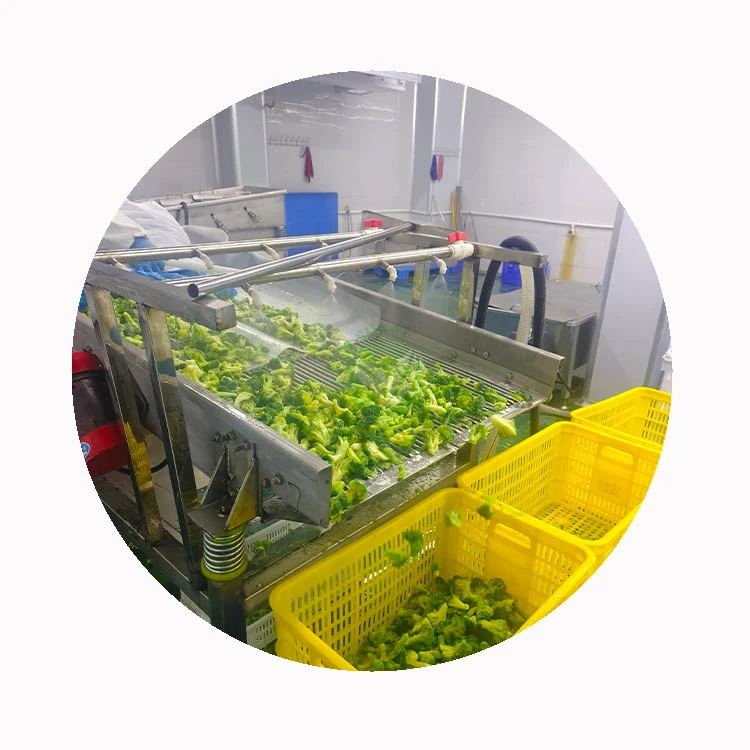
Worked Example: Scale a Foodservice Program
Worked example: A cafeteria plans 240 bowls, each with 75 g of cooked broccoli. The cooked requirement is 240 × 75 g = 18,000 g, or 18 kg. A representative kitchen trial starts with 10 kg frozen and produces 8.6 kg after its normal cook and drain, an 86% observed yield. Dividing 18 kg by 0.86 gives about 20.93 kg frozen input.
The operator should not order exactly 20.93 kg without considering pack increments, process variability, and the service buffer. It should repeat the trial across enough bags to understand spread, then round according to the actual case configuration and waste policy. If served weight changes to 85 g, the cooked need becomes 20.4 kg before the same yield calculation. The portion decision comes first.
A useful buffer is based on observed variability, not a copied percentage. If repeated trials show narrow yield and service counts are stable, the buffer can be modest. If attendance changes sharply or holding waste is still being reduced, a larger operational allowance may be needed. Keep the allowance visible as its own line so it is not mistaken for the recipe portion or presented as a supplier yield guarantee.
Suppose the first service shows 14% plate waste and staff report that the pieces are too large for the bowl. The kitchen reduces the broccoli target from 75 g to 65 g, changes to a smaller approved cut, and adds 10 g of carrots. The result is not less commitment to vegetables; it is a serving designed for actual consumption. The frozen requirement is recalculated from the new broccoli weight.
Pack design also matters after opening. A smaller inner bag may reduce thaw exposure and weighing error when each shift uses limited volume. A larger bag may reduce packaging units but create more handling. The XMSD guide to frozen packaging technology gives a useful context for discussing the inner-pack decision after the service weight is stable.

A Number You Can Defend
Use one-half to one cup cooked as a practical meal-level starting range, not as a medical limit. Convert it into cooked edible grams for your product and method. Check comfort, actual consumption, the rest of the vegetable pattern, and any clinician-directed restrictions. Increase only when the larger amount still improves the meal; decrease when symptoms, waste, or displacement appear.
Commercial programs should document frozen input, cooked output, drain time, holding conditions, served grams, and plate waste. That short chain turns a vague cup instruction into an auditable specification. The daily broccoli guide covers frequency and variety, while the current frozen broccoli range provides the product starting point for a sample trial.
Write the approved number with its unit and state every time it moves between the menu, recipe, purchasing sheet and carton calculation. A note such as "75 g cooked, drained for two minutes, per served bowl" prevents later teams from interpreting 75 g as frozen input or gross pack weight. That clarity is the real answer to a quantity question: a portion that can be served, observed, recalculated and corrected without hiding the basis.
XMSD sourcing note: Share frozen input basis, cooked serving weight, floret size, recipe, drain method, hold time, daily covers, inner-pack preference, and destination. We can review which sample and pack questions must be resolved before quotation.
References
- USDA MyPlate: Vegetable Group
- Australian Government: Eat for Health Serve Sizes
- FDA: Serving Size on the Nutrition Facts Label
- NIDDK: Eating, Diet, and Nutrition for Gas in the Digestive Tract
- XMSD operational perspective on frozen input, cooked yield, serving control, holding, and pack design.