


Broccoli Health Benefits: Nutrition, Evidence and Cooking
Oct 18, 2019

Broccoli can contribute fiber, vitamin C, vitamin K, folate and several plant compounds to a varied diet. Those nutrients have established physiological roles, while research on broccoli and long-term disease outcomes is more complex. A serving of broccoli is not a cancer treatment, a blood-sugar medicine or a guarantee of better health. Its strongest value is as a nutrient-containing vegetable in the complete eating pattern.
Raw, steamed, microwaved, boiled, roasted and frozen broccoli do not arrive on the plate in exactly the same condition. Heat, water contact, blanching, storage, cut size and serving time can change nutrient content and texture. A plain frozen floret can still be useful, especially when it makes a vegetable serving convenient and repeatable. Judge the served product rather than repeating a raw-food number across every lot and recipe.
The short answer: Broccoli is a low-energy vegetable that contributes fiber and several vitamins, while its glucosinolates remain an active research area. Eat or formulate it as part of a varied diet, choose a cooking method that fits the result you want, and avoid turning laboratory mechanisms or observational associations into promises of disease prevention.
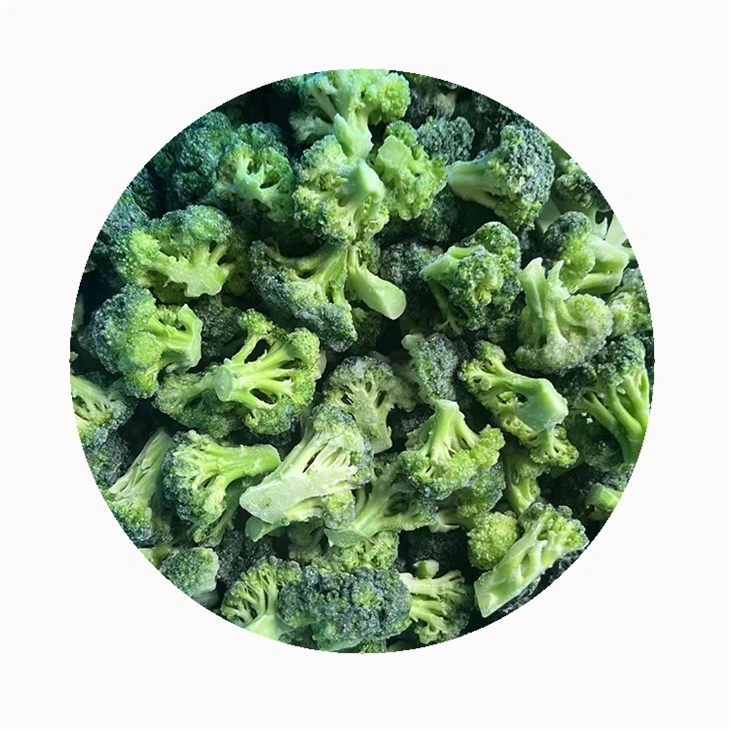
What Broccoli Contributes to a Normal Diet
Vitamin C supports normal collagen formation, antioxidant protection, immune function, and absorption of non-heme iron. Broccoli is a recognized food source, yet vitamin C is water soluble and sensitive to prolonged heat, storage, oxygen, and processing. A value for raw broccoli is therefore a reference point rather than a guaranteed value for a cooked meal, a frozen retail bag, or an industrial formula. Use verified product or finished-food data when a quantitative nutrition claim matters.
Vitamin K is required for proteins involved in normal blood clotting and bone metabolism. The presence of vitamin K does not prove that broccoli prevents fractures. If you use warfarin or another vitamin-K-sensitive anticoagulant, the practical issue is often consistency of intake, not eliminating every green vegetable. Follow individual clinical advice rather than changing a medication or diet from a general article.
Folate participates in DNA synthesis and cell division, which explains why adequate folate status matters before and during pregnancy. Broccoli contributes dietary folate, but it is not a substitute for prenatal care or for folic-acid guidance from a qualified health professional. The old claim that broccoli contains "94 mg of niacin" and therefore ensures placental development is not credible: it confuses nutrient amounts and converts a general biological role into a guaranteed outcome.
Dietary fiber supports normal bowel function and can contribute to fullness and overall dietary quality. It does not keep insulin "stable" in every person and it does not prevent diabetes by itself. The better conclusion is that broccoli can replace some more energy-dense, lower-fiber foods within a balanced meal. Total dietary pattern, portion, preparation, body composition, activity, genetics, medication, and health status all influence glucose control.
The nutrient table also changes with the comparison basis. Raw values are normally stated per 100 g edible portion, while cooked values reflect water gain or water loss as well as chemical change. If broccoli loses water during roasting, a nutrient may appear more concentrated per 100 g even when some of it was lost. If it absorbs water during boiling, the same nutrient may appear diluted. Compare like with like: raw with raw, cooked with cooked, and the same drained or prepared basis.
A label claim also uses the serving that reaches the consumer, not the mass placed on a production line before trimming, sauce addition, cooking, or portioning. For a ready meal, calculate the contribution from the verified broccoli input and the finished serving, then apply a defensible retention factor or laboratory result. This prevents a raw-ingredient number from overstating the vitamin content of a much smaller cooked portion.
Practical example: A 150 g portion calculated from a 2.6 g fiber-per-100 g reference contributes about 3.9 g fiber before allowing for database, crop, trimming, and cooking variation. That is a meaningful contribution, but not a treatment dose. If the same broccoli is served with a high-sodium sauce or deep-fried coating, evaluate the complete dish rather than transferring the vegetable's reputation to the entire recipe.

Glucosinolates Explain the Research Interest, Not a Medical Promise
Broccoli belongs to the cruciferous vegetable family. It contains glucosinolates, sulfur-containing compounds that help create the characteristic aroma and slight bitterness. Cutting, chewing, and digestion can transform glucosinolates into compounds including indoles and isothiocyanates. Sulforaphane is one of the best-known examples, which is why cell, animal, biomarker, and human dietary studies continue to examine broccoli.
The National Cancer Institute draws an important boundary. Laboratory and animal studies have identified plausible mechanisms, but human studies of cruciferous vegetable intake and cancer risk have produced mixed results. Some case-control or subgroup findings suggest associations, while several cohort studies show little or no association for specific cancers. Recall error, the rest of the diet, smoking, activity, genetics, and other behaviors make a single-food conclusion difficult.
That distinction changes responsible wording. "Contains glucosinolates" is a compositional statement. "Cruciferous vegetables are studied for biologically active breakdown products" is a fair research statement. "Broccoli prevents cancer" is not established. The same rule applies to claims about cardiovascular disease, inflammation, detoxification, or diabetes: a biochemical pathway is not the same as a demonstrated clinical outcome from an ordinary serving.
Variety, growing conditions, maturity, plant part, storage, blanching, freezing, chopping, cooking time, temperature, and water volume can all change measured glucosinolates or their conversion. A branded powder, sprout extract, raw floret, steamed side dish, and blanched IQF floret are not interchangeable research materials. When you communicate nutrition, identify the food form actually sold rather than borrowing the strongest result from a different form or dose.

Cooking Changes Broccoli, but There Is No Single Perfect Method
Heat makes broccoli more tender, reduces raw brassica notes, and can improve acceptability. It can also reduce heat-sensitive compounds or move water-soluble nutrients into cooking liquid. In one controlled comparison of five domestic methods, steaming produced the best overall retention of chlorophyll, vitamin C, soluble protein, soluble sugar, and glucosinolates among the tested treatments. Stir-frying followed by boiling caused substantial losses in that experiment.
A separate study of fresh and frozen Brassica vegetables reported that microwaving maintained color and retained glucosinolates well under its test conditions, while boiling reduced many measured phytochemicals. These results are useful directions, not universal rankings. Piece size, starting temperature, equipment power, cooking time, water, cultivar, and the desired tenderness can reverse practical performance. A method that leaves an institutional meal too tough to eat has not delivered a better real-world result simply because a laboratory marker remained higher.
For a home meal, use short cooking with limited water when you prefer a firmer texture and want to reduce leaching. Steaming or microwaving can work well; roasting develops browning and a drier bite; boiling gives a softer result and may suit soups where the liquid is consumed. Avoid cooking far beyond the texture you need. Seasoning and the rest of the plate matter more to long-term dietary quality than arguing that only one technique is healthy.
For commercial production, measure the actual process. A frozen ready meal may receive blanching before freezing, heating during assembly, frozen storage, and reheating by the consumer. Optimizing only one step can miss the cumulative effect. Record time-to-temperature, final core temperature where safety validation requires it, yield, color, firmness, drip, sauce interaction, and sensory acceptance across representative lots.
The XMSD guide to checking frozen broccoli condition covers pack damage, ice, odor, color, texture, and freezer burn. Use those observations as quality signals. Appearance alone cannot establish microbiological safety, and a quality defect does not automatically prove that the food is hazardous.

Fresh and Frozen Broccoli Solve Different Problems
Fresh broccoli offers a crisp raw texture, flexibility in stem and floret cutting, and strong visual appeal when the supply chain is short. Its quality changes during transport and chilled storage as respiration, moisture loss, yellowing, and microbial spoilage continue. Trim waste and preparation labor also affect usable cost. A low purchase price per kilogram is not automatically a low cost per plated or packed kilogram.
Frozen broccoli is generally trimmed, washed, cut, blanched, frozen, and packed before sale. IQF processing keeps pieces separate when the process and cold chain are controlled, which supports portioning and stable year-round production. Blanching changes raw texture and inactivates enzymes that would otherwise damage color and flavor during frozen storage. The result is a prepared ingredient, not fresh broccoli preserved without any change.
Published research comparing industrially frozen broccoli with fresh material found that blanching and freezing reduced firmness and changed some physical properties, while antioxidants, vitamin C, and glucosinolates remained substantially present under the study conditions. The practical message is not that frozen always equals fresh. It is that a well-managed frozen product can retain nutritional value while delivering different texture, convenience, waste, and supply characteristics.
Choose the form from the application. A raw crudité tray favors fresh compact crowns. A ready meal, vegetable blend, central kitchen, school meal, soup, or private-label frozen bag may favor IQF florets. Compare both on edible yield, preparation labor, waste, energy, storage, line throughput, cooking performance, pack size, and consumer expectation-not only on a raw nutrient table.
For current commercial formats, review the XMSD IQF frozen broccoli product guide, the wider frozen broccoli range, and our full frozen produce catalog. Page values are screening information until the exact production site, lot, pack, certificate scope, and destination requirements are confirmed for an order.

How to Turn "Good Broccoli" into an Inspectable Specification
Begin with the application and define the cut. Common frozen floret bands include 2–4 cm, 3–5 cm, and 4–6 cm, but the number means little without a measurement rule. State whether the longest dimension, crown width, or another method controls; define sample size; and decide how stems, fragments, fines, and pieces crossing a band are counted. A photograph of an approved sample can complement the written limit but cannot replace repeatable inspection.
Then define the balance between crown and stem. Broccoli stems are edible and useful, yet excessive long pale stems can reduce the green visual area and change bite. Specify maximum stem length or an agreed visual range when that matters. Add limits for yellowing, brown buds, leaf, woody pieces, mechanical damage, clumps, excessive surface ice, foreign matter, and any crop-specific defects. Connect each limit to a sampling and calculation method.
Texture needs an application method. "Firm" after thawing is ambiguous because IQF broccoli is normally cooked and blanching has already altered tissue. Test a defined mass from frozen in the same steam, microwave, oven, kettle, or sauce process used commercially. Record time, temperature, water, drain time, and target sensory result. Compare at least two representative lots before fixing an acceptance limit.
Worked example: Assume a factory needs 8,000 kg of cooked broccoli in finished meals. Candidate A costs USD 1.20/kg delivered and gives 88% usable cooked yield after fines, sorting, and cooking loss. Candidate B costs USD 1.25/kg and gives 93% yield. The ingredient cost per usable kilogram is 1.20 ÷ 0.88 = USD 1.36 for A and 1.25 ÷ 0.93 = USD 1.34 for B. To obtain 8,000 kg, A requires about 9,091 kg while B requires about 8,602 kg. The higher invoice price can therefore be the lower application cost before labor and line efficiency are considered.
Pack and logistics complete the specification. Confirm net weight, inner liner or bag, carton strength, case dimensions, pallet pattern, labels, barcode, lot code, production date, shelf life, and frozen storage statement. Use reefer set point and temperature-record expectations appropriate to the route. Heavy clumping, carton collapse, wet cases, or widespread frost at arrival can indicate handling stress and deserve documented review.
Food-safety and market-access documents follow the actual facility and product scope. Confirm the specification, process flow, HACCP-related controls, certificate validity and scope, COA format, microbiological criteria, pesticide-residue plan, traceability, origin documents, and destination requirements before shipment. XMSD's certification overview is a starting point; controlled copies and order-specific applicability still require review.

Safety, Tolerance, and Labeling Boundaries
Broccoli is safe for most people as a normal food, but no food fits every situation. A large sudden increase in fiber can cause gas or digestive discomfort. A true broccoli allergy is uncommon but possible. People with diagnosed digestive conditions, swallowing difficulties, anticoagulant therapy, or other clinical concerns need individualized guidance. A general article cannot replace diagnosis or treatment.
Frozen broccoli is not sterile. Follow the package cooking instruction and the safety system for the intended use. In commercial production, keep raw-material approval, hygiene, environmental controls, validated kill steps where applicable, post-process handling, and label directions aligned. Freezer temperature slows microbial growth; it does not erase contamination that occurred earlier.
Keep quality release separate from food-safety release. Yellowing, long stems, broken florets, or a soft bite may fail the agreed appearance standard without proving a safety hazard. Conversely, a visually attractive floret can still fail a microbiological, residue, allergen-cross-contact, or traceability requirement. Use the correct evidence for each decision: sensory and dimensional inspection for quality, and validated sampling, laboratory methods, process records, and traceability for safety and compliance.
If a shipment arrives with temperature or packaging concerns, retain the lot identity and record product temperature by the agreed method, reefer data, carton condition, photographs, ice or clumping pattern, and representative samples. Quarantine and disposition follow your food-safety system, contract, insurer, and competent technical review. Do not rely on a taste test or a single surface reading to clear a disputed load.
Nutrition and health claims are regulated by destination. A database can help formulate a hypothesis, but the final serving, laboratory or calculation basis, nutrient threshold, reference intake, processing loss, and local wording determine whether a claim is allowed. Do not copy "high in vitamin C," "supports immunity," or disease-reduction language from another market without a finished-product assessment.

XMSD sourcing note: Tell us your application, required floret band, stem preference, pack, destination, expected cooking method, and document list. We can review a suitable frozen broccoli specification and sample plan for the current project.
Frequently Asked Questions
Does broccoli prevent diabetes or cardiovascular disease?
No single food provides that guarantee. Broccoli contributes fiber and nutrients within a healthy dietary pattern, but disease risk and control involve the complete diet, activity, body composition, genetics, smoking, medication, and medical care. Do not use broccoli as a substitute for treatment.
Is frozen broccoli less nutritious than fresh broccoli?
Not in a simple all-or-nothing sense. Blanching, freezing, storage, and cooking can change individual nutrients and texture, while well-managed frozen broccoli can retain substantial nutritional value. Compare the exact product, storage history, preparation, edible yield, and application.
What is the best way to cook broccoli?
Short steaming or microwaving with limited water often retains color and several measured compounds well, while roasting gives a different texture and boiling produces a softer result. Choose from the portion, equipment, desired tenderness, recipe, and whether the cooking liquid is consumed.
Which broccoli information belongs in a bulk RFQ?
Include product form, floret-size method, stem limit, color and defect tolerances, application, cooking test, pack, net weight, quantity, destination, Incoterm, temperature requirement, certificate and test list, label language, sample expectation, and delivery window. This turns a generic request into a comparable quotation.
Final Thoughts from XMSD
Broccoli deserves its place as a useful vegetable without being presented as medicine. It contributes fiber, vitamins, carotenoids, and glucosinolates, while human evidence does not justify guaranteed disease-prevention claims. Fresh and frozen formats each have strengths. Keep nutrition language proportional to the evidence, select the form from the application, and convert quality adjectives into measurable acceptance rules. That is how a popular vegetable becomes a reliable ingredient.
References
- USDA FoodData Central: Broccoli, Raw
- NIH Office of Dietary Supplements: Vitamin C Fact Sheet
- NIH Office of Dietary Supplements: Folate Fact Sheet
- U.S. National Cancer Institute: Cruciferous Vegetables and Cancer Prevention
- Effects of Different Cooking Methods on Health-Promoting Compounds of Broccoli
- Cooking Effects on Raw and Frozen Brassica Vegetables
- Effect of Industrial Freezing on Broccoli Physical and Nutritional Quality