


How Many Carrots Do You Need for Better Eyesight?
Jul 11, 2019

There is no reliable number of carrots that will sharpen normal eyesight. Carrots supply beta-carotene, which your body can convert to vitamin A, and vitamin A is essential for normal vision. Meeting a nutrient need is not the same as improving a glasses prescription, reversing myopia or making already-normal eyes see beyond their normal ability. If your question is about the broader evidence rather than quantity, our carrots and eyesight evidence guide owns that wider comparison.
The most useful food number is a reference, not a treatment dose. The U.S. National Institutes of Health lists one-half cup of raw carrots at 459 micrograms retinol activity equivalents (mcg RAE), or 51% of the U.S. Daily Value for vitamin A. Adult Recommended Dietary Allowances are 900 mcg RAE for men and 700 mcg RAE for women, with different values during pregnancy and lactation. Those totals cover the whole diet. They do not instruct you to obtain every microgram from carrots.
Direct answer: If your vision is normal and your diet is adequate, the number of carrots needed to improve eyesight is zero-there is no proven carrot dose for that outcome. Eat carrots as one vegetable within a varied diet. Persistent trouble seeing in dim light, new blur or other vision change needs an eye examination, not a larger carrot calculation.

No Carrot Count Is an Eyesight Dose
The word "improve" hides several different outcomes. It might mean correcting blurry distance vision, adapting faster after moving into a dark room, preventing a deficiency-related eye problem, or supporting long-term eye health. Those outcomes do not share one food dose. A refractive error occurs when the shape of the eye prevents light from focusing correctly on the retina. The National Eye Institute describes glasses, contact lenses and surgery-not carrots-as correction options. Vitamin A, by contrast, is part of rhodopsin, a light-sensitive protein used by the retina. Too little can impair dark adaptation, but extra carotene does not reshape the eye.
That distinction changes the answer immediately. For a healthy person who sees normally and already obtains enough vitamin A, no controlled dose-response evidence establishes that one carrot, two carrots or 250 g per day produces a measurable gain in visual acuity. A nutrient reference can tell you whether a food contributes substantially to intake. It cannot be converted into a promise that the letters on an eye chart will become clearer.
Use three separate questions instead. First, are you planning an ordinary vegetable portion? Second, are you checking whether your total diet meets a vitamin A reference? Third, do you have a symptom or diagnosed deficiency that requires clinical assessment? Only the first two are suitable for household food arithmetic. The third belongs with a qualified clinician because cataracts, myopia, medicines, inherited retinal conditions and vitamin A deficiency can all affect night vision.
Read Vitamin A Numbers Without Turning Them into a Prescription
Vitamin A figures use mcg RAE so that preformed vitamin A and provitamin A carotenoids can be compared after accounting for different activity. NIH uses a conversion of 12 micrograms of dietary beta-carotene to 1 mcg RAE. It also notes that absorption of beta-carotene from food is often about 10% to 30%, that cooking can increase bioavailability, and that genetic differences affect conversion. This is another reason a visible root count cannot predict exactly how much usable vitamin A reaches one person's tissues.
| Reference | Current value | What it means | What it does not mean |
|---|---|---|---|
| Adult male RDA | 900 mcg RAE/day | Average daily intake sufficient for nearly all healthy men | A carrot-only target or a vision-improvement dose |
| Adult female RDA | 700 mcg RAE/day | Average daily intake sufficient for nearly all healthy women | An instruction for pregnancy, lactation or treatment |
| Pregnancy / lactation RDA | 770 / 1,300 mcg RAE/day | Life-stage reference values for total intake | Permission to copy a research intervention or self-dose supplements |
| Raw carrots, one-half cup | 459 mcg RAE; 51% DV | A database food-composition reference | A guaranteed value for every cultivar, cut or finished product |
Worked example: Two one-half-cup portions contain 459 × 2 = 918 mcg RAE using the NIH table. Compared with the 900 mcg RAE Daily Value, 918 ÷ 900 × 100 = 102%. That calculation says the reference food amount is approximately equal to one Daily Value. It does not say that two half-cups improve normal eyesight by 2%, 51% or 102%. Daily Value is a label-comparison tool, not a scale of visual performance.
You also do not need to plan two half-cups simply because the arithmetic reaches 102%. Eggs, dairy foods, liver, fish, fortified foods and many orange or dark-green vegetables may contribute vitamin A or provitamin A carotenoids. Choose a normal food portion and consider the rest of your diet. Our separate daily carrot portion guide covers cups, grams and ordinary meal planning without presenting the portion as eye treatment.

Why "How Many Carrots?" Is the Wrong Measurement Unit
A carrot is not a standardized unit. Root length, diameter, trimming loss, cultivar, maturity and water content vary. Five baby-cut pieces, one slender field carrot and one large processing carrot can have very different weights. Counting pieces may be convenient at lunch, but it is a poor method for nutrient calculation and an even poorer method for predicting a biological response.
Form changes the measure too. One-half cup of loosely packed raw sticks is not identical to one-half cup of compact cooked dice. Blanching and cooking change tissue structure and water distribution. Frozen product may carry surface ice before cooking, while a drained cooked measure excludes free water. Juice removes much of the insoluble structure and is easy to drink quickly. A statement that "one cup equals a certain number of carrots" is only useful when root size, preparation and packing method are specified.
For daily eating, pick one transparent basis: grams of the edible portion, a defined household volume, or the serving printed on a packaged food. Do not mix them mid-calculation. For a recipe, record whether the weight is raw as purchased, trimmed raw, frozen input, cooked, or cooked and drained. For nutrition labeling, use data for the actual form and the rules in the destination market. These steps make the food number repeatable, but they still do not convert it into a vision dose.
What the Six-Week Carrot Study Actually Tested
A 2005 randomized clinical trial is often simplified into the claim that eating cooked carrots for six weeks restores eyesight. The real study was much narrower. It enrolled pregnant Nepali women who were already night-blind. Participants were assigned to six intervention groups and received a supervised midday meal and supplements six days per week for six weeks. The study compared vitamin A supplied as retinyl palmitate, fortified rice, goat liver, amaranth leaves or carrots, plus a higher-dose retinyl-palmitate group.
The carrot group received about 128 g of cooked carrots containing 850 micrograms retinol equivalents (RE), expressed by the authors as 425 mcg RAE from beta-carotene. The older RE figure and the current RAE figure are not interchangeable labels. The intervention's outcome was dark adaptation measured with a pupillary-threshold test, not reading smaller letters, reversing myopia or improving normal vision. On average, dark adaptation improved across the night-blind groups, and improvement did not differ significantly among the liver, amaranth, carrot and retinyl-palmitate groups.
You cannot carry that intervention across to the general population. The women had a specific symptom in a nutritionally vulnerable setting. There was no untreated night-blind control group for ethical reasons, and the authors noted that recovery could have occurred for reasons in addition to the treatments. The meal was supervised, the exposure occurred six days per week, and other intervention foods produced similar improvement. A carrot amount used in that setting is not a prescription for a healthy adult, a child, a person with refractive blur, or a person with an undiagnosed night-vision problem.
Evidence correction: The trial does not establish "128 g per day improves anyone's eyesight," and it does not establish 250 g as a maximum safe daily amount. It supports a much narrower conclusion: in night-blind pregnant women studied under supervision, vitamin A–containing interventions were associated with improved dark adaptation over six weeks.
Night Blindness Needs Assessment, Not Self-Treatment
Night blindness means poor vision at night or in dim light, including difficulty adapting after leaving a brightly lit area. Vitamin A deficiency can cause it, but MedlinePlus lists several other possibilities: cataracts, nearsightedness, certain medicines, inherited conditions and retinitis pigmentosa. In the United States, frank vitamin A deficiency is uncommon, although risk can rise with malabsorption conditions, very restricted intake or other clinical circumstances.
Practical example: You notice that entering a dark cinema has become much harder over three months, and night driving no longer feels safe. Eating two carrots every evening does not identify the cause. The useful actions are to avoid night driving until an eye professional says it is safe, list your medicines and diet for the appointment, and have a complete eye examination. If deficiency is diagnosed, your clinician can determine the appropriate food and treatment plan. If the cause is cataract or refractive error, the treatment path is different.
Do not use the RDA, the Daily Value or the trial's 850 micrograms RE as a self-treatment dose. A clinical plan considers the cause, severity, age, pregnancy status, absorption and any other supplements or medicines. Blood retinol can support population assessment, but it is affected by inflammation and is not a simple do-it-yourself individual diagnosis. The symptom, exam and clinical context belong together.
Urgent or sudden vision loss, eye pain, flashes, a curtain-like shadow, new neurological symptoms or injury needs prompt medical attention. A food experiment is not an appropriate waiting period. For gradual blur, trouble with glasses or persistent night difficulty, arrange an examination rather than escalating carrot intake while the underlying problem remains unknown.
Raw, Cooked, Frozen and Juice Forms Do Not Share One Number
Raw carrots retain a crisp structure and are easy to weigh before eating. Cooked carrots soften and may pack more tightly into a cup. Heat can make beta-carotene more bioavailable by disrupting plant tissue, especially when the meal includes some fat, but that does not make a cooked carrot a more powerful vision treatment. It changes exposure and absorption, not the fundamental evidence boundary.
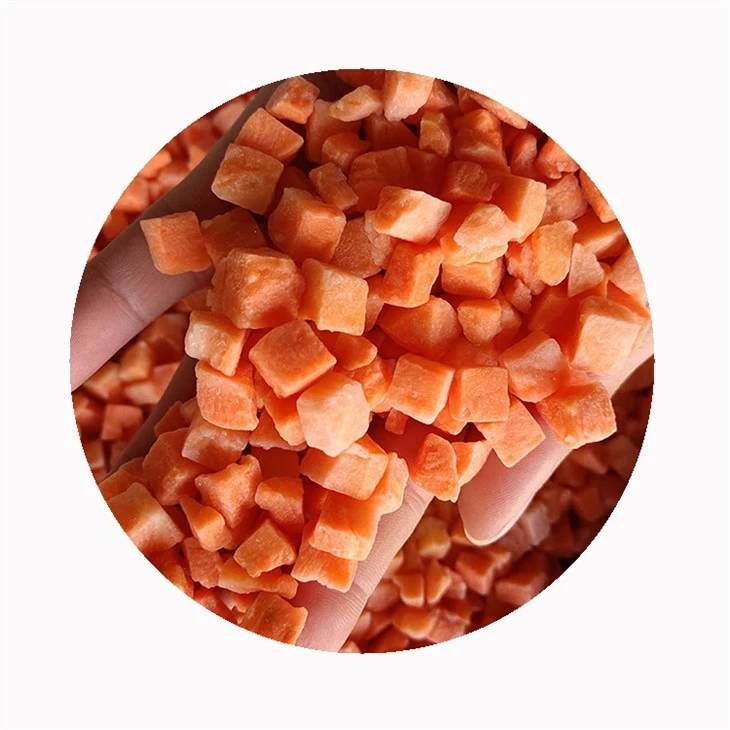
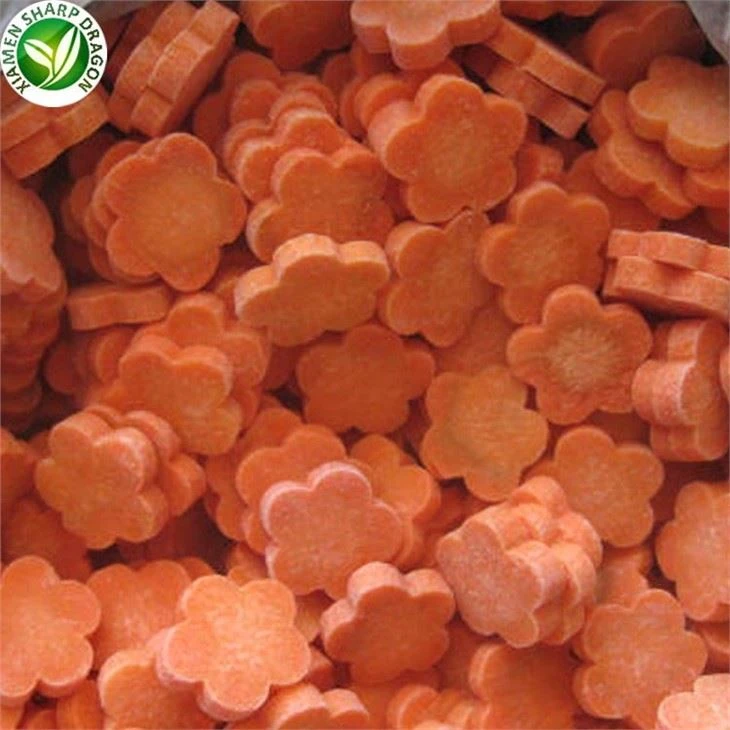
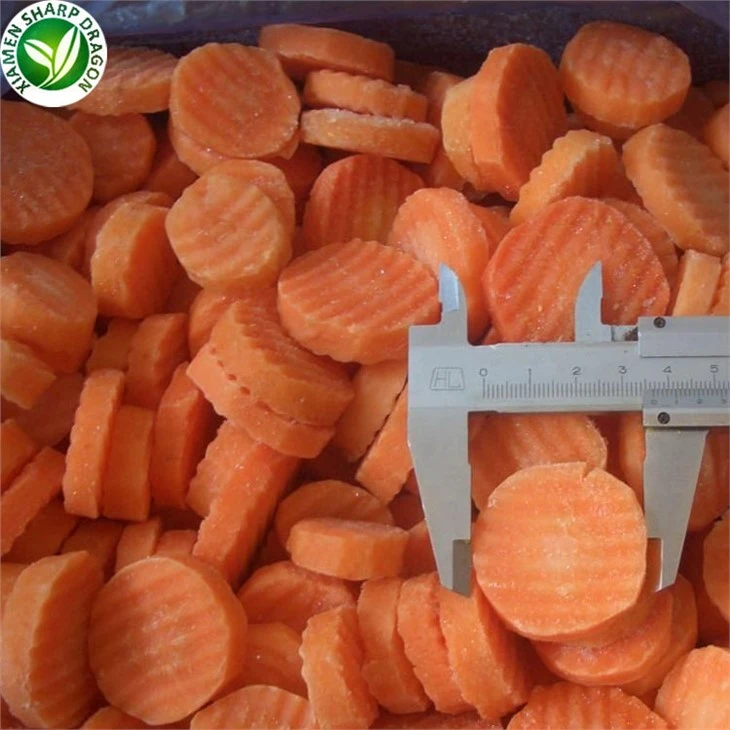
Plain frozen carrots can fit the same varied vegetable pattern. Commercial freezing commonly includes washing, cutting and blanching before rapid freezing. Compare nutrition on the actual finished-form basis and account for added sauces or seasoning separately. A compact frozen dice, flower slice and crinkle round can occupy different volumes even when the gram weight matches. For a repeatable recipe, grams are usually more useful than "pieces."
Carrot juice is more concentrated and faster to consume than whole carrots. A glass can represent several roots, but that still does not create a better-vision dose. The whole-versus-juice decision is mainly about product form, fiber, drinking speed, serving visibility and the rest of the diet. Our carrot juice versus whole carrot comparison handles those form differences in detail.
When you compare forms, keep the denominator visible. A value per 100 g is not automatically the value per cup, per bottle or per serving. Raw ingredient data may not represent a blanched frozen product, a drained cooked serving or a filtered beverage. Match the database entry or laboratory result to the actual product and declared serving before calculating a nutrient percentage.
More Is Not a Shortcut to Better Vision
Carrots provide provitamin A carotenoids rather than high concentrations of preformed vitamin A. The body regulates conversion to vitamin A, so ordinary food use is not equivalent to swallowing retinol supplements. Very high, sustained intake of carotenoid-rich foods or juice can nevertheless turn the skin yellow-orange, especially on the palms and soles. That condition is usually different from jaundice and generally reverses after intake is reduced, but a new color change still deserves sensible evaluation if the eyes look yellow or other symptoms occur.
A visible color change is not proof that the eyes are "fully supplied," and it is not a desirable progress marker. It only shows that carotenoid exposure has become high enough to deposit pigment in the skin. Our guide to carrots and skin-color change separates that reversible pigment effect from UV tanning and warning signs.
Supplements require a different safety judgment. Excess preformed vitamin A can be harmful, and pregnancy makes unsupervised high-dose use especially inappropriate because of fetal risk. High-dose beta-carotene supplements have also produced harm in trials involving smokers and people exposed to asbestos. Do not combine a food calculation with a multivitamin, retinol product or beta-carotene capsule and assume the total remains automatically safe. Check labels and ask a qualified professional when deficiency treatment or supplement use is being considered.

A Practical Portion Method for Everyday Eating
Start with the meal, not the eyesight claim. Put a normal serving of carrots beside other foods, vary vegetable colors over the day, and use a form you enjoy. A one-half-cup measure is useful because it connects to the NIH nutrient table, but it is not mandatory. If you count whole roots, weigh one typical root from your own supply once so you know whether your "one carrot" resembles the reference portions you are using.
Then read the number in context. If one-half cup supplies 459 mcg RAE in the reference table, that is a meaningful contribution. Look at other foods and supplements before adding another portion solely to hit 900 mcg. If you already meet your needs, more carrots may add color, texture, fiber and flavor to the meal, but there is no evidence-based conversion from extra grams to sharper vision.
Finally, separate food preference from symptom management. You can choose carrots often because you like them, yet still rotate dark-green vegetables, legumes, other orange vegetables and protein foods. If night vision, acuity or comfort changes, record when it began and what situations make it worse. Take that history to an eye professional. A detailed symptom timeline is more useful for diagnosis than a guess about how many carrots you ate.
For Food Products, Define the Formula Before You Make a Claim
In a frozen meal, soup, side dish or mixed vegetable pack, "one carrot" is not an operational specification. Define the carrot percentage, cut, size tolerance, input state, finished serving and nutrient-data basis. A 10 × 10 mm dice may distribute differently from strips or crinkle rounds. A recipe can be repeatable only when the scale weight, line yield and serving method are explicit.
Worked example: A 400 g frozen meal is designed with 15% carrot. The finished carrot quantity is 400 g × 0.15 = 60 g per pack. For 10,000 packs, the finished-form requirement is 60 g × 10,000 = 600,000 g, or 600 kg. If your validated blending and packing yield is 98%, the starting requirement is 600 ÷ 0.98 = 612.2 kg before adding the agreed production allowance. The 98% yield is an example assumption, not an XMSD guarantee; use your trial data and contract basis.
If you are preparing a label or nutrition file, keep the data basis just as clear. Suppose an approved analysis for the finished serving-not a raw-carrot estimate-reports 460 mcg RAE. Against the U.S. Daily Value of 900 mcg RAE, 460 ÷ 900 × 100 = 51.1%. That may support specific label work after you check the destination-market rules, rounding and record requirements. It cannot support "improves eyesight" merely because the percentage is high. Nutrient content, normal physiological function and treatment claims are different levels of evidence.
When you source IQF carrots, confirm cut style, size tolerance, defects, blanching status, ingredient declaration, packing, destination and intended application. Our frozen carrot range shows several available product forms. Final availability and specification still need order-by-order confirmation; a site image is not a substitute for an approved sample, product specification or laboratory record.

Tell us your cut, size tolerance, pack, application, destination and required records. We will review an IQF carrot option against the project basis.
Send Your Carrot RequirementThe Answer You Can Use
For normal eyesight, there is no evidence-based carrot count to chase. One-half cup of raw carrots is a useful composition reference at 459 mcg RAE, but neither that serving nor two servings is a treatment. Use RDA and Daily Value figures to understand total dietary contribution, not to predict visual acuity. Count, cups and grams must always name the food form.
The 2005 six-week trial does not change that answer. It tested supervised vitamin A interventions in night-blind pregnant Nepali women, with about 128 g cooked carrots in one group. It did not establish a dose for healthy eyes, and it did not establish a 250 g safety ceiling. If you have persistent night-vision difficulty or another vision change, arrange an eye examination and let the cause determine the response.
References
- National Institutes of Health, Office of Dietary Supplements. Vitamin A and Carotenoids: Health Professional Fact Sheet. Current food values, RDA, RAE conversion, absorption and safety guidance.
- Haskell MJ, et al. Recovery from impaired dark adaptation in nightblind pregnant Nepali women. American Journal of Clinical Nutrition. 2005;81(2):461–471.
- American Journal of Clinical Nutrition. Full text and intervention details for the six-week trial, including the 128 g cooked-carrot group and study limitations.
- National Eye Institute. Refractive Errors. Causes, diagnosis and correction options; updated December 19, 2025.
- U.S. National Library of Medicine. Vision-night blindness. Causes, safety steps and need for a complete eye examination; reviewed August 5, 2024.
- World Health Organization. Vitamin A deficiency. Clinical signs and population-assessment context.