


Do Carrots Make Your Skin Lighter? What the Evidence Shows
Jul 10, 2019

Eating carrots has not been shown to make your natural skin color lighter, reduce melanin, bleach the skin, or fade dark spots. Carrots contain beta-carotene and other carotenoids. With sustained high exposure, these pigments can increase yellow-orange color in the skin. That is a different optical and biological change from becoming lighter.
A useful human trial makes the distinction unusually clear. Thirty young women followed high- and low-carotenoid fruit-and-vegetable interventions in a randomized crossover design. After four weeks, the high-carotenoid phase increased measured skin yellowness, but it did not change measured skin lightness. The result does not prove that carrots alone caused the change, and it does not support a skin-lightening claim. It shows why "yellow," "warm," "bright," and "light" cannot be used as interchangeable outcomes.
The short answer: carrots can contribute to a warmer or more yellow skin tone when carotenoid intake is high enough for long enough, but reliable human evidence does not show that eating them lowers melanin or makes the skin lighter.

"Lighter," "Brighter," and "More Yellow" Are Different Results
Most confusion begins with an undefined word. "Lighter" normally means a movement from dark toward light. "Brighter" may mean less dull, more even, better hydrated, more reflective, or simply more appealing to the observer. "Glowing" is more subjective still. None of those words automatically means that melanin has decreased.
Skin-color research often uses the CIE L*a*b* system. In that system, L* represents lightness, positive a* represents redness, and positive b* represents yellowness. A food intervention can raise b* without raising L*. To the eye, that may look warmer, golden, or more colorful. It is not evidence that the skin became paler, that dark spots faded, or that melanin production fell.
| Claim or observation | What would need to be measured | What carrot evidence supports |
|---|---|---|
| "Skin became lighter" | A rise in L* or another validated lightness endpoint under controlled conditions | The four-week crossover trial found no L* change |
| "Skin looked warmer or more yellow" | A rise in b*, skin carotenoid score, or a defined visual rating | Several dietary carotenoid studies support increased yellowness |
| "Dark spots faded" | Lesion-level pigment change with diagnosis, comparator, and controlled imaging or instrumentation | No reliable evidence from eating carrots establishes this outcome |
| "Melanin decreased" | A validated melanin endpoint and an appropriate human intervention | Carrot nutrient content alone cannot establish it |
Practical example: imagine two photographs of the same face, one under warm bathroom lighting and one beside a daylight-balanced window. The warm image may make yellow and orange tones appear stronger, while camera exposure can make either image look lighter. Without controlled illumination, white balance, camera settings, body site, and timing, that comparison cannot prove a biological change. A photograph can document what someone saw; it cannot identify melanin reduction by itself.

What Human Carotenoid Trials Actually Found
The strongest answer comes from studies that separate the color coordinates. In the 2016 randomized crossover trial, 30 women received seven daily servings of either high-carotenoid or low-carotenoid fruits and vegetables for four weeks, followed by a washout and the alternate intervention. Reflectance spectroscopy measured exposed and unexposed skin. The high-carotenoid period produced significantly greater increases in b* yellowness at both kinds of site. The investigators reported no change in L* lightness or a* redness.
The intervention was intentionally large and controlled. The reported beta-carotene exposure was 176,425 micrograms per week in the high-carotenoid phase and 2,073 micrograms per week in the low-carotenoid phase. It came from a fruit-and-vegetable pattern, not a single carrot food. The trial therefore supports a causal statement about a defined high-carotenoid dietary intervention and skin yellowness in that study group. It does not authorize a claim that one carrot serving lightens skin in the general population.
Worked example: normalize the trial exposure. 176,425 micrograms per week ÷ 7 = about 25,204 micrograms of beta-carotene per day during the high-carotenoid phase. The low-carotenoid phase averaged about 296 micrograms per day. That is roughly an 85-fold difference in the planned beta-carotene exposure, yet the measured change was greater yellowness with no lightness change. This calculation illustrates the endpoint clearly; it is not a recommended intake and should not be converted into a carrot dose.
A separate six-week randomized trial enrolled 81 Malaysian Chinese university students. Participants who consumed a daily carotenoid-rich fruit-and-vegetable smoothie developed more facial yellowness and a smaller increase in redness than controls. Carrot juice contributed substantially to carotenoid intake, but the smoothie contained several plant foods. The study adds evidence that diet can alter measured facial color. It still did not establish skin whitening, melanin suppression, or treatment of hyperpigmentation.
A 2023 six-week randomized feeding trial broadened the participant mix. It assigned 162 adults from four self-identified racial or ethnic groups to apple juice with negligible carotenoids, 177 mL of orange-carrot juice with 4 mg total carotenoids per day, or 355 mL with 8 mg per day. The moderate- and high-dose groups developed higher skin carotenoid scores, and the high-dose group rose 42% from baseline. That instrument is useful for tracking carotenoid exposure; the study did not turn the score into proof of lighter skin.
Study population matters. These trials were short, involved selected groups, used controlled interventions, and measured color with instruments. A statistically detectable average change does not guarantee a visible change in every participant. Baseline diet, absorption, genetics, skin site, sun exposure, food matrix, and starting skin color can affect the response. Claims should state the tested endpoint rather than translating "more yellow" into "lighter," "brighter," or "better skin tone."
Beta-Carotene Nutrition Does Not Prove Melanin Reduction
Beta-carotene is an orange plant pigment and a provitamin A carotenoid. The body can convert it into vitamin A through regulated metabolic steps. Vitamin A has established roles in vision, immune function, cellular communication, growth, reproduction, and normal tissue differentiation. Those physiological roles are real, but they do not create an evidence bridge to lighter skin.
DermNet describes melanin as the main determinant of skin color. Hemoglobin and dietary carotenoids also contribute, with carotenoids playing a smaller role and often appearing as yellow color on the palms. A carotenoid can change the color reflected from skin without switching off the melanocyte pathway that produces melanin. Therefore, "contains beta-carotene," "provides vitamin A," and "orange in color" are composition facts, not proof of whitening.
The NIH Office of Dietary Supplements lists one-half cup of raw carrots as providing 459 micrograms of retinol activity equivalents, or mcg RAE, equal to 51% of the Daily Value for vitamin A. It also explains that 1 mcg RAE corresponds to 12 micrograms of dietary beta-carotene. RAE is a nutrient-activity unit. It is not a skin-lightness unit and cannot predict an L* change, melanin index, or number of "shades."
Worked example: keep the calculation in its lane. Two one-half-cup portions of raw carrots provide 459 mcg RAE × 2 = 918 mcg RAE on the NIH reference basis. That is a transparent nutrition calculation for the stated food and portion. It does not mean the meal lowers melanin by 918 units, changes L* by a predictable value, or makes the eater one shade lighter. The broader benefits and nutrition of carrots should be evaluated without turning a nutrient contribution into a cosmetic promise.
Why Carrots Do Not Treat Dark Spots or Uneven Pigmentation
A person asking for lighter skin may actually be concerned about melasma, freckles, a tan, post-inflammatory marks after acne or eczema, or one changing spot. These are not one condition. DermNet notes that localized pigmentation may involve melanin, blood-derived pigment, or external pigment, and it lists multiple possible causes. A diffuse yellow-orange color from carotenoids can be mistaken for generalized hyperpigmentation, but it is not a therapy for a brown lesion.
No reliable human evidence shows that eating carrots fades melasma, removes acne marks, lightens freckles, or reverses post-inflammatory hyperpigmentation. A laboratory test of carrot extract, an antioxidant assay, or a study of an external lotion cannot establish the effect of eating whole or frozen carrots. Route, dose, formulation, absorption, comparator, and endpoint all change. Topical carrot oil and edible carrots are also different products; neither should borrow efficacy from an unrelated retinoid medicine merely because their names are associated with vitamin A.
Practical example: if a brown mark remains after an acne lesion heals, increasing carrot juice is not an evidence-based test or treatment. The mark may be post-inflammatory hyperpigmentation, but diagnosis depends on the history and examination. Record when it appeared, whether it is changing, and what products or medicines contact the area. Seek qualified advice if it persists, changes, or causes concern instead of trying to bleach it with food or a homemade carrot paste.
Sun exposure is another separate pathway. Ultraviolet radiation can increase melanin production and cause tanning. Eating carrots does not replace protective clothing, shade, or an appropriate sunscreen. Our focused explanation of carrots and tanning addresses that melanin-and-UV question. If the concern is an orange-yellow rather than a brown pigment change, the guide to whether carrots make skin look darker explains the distinction and the medical warning signs.

Whole Carrots, Juice, Puree, Frozen Cuts, and Supplements
Product form changes exposure, convenience, and the evidence basis; it does not turn an unsupported outcome into a proven one. Whole raw carrots retain their structure and require chewing. Cooking and heat treatment can increase beta-carotene bioavailability. Puree reduces particle size and may be used in soups, sauces, baby food, or beverages. Juice can concentrate the carotenoid contribution of several roots into a quickly consumed volume while removing much of the whole-food structure.
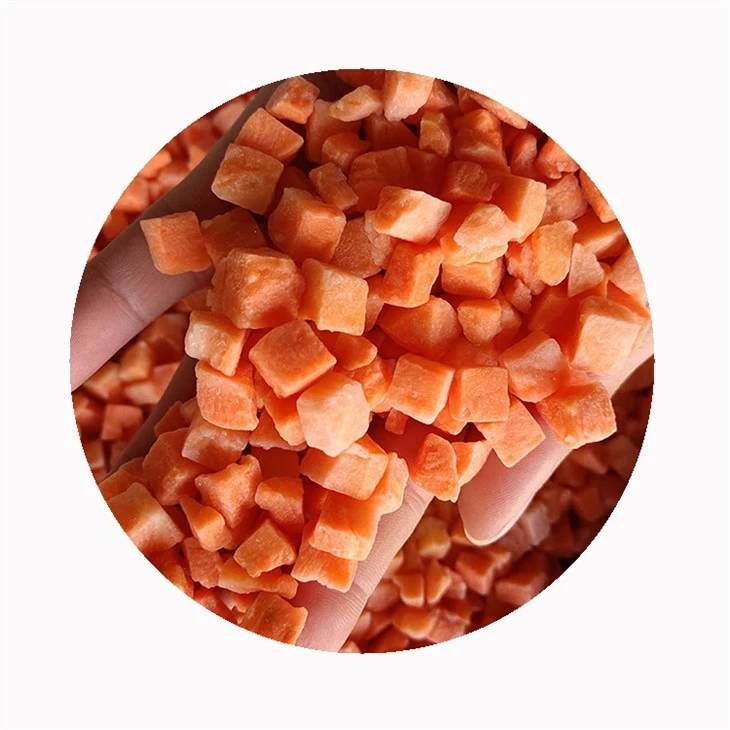
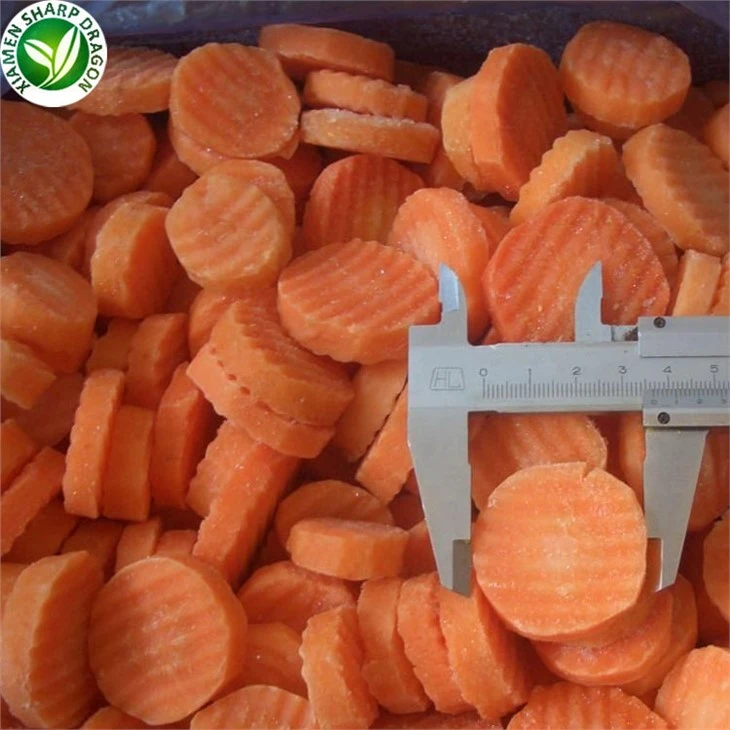
Frozen carrots are a storage and preparation format. Freezing does not create a skin-lightening mechanism. Cut size, blanching, storage, recipe amount, cooking, and the edible serving all affect the product that reaches the plate, so a raw-carrot reference should not be copied blindly to every finished product. The XMSD frozen carrot range includes cuts for different applications; define your gram amount and preparation rather than count visually different pieces as equal servings.
Supplements need a separate safety decision. NIH reports that large supplemental beta-carotene doses increased lung-cancer risk in trials involving smokers, former smokers, and some asbestos-exposed participants. Ordinary carrot servings are not equivalent to those supplements, but the trials are a strong reason not to use high-dose beta-carotene capsules as a complexion experiment. A food-first question should not become an unsupervised supplement protocol.
The practical choice is not "which carrot form whitens best?" because no form has a reliable eating-based whitening outcome. Choose whole, cooked, pureed, juiced, or frozen carrots for dietary fit, recipe performance, portion control, convenience, and sensory quality. If you notice yellow-orange skin after concentrated juices, purees, carotenoid-rich foods, or supplements, record your total exposure across the full diet rather than blaming the label on one product.

How to Test a "Brightening" or "Lightening" Claim
A credible claim begins with the exact endpoint. Ask whether "brightening" means higher L* lightness, lower melanin index, less contrast between a lesion and surrounding skin, lower perceived dullness, more even color, or greater observer preference. These outcomes require different measurements. If you cannot define the word operationally, a positive-looking photograph can be made to support almost any interpretation.
Next, match the evidence to the product. A carrot-extract lotion tested on skin does not prove an effect from eating diced carrots. An in-vitro tyrosinase assay does not demonstrate lower facial melanin in people. A carotenoid-rich mixed smoothie does not prove that one carrot ingredient caused the entire effect. A nutrition database value does not show cosmetic efficacy. Each gap in route, formulation, population, duration, comparator, or endpoint weakens the inference.
Then check study quality and magnitude. Was allocation randomized? Was the assessor blinded? Was there a suitable control? Were participants asked to keep sun exposure and skin-care products stable? Was color measured at the same body site and under standardized conditions? Did the reported change exceed ordinary measurement error, and was it large enough to matter visibly? A statistically significant result can still be too small or too context-specific for a broad consumer promise.
Finally, read the result literally. In the four-week crossover trial, b* increased and L* did not. A faithful sentence is "the defined high-carotenoid fruit-and-vegetable intervention increased measured skin yellowness in the study group." "Carrots whiten skin" is not a shortened version of that result; it changes the outcome, ingredient attribution, and population all at once.
Safety note: a new or changing pigmented lesion, unexplained generalized color change, or persistent dark patch deserves appropriate assessment. Yellow eye whites, dark urine, pale stools, itching, abdominal pain, marked fatigue, or feeling unwell need prompt medical advice rather than a food-based explanation.
A Defensible Carrot Product and Claim File
For a retail vegetable pack, foodservice item, puree, juice blend, soup, meal kit, or private-label formula, start with product identity. Record the carrot variety or agreed raw-material specification, preparation state, cut, ingredient statement, recipe amount, declared serving, cooking instructions, pack format, and the nutrition source that best matches the sold product. Orange appearance can support a color specification; it cannot substitute for a beta-carotene test or human skin outcome.
Keep three files separate. The quality file covers cut size, color range, defects, texture, flavor, clumping, foreign-material controls, pack integrity, and cold-chain condition. The nutrition file covers the food form, representative analysis or database basis, serving calculation, variability, and label rounding. The claim file covers the exact wording, product and serving to which it applies, target market, supporting human evidence, limitations, and approval responsibility. Passing one file does not automatically pass the other two.
Worked example: batch size is not an efficacy dose. A meal producer plans 3,000 portions with 75 g of frozen carrot per portion. The batch requires 3,000 × 75 g = 225,000 g, or 225 kg. The consumer basis remains 75 g per meal. The 225 kg total helps purchasing and production; it says nothing about whether a customer's skin becomes lighter. Even the 75 g serving needs a matching nutrient basis before a label value can be calculated.
Packaging can make serving control clearer without providing health evidence. A foodservice bag may be portioned with a scale, while a retail pack may present a defined serving and cooking direction. Our overview of frozen-food packaging options can help align inner pack, case, label space, and use rate. None of those choices validates "skin lightening," "melanin reduction," "whitening," "fades dark spots," or a similar cosmetic promise.
If a marketing concept uses "bright," define whether it describes the carrot's own color, the food's sensory appearance, or a human skin outcome. "Bright orange carrot pieces" can be checked against an agreed product standard. "Brightens skin" is a human efficacy claim and requires suitable evidence plus destination-market review. The safest editorial discipline is to state what the product is and what the study measured, then stop before an unsupported beauty conclusion.

What to Send for a Frozen Carrot Review
If you are preparing a buyer brief, state the application, carrot cut, target dimensions, tolerances, blanching preference, recipe weight, preparation method, pack format, annual or trial quantity, destination, and required documents. Add your exact proposed nutrition or appearance wording. We can separate specification questions from evidence questions before a sample or quotation is treated as proof of an outcome it was never designed to show.
For sample review, assess the carrot under the same cooking and serving conditions planned for the finished product. Measure piece size and portion mass; record color under consistent light; note breakage, fines, clumping, texture, flavor, and distribution through the recipe. If nutrient content is material, agree whether the basis will be a suitable database, recipe calculation, representative analysis, or another accepted route. If human appearance language remains in the concept, send it for qualified evidence and market review separately.
XMSD sourcing note: Send us the intended carrot cut, gram weight per serving, preparation method, pack format, destination, and exact proposed wording. We can review the frozen-product specification and identify which points require a sample, calculation, document, or qualified claim check.
Final Judgment
Carrots do not have reliable evidence for making natural skin color lighter, reducing melanin, or fading hyperpigmentation when eaten. Human carotenoid interventions can increase measured yellowness, and sustained high exposure can make skin appear warmer or yellow-orange. The randomized crossover trial that directly separated the axes found greater b* yellowness with no change in L* lightness.
Use carrots for nutrition and recipe performance, not as an oral whitening treatment. Keep whole carrots, juice, puree, frozen cuts, topical extracts, and supplements distinct. Ask what "brightening" actually means, match the evidence to the product and route, and require the correct endpoint. For commercial products, separate quality, nutrition, and human efficacy records so an orange ingredient or a valid nutrient calculation never becomes an unsupported skin-lightening promise.
References
- Pezdirc et al.: High-carotenoid fruit and vegetables, skin yellowness, and plasma carotenoids
- Tan et al.: Daily fruit-and-vegetable smoothie consumption and facial skin color
- Reflection spectroscopy study of skin carotenoid response in a six-week randomized feeding trial
- NIH Office of Dietary Supplements: Vitamin A and Carotenoids, Health Professional Fact Sheet
- DermNet: Hair and skin colour
- DermNet: Pigmentation disorders
- XMSD operational experience in frozen-carrot specification, portion control, quality review, packaging, and B2B application matching.