


How Many Carrots Should You Eat a Day? A Portion Guide
Jul 08, 2019

There is no single number of carrots everyone needs each day. For a meal-planning example, Australia describes approximately 75 g, including half a cup of cooked carrot, as a vegetable serve; the NHS uses 80 g as an adult fruit or vegetable portion. These are guidance examples, not a required daily carrot dose or a safety limit. Your meal, overall diet, age, tolerance and any individual clinical advice determine what makes sense for you.
Household measures need a clear basis. The American Heart Association counts two medium carrots, each about 6 to 7 inches long, as one cup-equivalent of vegetables. FDA's raw-vegetable reference uses one 7-inch carrot weighing 78 g, while USDA SNAP-Ed lists a medium carrot at 61 g. Size clearly changes the answer, so weigh one typical carrot from your own supply once rather than relying forever on a piece count. Raw, cooked, plain frozen and canned carrots can all contribute to vegetable intake. Juice is different: current guidance favors whole vegetables and recommends limiting juice portions.
The short answer: There is no universal daily carrot count. A 75 g cooked-vegetable serve in Australian guidance or an 80 g adult portion in NHS guidance can help you visualize a meal, but neither requires you to eat carrots daily. Adjust the amount and texture to the person and food.

Begin with the Vegetable Target, Not a Carrot Quota
A question about how many carrots to eat is really two questions. First, how much vegetable food fits your day? Second, what share of that amount should carrots provide? The 2025–2030 Dietary Guidelines for Americans give a useful reference: three vegetable servings per day in a 2,000-calorie pattern, adjusted when calorie requirements differ. They also emphasize variety and say that frozen vegetables with no or very limited added sugars can be good options. This framework does not assign all three servings to carrots.
Serving systems differ by country, so the numbers should not be stacked as if they were separate obligations. Australia's official Eat for Health guidance defines a standard vegetable serve as about 75 g and gives 1/2 cup of cooked orange vegetables, including carrots, as an example. The NHS uses 80 g as an adult portion of fresh, frozen or tinned fruit or vegetables. These two gram-based systems point to nearly the same practical amount. A 75–80 g carrot portion is therefore a defensible starting point, not a rule that every country expresses in identical language.
The useful action is simple: allocate carrots a place in the vegetable pattern, rather than building the whole pattern around them. If lunch contains a 75 g portion of carrots, choose another color or subgroup at dinner-perhaps a dark-green vegetable, beans or lentils, or a mixed vegetable dish. That variety changes nutrient, fiber, flavor and texture exposure more meaningfully than arguing over whether the carrot portion should be exactly 74 or 81 g.
Worked example: Suppose a kitchen chooses its own illustrative plan of three equal 75 g vegetable portions for a meal schedule. One 75 g cooked carrot portion is 1 of those 3 planned portions, or one-third; the other two can be different vegetables. This is only the kitchen's hypothetical plan, not a conversion of an Australian portion into a U.S. dietary-guideline serving.
How Cups, Grams and Carrot Counts Convert
Volume and weight answer different questions. A cup measures occupied space; grams measure mass. A cup of large loose slices will not weigh exactly the same as a cup of small tightly packed dice. Cooking can soften tissue, change water distribution and let pieces settle more closely. Draining changes the mass again. That is why one fixed cup-to-gram conversion should not be transferred across raw sticks, cooked slices, frozen dice and purée.
| Reference form | Published measure | How to use it |
|---|---|---|
| Raw whole carrot | 61 g for one USDA medium carrot; 78 g for FDA's 7-inch reference carrot | One medium-to-large carrot is close to the 75–80 g practical portion, but size is variable. |
| Cooked sliced carrot | About 75 g or 1/2 cup in Australia's standard vegetable-serve example | Measure the cooked edible portion, including the actual drain condition used at service. |
| Fresh, frozen or tinned vegetables | 80 g for one adult NHS fruit-or-vegetable portion | Useful for a gram-controlled menu; check added sauce, brine and drained basis separately. |
| Cup-equivalent carrot reference | Two medium carrots count as 1 cup-equivalent in AHA guidance | Half of that piece count is a convenient visual cue, not a precise batch weight. |
At home, one check with a kitchen scale is enough to calibrate your eye. Weigh the raw carrot or the cooked portion you actually serve, record the bowl or scoop that holds it, and use that same utensil for routine meals. In a commercial kitchen, repeat the test across several scoops and several operators. A single perfectly filled scoop does not prove that the line will hold the same portion during a busy service.

What a 75–80 g Portion Contributes
USDA FoodData Central's legacy entry for raw carrots reports 41 kcal, 2.8 g fiber, 320 mg potassium and 8,285 micrograms of beta-carotene per 100 g. Those figures describe raw edible carrot on a 100 g basis; they are not a promise for every cultivar, field, storage period or prepared product. Scaling the reference to an 80 g portion gives about 33 kcal, 2.2 g fiber and 256 mg potassium. The calculation is transparent: multiply each 100 g value by 0.8.
Carrots' orange pigment includes beta-carotene, a provitamin A carotenoid that the body can convert into vitamin A. NIH explains that vitamin A supports normal vision, immune function, reproduction, growth and organ function. Its professional fact sheet lists 1/2 cup of raw carrots at 459 micrograms retinol activity equivalents, or 51% of the U.S. Daily Value. That tells us carrots can make a meaningful contribution to vitamin A intake. It does not show that doubling or tripling the portion will improve eyesight, prevent disease or replace a varied diet.
The evidence boundary matters because nutrition databases describe composition, not an individualized prescription. Your total intake also includes vegetables, fruit, animal foods, fortified foods and supplements. Absorption and conversion vary, and preparation can alter bioavailability. NIH notes that cooking and heat treatment can increase beta-carotene bioavailability from foods. You can therefore choose raw carrots for crunch or cooked carrots for meal integration without declaring one form universally superior.
Practical example: An 80 g raw carrot portion contains an estimated 41 × 0.80 = 32.8 kcal and 2.8 × 0.80 = 2.24 g fiber using the USDA reference. If the carrots are roasted with 10 g of oil, the final dish includes the oil as well; the carrot calculation alone no longer describes the plate. Record both ingredients when energy or recipe nutrition must be controlled.
Raw, Cooked and Frozen Carrots Are Not Measured Identically
Raw carrots are easiest to count by piece, but piece size is the weak point. A short baby-cut carrot, a 61 g medium carrot and a 78 g FDA reference carrot are plainly different units. If you prefer raw sticks, weigh the edible portion after trimming. Chewing effort and crisp texture may also make the same gram amount feel different from soft cooked carrot, although appetite response varies from person to person.
Cooked carrots are better measured after the cooking and draining method has been defined. A boiled portion left wet can weigh more than a well-drained portion; a roasted portion can lose water. Added oil, glaze, butter, salt or sauce belongs to the finished dish and can change the nutritional conclusion more than the choice between raw and cooked carrot. For a plain cooked side, 1/2 cup or about 75–80 g is a practical starting point. For soup, record the carrot solids in the recipe rather than weighing a ladle of broth and calling the whole mass carrot.
Plain frozen carrots can contribute to vegetable intake. Follow the actual package instructions: blanching before freezing does not by itself make a product ready to eat. Cook a product intended for cooking as directed before serving it cold; use a frozen product without cooking only when its label and intended use support that use. The final nutrient value depends on the product, processing, cooking and ingredients. Use the product label or an appropriate reference for formal calculations.
For deeper form selection, our guide to cooked versus raw carrots separates texture, preparation and nutrient-access questions. For portion planning, the important rule is to keep the measurement basis attached to the number: raw edible grams, cooked drained grams, or the labeled frozen portion.
Carrot Juice Is a Separate Portion Decision
Do not convert a cup of chopped carrot into a cup of juice and assume the eating experience is unchanged. NHS guidance limits the combined total of unsweetened fruit juice, vegetable juice and smoothies to 150 ml a day; that amount counts as a maximum of one of the five daily portions. Other countries use different frameworks. Check the full product label, including added ingredients.
Food composition also explains the distinction. USDA legacy entries report 2.8 g fiber per 100 g for raw carrot and 0.8 g per 100 g for canned carrot juice. Values vary by product and processing, so check the actual label. The database comparison nevertheless shows why juice should not automatically replace every whole-carrot portion: separating pulp can materially reduce fiber, and drinking requires less chewing.
Worked comparison: If a juice label states that a 150 ml serving weighs 150 g, the USDA reference would estimate fiber at 0.8 × 1.5 = 1.2 g. An 80 g raw carrot portion would estimate 2.8 × 0.8 = 2.24 g. The raw portion provides about 1.04 g more fiber in this comparison. Use the serving weight and fiber value on the actual juice label before making a product claim; do not assume every 150 ml juice serving weighs exactly 150 g or has the same pulp content.
For everyday use, keep whole, cooked or plain frozen carrots as the default and treat juice as an occasional or deliberately portioned beverage. This preserves clarity: the carrot serving solves a vegetable-meal question, while the juice serving solves a beverage and formulation question.
Adjust the Portion for the Person and the Meal
The 75–80 g starting point is aimed at a general adult portion, not every person. Total energy requirements, age, body size, pregnancy or breastfeeding, appetite, total vegetable intake and clinical needs can change the appropriate pattern. The current U.S. guideline explicitly says its 2,000-calorie targets should be adjusted for individual caloric requirements. If a clinician or registered dietitian has set a therapeutic plan-for example, because of a digestive condition, an eating disorder, swallowing difficulty or another medical need-that plan takes priority over a general serving guide.
Children also need age-appropriate amounts and textures. The question is not merely how many grams fit their food-group plan. CDC identifies pieces of hard raw carrots as a potential choking hazard for infants and toddlers and recommends cooking hard vegetables until they can be mashed or puréed for children learning to eat solids. Reduce the piece size, soften the texture and supervise eating. A 75 g adult side dish should never be copied onto a young child's plate without considering development and official pediatric advice.
Tolerance matters too. A sudden increase in fiber-rich foods may be uncomfortable for some people, especially when the rest of the diet changes at the same time. Increase the portion gradually, drink fluids normally and watch the pattern rather than blaming one meal. If symptoms are persistent, severe or tied to an allergy or diagnosed condition, get qualified advice instead of testing larger or smaller carrot amounts repeatedly.
Frequency is a separate choice from portion size. Variety matters across the whole diet. For a closer look at food form and preparation, see our frozen carrot nutrition and use guide.
Build the Portion into a Complete Meal
A carrot portion works better as a component than as a nutrition challenge. At lunch, 75–80 g of raw sticks can sit beside a protein source and other foods. At dinner, 1/2 cup of cooked carrots can share the plate with a dark-green vegetable. In a soup or stew, calculate the carrot added to the batch and divide by the number of portions rather than estimating by color. These methods keep the carrot amount visible without allowing it to crowd out dietary variety.
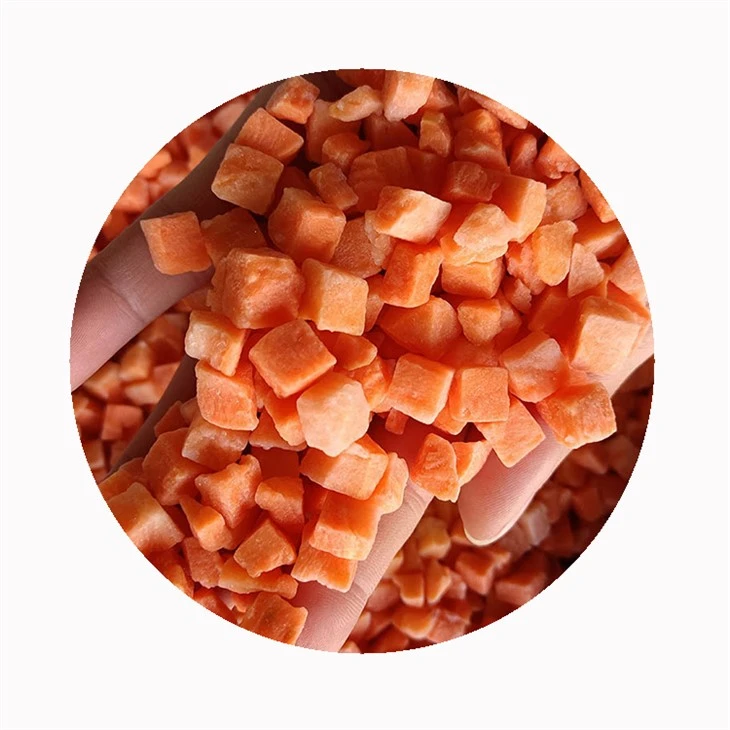
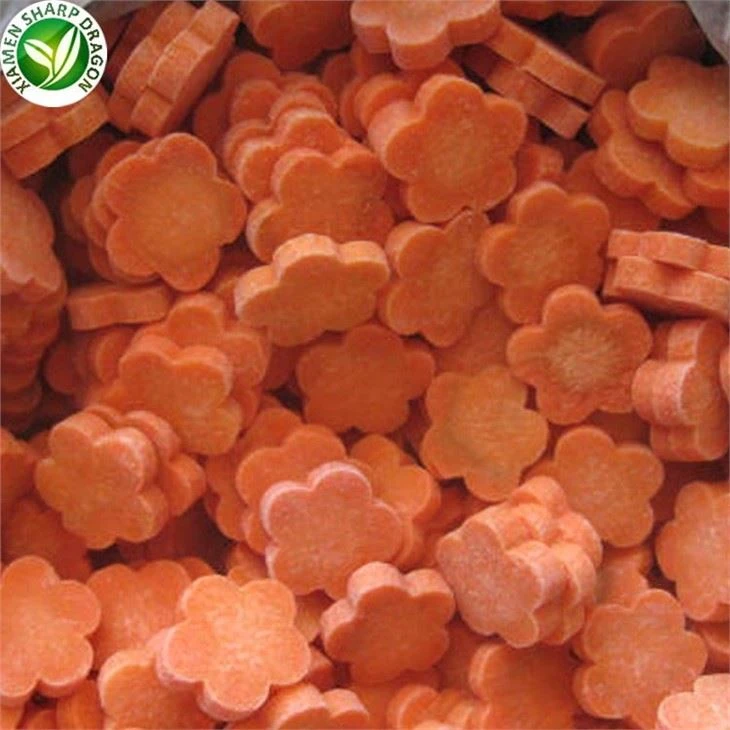
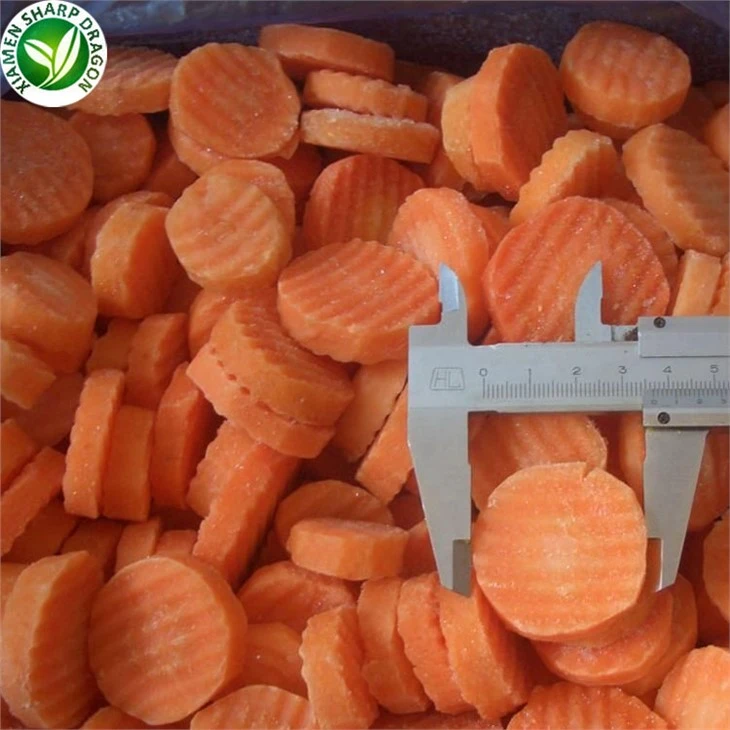
Preparation should follow the intended role. Use raw sticks when crispness is wanted and the eater can manage the texture safely. Use slices or crinkle cuts when the carrot should remain visibly separate as a side. Use dice when distribution across soup, rice, filling or a ready meal matters. Use strips when the recipe needs length and fast integration. The cut does not create a new nutrition category, but it changes scoop density, cooking behavior and how evenly a portion is distributed.
A mixed vegetable portion can make variety easier. If a 75 g portion contains 30% carrot, it contains 22.5 g carrot and 52.5 g other vegetables. A kitchen can request a defined blend ratio and test its scoop consistency. For a single-ingredient example, see our frozen carrot dice.

Commercial Portion Control: Define the Weight Basis
For foodservice or manufacturing, "one serving of carrots" is incomplete unless the specification states when the weight is taken. Raw receipt weight, frozen as-packed weight, cooked weight and cooked drained weight can produce different numbers. We recommend choosing the basis that matches the point where your operation can control it. A central kitchen may dose frozen carrot by recipe input; a plated service may control cooked drained weight; a retail pack must follow the destination market's labeling rules.
Cut size changes portion repeatability. A uniform dice generally settles into a volumetric scoop more consistently than mixed large and small pieces, while slices can bridge or overlap. Measure at least ten consecutive portions, calculate the average and range, and compare both with the recipe tolerance. If the average is correct but individual portions swing widely, the scoop, cut distribution or operator method still needs adjustment. A photograph of one good portion is not acceptance evidence.
Worked foodservice example: Suppose you plan 240 plates at 75 g cooked, drained carrot per plate. Required output is 240 × 75 g = 18 kg. With a hypothetical 95% cooked-drained yield from frozen input, the requirement is 18 ÷ 0.95 = 18.947 kg, rounded up to 18.95 kg. If bags contain 2.5 kg, stage eight bags (20 kg); about 1.05 kg remains unused as frozen input, not as cooked output. The yield and bag size are examples, not product promises. Keep unused product in its specified frozen conditions and test actual yield for the cut and cooking method.
For a purchased frozen product, inspect whether the cut distribution supports your portion tool, whether loose pieces have formed clumps, and whether package damage or temperature exposure has affected handling. The closest XMSD reference is our IQF frozen carrot category, which shows diced, sliced, strip and customized-cut formats. Use the agreed product specification and a sample cook test to set your actual yield and acceptance range.
Do Not Confuse a Label Serving with a Recommended Intake
FDA explains that a Nutrition Facts serving size is based on the amount people typically consume; it is not a recommendation of how much they should eat. That distinction matters on a retail carrot pack. A label might show a household measure followed by a metric gram amount because that is the regulated serving basis for the product category. It does not automatically establish the best daily carrot amount for every person.
Keep three numbers separate in product development: the food-group serving used in educational guidance, the recipe portion used for cost and sensory control, and the regulated serving size used for labeling. They may coincide, but that must be demonstrated rather than assumed. If a retail pack suggests four servings while its typical usage is to cook the whole pack for two people, the pack count, recipe direction and nutrition panel need a coherent review under the destination rules.
Packaging also affects portioning after opening. A kitchen using 20 kg per shift may prefer several smaller inner bags to one liner if repeated opening would expose product to moisture and clumping. A retail program may prefer a reclosable format only when the seal performs after frozen handling. Review our frozen-food packaging options for format context, then match the pack to actual quantity used per opening and the route's handling demands.

A Practical Decision You Can Repeat
For an adult meal, use a defined portion that fits the person. Australia's approximately 75 g cooked vegetable serve and the NHS 80 g adult portion are examples, not prescriptions to eat carrot every day. Measure the form you actually eat: raw edible weight, cooked drained weight, frozen recipe input or the labelled juice serving. Consider age, texture, swallowing safety, medical needs and tolerance.
For a commercial product, add the controls that household guidance does not cover: cut distribution, scoop repeatability, cooked yield, ingredient ratio, pack size and destination-label basis. The best number is the one with a defined state and a repeatable measurement method. "75 g cooked drained per plate" can be tested and costed; "some carrots in every serving" cannot.
XMSD sourcing note: If you are planning portion-controlled frozen carrot dishes, send us the target cut, recipe input weight, cooking method, pack format and destination. We can review which product format should move into your sample test and quotation.
Final Thoughts from XMSD
A useful carrot portion is not a universal number of pieces. The Australian 75 g cooked-vegetable example and NHS 80 g adult portion provide different reference systems for planning, not a required daily carrot dose. Keep the food form, measurement basis and individual context attached to the number; in production, use a portion specification that can be weighed, tested and repeated.
References
- Dietary Guidelines for Americans, 2025–2030
- American Heart Association: Fruits and Vegetables Serving Sizes
- Australian Government Eat for Health: Serve Sizes
- NHS: 5 A Day Portion Sizes
- U.S. FDA: Nutrition Information for Raw Vegetables
- NIH Office of Dietary Supplements: Vitamin A and Carotenoids Fact Sheet for Health Professionals
- USDA SR28: carrots, raw, NDB 11124
- USDA SR28: carrot juice, canned, NDB 11655
- CDC: Choking Hazards for Infants and Toddlers
- U.S. FDA: Serving Size on the Nutrition Facts Label
- NHS: What counts towards 5 A Day
- FDA: Ready-to-cook food instructions