


How Many Carrots Are Too Many? A Practical Safety Guide
Jul 08, 2019

There is no single number of whole carrots that becomes toxic for every person. For most healthy adults, one medium carrot or an ordinary vegetable serving is not "too many," and even several carrots on one day do not create a general poisoning threshold. The useful question is whether a high intake is repeated for weeks, whether it crowds out dietary variety, which form you consume, and whether your skin or digestion changes.
A practical screening range is about 20–50 mg of beta-carotene per day for a few weeks, an intake Cleveland Clinic associates with possible yellow-orange skin discoloration called carotenemia. Using the USDA reference value of 8.285 mg beta-carotene per 100 g raw carrot, that range is roughly 240–600 g of raw orange carrots per day. It is not a poison limit: absorption varies, carrot size and carotenoid content vary, and food-derived beta-carotene is regulated differently from preformed vitamin A.
If you want a normal daily starting portion, use the separate guide to how many carrots fit into a varied day. Here, we focus on the upper-side judgment: sustained exposure, skin color, total diet, juice, supplements and the product-form decisions that change the answer.
The short answer: Do not use a universal carrot count. Weigh a representative day, note the food form and repeat duration, and watch for orange-yellow skin. Roughly 240–600 g raw carrot daily for weeks can reach a beta-carotene range associated with carotenemia, but the individual response is variable and the condition is not the same as vitamin A poisoning.

Why There Is No Universal Toxic Carrot Count
Orange carrots contain beta-carotene, a provitamin A carotenoid. Your body can convert it into retinol when vitamin A is needed, but that conversion is regulated. The NIH Office of Dietary Supplements therefore separates beta-carotene from preformed vitamin A, such as retinol and retinyl esters. The adult tolerable upper intake level of 3,000 micrograms RAE per day applies to preformed vitamin A, not to the beta-carotene naturally present in carrots.
That distinction prevents a common calculation error. You cannot read a carrot's vitamin A value on a nutrition table, compare it directly with the 3,000 microgram preformed-vitamin-A limit, and conclude that a few carrots cause vitamin A toxicity. Food tables express provitamin activity in retinol activity equivalents so different sources can contribute to nutritional adequacy. The 3,000 microgram safety ceiling governs a different chemical form and exposure pathway.
The 2024 EFSA review reached a similarly careful conclusion. It found no indication that beta-carotene from the background diet is associated with adverse health effects, but the data were not adequate to derive one tolerable upper level for supplemental beta-carotene. "No UL" does not mean that any pattern is wise. It means evidence does not support a precise universal line. You still need to judge repetition, product form, dietary displacement and symptoms.
A high food intake and a high-dose capsule are also not interchangeable. In supplement trials involving smokers, 20–30 mg per day of supplemental beta-carotene was associated with increased lung-cancer risk. NIH and EFSA advise smokers to avoid beta-carotene supplements. That evidence should not be converted into a claim that ordinary carrot servings cause the same outcome. If your concern is a fatal event rather than a portion boundary, the separate explanation of whether excessive carrot intake can kill you distinguishes food intake from choking, severe allergy and other acute pathways.
Judge Exposure Across Days, Not from One Large Snack
If your estimate is "six carrots," the count is incomplete. Six thin baby carrots and six large roots can differ several-fold in weight. Raw sticks, cooked mash, frozen dice, juice and capsules also deliver different matrices. Start with grams or milliliters, then add frequency and duration. A one-off 300 g serving answers a different question from 300 g every day for six weeks.
Use a three-day record before changing your diet. Weigh the carrots actually eaten, including the carrot portion in soup, vegetable blends, juice and purée. Record the label quantity for supplements separately in milligrams. Then note whether the pattern is occasional, daily or repeated at more than one meal. This method catches hidden concentration without pretending that a carrot count has laboratory precision.
Next, look at the rest of the diet. Carrots are valuable vegetables, but eating a large amount does not replace beans, leafy greens, cruciferous vegetables, fruit, protein foods, grains and other sources needed for variety. USDA MyPlate gives broad adult vegetable-group amounts of about 2–4 cups per day, with the exact amount changing by age, sex and activity. That is a total vegetable-group guide, not a recommendation to fill every cup with carrots.
Finally, separate a preference from a warning signal. Feeling full after a large bowl is expected volume. New bloating may reflect a sudden rise in fiber or individual tolerance. A gradual yellow-orange tone, especially on the palms or soles, points to carotenoid exposure more directly. Yellowing of the whites of the eyes is not typical dietary carotenemia and deserves medical assessment rather than a self-diagnosis based on carrot intake.
Carotenemia Is the Main Repeated-Intake Signal
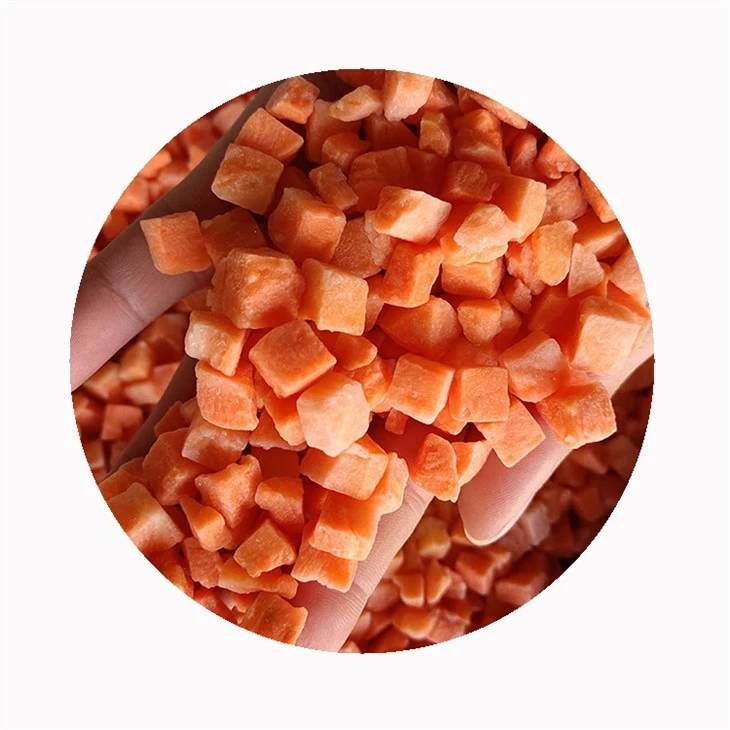
Carotenemia describes an increased carotene level in the blood; carotenoderma describes the visible yellow-orange skin color that may follow. The color often becomes most noticeable in thicker skin, including palms and soles, and the whites of the eyes are usually spared. This pattern helps a clinician distinguish it from jaundice, but photographs and online comparisons cannot make that diagnosis safely.
Diet-associated carotenemia is generally described as benign and reversible. Lowering the repeated carotenoid load and restoring variety usually allows the color to fade, but not overnight. Cleveland Clinic notes that improvement may take several weeks or months. A 2024 literature review of about 100 diet-induced cases also found wide variation in exposure and duration, which is another reason not to promise that a fixed carrot number will affect everyone in the same way.
The food record still matters because carrots are only one carotenoid source. Pumpkin, squash, sweet potato, mango and dark leafy vegetables can contribute to the same total. Cooking, particle size and fat eaten with a meal can change carotenoid bioaccessibility. Individual metabolism, body size and gastrointestinal conditions add further variation. If you develop visible color at one intake, your experience still does not establish a universal threshold for anyone else.
Practical example: Suppose you weigh a repeated daily portion at 350 g of raw orange carrots. At 8.285 mg beta-carotene per 100 g, the reference exposure is 350 ÷ 100 × 8.285 = 29.0 mg beta-carotene per day. If that continues for four weeks and your palms become orange-yellow while your eye whites remain clear, reduce the concentrated carrot pattern, replace part of it with other vegetables, keep the food record and arrange clinical advice if the color is uncertain or persists.
Whole Carrots, Juice and Supplements Are Different Exposures
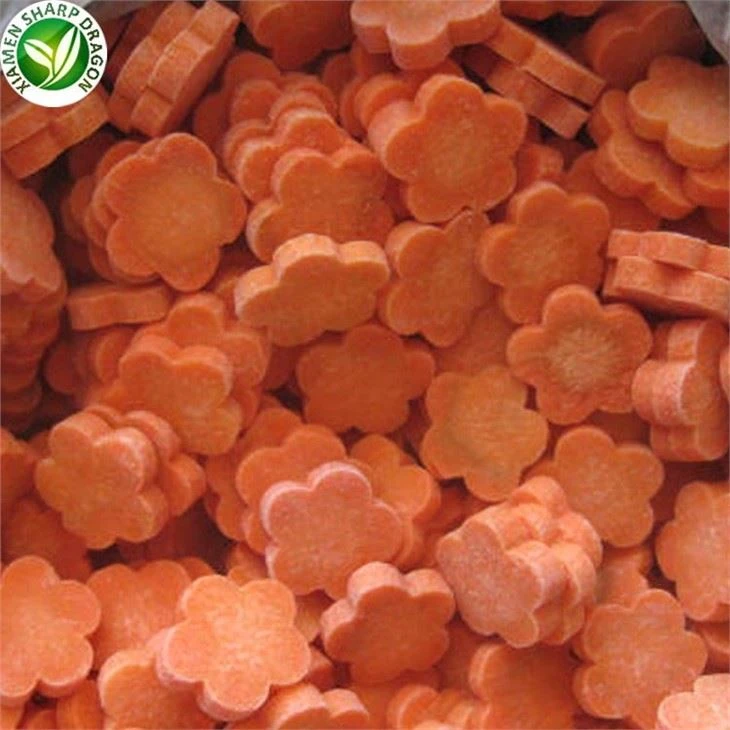
The form changes how easily a large amount can be consumed and how you should measure it. Whole carrots require chewing and retain their food structure. Juice concentrates a substantial carrot input into a drink and contains much less fiber per equal weight in USDA reference entries. A supplement bypasses the food portion entirely and must be judged from the label dose and your smoking and medical history.
| Form | What to measure | Decision that matters |
|---|---|---|
| Whole, cut or plain frozen carrot | Edible grams per serving and servings per day | Repeated weight, dietary variety and individual tolerance |
| Carrot juice or purée | Milliliters, nutrition label and actual carrot concentration | Easy repeat consumption, fiber difference and total juice intake |
| Beta-carotene supplement | Milligrams per dose, daily frequency and other supplements | Supplement evidence, smoking history and professional advice |
| Preformed vitamin A | Micrograms RAE from retinol or retinyl esters | The age-specific UL and medication or pregnancy context |
Do not use the whole-carrot screening range for juice without checking its label. USDA's legacy entry for canned carrot juice reports 9.303 mg beta-carotene and 0.8 g fiber per 100 g, while raw carrot reports 8.285 mg beta-carotene and 2.8 g fiber per 100 g. Products may differ by cultivar, processing, added ingredients and serving density. The comparison shows why form matters; it does not predict an individual skin response.
The NHS uses 150 ml as the combined daily maximum for fruit juice, vegetable juice and smoothies in its 5 A Day guidance, partly because juicing releases sugars from the food structure and frequent exposure matters for teeth. That is a public-health serving rule, not a beta-carotene toxicity limit. If juice is your main concern, compare the full explanation of carrot juice versus whole carrots and use the actual product label.
Worked Numbers: Convert Food Weight into a Useful Screen
A transparent calculation is more useful than saying "eat in moderation." For raw orange carrots, start with the USDA reference values per 100 g edible portion: 8.285 mg beta-carotene and 2.8 g dietary fiber. Multiply each value by your eaten weight divided by 100. Keep the result as a reference estimate because cultivar, storage, cooking and laboratory method can change the real value.
Worked example: A repeated 300 g raw-carrot day provides an estimated 300 ÷ 100 × 8.285 = 24.855 mg beta-carotene and 300 ÷ 100 × 2.8 = 8.4 g fiber. That beta-carotene estimate sits inside the 20–50 mg/day range associated with possible carotenemia after several weeks. It does not show toxicity. Your action is to check duration, all carotenoid sources, skin color, digestive tolerance and dietary displacement rather than declare 300 g unsafe on day one.
The same arithmetic converts the screening range into food weight. Twenty milligrams ÷ 8.285 mg × 100 g = about 241 g raw carrot. Fifty milligrams ÷ 8.285 mg × 100 g = about 604 g. If a reference medium carrot weighs 61 g, that is roughly four to ten medium carrots. Size variation makes grams the dependable measure, and the result remains a carotenemia screening band for repeated exposure, not a line between safe and poisonous.
Comparison example: A hypothetical 240 g portion of raw carrots contains about 19.9 mg beta-carotene and 6.7 g fiber using the USDA raw entry. The same weight of canned carrot juice contains about 22.3 mg beta-carotene and 1.9 g fiber using its separate entry. The beta-carotene totals look close, but the drinking format, fiber and speed of consumption differ. For a real packaged juice, replace both reference calculations with its laboratory-backed label values and serving volume.
A number can also mislead when it ignores the finished dish. One hundred grams of glazed carrots is not nutritionally identical to 100 g of plain carrot because oil, butter, sugar, salt and sauce affect the meal. A smoothie containing carrot, mango and pumpkin brings several carotenoid sources into one serving. Count the complete recipe and daily pattern before deciding that the visible carrot pieces alone explain the exposure.

"Too Much" Can Mean Too Little Dietary Variety
Even when no toxic threshold is crossed, an oversized carrot habit can be a poor trade if it repeatedly displaces other foods. MyPlate divides vegetables into dark-green, red and orange, beans and peas, starchy and other subgroups because no single vegetable supplies the same mix. Carrots contribute to the red-and-orange group; they do not satisfy every vegetable need by themselves.
Use proportion rather than fear. An adult vegetable portion in NHS guidance is about 80 g, and three heaped tablespoons of cooked or frozen carrots count as one portion. Those measures help you visualize an ordinary serving. They do not establish that 81 g is excessive or that every adult needs exactly the same amount. Activity, total energy needs, culture, medical conditions and the rest of the plate still change the practical choice.
For a simple weekly check, list the vegetables eaten at lunch and dinner for three days. If nearly every entry is carrot, replace part of the portion with a different color or subgroup. This lowers a repeated carotenoid concentration without treating carrots as dangerous. It also preserves the convenience of a food you enjoy instead of using an unnecessary all-or-nothing restriction.
Digestive tolerance provides another boundary. USDA's raw reference gives 2.8 g fiber per 100 g, so 500 g contributes about 14 g fiber before the rest of the day is counted. Some people tolerate that amount; others notice bloating or stool changes when intake rises suddenly. Increase or reduce gradually, drink normally according to thirst and medical guidance, and discuss persistent pain, vomiting, major bowel changes or unintended restrictive eating with a qualified professional.
Children require a separate proportion. A serving that looks modest beside an adult plate may dominate a young child's total food intake, and repeated carrot purée can raise carotenoid exposure quickly. Use age-appropriate dietary guidance and variety rather than scaling an adult gram range down by body weight. If an infant or child develops yellow-orange skin, ask a pediatric professional to assess the full diet and rule out other causes.

What to Do When Skin Color Changes
If your palms, soles or skin gradually look orange-yellow after weeks of high carrot, pumpkin, squash, sweet-potato or carotenoid-supplement intake, write down the amounts and duration. Reduce the concentrated source and restore vegetable variety rather than eliminating every carotenoid-rich food indefinitely. Color recovery is gradual, so judge the trend over weeks, not hours.
Safety note: Yellowing of the eye whites, sudden swelling, breathing difficulty, faintness, severe abdominal symptoms or a rapid unexplained color change is not a "count your carrots" problem. Seek prompt medical assessment. Dietary carotenemia usually spares the sclera, and serious acute symptoms need their own evaluation.
Arrange a routine clinical review when discoloration appears without a clearly high carotenoid intake, continues despite dietary change, or occurs with fatigue, weight change or other persistent symptoms. Carotenemia can appear alongside hypothyroidism, diabetes, liver or kidney disease and some restrictive-eating patterns. The color does not prove that carrots caused those conditions; it may signal that carotene is being processed differently or that another diagnosis must be excluded.
Bring useful evidence rather than a guessed diagnosis: a three-day food and supplement record, photographs taken in consistent light, the date the color began, and a list of medicines and health conditions. A clinician can decide whether the history is sufficient or whether bilirubin, thyroid, liver, kidney, glucose or carotene testing is appropriate. That is more reliable than trying to match skin color to a web photograph.
Turn the Health Answer into a Finished-Product Decision
For a retail, foodservice or prepared-meal product, the relevant quantity is the carrot actually served, not the bag size or the amount purchased. Start with edible grams per finished portion, carrot percentage in the recipe and expected servings per week. Then decide whether the product is a plain vegetable side, a mixed dish, a juice or a concentrated purée. Each form needs a different exposure and label review.
Plain IQF frozen carrot formats can simplify portion control because a defined dice, slice or strip is easy to weigh. Still, do not copy the USDA raw-carrot composition directly onto a finished frozen product. Cultivar, blanching, moisture, storage and cooking affect the as-served result. Use the actual product specification and an appropriate nutrition calculation or laboratory analysis for market-facing values.
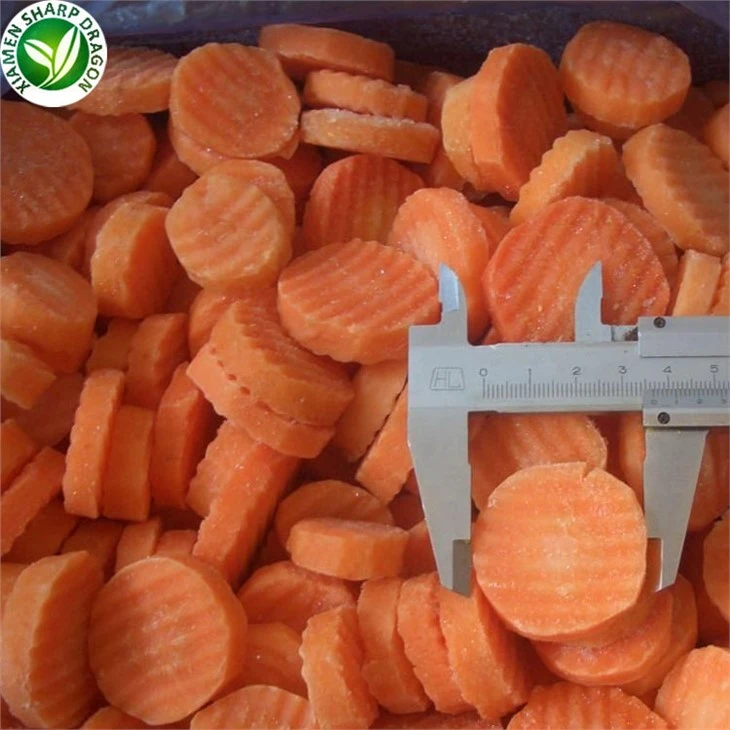
Cut size changes piece count and eating performance, not the underlying need for a gram specification. Ten 10 mm dice do not equal ten crinkle rounds. If your pack communicates a portion visually, verify that normal fill variation still produces the intended serving weight. For a children's product, also test the served texture and dimensions; for a soup or ready meal, test distribution after mixing and filling.
Commercial worked example: A 350 g ready meal uses 15% carrot by finished weight. The serving contains 350 g × 0.15 = 52.5 g carrot. Twenty servings therefore require 1.05 kg carrot. A raw-reference estimate would be 52.5 ÷ 100 × 8.285 = 4.35 mg beta-carotene per serving, but the final label should use the approved recipe method and data for the processed ingredient, not treat that estimate as a test result.
If your food-processing line uses carrots in more than one SKU, compare daily finished servings rather than evaluating each recipe in isolation. Review mix ratio, fill-weight control, piece distribution, added ingredients and the serving statement together. A product becomes misleading when the pack presentation implies a modest mixed-vegetable serving but the formulated portion is dominated by one concentrated ingredient.
For incoming frozen carrot, define measurable acceptance separately from health copy: cut dimensions, oversize and undersize limits, broken pieces, peel residue, color, foreign material, free-flowing condition, pack integrity and cooking performance. These controls protect portion consistency and product quality. They cannot prove a medical outcome, and a supplier document should never be used as a substitute for authoritative nutrition or clinical evidence.

XMSD sourcing note: If you are developing a frozen carrot or mixed-vegetable item, send the intended serving weight, cut, recipe percentage, pack format and cooking application. We can review the product-form and specification questions separately from consumer health claims.
A Practical Upper-Side Decision
Do not label one fixed carrot count as toxic. For a healthy adult eating whole carrots, use an ordinary portion within a varied diet as the normal case. If intake repeatedly approaches roughly 240–600 g raw carrot per day for weeks, treat that as a reason to review beta-carotene exposure and skin color, not as proof of poisoning. Use grams, duration and all carotenoid sources rather than count alone.
Juice and supplements need separate decisions. Measure juice in milliliters and use its label; measure supplements in milligrams and apply current NIH or EFSA advice, especially for smokers. If orange-yellow skin appears, reduce the concentrated pattern and restore variety. If the eye whites are yellow, symptoms are acute, or the color is unexplained or persistent, obtain medical assessment.
References
- USDA FoodData Central: Carrots, Raw (FDC ID 170393)
- USDA FoodData Central: Carrot Juice, Canned (FDC ID 170491)
- NIH Office of Dietary Supplements: Vitamin A and Carotenoids
- EFSA: Scientific Opinion on the Tolerable Upper Intake Level for Preformed Vitamin A and Beta-Carotene
- NCBI Bookshelf: Carotenemia
- International Journal of Dermatology: Diet-Induced Carotenodermia-A Literature Review
- Cleveland Clinic: Carotenemia-Causes and Treatment
- USDA MyPlate: Vegetable Group Guidance
- NHS: 5 A Day Portion Sizes