


XMSD Frozen Broccoli Nutrient Retention: Process and Test Guide
May 23, 2019

Freezing does not "kill" nutrients in broccoli. Nutrients are chemicals, not living organisms. The accurate question is how much of each measured nutrient remains after raw-material handling, blanching, cooling, freezing, frozen storage and final cooking. Different compounds respond differently, so neither "all nutrients are destroyed" nor "everything is perfectly locked in" is a defensible answer.
The short answer: Plain frozen broccoli remains a nutritionally useful vegetable. Freezing itself is not usually the largest loss step. Pre-freezing blanching can reduce heat-sensitive or water-soluble compounds, while it also slows enzymes that would otherwise damage quality during storage. The result must be reported by nutrient, process, basis and serving-not by the word "frozen" alone.

Start by Separating Freezing from the Whole Process
USDA food-safety guidance states that the freezing process itself does not destroy nutrients. The same guidance explains that freezing slows rather than stops enzyme activity and that most vegetables suitable for freezing receive a brief partial cook called blanching. Broccoli therefore reaches the freezer after several operations, and each can affect the analytical result.
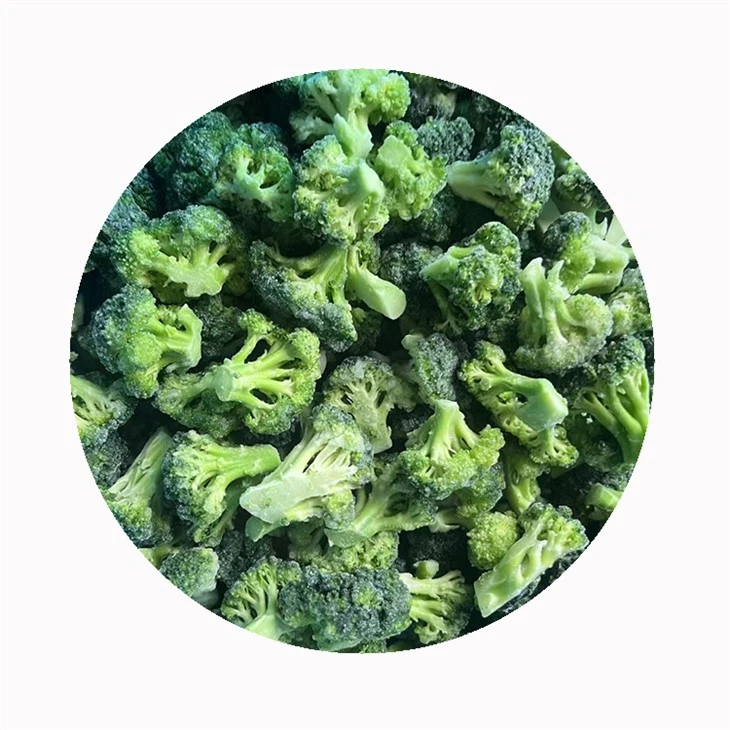
Codex defines quick-frozen broccoli as fresh, clean, sound broccoli that has been sorted, trimmed, washed and sufficiently blanched to stabilize color and flavor through the normal marketing cycle before quick freezing. That definition is useful because it prevents a common mistake: blaming the ice-forming step for every difference between raw fresh broccoli and a blanched frozen product.
Our general page on whether frozen broccoli is still healthy owns the broad consumer comparison. This guide goes further. It shows you how to attribute change, choose a comparison basis and request evidence for a commercial product.
A process map is more useful than a slogan
| Stage | What may change | Evidence to keep |
|---|---|---|
| Harvest and delay | Starting maturity, respiration, water loss and initial nutrient level | Variety, field lot, harvest time and intake time |
| Trimming and washing | Edible-part ratio, surface exposure and possible leaching | Cut specification, water control and mass balance |
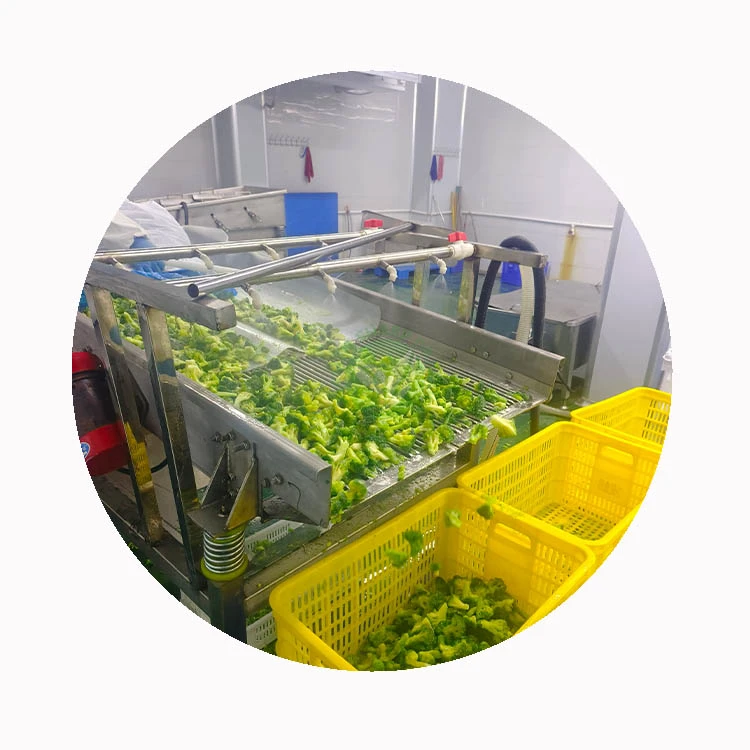
| Blanching and cooling | Heat-sensitive compounds, water-soluble compounds, enzymes, color and texture | Time, temperature, method, load, cooling and enzyme endpoint |
| Quick freezing | Ice crystals, cell structure, separation and moisture distribution | Product temperature curve and freezer conditions |
| Frozen storage | Slow oxidation, temperature-abuse damage, dehydration and clumping | Lot age, storage temperature and transport record |
| Final cooking | Additional heat loss, leaching, cooked yield and serving concentration | Method, time, liquid retained or discarded, yield and serving weight |

Why Blanching Is the Critical Trade-Off
Blanching exposes broccoli to heat and often water. That can reduce vitamin C and some glucosinolates through heat sensitivity, oxidation or leaching. At the same time, blanching is used to limit enzyme-driven deterioration that would continue slowly during frozen storage if left uncontrolled. Eliminating blanching to preserve one initial measurement can therefore sacrifice later color, flavor or overall stability.
A peer-reviewed industrial study reported that glucosinolate content decreased after pre-freezing processing, while measured phenols, carotenoids, chlorophyll and antioxidant capacity were maintained or appeared elevated in the frozen florets. The authors concluded that industrial freezing preserved major antioxidant nutrients but identified steam blanching and ice-water cooling as possible improvements for glucosinolate retention. The mixed result is the point: one process can affect analytes in different directions.
Apparent increases do not mean freezing manufactures vitamins. Removing water, changing extractability or changing the measurement basis can raise a concentration per 100 grams even when the total amount in the original lot did not increase. A report should state wet-weight or dry-weight basis, raw or cooked state, edible portion and the analytical method.
Key decision: Do not optimize blanching from vitamin C alone. Set an acceptable window that also controls residual enzyme activity, color, flavor, texture, microbiological handling and the performance of the finished product.
Under- and over-blanching fail differently
Under-blanching can leave too much enzyme activity and unstable quality. Over-blanching can soften florets, increase losses of water-soluble compounds and reduce cooked yield. A buyer therefore needs a defined process and a finished-product trial, not a statement that the broccoli was simply "blanched." The supplier's confidential process limits may remain controlled, but the acceptance outcome must be visible in the agreed specification and sample.
Nutrient-by-Nutrient Expectations
| Component | Main sensitivity | How to interpret a result |
|---|---|---|
| Vitamin C | Heat, oxygen, water contact, storage time and cooking | Useful process marker, but highly dependent on handling and basis |
| Glucosinolates | Pre-freezing treatment, leaching, enzymes and cooking | Report the compound group/method; do not convert automatically into a disease claim |
| Carotenoids | Oxidation, matrix change and analytical extractability | An apparent concentration increase may reflect water or extractability changes |
| Minerals | Leaching and edible-mass changes rather than destruction by cold | Compare on the same drained/cooked basis and serving size |
| Dietary fiber | Physical structure and analytical definition | Freezing may soften texture without making fiber disappear |
This table explains direction and decision logic, not a guaranteed retention percentage. Variety, maturity, floret-to-stem ratio, farm conditions, time to blanch, equipment, sample preparation, frozen age and cooking all contribute variability. FDA guidance on nutrition-label databases explicitly recognizes seasonal, geographic, transport and processing sources of variation in fruits and vegetables.
Select the analyte from the commercial question. Vitamin C can be a useful marker for a heat- and oxidation-sensitive component, but it does not represent every nutrient. Glucosinolate work may answer a research or claim question, yet the analytical method and named compounds matter. Fiber and minerals may be more stable, while water movement changes their concentration. Testing a long list without a decision rule creates cost, not control.
Interpret non-detects and low label values carefully. A Nutrition Facts panel lists required or voluntarily declared nutrients under the applicable rules; it is not a complete chemical inventory. A missing vitamin line does not prove the food contains none. Conversely, a database average does not prove that a specific crop lot meets a claim. Use the label for the finished packaged product and use appropriate lot evidence for a contractual minimum.
Compare Fresh and Frozen Broccoli on the Same Basis
"Fresh" can mean just harvested, several days in distribution or cooked after home refrigeration. "Frozen" can mean immediately after processing, late in shelf life or cooked with added sauce. A fair comparison defines the point in the chain and matches edible state, moisture basis, serving weight and cooking method.
Practical example: A laboratory result of 70 milligrams vitamin C per 100 grams for raw fresh broccoli cannot be compared directly with 45 milligrams per 100 grams for cooked frozen broccoli. The first includes no blanching or final cooking; the second includes both. Test raw fresh and frozen products after the same intended cooking method, or label each state clearly and explain why the difference matters to the consumer.
Also reconcile mass. If 100 kilograms of frozen florets produce 91 kilograms after cooking and draining, nutrient concentration per 100 grams of cooked food may move partly because water and soluble solids moved. Report cooked yield beside nutrient results so the reader can distinguish concentration from total retained mass.

A Worked Retention Calculation
Worked example: A representative raw-broccoli composite contains 90 milligrams of vitamin C per 100 grams on a wet-weight basis. After the defined commercial blanch, cooling, freezing and storage period, the matched frozen composite contains 63 milligrams per 100 grams on the same basis. Simple concentration retention is 63 / 90 x 100 = 70%.
Now include mass. Suppose 1,000 kilograms of prepared raw florets enter the process and 940 kilograms of frozen florets are recovered. Starting vitamin C mass is 90 mg / 100 g x 1,000 kg = 900,000 mg. Frozen vitamin C mass is 63 mg / 100 g x 940 kg = 592,200 mg. Mass-balance retention is 592,200 / 900,000 x 100 = 65.8%.
The difference between 70% concentration retention and 65.8% mass-balance retention shows why basis matters. These numbers are hypothetical teaching values, not an XMSD specification. Your defensible figure needs representative samples, the actual process, an appropriate analytical method and a stated storage point.
Frozen Storage and Temperature Abuse
Low temperature greatly slows deterioration, but a frozen product is not chemically motionless. A broccoli storage study reported only a modest vitamin C decrease under its controlled frozen conditions, with the total loss remaining below 12% at the study endpoint. That result supports good retention under that study design; it is not a promise for every freezer, package, temperature fluctuation or shelf life.
Temperature abuse can create recrystallization, clumping, dehydration and texture damage. Those defects do not directly quantify vitamin loss, but they show the product has experienced conditions outside the intended state and justify investigation. Review receiving temperature, logger data, carton and inner-bag integrity, frost distribution and evidence of thaw/refreeze before accepting the lot.
Our frozen broccoli condition and shelf-life guide covers spoilage and quality failure. Nutrient retention should be assessed alongside, not instead of, food safety, package integrity and sensory acceptance.

Final Cooking Can Matter More Than the Freezer
Boiling in excess water and discarding the liquid can remove water-soluble compounds. Steam, microwave, roasting, stir-frying and cooking directly in sauce produce different heat and moisture histories. The best method depends on food safety, texture and the dish, not nutrient retention alone. Avoid extending cook time merely because the broccoli began frozen.
For a soup, compounds that move into the broth may remain in the consumed meal; for a drained side dish, the liquid is lost. This is why nutrient analysis of the ingredient cannot fully represent the served food. Run the real cook-and-hold process, record yield and analyze or calculate the finished serving as required by the target market.
Our guide to the best way to cook frozen broccoli focuses on method and texture. Use it with this nutrient framework: validate the cooking result you will actually sell, not an idealized raw comparison.
How to Build a Defensible Nutrient Test Plan
Start with the claim or decision. If you only need a compliant Nutrition Facts panel, define the applicable rules, serving and database or laboratory approach. If you want to claim vitamin C, compare processes or verify shelf-life retention, define the analytes, statistical design, lot coverage and acceptance rule before sampling.
- Identify the exact SKU, crop windows, suppliers, cut and intended shelf-life point.
- Choose representative production lots rather than a visually perfect hand sample.
- Create a composite sampling plan that covers package and case variation.
- State raw, frozen, thawed, drained or cooked condition and wet/dry basis.
- Use validated analytical methods and a competent laboratory.
- Record process, storage age, temperature and cooked yield with the result.
- Reassess after a material change in farm source, process, formulation or shelf life.
FDA database guidance emphasizes that natural and process variability must be represented rather than hidden behind a mean from one sample. Your exact compliance plan depends on destination. A marketing comparison may require different substantiation from a mandatory nutrient declaration, so involve the responsible regulatory specialist before artwork approval.
Define the consequence before results arrive. If the value falls below a declared minimum, decide whether the lot is held, retested, relabeled where lawful or rejected. If a research result is only informational, keep it out of release criteria. Specify how laboratory uncertainty, replicate variation and outliers will be handled so neither party improvises after seeing an unfavorable number.
Retain the sample identity chain. Link field or intake lot, production date, line, blanch record, freezer run, pack code, storage history and laboratory sample. Without that chain, a low result cannot be traced to starting material, process, storage or sampling. With it, you can compare affected and unaffected lots and decide whether the correction belongs at farm planning, blanch control, cold storage or final cooking.
Three Failure Signals in a Nutrient-Retention Claim
First, reject a comparison that uses raw fresh broccoli against cooked frozen broccoli without disclosure. It combines preservation and cooking effects, so the headline cannot attribute the difference to freezing. Request matched preparation or restate the claim as a comparison of the two products exactly as tested.
Second, pause when a single hand-selected sample supports an entire crop-year or shelf-life claim. Broccoli composition varies, and a visually attractive bag may not represent cartons, cases or production dates. Expand the sampling frame and set a confidence or compliance approach appropriate to the claim.
Third, investigate when the laboratory result looks acceptable but the cooked product shows excess drip, yellowing or soft texture. Nutrient concentration does not override application performance. Review blanching, floret size, temperature history and cooking. A product must meet the nutritional, sensory, physical and food-safety requirements that actually drive release.
What to Specify When Buying IQF Broccoli
A nutrient question does not replace the physical and food-safety specification. Confirm floret size distribution, stem ratio, color, texture, blanch status, defects, foreign material, microbiological and residue criteria, pack, shelf life, storage, traceability and documents. The already-published XMSD broccoli floret and stem-ratio buyer guide provides that acceptance framework.
If nutrition is commercially decisive, add the exact analyte, minimum or declared value, basis, method, sampling frequency and action for a nonconforming result. A generic request to "retain nutrients" cannot be inspected. A defined vitamin C value at a stated shelf-life point can be tested, but it will affect sampling, cost and possibly process design.
Review the current XMSD IQF frozen broccoli page for common formats. We coordinate supply against the confirmed application and order-specific factory scope; we do not promise one universal nutrient value across every region, crop and process.
Send XMSD the destination market, application, floret size, pack, volume, storage life, intended claim and any nutrient test requirement through our inquiry form. We will review whether the requested evidence, process and supply route can be aligned before quotation.

Frequently Asked Questions
1. Does freezing broccoli remove all vitamin C?
No. Some vitamin C may be lost during blanching, storage and cooking, but the amount depends on the real process. Freezing alone does not make broccoli nutritionally empty.
2. Is frozen broccoli always as nutritious as fresh?
Not for every nutrient and comparison point. Both can be nutritionally useful. Compare the same edible and cooked basis and account for the fresh product's storage history.
3. Why is broccoli blanched before freezing?
Blanching helps control enzymes and stabilize color and flavor during frozen storage. It must be balanced because excessive treatment can soften texture and increase losses.
4. Does IQF preserve more nutrients than block freezing?
IQF supports rapid freezing and separate pieces, but nutrient outcome still depends on pre-treatment, temperature history and later cooking. The process name alone is not a retention result.
5. Can color prove that nutrients were retained?
No. Color is a useful quality observation but cannot quantify vitamin C, glucosinolates or food safety. Use appropriate analysis for a nutrient claim.
6. Should frozen broccoli be thawed before cooking?
Follow the product instructions and application method. Many dishes can cook it from frozen, avoiding unnecessary drip and delay, but equipment and product format differ.
7. What evidence supports a nutrient claim?
Use representative sampling, a suitable analytical or approved database method, the correct serving and destination-market rules. Keep the lot, process and shelf-life basis with the result.
Bottom Line
Freezing does not kill broccoli nutrients. The complete chain changes them selectively: blanching can reduce some sensitive compounds, controlled frozen storage slows further deterioration, and final cooking may add another loss or leaching step. Frozen broccoli remains a useful vegetable, but absolute "no loss" claims are as inaccurate as "no nutrients left."
For procurement and product development, define the analyte, comparison basis, serving, process, shelf-life point and acceptance method. Combine that nutrition evidence with the physical specification, food-safety program and cooked-product trial. That produces a claim and a supply decision you can defend.
References
- USDA FSIS: Freezing and Food Safety
- Codex Standard for Quick Frozen Broccoli
- PubMed: Industrial Pre-Freezing Processing and Broccoli Nutrients
- Effect of Industrial Freezing on Broccoli Quality Traits
- Frozen Broccoli Compounds During Storage and Thawing
- FDA: Developing and Using Databases for Nutrition Labeling
- USDA Table of Nutrient Retention Factors