


XMSD Onion Growing Regions and Supply Windows
May 22, 2019

Onions grow commercially across temperate, subtropical, and some tropical regions, but the useful answer is not simply a list of countries. Bulb formation depends strongly on matching a cultivar to local day length, planting date, and temperature. Soil drainage, irrigation, disease pressure, harvest weather, curing, storage, and the intended market then decide whether the crop becomes a reliable fresh or processed ingredient.
For an international buyer, origin is only the first checkpoint. You need to know the named production area, onion type, crop stage, expected harvest window, available size band, storage method, processing facility, finished-product plan, and the evidence supporting each claim. A harvest calendar can explain when raw material is abundant; it does not guarantee that a particular specification, residue program, pack, or volume is ready to ship.
Quick answer: Bulb onions can grow in many regions when the cultivar's photoperiod requirement matches local latitude. Short-day types begin bulbing under shorter days and are used mainly at lower latitudes; intermediate types fit middle zones; long-day types need longer summer days and suit higher latitudes. In China, commercial programs may use regional crop windows in Yunnan, Henan, Shandong, and Gansu, then combine fresh crop, cured storage, processing campaigns, and frozen stock. Treat every window as indicative until the supplier confirms the current crop and contracted route.

Day Length Decides Where a Bulb Onion Variety Fits
An onion plant first builds leaves, then shifts carbohydrate into the bulb after it receives the day-length signal required by its genetics. That signal is called photoperiod. University extension guidance commonly groups cultivars as short-day, intermediate-day, and long-day onions. The hour ranges overlap slightly among sources because cultivars and local recommendations differ, so they should be treated as practical bands rather than universal biological cutoffs.
A short-day variety may start bulbing at roughly 10 to 12 hours of daylight. Intermediate-day onions are often described around 12 to 14 hours. Long-day varieties generally require about 14 hours or more. A peer-reviewed onion review similarly connects short-day material with lower latitudes, intermediate material with middle latitudes, and long-day material with higher latitudes where summer days become much longer.
| Cultivar group | Indicative bulbing signal | Typical latitude fit | Mismatch risk |
|---|---|---|---|
| Short-day | About 10-12 daylight hours | Lower-latitude production | Bulbing too early after limited leaf growth can reduce bulb size |
| Intermediate-day | About 12-14 daylight hours | Transitional and middle zones | A poor planting date or unusual season can narrow the growth window |
| Long-day | About 14 hours or more | Higher-latitude production | At a low latitude, the crop may never receive enough day length to bulb normally |
This is why moving seed to a new region is not a simple test of whether onion plants can survive there. A plant can remain green yet fail to deliver the required bulb diameter and maturity. Conversely, an early bulbing signal can stop vegetative growth before the plant has enough leaf area to build a large bulb. The buyer sees the result later as an unexpected size distribution, low process yield, immature necks, or inconsistent storage behavior.
Practical example: A packer needs 60-80 mm yellow onions for peeling. A newly introduced short-day cultivar bulbs ten days earlier than the existing variety in that location, but it has built fewer leaves. The crop may be healthy and visually uniform while a larger share falls below 60 mm. Before approving the change, compare the two cultivars by planting date, bulb count per size band, mature-neck percentage, raw defects, and peeled yield. The variety name and location alone cannot answer whether the crop fits the packer's line.

Climate, Soil, and Water Still Control Field Performance
Photoperiod triggers bulbing, but it does not replace agronomy. Onion seedlings and leaves generally develop well under cool to moderate conditions. Bulb enlargement and maturation need a suitable warmer period, while excessive heat, cold injury, bolting, hail, prolonged rain, or poorly timed irrigation can reduce marketable output. Temperature interacts with variety and growth stage, so a single seasonal average hides the damaging events that matter most.
Onions have a relatively shallow root system and need carefully managed moisture. Water stress during establishment and bulb enlargement can restrict growth; excessive water and poor drainage can increase disease or storage risk. Friable, well-drained soil supports bulb expansion and harvesting. Heavy clods, stones, salinity, compaction, and uneven fertility can influence shape, skin condition, maturity, and the proportion that meets a commercial size band.
Harvest weather affects the supply chain after the field. Dry conditions help tops mature and skins cure, while rain can delay lifting or create dirt and disease pressure. A cured bulb with a closed neck has a different storage prospect from an immature, wet-neck bulb. Ask how the crop was lifted, field-dried or mechanically cured, graded, ventilated, and moved into storage. Do not assume that all onions from a dry region received the same postharvest treatment.
Water availability is also a supply risk rather than only a farm detail. Research in the Hexi Corridor of Gansu continues to examine drip irrigation and water-saving methods for onion production. For a buyer, that does not prove one farm is sustainable or guarantee future output. It tells you to verify the actual irrigation source, water constraints, field plan, and current-season condition when a program depends heavily on an arid production zone.

How China's Onion Regions Create a Relay Supply
China's commercial onion production covers different climates and latitudes. Yunnan, Henan, Shandong, and Gansu are frequently cited in export and production reporting, but they do not represent one simultaneous national harvest. A regional relay moves broadly from southern early crops toward northern and northwestern crops. Cultivar, planting date, local weather, storage, and the marketing plan can shift the actual dates.
A 2026 market report described Yunnan supply from approximately February through April, followed after June by larger North China production, especially Shandong locations including Shouguang, Heze, and Liaocheng, into late August. It also described a sourcing network across Shandong, Gansu, Yunnan, and Henan. An older official Japanese market report documented a similar south-to-north relay from Yunnan through Shandong and Gansu. The older report is useful historical context, not evidence that the same acreage, prices, or exact dates apply today.
| Region | Indicative supply role | What to verify now |
|---|---|---|
| Yunnan | Earlier southern crop; approximately February-April in the cited 2026 report | Variety, lifting date, rain, size distribution, curing, current available volume |
| Henan | Part of the transition into central and northern supply | Named county or farm base, crop stage, pack or processing route, pesticide plan |
| Shandong | Large North China crop; June-late August in the cited 2026 report | Fresh-crop versus stored stock, size band, skin and neck condition, facility capacity |
| Gansu | Northwestern later-season production and storage contribution | Field location, irrigation, harvest timing, storage plan, transport to the approved facility |
These windows are planning markers, not a sales promise. Weather can advance or delay maturity. A region may grow red, yellow, or white material in several size bands, but the requested format may not be available from every field. Export quality can also mean different things to different sellers. Replace that phrase with measurable criteria for size, color, shape, firmness, dry matter where relevant, defects, residues, microbiology, pack, and remaining storage life.
For whole-bulb options, the XMSD fresh onion range gives a starting point. The fresh white onion reference and fresh red onion reference show two commercial color routes. Confirm the current crop, size, pack, and approved source on the quotation and signed order rather than treating a website image as lot evidence.

Harvest Window Is Not the Same as Shipment Window
Fresh onions can be cured and stored beyond harvest, but quality does not stand still. Weight loss, sprouting, root growth, softening, decay, skin loss, pressure damage, and internal condition can change with variety, maturity, curing, temperature, humidity, ventilation, handling, and storage duration. Ask whether a lot is newly harvested or stored, the entry date, storage regime, inspection date, remaining shipment plan, and how defects are sampled.
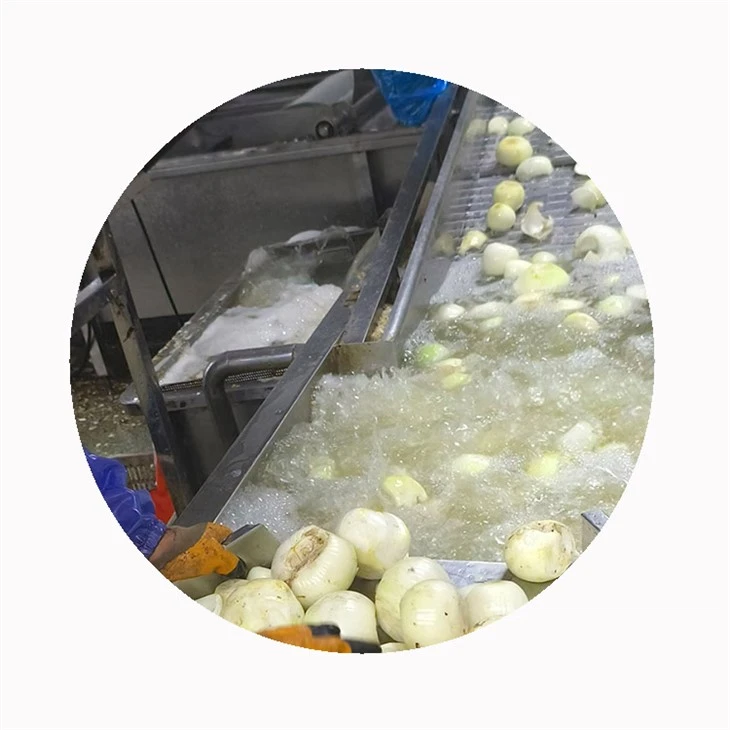
Frozen onion creates a different bridge. A processor can receive raw onions during an efficient campaign, then peel, cut, freeze, pack, and hold finished stock for later shipment. The XMSD frozen onion range shows possible product directions, while your order must identify the final cut, tolerance, facility, crop or production lot, pack, shelf life, and release criteria.
Frozen stock does not make crop risk disappear. It changes the control point. You need an inventory plan, confirmed production status, monthly release and replenishment logic, cold-store records, lot rotation, and backup action if crop intake or finished yield is lower than planned. A seller saying "available all year" may mean stored fresh onions, frozen inventory, multiple origins, rolling production, or simply spot purchasing. Ask which model applies.
Worked example: A food manufacturer plans 40 metric tons of accepted frozen onion dice per month for 12 months, so annual finished demand is 40 x 12 = 480 metric tons. A trial indicates that 80% of net raw onion intake becomes accepted finished dice after peeling, trimming, cutting, freezing, and sorting. Estimated raw intake is therefore 480 / 0.80 = 600 metric tons.
If the primary processing campaign runs for 10 weeks, the average intake target is 600 / 10 = 60 metric tons per week. With two five-day shifts each week, that equals 6 metric tons per production day. If the buyer wants an 8% raw-material contingency for field and sorting variation, the planned intake becomes 600 x 1.08 = 648 metric tons, or 64.8 metric tons per campaign week.
These are planning assumptions, not XMSD capacity, yield, price, or availability. Replace them with the approved crop, facility, cut, measured yield, production days, pack loss, opening inventory, safety stock, lead time, and monthly call-off. The calculation exposes the questions that "one harvest per year" cannot answer.
Verify the Crop Calendar Before You Commit Volume
A credible crop update should name the production area and give a date. "North China crop" is too broad. Ask for the province, county or farm base, cultivar or commercial type, planting period, crop stage, expected lifting period, weather events, and estimated volume relevant to your specification. Photographs should show a date, location or lot reference, and a representative field or store; a close-up of one attractive bulb cannot establish acreage or total condition.
Separate agronomic estimates from committed supply. Planted area is not finished output. Expected field yield is not packed export yield. Raw onion entering a plant is not accepted frozen product. At each conversion, record the basis: hectares planted, estimated harvested tons, percentage in the required size band, raw intake after field rejection, processing yield, finished inventory, reserved quantity, and uncommitted balance.
For pesticide and traceability review, confirm the field or grower group, application records, preharvest intervals, destination-market requirements, sampling plan, laboratory and method, certificate scope, and lot linkage. A residue result from another crop, another date, or a blended storage lot cannot automatically release the proposed shipment. Confirm how identity is preserved when onions move from several fields through curing, storage, peeling, and freezing.
- Define the finished need. State onion color, fresh or frozen form, size or cut distribution, defect limits, pack, monthly call-off, destination, and required documents.
- Map the proposed origin. Record production region, variety, planting date, expected harvest, current crop stage, and the facility that will receive it.
- Test representative material. Check raw bulb size and maturity, peeled or cut yield, appearance, defects, and performance in the real application.
- Reconcile volume. Convert field or stored stock through sorting and processing yield into approved finished volume; deduct existing commitments.
- Confirm the calendar bridge. Identify fresh curing and storage, production campaign dates, frozen inventory, reorder point, call-off lead time, and backup route.
- Lock evidence to the order. Use the final specification, signed sample, facility and certificate scope, lot coding, inspection plan, release records, and deviation process.
Update this file during the season. A crop report from four weeks ago may no longer reflect size, disease, harvest progress, or sold volume. Compare each update with the prior forecast and document the reason for the change. That discipline is more useful than pretending that a calendar is exact months before harvest.
If you also need to define which onion tissues are removed and how root-end trimming affects yield, use the separate XMSD onion bulb anatomy guide. That article owns the anatomy, trimming, and cut-geometry questions; this guide owns where and when the crop can support a sourcing plan.

Common Supply Risks Hidden by a Region Name
The same region can deliver different results across farms and seasons. A weather event may reduce bulb size without destroying the crop. Wet harvest conditions may increase storage concerns. Heat or water stress can narrow the usable size band. A strong market can divert raw material from processing, while a weak market can leave more bulbs available but does not automatically improve condition.
Storage can conceal age differences when fresh and older lots are mixed. Processing can conceal original bulb defects after peeling and cutting. Multi-region procurement can improve continuity, but it can also introduce variation in color, pungency, dry matter, layer thickness, piece geometry, and cooking behavior. The right response is not to reject regional flexibility; it is to define what may change and what the finished ingredient must keep constant.
Price should be compared on accepted output and application performance. A low field price can lose its advantage through small bulbs, deep peeling, excessive trim, decay, sorting, freight to the plant, or lower finished yield. A higher-priced crop may be economical if it delivers the required size distribution and more stable processing. Ask for a mass-balance trial or at least a documented yield basis before extrapolating a spot raw-onion quotation to annual finished cost.

XMSD sourcing note: Tell us the onion color, fresh or frozen form, size or cut, monthly volume, delivery months, pack, destination, application, residue program, and required documents. We can review current regional crop information, stored or frozen availability, specification fit, sample, and a suitable partner-factory route order by order.
FAQ About Onion Growing Regions
Can bulb onions grow anywhere?
No cultivar fits every location. Onion plants grow in many climates, but successful bulb production requires a suitable day-length group, planting date, temperature pattern, soil, water, and disease-control plan. A variety that performs at one latitude may bulb too early, too late, or not normally in another.
Do onions grow underground?
The bulb develops at or partly below the soil surface, with fibrous roots beneath it and leaves above. The edible bulb is not a botanical root; it is a true bulb formed mainly from swollen leaf bases around a compressed basal stem.
Does a harvest window mean onions are unavailable in other months?
Not necessarily. Regional crop relays, cured fresh storage, processing campaigns, and frozen finished inventory can extend shipment coverage. You still need to confirm whether the proposed lot is fresh crop, stored crop, or frozen stock, plus its age, condition, available volume, and call-off plan.
Final Thoughts from XMSD
Onions grow across a wide geographic range, but reliable bulb production begins with a cultivar whose photoperiod matches the latitude. Climate, water, soil, crop management, harvest weather, curing, storage, and processing determine how much of that crop becomes an approved commercial ingredient.
For China sourcing, use Yunnan, Henan, Shandong, and Gansu as regional planning references, then verify the current named crop and facility route. Build a calendar that connects field dates to usable size, processing yield, finished inventory, monthly release, and backup action. The best answer to "Where do onions grow?" is the origin-and-timing file that your production, quality, and purchasing teams can actually use.
References
- Iowa State University Extension: Long-Day, Intermediate-Day, and Short-Day Onion Varieties
- Texas A&M AgriLife Extension: Onions
- University of Delaware Cooperative Extension: Growing Onions
- Oregon State University: Dry Bulb Onions in Western Oregon
- Peer-Reviewed Review: Onion Bulb Formation, Photoperiod, and Temperature
- FreshPlaza, 2026: China's Onion Production Season and Regional Sourcing Window
- Japan Agriculture & Livestock Industries Corporation: Historical Report on Chinese Onion Producing Areas
- Gansu Agricultural Science and Technology: Drip Irrigation and Water-Saving Onion Production in the Hexi Corridor
- XMSD operational experience in onion source matching, specification review, sample coordination, processing plans, frozen inventory, packaging, and B2B export supply.