


Carrot Beta-Carotene, Vitamin A and Buyer Guide
Apr 09, 2019

Carrots are well known for their orange color and beta-carotene, but "carrot contains vitamin A" is an incomplete explanation. Most of the vitamin A activity in an ordinary orange carrot begins as provitamin A carotenoids, especially beta-carotene. The body converts part of that beta-carotene to retinol. The conversion is not 50% by weight, and the amount absorbed from a meal changes with the food matrix, chopping, pureeing, cooking, fat in the meal and individual status.
This distinction matters in two places. You need a realistic answer about eyesight, skin and immunity without a cure claim. For a commercial specification, determine whether a laboratory result, database value, label declaration, orange-color target and finished serving are describing the same thing. A dark orange sample is useful sensory evidence, but color alone is not a validated vitamin A assay.
This guide stays with that narrow evidence and procurement problem. It does not repeat XMSD's general carrot-benefit, nutrient-table, growing-condition or frozen-carrot overview pages. It shows how to interpret beta-carotene and retinol activity equivalents, how processing changes accessibility, and how to build a frozen carrot approval plan around identity, cut, maturity, color, defects, cooking performance, documents and cold chain.
The short answer: Orange carrots supply beta-carotene that the body can convert to vitamin A. NIH uses a food conversion of 12 micrograms of dietary beta-carotene to 1 microgram of retinol activity equivalent, or RAE, for intake calculations. That factor does not mean every person absorbs the same fraction from every carrot meal. For a commercial order, define the carrot type, product state, nutrient-data basis, cut, color, blanching, defects, application test, packing and lot documents before making a label or marketing claim.

Beta-Carotene Is a Precursor, Not Preformed Vitamin A
Vitamin A is a group of fat-soluble compounds involved in normal vision, immune function, reproduction and cell growth. Animal foods and some fortified products can provide preformed vitamin A. Plant foods such as orange carrots provide provitamin A carotenoids that can be converted in the body. Treating beta-carotene and retinol as identical milligram-for-milligram substances produces the wrong result.
The NIH Office of Dietary Supplements expresses intake as micrograms of RAE. One microgram RAE equals 1 microgram of retinol, 12 micrograms of dietary beta-carotene, or 24 micrograms of dietary alpha-carotene or beta-cryptoxanthin. Supplemental beta-carotene uses a different factor because its matrix and absorption differ. Use the factor that matches the source.
This explains why the old statement "50% of carotene converts to vitamin A" should be removed. It does not identify whether the writer meant mass, molecules, absorption or biological activity. It also ignores the difference between beta-carotene and other provitamin A carotenoids. Use the RAE method required by the applicable nutrition system rather than an unsourced percentage.
Carrots can support normal vitamin A intake, but they are not a guaranteed treatment for night blindness. Vitamin A deficiency can impair dark adaptation, yet poor night vision has other causes and requires appropriate assessment. A food company should not diagnose the cause or promise that one carrot product will correct a medical condition.
For a broader composition table that separates raw, cooked and frozen states, see XMSD's carrot nutrients and forms guide. The present article stays focused on carotenoid interpretation, label control and batch approval.

Food Matrix and Preparation Change Carotenoid Availability
Carotenoids are held inside plant-cell structures. Chewing breaks some of that structure, while chopping, heating and pureeing can release more carotenoid into a form available for digestion. Because carotenoids are fat soluble, the meal's fat content can also help them enter mixed micelles for absorption. Raw carrots still contribute beta-carotene; they do not become nutritionally useless because they are uncooked.
Human feeding studies illustrate the size of the food-matrix effect. One stable-isotope study found alpha- and beta-carotene from commercial carrot puree were more bioavailable than the same carotenoids from boiled-mashed carrots, while both differed from raw grated carrot. Another controlled study estimated substantially greater beta-carotene availability from stir-fried than raw carrot under its specific meal conditions. These results show direction and mechanism, not a universal percentage for every recipe.
Do not turn "cooked may be more available" into "cook as long as possible." Heat intensity, duration, oxygen exposure, particle size, water and storage all influence the final result. Excessive heat can damage quality, while long boiling can move water-soluble nutrients into discarded water. The useful question is which preparation gives the required safety, texture, flavor and nutrient basis in the real application.
For a soup or sauce, carrot dice that soften and release color may be desirable. For a visible tray component, excessive softening is a defect. For puree, small particle size is part of the target. A nutrition statement cannot replace an application test, and an application test cannot replace the data supporting the nutrition statement. Keep those decisions connected but distinct.
Use RAE Calculations Carefully
The RAE factor allows unlike vitamin A sources to be expressed on one activity basis. It is useful for dietary analysis and label preparation, but only after the input is clear. Ask whether the beta-carotene result is reported per 100 grams or per serving, on an as-sold or prepared basis, and for raw, blanched, frozen, thawed, cooked or drained material. Moisture loss can raise a value per 100 grams even when the total nutrient in the batch has not increased.
Worked example: Suppose a representative analysis reports 9,600 micrograms of dietary beta-carotene per 100 grams of the product. Using the NIH food factor, 9,600 divided by 12 equals 800 micrograms RAE per 100 grams from beta-carotene. If the labeled serving is 75 grams and the same basis is applicable, the arithmetic result is 800 × 0.75 = 600 micrograms RAE per serving. Before using that number, confirm method, sample representativeness, rounding, other provitamin A carotenoids, retention through preparation and destination labeling law.
The calculation is not permission to copy a value onto a pack. Some jurisdictions prescribe reference amounts, nutrient-conversion factors, analytical tolerances, rounding and conditions for "source," "high" or health-related claims. The United States uses a Daily Value for vitamin A of 900 micrograms RAE for adults and children four years and older, while other markets may present different reference intakes or claim rules.
Keep the raw data and calculation trail. Record the laboratory, method, sample date, lots represented, product state, moisture basis, carotenoids included, conversion factor, serving weight and rounding rule. If a database value is used, record the exact food entry and why it matches. "Carrot" alone is not sufficient when cut, cooking, added ingredients and drainage change the serving.

Orange Color Is Useful Evidence but Not a Nutrient Assay
Beta-carotene contributes orange color, so color can be a practical raw-material and lot-consistency signal. However, visual orange intensity also changes with cultivar, maturity, surface moisture, blanching, freezing, lighting, camera settings, particle size and comparison background. A photograph is particularly unreliable for quantitative nutrient verification.
Set color in a way that matches the decision. You can approve a physical reference sample, a calibrated color range, an instrument method such as L*, a* and b* values, or a combination. State whether the reading is made frozen, thawed or cooked; whether frost is removed; how many pieces are sampled; and which surface is measured. Compare the same cut and preparation.
Reject unusual pale, brown, blackened or green-shoulder pieces according to defined defect categories. Do not use one broad "poor color" allowance to hide decay, oxidation, underdeveloped color and harmless natural variation. Each category has a different cause and corrective action. The USDA frozen-carrot grade standard provides one reference for style, color, defects, texture and scoring, although your contract must identify the grade and any order-specific limits.
If the commercial claim depends on beta-carotene or vitamin A, support it with an appropriate nutrient-data program. Color screening can help choose samples or detect drift, but a correlation must be established for the exact cultivar and process before an instrumental color value is treated as a nutrient predictor. Even then, verify the model over crop and process changes.

Choose the Cut for the Finished Product
Carrot rounds, crinkle slices, flower cuts, dice, strips and chunks do not cook or dose in the same way. Thin pieces heat quickly and distribute evenly but may soften during a long hold. Large pieces retain identity but need more cook time and can cause portion variation. Decorative cuts add visual value but increase the importance of breakage and shape definition.
Define nominal dimensions and tolerances. For dice, state the target for all three dimensions and the method for irregular pieces. For slices, state thickness and diameter treatment. For crinkle or flower cuts, approve profile depth and the acceptable percentage of misshapen or broken pieces. A product name such as "carrot pieces" cannot protect an automated depositor or retail appearance.
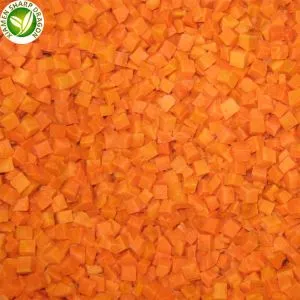
Blanching is commonly used before freezing to control enzyme activity and prepare texture, but it is not a universal safety kill step. Ask for the process-flow position, monitored time-temperature conditions, cooling and freezing method. Then evaluate flavor, color and bite using the recipe's real heat cycle. The XMSD frozen carrot range shows several available cut families for that comparison.
Do not thaw pieces on a bench merely to judge their final texture. Frozen carrot is intended for cooking, and thawing releases water and changes firmness. Use one frozen-state inspection for separation, frost and dimensions, then a separate controlled cooking test for the application. Record sample weight, time, temperature, liquid, equipment and drain interval.
Separate Nutrition Claims from Medical Claims
Normal vitamin A status supports vision, immune function and epithelial tissues, but that does not make a frozen carrot a treatment for eye disease, skin disease, hypertension, high cholesterol, diabetes or cancer. Earlier statements about preventing cardiovascular disease and producing an anti-cancer effect are not supported as product claims by the simple presence of quercetin, lignin or beta-carotene.
A nutrition claim needs a measurable nutrient basis and legal review. A disease-risk or treatment claim has a much higher evidence and regulatory threshold and may be prohibited for an ordinary food. Translate evidence into permitted wording for the destination market rather than copying a research headline or a traditional-use statement onto export packaging.
For the general evidence boundary on carrots and health, use XMSD's benefits of eating carrots evidence guide. For the distinct question of whether freezing changes the nutrition or product decision, see Are Frozen Carrots Good for You?
Keep consumer advice proportionate. Eating orange vegetables as part of a varied diet is different from taking high-dose beta-carotene supplements. NIH notes that high-dose beta-carotene supplements increased lung-cancer risk in people who smoke or formerly smoked and in people exposed to asbestos. Do not transfer supplement findings into a warning against normal carrot servings, and do not use food findings to promote supplements.
Inspect Raw Material, Defects and Cooking Yield
A useful frozen-carrot specification identifies variety or approved type where relevant, crop region and period, color target, maturity, peeled or unpeeled status, cut, blanching status and grade. It then defines stems, crowns, green shoulders, peel, dark spots, serious discoloration, tough or woody pieces, decay, foreign vegetable matter, foreign material, broken cuts, fused clusters and excessive frost.
Use representative lot sampling. Pull bags across pallet positions and production time, not only from the easiest carton. Inspect frozen appearance first; then prepare a controlled sample and evaluate flavor, aroma, tenderness, fibrousness, color retention and piece integrity. A sweet flavor does not compensate for hard woody pieces, and a bright orange color does not compensate for off-odor or decay.
Worked example: A manufacturer receives 1,000 kg of frozen carrot dice. Sorting and preparation remove 4%, leaving 960 kg. The validated cooking-and-draining test then produces a 10% loss on that remaining mass, leaving 960 × 0.90 = 864 kg of usable cooked carrot. At a delivered ingredient cost of USD 1,150 for the shipment, the ingredient cost is about USD 1.33 per usable cooked kilogram before labor and energy. Compare suppliers on the same method rather than invoice price alone.
The numbers are a method example, not an XMSD grade promise. Your result depends on cut, maturity, blanching, freezer history, recipe, equipment and drain procedure. Set replicate count and acceptance range during approval. If one lot moves outside the agreed range, investigate raw material and process data instead of changing the test after seeing the result.

Verify Food Safety and Document Scope
Freezing preserves quality and stops microbial growth while the product remains frozen, but USDA food-safety guidance explains that freezing does not reliably destroy all microorganisms. Control begins with agricultural practices, water, harvest hygiene, transport, washing, trimming, cutting, blanching where used, rapid cooling, freezing, sanitation, foreign-material control and employee practices.
Set microbiological criteria from intended use and destination requirements. Name each organism or indicator, method, sample plan, units, limit and release rule. A carrot intended for a validated commercial cook may have a different risk assessment from a ready-to-eat component, but the word "frozen" does not prove either use.
Review pesticide residues, heavy metals and other contaminants under the applicable program. Ask for a certificate of analysis tied to the lot or crop as agreed, not a generic report from a different year. Verify certificate holder, production site, product scope, standard, issue date and expiry. A certificate logo in a brochure does not establish scope for the current order.
Trace one carton backward and forward during supplier approval. The lot code should connect finished pack, production record, raw-material source, process checks, test results and dispatch. Define sample retention and complaint evidence before shipment. That is more useful than requesting a large folder of documents no one maps to the product.
For fresh-program comparisons or raw-material discussion, use a separately verified fresh carrot specification as the starting point. Confirm current availability, facility match and order-specific documentation rather than assuming that fresh and frozen supply use the same site.

Control Packing, Labels and Cold Chain
Approve pack weight, bag material and thickness, sealing method, carton strength, label language, ingredient name, storage statement, nutrition panel, lot code, production date and shelf-life basis. For private label, freeze the approved artwork version and barcode before printing. A correct laboratory calculation can still become a noncompliant label through the wrong serving, unit, rounding or preparation basis.
The XMSD frozen packaging overview can frame material and format questions. It does not replace a signed artwork, food-contact declaration or pack specification for the actual supplier and destination.
Set frozen storage and transport temperatures, measurement point, recorder placement and action after deviation. At receipt, inspect container seal, logger record, cartons, pallet stability, bag seals, codes, product temperature, fused clusters and loose ice. Record evidence before unloading destroys the original pattern.
Temperature abuse can create ice migration, clumping and texture loss even when orange color appears normal. Do not release a questionable lot from color alone. Compare logger data, product temperature, package condition and a controlled cooking sample. If the contract uses a core-temperature method, state where and how the probe is placed.
A Practical Approval Sequence
First, define the claim and application. Tell us whether the carrot is a visible side, soup ingredient, puree input, baby-food component or retail pack. Identify the destination, nutrition claim under consideration, serving basis, cut, cook cycle, pack and expected volume. This determines which evidence is decisive.
Second, align the specification and data. Confirm product state, carotenoid or vitamin A data source, laboratory method where required, color method, dimensions, blanching, defects, microbiology, residue plan, certificate scope, packaging and cold chain. Mark which values are release criteria and which are information only.
Third, test a representative sample. Inspect frozen separation and dimensions, then run the actual cook. Measure yield and score texture, color and flavor. If a nutrient claim is important, ensure the tested or documented state matches the serving state. Retain the approved sample, method and results.
Finally, connect approval to each lot. Review lot-specific documents, packaging, logger plan and pre-shipment inspection. At arrival, reconcile codes and condition. Update the reference when crop, cultivar, processing site, blanching program, cut or label basis changes.
XMSD sourcing note: Send your carrot format, cut size, application, cooking method, pack, destination, expected volume, nutrient or label question and document list. We will review a suitable frozen carrot specification and sample plan for the current project.
Frequently Asked Questions
Do carrots contain vitamin A or beta-carotene?
Orange carrots mainly provide provitamin A carotenoids, especially beta-carotene. The body can convert part of them to vitamin A. Nutrition systems express this activity as micrograms RAE so carotenoids and preformed vitamin A can be compared appropriately.
Does the body convert 50% of carrot carotene into vitamin A?
That blanket percentage is not an appropriate conversion rule. NIH uses 12 micrograms of dietary beta-carotene per 1 microgram RAE, while other provitamin A carotenoids use another factor. Actual absorption also changes with food matrix, preparation, meal composition and individual status.
Are cooked carrots better than raw carrots for beta-carotene?
Chopping, heating and pureeing can improve carotenoid accessibility by disrupting plant structure, and fat in the meal can aid absorption. Raw carrots still contribute beta-carotene. The best form depends on the whole meal, desired texture, other nutrients and serving preference.
Can orange color prove the beta-carotene content?
Color is a useful consistency signal but not a quantitative nutrient assay. Cultivar, maturity, processing, frost, lighting and particle size affect appearance. Support a beta-carotene or vitamin A claim with the nutrient-data and compliance method required for the product and destination.
What should be approved before buying frozen carrots?
Approve identity, product state, cut dimensions, color, maturity, blanching, defects, cooking performance, yield, microbiological and residue criteria, certificate scope, pack, label, traceability and cold chain. If a nutrient claim matters, also approve its data source, method, serving basis and destination rule.
References
- NIH Office of Dietary Supplements. "Vitamin A and Carotenoids: Health Professional Fact Sheet."
- USDA FoodData Central. Carrot food-composition records and Foundation Foods documentation.
- USDA Agricultural Marketing Service. "Frozen Carrots Grades and Standards."
- Edwards et al., American Journal of Clinical Nutrition. Carrot puree and boiled-mashed carrot carotene bioavailability study.
- British Journal of Nutrition. "The effect of food preparation on the bioavailability of carotenoids from carrots using intrinsic labelling."
- USDA Food Safety and Inspection Service. "Freezing and Food Safety."
This article provides general nutrition and procurement information. It does not replace medical advice, destination-market law, a validated food-safety plan, laboratory testing or the signed purchase specification.