


Can Carrots Kill You? Real Risks and Emergency Actions
Jul 11, 2019

A normal serving of carrots from a grocery store is not a fatal dose of vitamin A. Carrots contain beta-carotene, which the body converts to vitamin A as needed; they do not deliver the same exposure as a large dose of preformed vitamin A from certain supplements or medicines. There is no useful "number of carrots that kills a person" for ordinary eating, and inventing one would turn a safety question into false precision.
Carrots can still be involved in a life-threatening event. A hard piece can block an airway. A carrot allergy can progress to anaphylaxis. Contaminated or recalled carrots and improperly controlled refrigerated carrot juice can cause severe foodborne illness. A poison hemlock root mistaken for a wild carrot is not a food carrot at all, but the error can be deadly. High-dose vitamin A capsules are another separate exposure. Start with the route and the symptoms, not fear of the orange vegetable itself.
The short answer: Ordinary carrots do not poison a healthy person at a normal meal. Treat inability to cough, speak or breathe; rapidly worsening throat or tongue swelling; collapse; double vision; trouble swallowing; descending weakness; or illness linked to a recalled product as urgent warning signs. Call local emergency services rather than calculating how many pieces were eaten.

Food Carrots Are Not a Vitamin A Poison
The chemical form matters. Carrots supply provitamin A carotenoids, especially beta-carotene. NIH's Office of Dietary Supplements explains that the body must convert beta-carotene into active vitamin A. Preformed vitamin A-retinol and retinyl esters-does not require that conversion and can accumulate because it is fat-soluble. Acute toxicity follows one or a few extremely high doses of preformed vitamin A, not a side dish of carrots.
NIH has not established a tolerable upper intake level for beta-carotene from food. By contrast, the adult upper level for preformed vitamin A is 3,000 micrograms of retinol activity equivalents (mcg RAE) per day. That limit applies to retinol or retinyl-ester sources; it must not be used as a "carrot limit." A nutrition label or database may express the vitamin A activity of carrot carotenoids in mcg RAE, but that common unit does not erase the metabolic difference.
Repeatedly eating unusually large amounts of carrots may turn the skin yellow-orange, especially the palms and soles. This is carotenemia or carotenodermia, and food-related cases are generally benign and reversible when the high carotene pattern is reduced. The whites of the eyes are usually spared. Yellow eye whites, dark urine, marked fatigue or abdominal illness do not fit a simple carrot-pigment explanation and deserve clinical assessment.
If your concern is a repeated high-intake pattern or orange skin, use our guide to repeatedly eating too many carrots. The urgent decision is different: what can become dangerous now, which signs separate one route from another, and what should you do first?
Match the Danger Signal to the Route
Several very different problems can follow a mention of carrots. Counting pieces does not distinguish them, but timing and symptoms often do. Use the comparison below to choose the right service; it is not a diagnosis or a replacement for emergency instructions in your country.
| Possible route | Key danger signals | First response |
|---|---|---|
| Airway obstruction | Unable to cough effectively, speak, cry or breathe; silent distress; blue or grey color; loss of consciousness | Call emergency services and begin the correct choking response for the person's age |
| Anaphylaxis | Rapid throat or tongue swelling, breathing trouble, faintness, collapse, or symptoms affecting more than the mouth | Use the prescribed adrenaline auto-injector immediately and call emergency services |
| Foodborne illness or botulism | Bloody diarrhea, severe dehydration, double vision, drooping eyelids, slurred speech, trouble swallowing, weakness or breathing trouble | Seek urgent medical care; botulism symptoms require an emergency department without delay |
| Wild-plant poisoning | Symptoms after eating an unidentified carrot-like plant, including nausea, tremor, weakness, confusion or breathing difficulty | Call a poison center or emergency service; do not induce vomiting unless an expert directs it |
Emergency rule: If the person cannot breathe, is becoming unconscious, has rapidly progressive swelling or shows neurological signs such as double vision plus weakness or trouble swallowing, do not wait for an online explanation. Call local emergency services. In the United States, Poison Control is available at 1-800-222-1222 for suspected poisoning.

Choking Is the Most Immediate Everyday Risk
Choking is a mechanical blockage, not toxicity. A single hard piece can be dangerous even though its nutrients are harmless. CDC specifically lists pieces of hard raw vegetables such as raw carrots as potential choking hazards for infants and young children. Risk changes with hardness, shape, piece size, chewing development, posture, distraction and supervision. Older adults and people with swallowing disorders, neurological disease, poor dentition or sedating medicines may also need an individualized texture plan.
For a young child, prepare food to the shape, size and texture appropriate for the child's development. CDC recommends avoiding hard foods that are difficult to chew and swallow, seating the child upright, keeping the meal calm and watching continuously. Cooking until the carrot is soft enough for the intended eater is more meaningful than relying on a product name such as "baby carrot," "coin" or "dice." Small does not automatically mean safe.
Practical example: A caregiver plans to give a two-year-old raw carrot coins while the child walks around. The safer decision is not to count the coins. The caregiver should stop the walking meal, seat and supervise the child, and serve carrots in a developmentally appropriate soft form. A frozen cut also needs to be cooked as directed and checked at serving temperature; freezing alone does not make a hard piece safe to swallow.
Know the difference between effective coughing and severe obstruction. A person who can speak and cough strongly should be encouraged to cough while being watched closely. Severe choking is different: the person cannot speak, cry, cough effectively or breathe. Call emergency services. Current NHS first-aid guidance uses up to five back blows, followed-if the blockage remains and the person is conscious-by up to five abdominal thrusts for an adult or child over one year. A baby under one year receives chest thrusts, not abdominal thrusts. Repeat while help is coming and follow the dispatcher's instructions.
Do not sweep fingers blindly into the mouth; remove an object only when it is clearly visible and easy to grasp. If the person becomes unresponsive, place the call on speaker, start age-appropriate CPR and follow the emergency dispatcher. Even after an object comes out, medical review may be needed because a fragment can remain or first-aid thrusts can cause injury.
Carrot Allergy Can Become Anaphylaxis
Carrot is not among the most common food allergens, but an uncommon allergy can still be serious for the affected person. The American College of Allergy, Asthma & Immunology lists carrot among raw foods associated with birch-pollen cross-reaction. Pollen-food allergy syndrome often produces an itchy mouth, scratchy throat, lip or mouth swelling soon after raw carrot. Symptoms usually stay around the mouth and often settle quickly, but progression beyond that area has been reported.
Cooking changes some cross-reactive proteins, so many people with pollen-food allergy syndrome tolerate a cooked form. Do not test cooked carrot at home after throat tightness, breathing symptoms, widespread hives, vomiting with other symptoms, faintness or a reaction to cooked carrot. An allergist should interpret the pattern and decide which forms, ingredients and cross-contacts matter. Carrot can also be hidden in soup bases, sauces, seasoning blends, juices and vegetable mixtures.
Anaphylaxis is a rapid systemic reaction. Warning signs include tongue or throat swelling, difficulty breathing, wheeze, a hoarse voice, dizziness, collapse, or symptoms in more than one body system after exposure. If a person has a prescribed adrenaline auto-injector and anaphylaxis is suspected, use it immediately, then call emergency services and state that anaphylaxis is suspected. NHS guidance says to use a second auto-injector after five minutes if symptoms have not improved and another device is available. Keep the person lying down; if breathing is difficult, they may raise their shoulders or sit up slowly, but they should not stand or walk.
Practical example: Mild tingling confined to the lips after raw carrot in a person with birch-pollen allergy is not the same pattern as rapidly increasing tongue swelling and breathlessness. The first pattern needs avoidance and an allergy review; the second needs adrenaline, if prescribed, and an emergency call now. Do not delay adrenaline while waiting to see whether an antihistamine will work. Antihistamines do not replace adrenaline for anaphylaxis.
Contamination Can Make a Carrot Product Dangerous
Fresh produce can acquire harmful microorganisms from soil, water, handling, processing equipment, storage or preparation. FDA advises choosing sound produce, keeping it separate from raw meat and contaminated utensils, washing whole produce thoroughly under running water and refrigerating pre-cut or packaged produce. Soap, detergent and commercial produce wash are not recommended for washing produce. Washing can reduce surface bacteria, but it cannot guarantee removal of every pathogen.
When a lot appears in a recall notice, do not try to rescue it by washing, peeling or cooking unless the notice specifically provides that direction. Check the brand, pack size, lot or date code and purchase location against the notice. Stop service, isolate affected stock so it cannot re-enter use, preserve the package information, follow disposal or return instructions, and clean surfaces that contacted the product.
The 2024 U.S. outbreak provides a concrete example. In a November notice, CDC reported 39 illnesses across 18 states linked to recalled organic whole and baby carrots, including 15 hospitalizations and one death. That record does not mean organic carrots or carrots in general are lethal. It shows why product identity and recall action matter more than reassurance that the vegetable is usually healthy.
Refrigerated carrot juice needs its own controls. FDA's guidance records six botulism cases in the United States and Canada in 2006 associated with refrigerated carrot juice from one firm. The implicated juice was pasteurized but not heated enough to eliminate heat-resistant Clostridium botulinum spores, and severe temperature abuse was suspected to have allowed toxin formation. This was a product-processing and refrigeration failure, not beta-carotene poisoning.
Botulism is rare but a medical emergency. CDC lists double or blurred vision, drooping eyelids, slurred speech, difficulty swallowing, muscle weakness and difficulty breathing among warning signs. Do not taste a swollen, leaking or suspicious container to judge it. If neurological symptoms follow carrot juice, home-canned vegetables or another suspect low-acid product, go to an emergency department immediately and report what was consumed. Do not wait for every symptom to appear.
A separate daily carrot-juice safety guide covers routine serving, fiber, sugar and label questions. In an acute event, the priority is the recall, refrigeration history, processing statement and symptoms-not the beverage's health positioning.
A Wild Carrot Lookalike Can Be Deadly
A labeled cultivated carrot from an established food supplier and a plant pulled from a roadside are not equivalent. Poison hemlock belongs to the same Apiaceae family as carrots and can resemble edible plants. Poison Control notes that modern exposures often result from misidentification and that people have died after mistaking hemlock for wild carrots or other edible relatives.
Do not rely on one field mark, smell, photo app or internet comment to declare a wild root edible. Plant appearance changes through the life cycle, and Poison Control warns that commonly cited features may not always be present. If the plant's identity is uncertain, do not taste it. Foraging expertise is local and species-specific; a grocery carrot's safety record says nothing about an unknown roadside plant.
If someone has swallowed an unidentified carrot-like plant, remove remaining material from reach, save a clear sample or photographs without exposing others, and call a poison center for case-specific advice. In the United States, the number is 1-800-222-1222. Go to emergency care for weakness, tremor, confusion, seizures, breathing difficulty or collapse. Do not induce vomiting unless a poison expert specifically tells you to do so.

Supplements Are Not a Bigger Serving of Carrots
A capsule labeled "vitamin A" may contain retinol, retinyl acetate, retinyl palmitate, beta-carotene or a mixture. The front label is not enough; the Supplement Facts panel and ingredient form determine the exposure. High preformed-vitamin-A intake can cause severe headache, blurred vision, nausea, dizziness, muscle pain and coordination problems. Very large acute doses can progress to drowsiness, coma and death. Pregnancy adds a specific concern because excess preformed vitamin A can cause birth defects.
Worked example: Imagine a supplement provides 7,500 mcg RAE of vitamin A per daily serving and the label says all of it comes from retinyl palmitate. For an adult, 7,500 ÷ 3,000 = 2.5, so that serving is 2.5 times the NIH adult upper level for preformed vitamin A. That arithmetic identifies a supplement question for a clinician or poison expert. It does not prove that an equal mcg RAE value from carrot beta-carotene creates the same risk.
Mixed-form labels require another step. NIH gives an example in which a 3,000 mcg RAE supplement derives 60% of its vitamin A from beta-carotene and 40% from retinol or a retinyl ester. The preformed portion is 3,000 × 0.40 = 1,200 mcg RAE. Use the percentage and form rather than comparing the full amount blindly with the preformed-vitamin-A upper limit.
High-dose beta-carotene supplements also should not borrow the safety reputation of vegetables. NIH reports increased lung-cancer risk in trials that used 20 to 30 milligrams per day of supplemental beta-carotene in smokers or former smokers, with one trial also including asbestos-exposed participants and preformed vitamin A. A concentrated supplement is an intervention with its own dose and population evidence. It is not "many carrots in a pill."
If a child or adult has swallowed an unknown quantity of vitamin A or another supplement, keep the bottle and label, do not induce vomiting, and call a poison center. Call emergency services for loss of consciousness, seizure, severe confusion, breathing trouble or another rapidly worsening symptom. A person prescribed a retinoid medicine should follow the prescriber's instructions and should not add a vitamin A supplement without review.
Use a Five-Step Emergency Decision
- Look for the immediate threat. Inability to breathe, loss of consciousness, rapidly progressive swelling, seizure or neurological weakness takes priority over identifying an exact food dose.
- Call the right service. Use local emergency services for airway, anaphylaxis, severe neurological or collapse symptoms. Use a poison center for a swallowed supplement or unknown plant, while escalating to emergency care when severe signs are present.
- Follow the route-specific response. Use age-appropriate choking first aid, a prescribed adrenaline auto-injector for suspected anaphylaxis, or poison-expert instructions for ingestion. Do not improvise across routes.
- Preserve identity information. Keep the package, lot code, supplement bottle, receipt, recall notice or safe plant photograph. Do not delay treatment to gather it.
- Prevent another exposure. Isolate the product, stop service and tell anyone who may have eaten the same lot. A business should activate its incident and traceability process rather than quietly replacing the pack.
These steps preserve the order that matters under pressure: stabilize the person, bring in the appropriate expert, then protect product identity and other exposed people. Do not spend the first minutes photographing labels while someone cannot breathe, and do not discard the only lot evidence after the immediate danger has passed.
Practical example: An adult eating raw carrot suddenly becomes silent, grabs the throat and cannot cough. That is treated as severe choking even if the person has a pollen allergy. By contrast, a person who can speak but develops widespread hives, wheeze and dizziness after carrot needs the anaphylaxis pathway. The food is the same; the observable emergency is not.
Translate the Safety Answer into a Commercial Carrot Specification
In commercial approval, "carrots are safe" is not an acceptance criterion. Define the product form, intended consumer, whether the product is ready to eat or requires cooking, the validated preparation, package statement, microbiological criteria, allergen and cross-contact controls, foreign-material controls, lot coding, storage temperature, shelf life and recall contact. The specification must describe the finished use, not only the ingredient name.
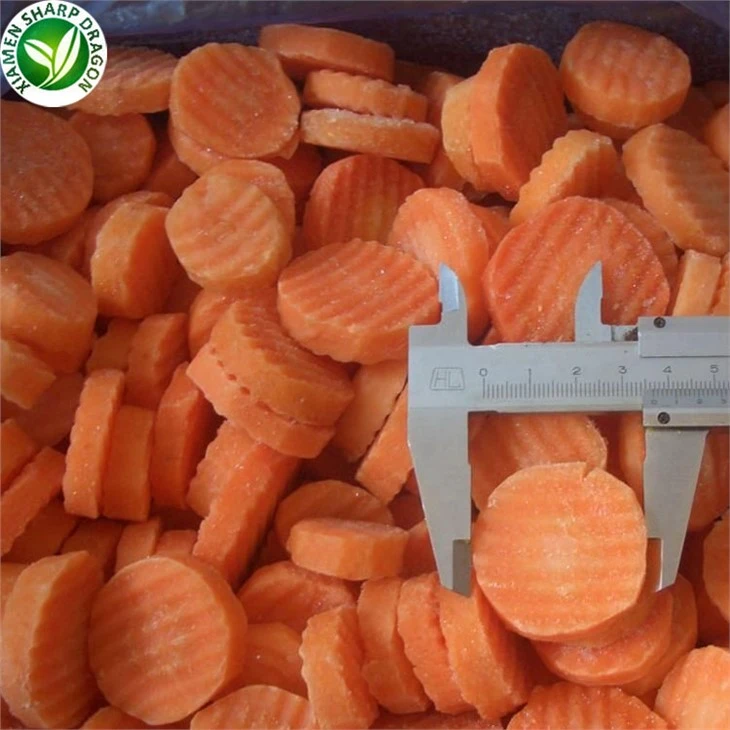
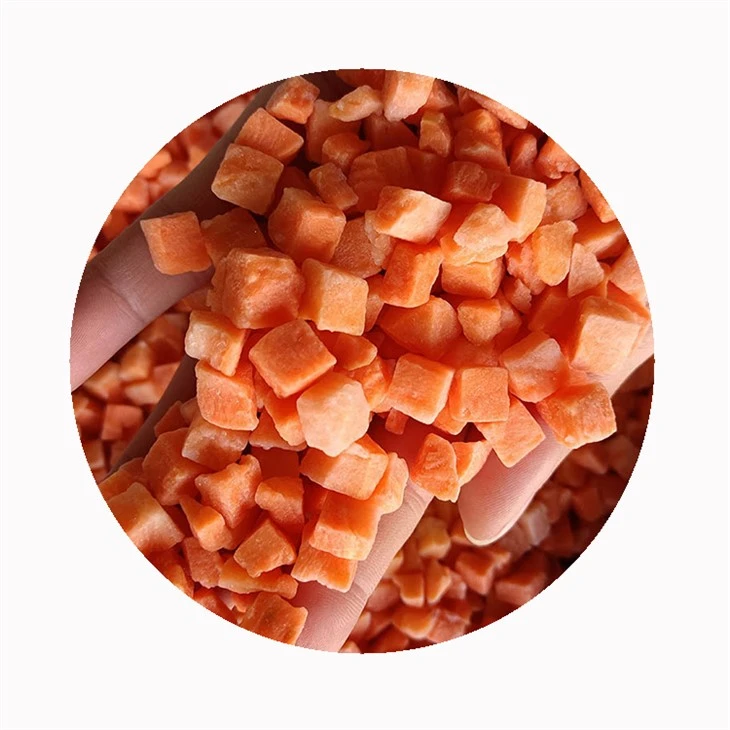
Cut dimensions can support process consistency, but they cannot certify choking safety by themselves. Our current IQF frozen carrot range shows dice, slices, strips and other formats. Your team should test the specified cut after the exact cook method, holding time and serving temperature. A 10 mm nominal dice that stays firm is a different swallowing experience from the same nominal dice cooked until easily mashed.
For a soup, ready meal or puree line, confirm where the carrot enters the process and which thermal step controls hazards. The frozen ingredients for food processing route is relevant when cut distribution, cook performance, weight recovery and dispersion through a batch affect the result. Frozen does not mean sterile, and blanching is not automatically the consumer's final kill step.
Packaging must keep the use instructions and identity readable through distribution. Review the frozen packaging options against bag strength, seal integrity, print space, cooking statement, storage condition, lot code and case traceability. A clean front panel cannot compensate for a missing cook direction or an unreadable code during a recall.

Build Traceability Before You Need It
Traceability earns its value when every case links to an identifiable production lot. Before approval, ask how farm or raw-material identity, processing date, line, finished lot, packaging run and shipment records connect. Confirm who can produce a distribution list, how quickly, and what happens when part of a lot has already been repacked under a customer label.
Worked example: A retail order contains 18,000 bags at 500 grams each, so the finished quantity is 18,000 × 0.5 kg = 9,000 kg. If three production lots share that order, the buyer needs the bag-code and pallet map for each lot; "9,000 kg of frozen carrots" is not enough to isolate one affected lot. This calculation does not estimate risk. It shows why pack-level identity determines how much stock must be held, traced or recalled.
During sample approval, record the product frozen and after preparation. Check cut range, fragments, foreign material, color, odor, texture and cooking performance against written tolerances. Review the food-safety plan and reports against the destination market and intended use rather than accepting a certificate logo as universal proof. If the product is intended for a sensitive population, the customer's hazard analysis and final thermal process must be explicit.

What We Confirm for an XMSD Carrot Inquiry
At XMSD, we keep the boundary clear: a supplier can document the ingredient, but only the finished-product team can validate the final serving. We do not claim that a frozen carrot cut prevents an allergy, makes every child service safe or eliminates every microorganism. We match the available cut and packing route to your application, then confirm the specification points that can actually be measured and documented for the order.
Tell us the destination market, finished product, consumer group, carrot form and nominal size, cook step, bag weight, annual or shipment volume, labeling language, storage condition and document requirements. We can then review available formats and identify where your team still needs a finished-product validation. Use the XMSD inquiry form to send the commercial brief.
If the request is for young-child feeding, dysphagia diets or another clinical population, a frozen ingredient supplier cannot approve the serving texture on your behalf. Your qualified product-development and clinical teams should define and validate the final texture and instructions. We can support the ingredient specification and sample route within that controlled program.
Send the target cut, final cook step, pack size, destination market and expected volume. We will review the available frozen carrot route and the specification points that need confirmation.
Final Thoughts
Can carrots kill you? Not by supplying a lethal vitamin A dose in an ordinary meal. The credible severe risks follow different routes: airway obstruction, anaphylaxis, contaminated or recalled product, botulism from an improperly controlled low-acid product, a toxic wild-plant lookalike, or a high-dose supplement that should never be equated with vegetables.
Use the symptom to choose the response. Inability to breathe, rapidly worsening swelling, collapse or neurological weakness is an emergency. Recall information and lot codes outrank general reassurance. For routine meals, prepare carrots for the eater's chewing and swallowing ability, follow package instructions, keep food handling clean and maintain a varied diet. That is a defensible safety answer without turning a healthy vegetable into either a cure or a harmless-in-every-situation slogan.
References
- NIH Office of Dietary Supplements: Vitamin A and Carotenoids-Health Professional Fact Sheet
- CDC: Choking Hazards for Infants and Young Children
- NHS: How to Stop a Child from Choking
- NHS: What Should I Do If Someone Is Choking?
- American College of Allergy, Asthma & Immunology: Pollen Food Allergy Syndrome
- NHS: Anaphylaxis-Symptoms and Emergency Action
- U.S. FDA: Selecting and Serving Produce Safely
- CDC: 2024 E. coli Outbreak Linked to Organic Carrots
- U.S. FDA: Refrigerated Carrot Juice and Other Refrigerated Low-Acid Juices
- CDC: Symptoms of Botulism
- Poison Control: Can Poison Hemlock Be Deadly?
- Poison Control: Immediate Assistance and First Aid for Poisoning