


Why Pumpkin Is Nutritious: Beta-Carotene Explained
Jan 09, 2020

Pumpkin is valued for its orange flesh and useful nutrients, especially carotenoids that can contribute to vitamin A intake. Its nutritional appeal is real, although promotional labels do not give it a separate nutritional classification. A serving belongs with other everyday vegetables in a varied diet; how you prepare it and what you eat alongside it remain part of the decision.
The most useful part of the story is beta-carotene. Your body can convert this plant pigment into vitamin A, a nutrient involved in normal vision and immune function. A bowl of cooked pumpkin therefore has a nutritional role beyond its color and flavor. It still works best as part of a varied diet rather than as the answer to every nutrition concern.
The clearest distinction is between the pigment and the vitamin. Beta-carotene and vitamin A are related, but their weights are different kinds of information. Orange intensity describes appearance. Eating pumpkin provides a food contribution. Concentrated supplements raise separate questions about dose and need. Keeping those ideas apart makes pumpkin's nutritional strengths easier to appreciate.

What the orange flesh contributes
Cut open a culinary pumpkin and the flesh may range from pale yellow to deep orange. Carotenoids help produce those colors. Beta-carotene belongs to that larger pigment family, whose members have different nutritional activities. So a broad statement about carotenoids and a specific vitamin A figure give different levels of information about the flesh.
The flesh is also a food with texture, moisture and flavor. In a savory dish, its gentle sweetness can contrast with beans, herbs or a tangy dressing. In a mash, it brings body. These ordinary qualities help explain why someone might eat it regularly: a vegetable is useful when it fits the meals people actually enjoy, not only when it earns an impressive description.
The flesh and seeds deserve separate descriptions. A peeled pumpkin cube is not nutritionally interchangeable with a spoonful of seeds, and neither is the same food as an extract. Keep the part you are discussing visible. Otherwise a list can collect favorable facts from several different ingredients and accidentally present them as the benefits of a single serving.
For broader questions about portions and finished recipes, use the measurable food test for pumpkin. Carotenoid units answer a more specific question about its nutritional contribution.

Why beta-carotene and vitamin A use different numbers
Beta-carotene is one dietary starting material for vitamin A. A food composition table may list it separately from the vitamin A column, which is often expressed as retinol activity equivalents, or RAE. The two columns describe the same food from different nutritional perspectives.
The National Academies explains the food conversion used for RAE: 12 micrograms of dietary beta-carotene correspond to 1 microgram RAE. Dietary alpha-carotene and beta-cryptoxanthin use a different factor, 24 to 1. These are nutritional accounting factors, not a promise that every person converts every meal with identical efficiency. Food and supplement forms also have different conversion conventions.
Read the letters after the number. A value in micrograms of beta-carotene cannot be compared directly with a value in micrograms RAE. Nor should an older value in international units be silently treated as RAE. If a chart drops the unit, the resulting number may look precise while no longer saying what was measured or calculated.
You rarely need to do this arithmetic to cook dinner. It becomes useful when two sources appear to disagree. Start with the heading above each number, then locate the description of the food. One source may describe raw cubes while another describes a cooked product. Once those details are clear, you can decide whether the comparison is meaningful or whether you need a better-matched source.
Worked example: checking a carotenoid calculation
Illustrative example: A food educator uses an invented composition exercise to help adults read nutrient units. Its stated portion contains 2,400 micrograms of dietary beta-carotene. Her task is to explain that component's vitamin A activity clearly.
Using the dietary RAE factor, she calculates 2,400 ÷ 12 = 200 micrograms RAE. She labels the result "vitamin A activity from the beta-carotene in this illustrative portion." Adding 2,400 to 200 would be a double-counting error: the exercise starts with the compound's mass and converts it to an activity value. The calculation replaces one expression with another for the stated purpose.
The exercise also includes 1,200 micrograms of dietary alpha-carotene. Its contribution is 1,200 ÷ 24 = 50 micrograms RAE, bringing the two calculated contributions to 250 micrograms RAE. These invented inputs demonstrate arithmetic, rather than declare the composition of a pictured product.
She puts the input, divisor and result on separate lines. That layout makes a common error easier to catch: adding a compound's mass to its already-calculated activity. Learners can retrace the calculation, identify which column they started from, and leave with a usable way to read another food table.
A useful stopping point follows: once the unit is clear, return to the food. You do not need to calculate every carotenoid in your kitchen. A consistent source for the exact food, a realistic portion and a varied eating pattern are more practical than collecting the largest vitamin number from different charts.

Cooking changes the food, not just a nutrient total
Cooking affects both the structure and composition of pumpkin. Some changes make carotenoids easier to release from plant tissue during digestion; others influence how much remains in the food. Researchers distinguish retained content from accessibility because one figure alone gives an incomplete account of those changes.
A study of five biofortified pumpkin genotypes examined brief boiling and steaming and used simulated digestion to investigate carotenoid accessibility. It found substantial carotenoid retention alongside variable accessibility. That result is useful for understanding why retained content alone does not explain uptake. It is not a household absorption percentage, a clinical outcome, or a guarantee for ordinary commercial pumpkin varieties.
For dinner, choose a preparation that makes the pumpkin pleasant to eat. Steam pieces for a tender side, roast them for a drier surface, or cook and mash them for a smooth component. Follow instructions for the particular product.
Consider the texture you need before you heat it. Small pieces can become soft before a large piece is ready; a mash can tolerate breakdown that would spoil a plated side. We put that distinction first when discussing a pumpkin application. A method that looks nutritionally impressive on paper but leaves the intended dish unappealing is unlikely to support a useful everyday habit.
Also separate cooked weight from starting weight. Water added to a mash or lost during roasting changes the denominator of a value per 100 grams. A food comparison should say whether the sample is raw, cooked or drained. At home, this is usually a reason to choose a matching reference entry rather than to calculate a retention factor yourself.

Use fat as part of a meal, not as a carotenoid challenge
Carotenoids are fat-soluble compounds, and the surrounding meal can influence their digestion. An ordinary mixed plate may already include some fat in a dressing, cooking ingredient or another food. Look at that complete plate before deciding whether pumpkin needs a separate oil coating.
Roasted pumpkin with a modest dressing, pumpkin alongside fish, or a pumpkin dish served with tofu and another vegetable can all be considered as complete meals. The quantity of oil still belongs to the recipe. Adding more to chase an assumed absorption benefit can change the flavor, texture and energy contribution without providing a clear personal nutritional advantage.
Keep taste in the discussion. Some people enjoy a creamy pumpkin component; others prefer pieces with lightly browned edges. If a recipe relies on heavy cream or a sweet coating, that is part of the dish's character, not a hidden bonus granted by its carotenoids. You can choose a richer dish knowingly without pretending that the pumpkin cancels the other ingredients.
For someone managing a diagnosed condition that affects fat absorption or following a prescribed diet, general food advice is not enough. Their care team can assess the complete diet and any need for treatment. Ordinary pumpkin recipes should not be used to improvise a supplement or medical nutrition plan.
Practical example: a community cooking demonstration
Representative scenario: A community cook is planning a 30-minute demonstration for adults who want more vegetables in weekday meals. The menu already includes lentils dressed with a small measured amount of oil and lemon, plus a green vegetable. She wants pumpkin to supply a soft orange contrast, and she has a choice between steaming peeled pieces and roasting them with a separate oil coating.
She chooses steaming because the lentils already bring dressing and the short session leaves little time for roasting. Following the pumpkin's preparation instructions, she cooks it to the required tenderness and serves the pieces beside the lentils.
Participants compare the soft pumpkin with the firmer lentils and the green vegetable. They can see three different textures on the plate and decide whether they prefer the pumpkin as pieces or lightly mashed. The cook explains its carotenoid contribution briefly, keeping the demonstration focused on a combination they can prepare again.
For a longer session built around roasted vegetables, she could choose roasting and adjust the dressing instead. Either choice can be useful. The deciding factors are the rest of the menu, available time and the texture the participants enjoy.
This distinction is useful in foodservice and catering applications as well. A menu can teach sound food habits through the meal it serves. Staff need a cooking method, a texture target and a clear description of the ingredient more than a dramatic nutrient slogan.
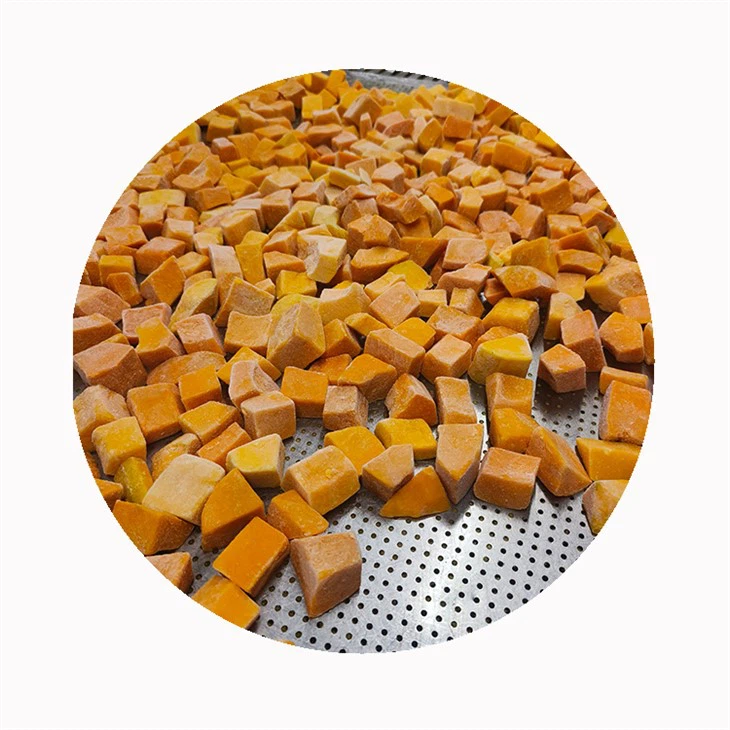
Why a deeper orange is not a vitamin certificate
Color gives you a visible feature to compare, but it cannot supply the missing nutrient unit. Several pigments, the variety, the condition of the cut surface and the way the sample is viewed can influence appearance. A photograph of pale frozen flesh under frost and a photograph of glossy cooked flesh are particularly poor candidates for a numerical nutrition comparison.
We separate appearance from nutrient documentation. When two pumpkin cuts look different, the useful first question is whether that difference affects the finished dish: an orange sauce may need a different visual target from pieces in a vegetable blend. If a buyer also requires a particular declared nutrient value, that becomes a separate evidence question for the named product and market.
A purchase decision can give appearance its proper place. First assess the food under comparable conditions, including lighting and whether the sample is frozen or cooked. Then decide whether the color suits the dish. Keep the nutritional question with the relevant composition information, so neither a photograph nor an attractive description is asked to do the work of a measurement.
For a piece-based application, our frozen pumpkin diced information is a starting point for discussing the food format. We would keep any request for nutrient documentation distinct from the cut, pack and cooking requirements.

Pumpkin is not a substitute for a concentrated supplement
A food and a supplement can share a familiar nutrient name while presenting different decisions. A serving of pumpkin comes with an ordinary food structure and is eaten within a meal. A supplement may deliver a concentrated quantity in a different form. Treating them as interchangeable because both mention beta-carotene skips the questions of dose, formulation and reason for use.
The NIH Office of Dietary Supplements reports that high-dose beta-carotene supplements increased lung-cancer risk in some trials involving smokers or other high-risk groups. That evidence is about the studied supplements and participants. It is not a reason to describe ordinary pumpkin as dangerous, and it is certainly not a reason to recommend a supplement simply because a vegetable contains the same named compound.
Discuss a proposed supplement's exact product, ingredients and dose with a qualified clinician or pharmacist, particularly if you already take medicines or other supplements. A suspected nutrient deficiency also deserves professional assessment.
For everyday meals, the reason to eat pumpkin can stay uncomplicated: you enjoy it, it brings a vegetable you are willing to prepare, and it contributes to the variety of the diet. A nutritional concern and a shopping preference do not have to be resolved through the same decision.
Keep nutrition information connected to the food you buy
When a package provides nutrition information, start with the product name and preparation basis. Plain flesh, a ready-seasoned product and a sweetened filling can look similar in an online photograph. The ingredient list tells you what else is included. Preparation instructions explain the intended kitchen use.
For a supplied frozen ingredient, keep the food's identification available after opening the outer carton. The original inner pack and product information help a kitchen connect the ingredient to its instructions and any declared composition. A loose container described only as orange vegetables makes later questions about the food unnecessarily difficult.
This is one practical reason to consider frozen-food packaging and labeling alongside the recipe. A legible product identity and appropriate handling information help staff use the food consistently. They do not create a nutrient benefit, but they preserve the connection between the ingredient purchased and the ingredient served.
A nutrient fact can be useful without becoming the main purchase criterion. For an ordinary household, affordability, acceptable flavor and a form that will actually be cooked may matter more than a small difference in a reference table. For a business making a precise nutrient declaration, the evidential burden is different. Keep those two decisions separate rather than asking one catchy description to answer both.

Reading a nutrition table without overcomplicating dinner
Begin with the food description in full. "Pumpkin" may be the only word visible in a search result, while the underlying entry specifies boiled, drained, canned or another form. The preparation words are part of the evidence. If you eat a spoonful of a smooth prepared product, an entry for a piece of commercial pumpkin pie answers a different question, even when both contain a vitamin A value.
Next, decide whether you want to compare foods or understand a meal. Comparing composition requires a common weight basis. Understanding a meal requires the portion actually served. A half-plate of one food and a garnish of another can give a misleading impression if their nutrient amounts are compared without noticing the different quantities.
Write down only the information needed for that decision. For a family meal, this might be the food form, approximate portion and the other foods on the plate. A teaching exercise may need the carotenoid column and its unit. A nutrition professional assessing intake may need a fuller food record. Each person can work at an appropriate level of detail rather than treating every meal as a laboratory project.
If a table leaves the unit or preparation basis unclear, choose a better-documented source before using its number. That is a modest information check, not a reason to give up on eating the vegetable. You can still cook pumpkin as an ordinary food while leaving an unsupported numerical comparison aside.
A sensible reason to keep pumpkin on the menu
Pumpkin earns a place on the menu through familiar food qualities. Its carotenoids explain one nutritional strength; its softness, color and gentle flavor explain why it works in many meals. Together, these make it a useful choice alongside other vegetables and the rest of a balanced diet.
The most useful habit is to keep the food name and unit attached to every nutrition number you compare. For meal planning, put more attention into a practical recipe than into finding the biggest carotenoid figure.
Then choose a preparation you like and can repeat. A tender side, a savory mash or a familiar mixed dish is a better everyday reason to buy pumpkin than an elaborate promise about detoxification, disease prevention or perfect absorption. Good food can remain ordinary.
For a frozen pumpkin supply discussion, tell us the dish, required piece format, packaging use and destination. If nutrient documentation is part of the project, include that requirement explicitly. Send XMSD your pumpkin requirements.