


Does Broccoli Make You Fat? Compare Prepared Portions
Jan 09, 2020

Plain broccoli is low in calories and is not a food that uniquely causes weight gain. The more useful question is what comes with it and how much of the prepared dish you eat. Steamed florets, broccoli in cheese sauce and a broccoli-filled pastry may share a vegetable, but their ingredients and portions differ substantially.
The FDA's raw-vegetable table lists 45 calories for a medium broccoli stalk weighing 148 grams. That is a reference for the raw edible vegetable, not a calorie value for any bowl with broccoli in its name. A packaged dish needs its own label; a home-cooked dish needs the ingredients that actually went into it.
If your stomach feels fuller after broccoli, that is a separate question. Digestive gas and the volume of a meal can affect how your abdomen feels without showing that the vegetable has increased body fat. Start by separating the prepared-food portion from the digestive response, then decide what, if anything, needs changing.

Find the food that the number describes
A calorie figure becomes useful only when you know its basis. The broccoli entry in a raw-food table describes broccoli without the sauce, oil, breadcrumbs or other ingredients used in a recipe. A frozen prepared-food label describes a particular product. A restaurant's nutrition information, where available, describes the listed recipe and serving. These are different descriptions, even if each uses a photograph of green florets.
Check the weight beside the figure before comparing two products. One label may show values per 100 grams and another per serving. A larger listed serving can carry more calories while having a lower calorie concentration. Conversely, an attractive number beside a small portion can look misleadingly low when you intend to eat the whole container. Put both products on the same weight basis first; then return to the amount you expect to eat.
Food labels are a tool for understanding a meal, not a test that you must pass. The FDA explains that a labeled serving size reflects amounts people typically consume and is not a recommendation of how much to eat. Your appetite, the rest of the meal and any personal dietary advice still matter. There is no need to make every broccoli portion identical.
A particularly useful distinction is plain broccoli versus broccoli with a formulated sauce. Freezing alone is not the same operation as adding cheese, cream or oil. Look at the product description and ingredient information before treating a sauced bag as interchangeable with a plain bag.
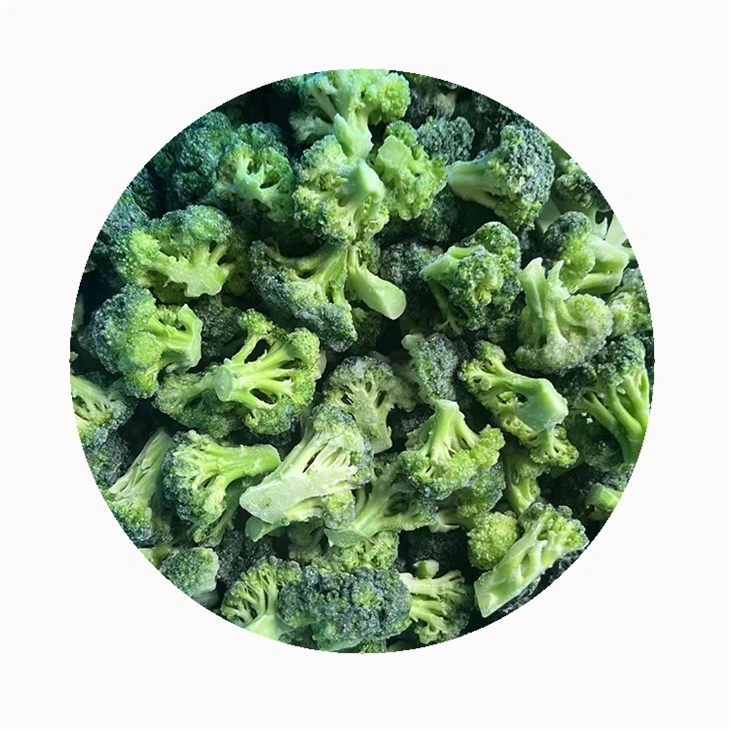
Read the bag as a package, not automatically as one serving
Pack size and eating portion answer different questions. The package tells you what you bought. The serving statement gives the basis used for the nutrition figures. A pouch that is easy to finish may still contain more than one stated serving, while a large bag of plain florets may be intended for several meals.
Preparation instructions introduce another detail. Some products list the contents as sold; others provide values for a specified preparation. If the instructions ask for milk, butter or another addition, establish whether that addition is already included in the displayed calculation. Adding it twice gives an inflated estimate; ignoring it when the table covers only the contents gives an understated one. Use the wording on that particular pack.
At XMSD, we would clarify the supplied food before discussing its eating characteristics: plain florets or a recipe component, the stated pack weight, and the intended preparation. A picture of broccoli supplies none of those answers by itself. Our frozen broccoli product information is a useful starting point for discussing the vegetable format, while a finished meal requires its own recipe information.
For a shared meal, divide the prepared food according to how it is actually served rather than assuming each person takes an equal fraction. You can do this once to understand a familiar dish. Repeatedly measuring every vegetable at dinner is unnecessary for most people and can distract from enjoying a satisfying, varied meal.

Worked example: a sauced bag and two different portions
Consider an invented label for a broccoli-in-sauce product: 90 calories per 100 grams, with 300 grams in the bag. These figures are for demonstrating label arithmetic, not for describing an XMSD product or recommending a portion. Assume the table covers the complete contents as sold and that preparation adds only water.
The whole bag contains approximately 270 calories: 90 multiplied by three. Half the bag, or 150 grams before preparation, contains approximately 135 calories. The vegetable has not changed between those two amounts. The calculation has changed because the amount of the packaged recipe has changed.
Water can change the weight basis without adding calories. Continue with the same invented product and imagine that its 300 grams become 450 grams after preparation with water, with all contents retained. The recipe still contains about 270 calories in total. Dividing 270 by 450 and multiplying by 100 gives approximately 60 calories per 100 grams of the prepared food. The value is now lower per 100 grams because the finished food contains more water, not because cooking removed energy.
This is why the words as sold and as prepared matter. If you eat the entire prepared amount, you have eaten the contents of the whole bag despite the lower figure per 100 grams. If you divide it equally, each half still represents half the bag. The calculation assumes no sauce is discarded and no additional energy-containing ingredient is added; changing either detail changes the recipe being calculated.
Now imagine that two people share the bag alongside potatoes and a protein food. The 135-calorie figure describes an equal half of the broccoli recipe, not either person's complete dinner. It also does not describe the nutrient contribution of the potatoes or protein food. Keeping the components separate avoids blaming broccoli for everything served on the plate.
If one person takes a larger share of the sauce left in the pan, an equal division by weight may only approximate the calorie split. That level of precision is rarely necessary for an ordinary family meal. For formal nutrition information, however, the recipe and portioning method should account for the distribution of the sauce. A rough kitchen estimate and a declared commercial value have different jobs.
Finally, suppose the cooking instructions call for an additional ingredient. Return to the label wording before using the calculation. The example's 270-calorie total applies only under its stated assumption; it should not travel unchanged to a different recipe simply because the bag also weighs 300 grams.

Flavor the broccoli deliberately, without making fat the enemy
Broccoli can be enjoyable with olive oil, cheese, nuts, sesame dressing or a creamy sauce. Those ingredients contribute flavor and may also contribute nutrients. The practical issue is their amount and role in the meal, not a rule that broccoli must always be eaten plain. A modest amount that makes a vegetable appealing may fit a meal better than a large bowl that nobody wants.
Pouring from a bottle is difficult to judge by sight, particularly over branching florets. Oil can collect in the bowl while the crowns still look dry. Dressing may cling to the buds and run off the smooth stems. If the dish repeatedly turns out heavier than intended, measure the added ingredient for the recipe once and observe where it goes. This is recipe learning, not a demand for permanent calorie tracking.
Seasoning can come from several directions. Lemon juice, grated zest, garlic, pepper, herbs and toasted spices contribute different aromas and acidity; they need not imitate the richness of cheese. Choose the flavor you actually want. A sauce that tastes satisfying in a smaller amount may be more successful than diluting a favorite dressing until it becomes watery.
Cooking method also changes texture and water content. A raw-food value per 100 grams should not be applied casually to 100 grams of a roasted mixed dish. The portion may have lost water and gained oil or other ingredients. Work from the recipe or the prepared-food information when you need a meaningful comparison.

Practical example: portioning sauce for a cafeteria side
Imagine a cafeteria developing a broccoli side with a separate sauce. This is a hypothetical preparation exercise, not a report of a customer trial. Its sauce label lists 80 calories per 30 grams. The kitchen wants to compare a 20-gram sauce portion with its existing 30-gram portion while keeping the amount of broccoli the same.
The 20-gram amount contributes about 53 calories, calculated as 80 multiplied by 20 and divided by 30. The 30-gram amount contributes 80 calories. The difference is approximately 27 calories from the sauce per serving. This arithmetic says nothing about a diner's future weight, and it does not include the broccoli or any other part of lunch.
Taste comes next. Compare the complete sides at their normal serving temperature, looking at sauce coverage, flavor and any watery liquid underneath. A portion that works on a freshly drained sample may taste different after the food waits for service.
Our practical preference at XMSD is to settle the broccoli format before adjusting sauce coverage. Large branching pieces and a mixture containing many small buds distribute sauce differently. Even when the weight is unchanged, the surface presented to the dressing can vary. Describe that physical behavior separately from any nutrition claim, and use a portioning utensil that staff can handle consistently.
If 20 grams tastes inadequate, the answer need not be to insist on it. The kitchen might revise flavor intensity, serve sauce separately or retain the larger amount and describe the recipe honestly. For foodservice and catering applications, a repeatable, appealing dish is a more useful goal than an impressive calorie reduction that disappears when diners add extra dressing.

A green ingredient does not describe an entire meal
Broccoli soup, slaw, quiche and stir-fry can all be worthwhile foods. Their names identify an ingredient, not a complete nutrition profile. Soup may be mostly vegetables and stock, or it may contain substantial cream and cheese. Slaw might include cabbage, broccoli stems, dried fruit, seeds and dressing. The amount and combination of those ingredients matter more than the greenness of the photograph.
The same principle works in reverse. A dish with some oil or cheese is not automatically a poor choice. Look at how it fits the meal, whether it provides an amount that satisfies you, and which other foods you are eating. A lunch composed only of a very large quantity of broccoli may still leave you wanting protein, starch or another food afterward.
CDC guidance on fruits, vegetables and weight emphasizes the overall eating pattern and the way foods are prepared. It distinguishes including vegetables within a meal from simply adding more food to everything already being eaten. That is a useful general principle, but it does not supply a personal calorie target or make one particular meal responsible for body weight.
A restaurant meal is sometimes impossible to calculate precisely from appearance. Ask for available nutrition information if you need it, or make a straightforward choice about portion and accompaniments. Treat an unknown amount of sauce as unknown rather than inventing an exact number. Precision on paper is not the same as accuracy.

Feeling bloated after broccoli is a different issue
Broccoli is a cruciferous vegetable. Some of its carbohydrates can reach the large intestine, where bacterial breakdown produces gas. NIDDK includes cruciferous vegetables among foods that may increase gas for some people. The experience varies: one person enjoys a generous portion comfortably, while another feels better with a smaller amount.
Bloating is a feeling of fullness or swelling in the abdomen; visible distention can accompany it, but the two are not identical. Neither is a measurement of body fat. A tight waistband after dinner is therefore a poor basis for deciding that broccoli is a fattening food. The size of the meal, swallowed air and individual digestive responses can all complicate that impression.
If discomfort occurs repeatedly, pay attention to the whole dish and the circumstances. Was it an unusually large portion? Was broccoli eaten quickly? Did the meal include other foods that commonly bother you? A smaller serving or a different preparation may be easier to tolerate, but cooking is not a guarantee that all gas-producing effects disappear.
Avoid turning one uncomfortable meal into a long list of prohibited vegetables. Persistent or troublesome symptoms deserve advice from a healthcare professional, especially with pain, a sudden change in symptoms, constipation, diarrhea or unintended weight loss. That is a digestive-health question, not a reason to compensate by skipping the next meal.
Compare plain and prepared broccoli when shopping
For a quick comparison in the freezer aisle, begin with whether the product is plain or includes a sauce or seasoning mixture. Then check the nutrition basis and preparation wording. Price, pack size and convenience may also matter, but keep them distinct from the nutrition comparison. A smaller bag is not necessarily a smaller eating portion, and a larger bag can be used across several meals.
If you regularly cook for one person, packaging that lets you take the needed amount and return the rest to appropriate frozen storage can be convenient. Follow the storage and handling instructions for the product. A large pack may offer flexibility, but only if it is practical to handle without repeatedly warming its contents.
The frozen-food packaging considerations relevant to a supplier discussion include pack format and how it will be used. They do not prove that a product is suitable for weight loss. Keep logistical decisions separate from health promises: a resealable format helps access, while the ingredients and amount eaten determine what the portion contains.
For a prepared meal, retain the packaging until you understand the directions and portion information. Once broccoli has been tipped into an unmarked container, it is easy to forget whether the stated values included its sauce or an added ingredient. A brief look at the original label is more reliable than assigning the finished dish the calorie value of raw broccoli.
Common questions about broccoli and weight
Can I use the same cup measure for florets and finely chopped broccoli? A cup describes volume, and different cuts pack into that space differently. If a label supplies a gram weight as well as a household measure, use the weight for a like-for-like calculation. Loosely branching florets leave spaces that finely chopped pieces can fill.
Do I need to separate stems from crowns for an ordinary meal estimate? Use nutrition information that matches the edible product you are actually eating. You need not dissect each floret at dinner. For a commercial recipe containing unusually large amounts of trimmed stem or another defined component, use an appropriate ingredient specification rather than assuming a photograph establishes the composition.
What if some sauce stays in the pan? Then you have not eaten exactly the complete recipe, but the amount of energy left behind is difficult to judge by looking at it. Some residue may be mostly water and some richer sauce. For everyday eating, accept that an estimate is approximate; for formal portion information, define a consistent serving method.
Can broccoli fit a late dinner? Yes. Timing does not change the vegetable's composition. Choose an amount that is comfortable alongside the other foods in the meal. Our explanation of broccoli and weight-related food choices provides the broader background; there is no requirement to serve broccoli alone.
Must I calculate calories whenever I eat vegetables? Usually not. The arithmetic is most useful when a package is confusing or a prepared dish is repeatedly misjudged. Once you understand that familiar meal, you can return your attention to taste, appetite, variety and eating comfortably.
For a broccoli ingredient discussion, tell us whether you need a plain side, a sauce-coated component or a mixed prepared meal, together with the intended floret size and pack format. Contact XMSD with your preparation requirements so we can review the relevant product details. Nutrition information for a finished dish should be based on its actual recipe and portion.