


Why Is Dragon Fruit So Expensive? Frozen Buyer Cost Guide
Jul 25, 2019

Dragon fruit is not always expensive at the farm gate, and no single price describes every market. The high price a buyer sees may come from limited local supply, flesh type, season, off-season production, fresh-fruit losses, hand sorting, peel and trimming yield, freezing or pureeing, pack format, cold storage, freight, order size and the commercial term used in the quote. A rare yellow fruit flown to a distant retail market and a full-container frozen white-flesh puree are different products with different cost structures.
For B2B buying, replace "Why is it expensive?" with three measurable questions: what exact product is being quoted, how much usable finished material does one kilogram deliver, and which costs and risks are included before the product reaches your plant. A low headline price can become expensive after peel loss, drip, rejected color, small packs and temperature damage. A higher quoted price can be economical when form, yield, documentation and delivery performance match the application.
Direct answer: Dragon fruit can carry a premium because the quoted product may combine a less common variety or flesh color, seasonal supply, edible-yield loss, labor-intensive preparation, rapid frozen processing, protective packing and long-distance cold chain. Compare price per usable kilogram at the same specification and Incoterm-not price per kilogram in an unmatched listing.

First Define the Dragon Fruit You Are Pricing
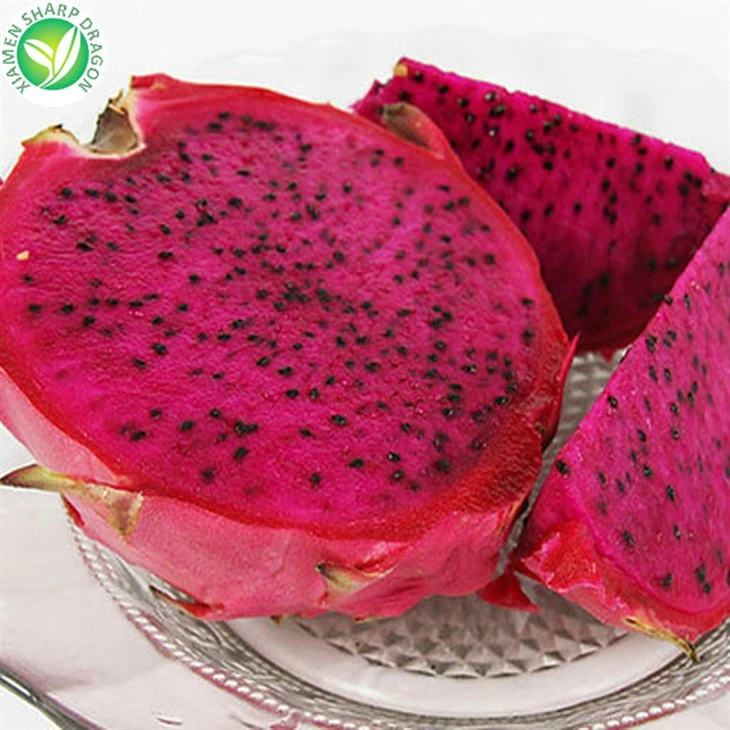
Dragon fruit, pitaya and pitahaya are market names used across multiple types. White flesh with red skin, red or magenta flesh, and yellow-skin fruit can differ in supply base, appearance, flavor, yield and demand. The already published dragon fruit and pitaya identity guide explains the naming issue. For a quote, a common name is not enough; state flesh type, peel status, color target and botanical or commercial type when it changes the requirement.
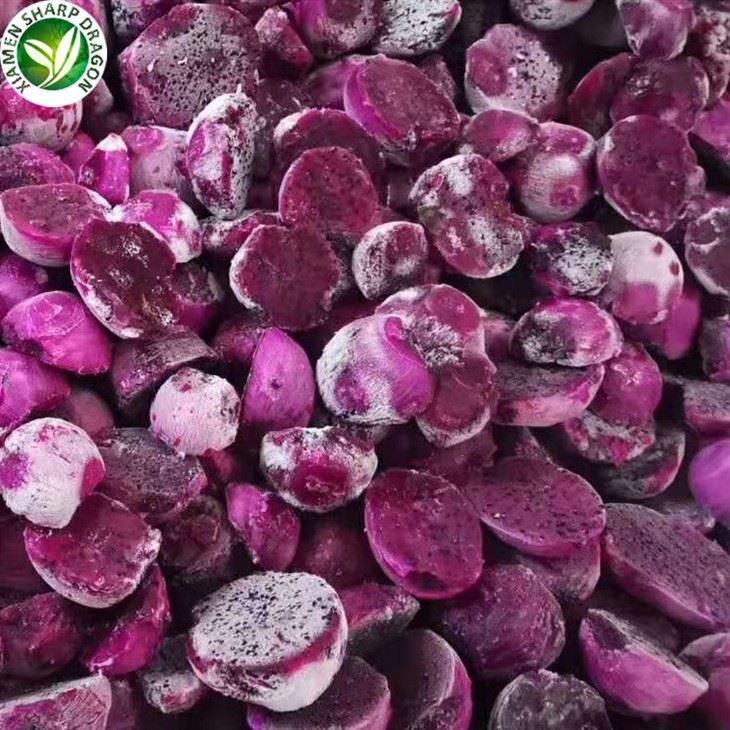
Then define form. Fresh whole fruit contains peel and creates preparation loss. Frozen supply may be whole, peeled half, slice, dice, chunk, pulp with seed or puree. A 10 kg carton of peeled IQF dice is not comparable with 10 kg of whole fresh fruit because the first price includes raw-fruit selection, peel removal, cutting, freezing and packing. Puree in a drum has different handling and freight efficiency from retail bags of attractive cubes.
Color can be an economic function, not only a visual preference. A beverage using red flesh for natural magenta appearance may accept softer pulp but require a minimum color grade. A fruit salad may need intact dice and a narrow size tolerance. A white smoothie base may not benefit from paying for red flesh. The least expensive product name is irrelevant if its flesh color, form or texture cannot perform the job.

Season, Origin and Supply Volatility Change the Starting Cost
Dragon fruit supply varies by origin, production system, weather and season. A Vietnam supply-chain study describes distinct main-season and off-season production, with lighting used to stimulate flowering during the dry-season period. It also reports that prices can change with season, demand and supply-chain conditions. That evidence supports a variable price model; it does not justify copying one historical farm price into a current international quotation.
The same research identifies weather sensitivity, information gaps, multiple intermediaries, postharvest storage and transport as sources of uncertainty. A Wageningen roadmap similarly identifies yield gaps, disease and weather pressure, labor-intensive sorting and packing, bruising, limited cold-chain capability and high losses as supply-chain weaknesses. These factors affect how much sound fruit reaches the processor and what contingency a supplier needs when promising delivery.
Main-season abundance can lower raw-material pressure, but the lowest raw-fruit window is not automatically the best purchase. Heavy rain may change defect risk; oversupply may stretch handling capacity; a processor may already have committed its preferred color grade; and shipping space can move independently from farm supply. Ask for crop window, production plan and quotation validity rather than assuming "in season" means unlimited finished inventory.
Practical example: Same fruit name, different supply risk
A buyer compares an in-season white-flesh puree with a red-flesh IQF dice booked for an off-season retail launch. The puree can absorb cosmetic variation and ship in drums; the dice must meet color, size and piece-integrity limits in small packs. A higher dice quote is not evidence of overpricing until the buyer compares variety, timing, usable form, tolerance, pack and committed delivery.
Edible Yield Converts Farm Price into Ingredient Cost
Whole-fruit price includes peel and any fruit later removed for decay, bruising, poor maturity, unacceptable flesh color or cutting defects. The processor also loses weight through trimming and may separate pieces that do not meet a premium dice grade. There is no universal edible-yield percentage for every type and specification. It must be measured on representative raw material using the agreed finished form.
Use a simple conversion: raw-fruit cost per usable kilogram equals raw price per kilogram divided by finished usable yield as a decimal. If a strict red-dice specification gives less acceptable output, the raw component of each usable kilogram rises even before labor, freezing and packaging. A puree program may recover sound irregular flesh that a visible dice program rejects, so its yield and unit economics can be different.
Worked example: Suppose raw fruit costs an illustrative USD 1.20/kg and the measured finished yield for acceptable peeled dice is 65%. Raw fruit then contributes USD 1.20 ÷ 0.65 = USD 1.85 per usable kilogram after rounding. Add illustrative processing/freezing of USD 0.35, packaging of USD 0.18, cold storage and inland handling of USD 0.22, and freight/duty/clearance of USD 0.45. The modeled landed cost is USD 3.05/kg: 1.85 + 0.35 + 0.18 + 0.22 + 0.45. These are teaching inputs, not a current XMSD quotation; replace every figure with supplier and route evidence.
Now test sensitivity. If usable yield falls from 65% to 55% while raw price remains USD 1.20/kg, the raw component becomes USD 2.18/kg. That USD 0.33/kg change occurs before other costs. A quotation that is USD 0.20/kg lower but produces ten percentage points less acceptable yield can cost more in the finished recipe. This is why a sample yield trial belongs beside the price sheet.
Processing Adds Cost but Can Remove Buyer Work
Frozen dragon fruit requires raw-fruit receipt, sorting, cleaning, peeling or pulping, cutting where applicable, freezing, inspection, packing and frozen storage. Energy, labor, sanitation, water, equipment use, quality checks and rejected material all enter the finished cost. Rapid freezing and protected storage do not create quality that was absent in raw fruit; they preserve the selected form and extend the useful supply window.
You may save work in return. Peeled dice removes fresh-fruit receiving, ripening, peel waste and hand cutting at the point of use. Puree removes piece-yield concerns and can simplify beverage dosing. IQF pieces can be weighed without thawing an entire block when they remain free-flowing. Compare total conversion cost, waste disposal, labor, line capacity and inventory risk-not ingredient invoice alone.
Processing choice also creates performance trade-offs. Frozen and thawed pieces are normally softer than fresh-cut fruit. Smaller dice presents more cut surface and can release color and moisture more quickly. Block puree may be efficient for a large batch but inconvenient for a small production run. The XMSD frozen dragon fruit range provides current form and packing references. In the RFQ, identify the unknown cut, color grade, pack or treatment that would change yield, label or line performance, then close it with a sample, specification or ingredient statement before price approval.

Packing and Cold Chain Can Dominate a Small Order
A bulk liner in a strong carton, a retail-printed pouch, a 3 kg block and a 200 kg drum distribute packaging and handling cost differently. Small packs use more film, labels, seals and case handling per kilogram. Private-label printing can require artwork, plates, minimum film quantities, compliance review and unused-material planning. A low product price with an unsuitable pack may create more cost than a correctly sized pack.
Use the amount opened per production run to choose inner pack. A beverage plant consuming hundreds of kilograms can use blocks or drums efficiently. A café opening only a few kilograms may reduce thawed waste with smaller bags. The frozen packaging overview helps structure inner bag, carton, label and pallet decisions, while the signed specification must identify exact materials and pack weights.
Frozen distribution requires temperature-controlled storage, loading, transport and receiving. Freight varies with origin, destination, season, equipment availability, fuel, route and trade term. Less-than-container quantities can carry higher handling cost per kilogram and more transfer risk. A full-container FOB price, a delivered-duty-paid trial pallet and a domestic retail price must never be placed in one comparison column without normalizing what is included.

Normalize Every Quote Before Choosing a Supplier
Put each quote on one product and commercial basis. Record flesh type, form, cut, size tolerance, grade, color requirement, Brix or soluble-solids basis if relevant, ingredient statement, pack, net weight, order volume, production window, Incoterm, loading port, destination, payment term and quotation validity. Write down which tests, certificates, inspection, pallet, freight, duty and insurance are included.
Then add usable yield and application performance. For dice, measure acceptable piece ratio, broken material, drip after the defined thaw, color transfer, seed distribution and deposited weight. For puree, measure Brix, acidity if specified, viscosity or consistency, seed condition, color, thaw behavior and batch yield. A specification that merely says "Grade A frozen dragon fruit" is too vague to support a defensible price comparison.
Check the time basis of the offer. Raw-material commitments, ocean freight and currency can change while a project moves from sample to artwork approval. Record quote date, expiry date, currency, payment schedule, quantity window and the event that allows repricing. If one offer requires a large deposit months before shipment while another is paid closer to loading, the financing exposure is different even at the same unit price. Ask the commercial team to calculate cash tied up from deposit to sale, not merely the nominal payment term.
Add failure cost explicitly. A rejected container can create survey, storage, demurrage, replacement production, disposal, line stoppage and customer-service expense. Define inspection timing, claims notice, evidence required, rework options and responsibility for an out-of-spec lot. Do not invent a probability to make a spreadsheet look precise. Use your own receipt history or scenario ranges, then test whether a small unit-price saving is large enough to absorb a plausible failure event.
| Quote field | Why it changes cost | Evidence to request |
|---|---|---|
| Flesh type and color grade | Changes availability, demand and acceptable yield | Representative sample, color method and tolerance |
| Form and cut | Changes labor, freezing, broken rate and application yield | Cut definition, size distribution and defect photos |
| Pack and volume | Changes material, handling and freight efficiency | Pack drawing, case dimensions, pallet and load plan |
| Incoterm and route | Changes included logistics, risk transfer and landed cost | Named place, route, freight validity and included charges |
| Safety and documents | Changes testing, release, destination compliance and risk | Facility scope, lot COA, traceability and agreed records |
Practical example: Supplier A quotes USD 2.80/kg for mixed-size dice with 78% usable pieces in the buyer's application. Supplier B quotes USD 3.10/kg with 94% usable pieces. Ignoring all other differences, usable-product cost is USD 3.59/kg for A (2.80 ÷ 0.78) and USD 3.30/kg for B (3.10 ÷ 0.94). The higher invoice price produces the lower ingredient cost. A real decision must still add freight, pack, documents and failure risk.

How to Reduce Cost Without Buying the Wrong Product
Begin with the application, then relax only requirements that do not create value. A blended beverage may not need whole-looking premium dice. A visible topping may need piece integrity but not a narrow Brix range. A sauce may accept puree or sound broken material. Matching form to use can improve yield without disguising defects or weakening food-safety controls.
Plan volume and timing. Consolidating an order can improve freight and packaging efficiency, but buying more than the operation can rotate safely adds inventory and cash cost. Booking within an appropriate crop and production window may reduce supply pressure, while a blanket demand for immediate off-season delivery narrows options. The importer and global buyer solution outlines the information needed to compare destination, quantity, documents and shipment plan.
Approve a representative sample against a written method before committing volume. Record frozen appearance, thaw protocol, time, temperature, usable yield, color, flavor, texture, drip and recipe result. A low-cost sample tested differently from production tells you little. Require production lots to use the same definitions and retain enough records to investigate variation.
Set a decision threshold before quotations arrive. For example, state the maximum landed cost per usable kilogram, minimum acceptable dice yield, maximum broken-piece ratio and latest delivery date. If one offer misses a non-negotiable threshold, do not hide the failure inside a weighted score. If two offers pass, compare total cost and evidence strength. This prevents a visually attractive sample or a small price difference from overriding the requirement that actually determines profitability.
XMSD sourcing note: Send us flesh type, form, cut, color target, application, annual and trial volume, pack, destination, Incoterm and required documents. We can review a comparable frozen-dragon-fruit specification and sample plan before discussing a current order price.
Frequently Asked Questions
Is red dragon fruit always more expensive than white dragon fruit?
Not always. The result depends on origin, season, grade, demand, crop availability, form and order conditions. Red flesh may carry a premium when natural color is scarce or highly valued, but compare current like-for-like quotes rather than treating color as a permanent price rule.
Can frozen dragon fruit cost less overall than fresh fruit?
The invoice price may be higher because frozen product includes preparation, freezing, packing and cold chain. It can still lower total cost by reducing peel waste, ripening loss, cutting labor and seasonal inconsistency. Compare cost per usable kilogram in the actual recipe.
Why do online dragon fruit prices differ so much?
Listings may show different varieties, forms, grades, quantities, packs, origins, currencies and delivery terms. Some exclude freight and duty; others are retail delivered prices. Normalize specification, unit, Incoterm, named place, date and included charges before comparing.
What information is needed for an accurate frozen dragon fruit quote?
Provide flesh type, product form, cut and size, color or grade, ingredient requirement, pack, quantity, destination, delivery term, required arrival date, application and document list. A quote without these inputs is a rough lead, not a comparable commercial offer.
Final Decision
Dragon fruit can appear expensive because buyers often compare unlike products or see the final cost after a fragile seasonal fruit has passed through selection, trimming, processing, packing and long-distance logistics. The market is not permanently high or low. Price changes with crop conditions, product definition, usable yield and the responsibility included in the quote.
Make the decision from a normalized cost model: exact fruit and form, raw-to-finished yield, processing, packaging, cold chain, freight, duty, application yield and failure risk. Verify those inputs with a representative sample, current quotation and written specification. That is more useful than asking whether dragon fruit is expensive in the abstract.
References
- Optimization Model for Fresh Fruit Supply Chains: Case Study of Dragon Fruit in Vietnam
- Stochastic Modelling Frameworks for Dragon Fruit Supply Chains under Uncertain Factors
- Wageningen University & Research: Dragon Fruit Post-Harvest Loss Reduction Roadmap
- XMSD operational experience in frozen-fruit specification, yield trials, processing, packaging, cold-chain review and export quotation coordination.