


Why Eat Frozen Fruit?
Dec 05, 2019

Frozen fruit is worth eating because it makes fruit available in a convenient, portionable form throughout the year. A bag of plain frozen berries, mango, peach, or another fruit can go directly into smoothies, cooked sauces, bakery fillings, yogurt preparations, and many foodservice recipes. The unused portion stays frozen, so there is less pressure to finish an entire fresh pack before it softens or spoils.
Nutrition is another good reason, but the comparison needs care. Frozen fruit is not automatically more nutritious than all fresh fruit, and freezing does not preserve every nutrient perfectly. Research on selected fruits and vegetables shows that many measured vitamins can remain broadly comparable across fresh, refrigerated-stored, and frozen forms. The result still depends on the fruit, harvest condition, processing steps, storage time, temperature stability, and the nutrient being measured.
Quick answer: Choose plain frozen fruit when you want year-round access, quick preparation, portion control, and less household or kitchen waste. Treat it as a practical alternative to fresh fruit, not as a guaranteed nutritional upgrade. Check the ingredient list so that whole or cut fruit is not confused with fruit in syrup, a sweetened purée, or a frozen dessert.

Is Frozen Fruit More Nutritious Than Fresh Fruit?
There is no single answer for every fruit and every nutrient. Fresh fruit eaten soon after harvest may offer excellent flavor, texture, and nutrient quality. Fresh fruit that spends days in distribution and refrigerated storage may lose some sensitive nutrients over time. Frozen fruit can preserve much of the nutritional value present when it is processed, but it can also experience losses from washing, cutting, pretreatment, freezing, storage, or thawing.
A two-year study published in the Journal of Food Composition and Analysis measured vitamin C, beta-carotene, and folate in selected produce, including blueberries and strawberries. Most comparisons found no significant differences among fresh, fresh-stored, and frozen samples. That finding supports nutritional comparability for the foods and nutrients tested; it does not prove that every frozen fruit is equal to or better than every fresh one.
A separate study of eight fruits and vegetables also found that frozen vitamin content was generally comparable and occasionally higher than refrigerated fresh samples, while beta-carotene fell sharply in some commodities. Taken together, the useful lesson is variation: the fruit, nutrient, handling history, and comparison point all matter. A package claim or broad slogan cannot replace product-specific data.

What Freezing Preserves-and What Can Still Change
Freezing slows the chemical and microbial activity that causes rapid deterioration, which helps extend usable life. It does not stop every quality reaction, and it is not a sterilization step. Stable low-temperature storage, a suitable moisture and oxygen barrier, and limited exposure during portioning all influence the product that reaches the plate or production line.
Vitamin C is often studied because it is sensitive to oxygen, heat, and storage. The body needs it for collagen synthesis, antioxidant functions, immune function, and absorption of nonheme iron. That makes retention relevant, but vitamin C is only one part of fruit's nutritional contribution. Whole and cut fruit also provide water, carbohydrates, and dietary fiber, along with fruit-specific vitamins and plant compounds.
Dietary fiber adds bulk to the diet and supports normal digestion and satiety. Freezing the edible fruit does not remove the fiber in the way that straining juice can, although blending or puréeing changes the physical structure and may make a product easier to consume quickly. The practical distinction is therefore not only fresh versus frozen. It is also whole or cut fruit versus juice, strained purée, syrup-packed fruit, and prepared dessert.
| Fruit form | Main strength | What varies | Best decision rule |
|---|---|---|---|
| Fresh, eaten soon after harvest | Fresh texture and aroma with little storage time | Season, ripeness, variety, and handling | Use when raw texture and fresh presentation are essential |
| Refrigerated-stored fresh | Still suitable for raw use when condition remains good | Distribution time, temperature, moisture loss, and damage | Judge actual condition rather than the word "fresh" alone |
| Plain frozen whole or cut fruit | Convenient portions, long usable life, and often comparable nutrients | Texture after thawing, drip, clumping, and nutrient-specific retention | Match the cut and thaw behavior to the recipe |
| Sweetened, syrup-packed, or dessert product | Designed flavor, sweetness, or ready-to-use functionality | Added sugar, solids, stabilizers, serving size, and intended use | Read the ingredient list and nutrition information; do not treat it as plain fruit |
The Practical Reasons People Choose Frozen Fruit
Year-round access is the first advantage. Freezing separates use from a short local harvest window. That makes berries, tropical fruit, stone fruit, and other seasonal items easier to keep in regular recipes. Availability is still affected by crop and supply conditions, but the frozen format supports planning across a longer period than highly perishable fresh stock.
Preparation is faster. Commercial frozen fruit may already be washed, sorted, peeled, cored, pitted, or cut as appropriate for the product. The user can remove a measured portion and return the rest to frozen storage. For a restaurant or processor, that can reduce trimming labor and create a more repeatable input. For a household, it can turn fruit into a practical weekday ingredient rather than an item that needs immediate preparation.
Waste can be easier to control. Loose-frozen pieces allow the required amount to be used while the remainder stays protected. This does not mean frozen fruit is always lower in cost: price depends on species, origin, grade, season, cut, pack size, transport, and market. The better comparison is usable cost per portion or per finished recipe, including trimming, spoilage, labor, and yield.

Choose the Product Form for the Way You Will Use It
Whole berries and larger pieces retain visible fruit identity, but they take longer to temper and may release liquid as they thaw. Dice and slices shorten preparation and distribute more evenly through cereal, yogurt, bakery batter, or a filling. A good individually quick frozen product should remain reasonably free-flowing when the pack has been stored correctly, making portion control easier than with a solid block.
Smoothies can usually accept fruit directly from frozen, which contributes cooling and thickness. Balance the formula rather than assuming more fruit always produces a better drink: liquid level, seed load, acidity, sweetness, and serving size all influence the result. In baking or cooked sauce, account for water released during heating. Adding frozen pieces directly may reduce color bleed in some recipes, while controlled thawing and draining may be better for others.

Plain Frozen Fruit Is Not the Same as Frozen Fruit Dessert
For the simplest option, look for a single fruit in the ingredient list with no added sugar. A blend of several unsweetened fruits can also be straightforward. If the pack contains sugar, syrup, juice concentrate, sweetened purée, stabilizers, or flavoring, evaluate the complete product instead of relying on the fruit image on the front.
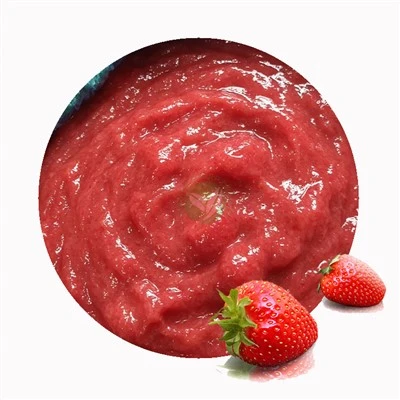
Purée is not automatically a poor choice. It is a functional ingredient for beverages, sauces, desserts, bakery fillings, dairy products, and baby-food formulations, depending on the recipe and regulatory requirements. The important questions are whether the purée is strained, concentrated, or sweetened; how its soluble solids, acidity, seeds, and viscosity are specified; and how much is used. Those details determine performance and nutritional context more accurately than the word "frozen."
Handle Frozen Fruit as Food, Not as a Sterile Ingredient
Freezing preserves fruit, but it generally does not inactivate viruses and does not kill all bacteria. Frozen berries have been associated with foodborne illness outbreaks, which is why sourcing, hygienic processing, traceability, testing programs, and preparation instructions matter. Keep packs closed and frozen, prevent contact with raw meat or contaminated utensils, and thaw in the refrigerator when a recipe requires thawing.
Safety note: Follow the package directions and any relevant public-health notice or recall. If a product is labeled for cooking, use the stated time and temperature rather than treating it as ready to eat. People preparing food for a high-risk group should follow their local public-health advice for the specific fruit and product.
Large ice crystals, clumps, frost, or freezer burn are mainly quality clues. They can indicate moisture movement, poor sealing, slow freezing, or temperature fluctuation, but they do not by themselves establish that a product is unsafe. A torn pack, signs of uncontrolled thawing, abnormal odor after safe thawing, contamination, or incomplete traceability requires a separate safety and acceptance decision.

What Foodservice and Processing Buyers Should Check
A commercial buyer needs more than the general statement that frozen fruit is healthy. The starting point is the intended application and a written specification. Our frozen fruit range shows available fruit and format directions, while our frozen packaging overview helps frame the packing discussion. The approved sample and transaction documents should define what will actually be supplied.
Define the fruit, form, and ingredient deck
Specify species or variety where relevant, origin requirements, maturity or color range, whole-piece or cut style, nominal size and tolerance, acceptable broken pieces, foreign-material controls, and whether added sugar or processing aids are allowed. For purée, define the parameters that matter to the recipe, such as seeds, pulp, soluble solids, acidity, or viscosity, with agreed methods and limits. Do not assume that every fruit is harvested at the same maturity simply because it will be frozen.
Test the sample in the finished application
Run the fruit through the real recipe, equipment, holding period, and serving condition. A smoothie producer may track color, flavor, seed perception, viscosity, and blend time. A baker may care about thaw drip, piece identity, color bleed, water release, and distribution through the dough. A dairy or topping buyer may focus on acidity, fruit integrity, syneresis, and appearance after chilled holding. Record measurable acceptance limits and keep an approved reference, rather than approving a photograph or the word "premium."
Connect packaging and cold chain to usable yield
Choose an inner-pack size that fits the consumption rate and dosing practice. Repeatedly opening a large bag can increase moisture exposure and clumping. Check seal integrity, material suitability, carton strength, labels, lot coding, pallet pattern, frozen transport conditions, and arrival checks. The final pack must be confirmed for the fruit, destination market, and distribution route.
Request a product specification, ingredient declaration, traceability information, current relevant certificates, and test documentation appropriate to the market and risk assessment. Agree on sampling and acceptance procedures before shipment. The commercial value of frozen fruit is not only its purchase price; it is the consistent usable yield and finished-product performance that remain after storage, preparation, and processing.

The Bottom Line
Eat frozen fruit because it can make fruit easier to keep, portion, and use throughout the year. Plain whole or cut fruit can retain meaningful nutritional value and often compares well with refrigerated fresh fruit, but neither form wins every comparison. Freshness history, processing, product form, storage, and the nutrient or quality attribute being measured all influence the answer.
For everyday use, choose the form that fits the recipe and check for added ingredients. For commercial sourcing, convert "frozen fruit" into measurable requirements for fruit identity, cut, defects, ingredients, application behavior, packing, documents, and cold-chain condition. That approach protects both nutritional credibility and practical performance.
Need frozen fruit for retail, foodservice, beverages, bakery, dairy, or processing? Send the fruit, cut or purée format, application, ingredient requirements, pack preference, destination market, and estimated volume. We can discuss a relevant sample and specification for your use.
References
- Journal of Food Composition and Analysis: Selected Nutrient Analyses of Fresh, Fresh-Stored, and Frozen Fruits and Vegetables
- Journal of Agricultural and Food Chemistry: Vitamin Retention in Eight Fruits and Vegetables
- NIH Office of Dietary Supplements: Vitamin C Fact Sheet for Health Professionals
- MedlinePlus: Dietary Fiber
- U.S. Food and Drug Administration: FDA Works to Enhance the Safety of Berries
- U.S. Food and Drug Administration: Are You Storing Food Safely?
- Office of Disease Prevention and Health Promotion: Current Dietary Guidelines for Americans