


What Are the Benefits of Eating Mixed Bell Peppers?
Feb 15, 2019

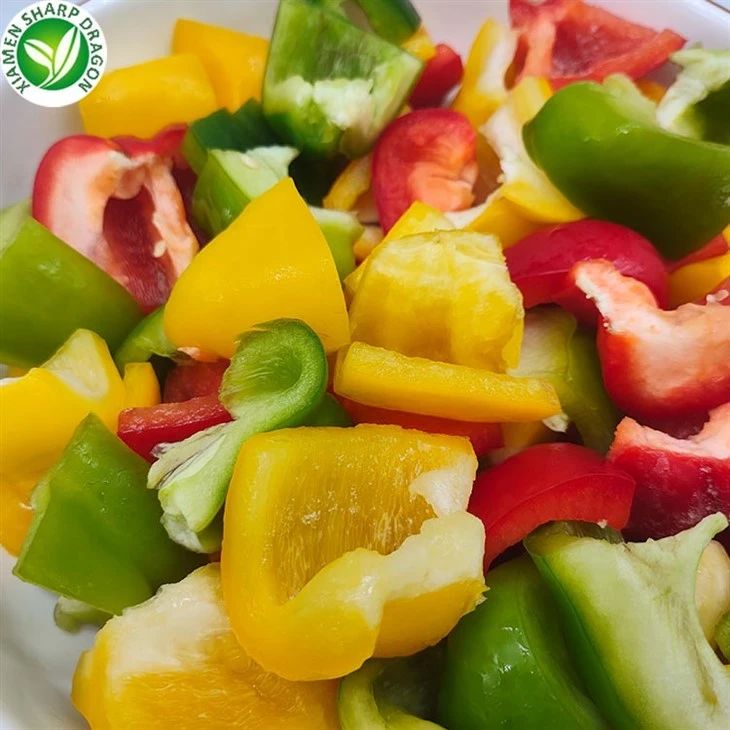
Mixed bell peppers combine green, yellow, red, and sometimes orange sweet peppers in one dish. Their practical value is straightforward: they add vegetables, vitamin C, dietary fiber, contrasting flavors, and a range of naturally occurring pigments without adding much energy when they are served plain.
The short answer: Eating mixed bell peppers can help diversify vegetable intake and provide vitamin C, fiber, potassium, and color-dependent carotenoids. The benefits come from their place in an overall balanced diet; peppers do not cure disease, guarantee better digestion, or make an otherwise unbalanced dish healthy.

1. They Add Vitamin C Without Many Calories
The U.S. Food and Drug Administration lists one medium raw bell pepper, an edible portion of 148 grams, at 25 calories, with 2 grams of dietary fiber and 220 milligrams of potassium. The same FDA table identifies bell pepper as a notable source of vitamin C. Exact values differ by color, cultivar, maturity, portion, and processing, so a mixed serving should not be assigned one universal nutrition number.
Vitamin C has established roles in collagen formation, antioxidant function, immune function, and absorption of nonheme iron from plant foods. This supports a realistic benefit: bell peppers can contribute useful vitamin C as part of meals built around grains, beans, vegetables, and other foods. It does not mean that eating peppers prevents infections or treats a medical condition.
2. Different Colors Bring Useful Variety
Green peppers are generally harvested at an earlier maturity stage, while yellow, orange, and red peppers are more mature forms depending on the cultivar. As peppers mature, their sweetness, aroma, and pigment profile change. A study of several Capsicum cultivars found that ascorbic acid and carotenoid concentrations generally increased with maturity, but the amount varied substantially among pepper types.
That makes a mixed-color serving useful for variety, not because every color delivers the same compounds or because one color is always superior. Red peppers contain prominent red carotenoid pigments, while yellow and orange peppers have different carotenoid patterns and green peppers retain more chlorophyll. Choosing a mixture broadens flavor and color, which may also make vegetable dishes more appealing.
What color tells you: Color is a practical clue to maturity, flavor, and pigment composition. It is not a complete measure of nutritional quality, and nutrient content still varies with cultivar, growing conditions, storage, and cooking.

3. Fiber and Vegetable Volume Support a Balanced Meal
Bell peppers contribute dietary fiber and water-rich vegetable volume. Adding them to rice, pasta, omelets, beans, soups, or stir-fries can increase the vegetable share of a meal. This is most useful when peppers replace part of a more energy-dense ingredient or add variety without a large amount of oil, cheese, cream, or sugary sauce.
Fiber is one reason vegetables matter in an overall eating pattern, but it is inaccurate to promise that peppers will stimulate the stomach or automatically improve digestion. Individual tolerance varies. Portion size, whether the peppers are raw or cooked, and the rest of the meal can all affect comfort.
Broader public-health guidance associates diets rich in vegetables and fruits with health benefits. That evidence applies to the complete dietary pattern, not to mixed peppers as a standalone treatment. The most defensible goal is regular variety across vegetables, rather than relying on one ingredient.
4. Fresh and Frozen Peppers Serve Different Needs
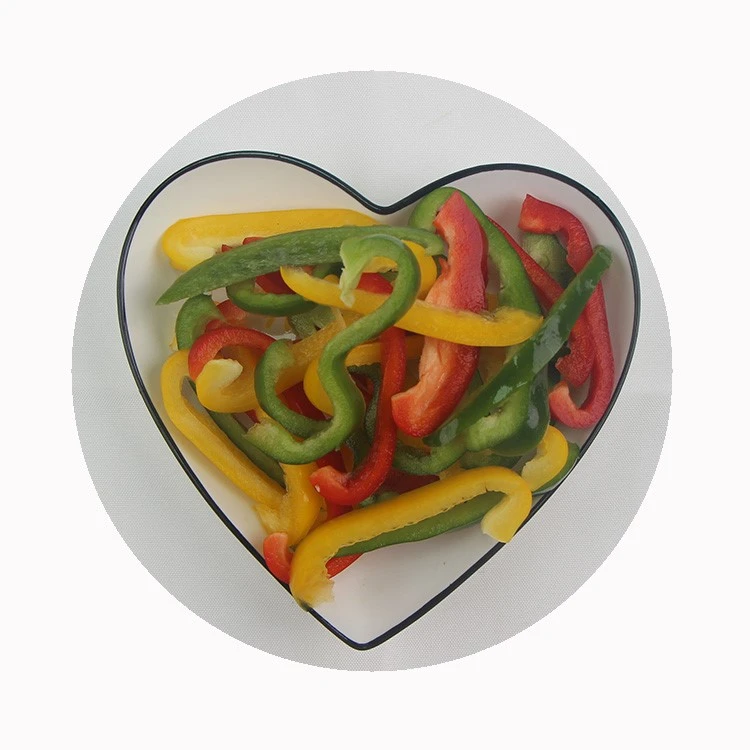
Fresh peppers provide a crisp texture for salads, raw snacks, and applications where visible crunch matters. Plain frozen peppers are convenient for cooked meals because they are already trimmed and cut, can be portioned from frozen, and reduce preparation time. Frozen pieces soften after heating, so they are better suited to stir-fries, sauces, soups, pizza, fajitas, omelets, and prepared meals than to raw salads.
Frozen does not mean nutritionally empty, but neither fresh nor frozen is automatically superior in every situation. A comparative study across eight fruits and vegetables found broadly comparable vitamin retention in frozen and refrigerated samples, although bell peppers were not among the foods tested. For peppers, the exact result depends on raw material, blanching, freezing, storage time, temperature, and cooking.
Vitamin C is water-soluble and sensitive to prolonged heat. The National Institutes of Health notes that steaming or microwaving may lessen cooking losses compared with longer water-based cooking. In practice, brief cooking that reaches the desired texture can help preserve color and avoid a soft, watery result.

5. Preparation Determines the Final Dish
A plain pepper mixture is naturally low in fat and sodium, but a pepper dish can be very different. Deep frying, heavy cheese, creamy sauces, processed meats, or a large amount of salty seasoning can dominate the final nutrition profile. Roasting, sautéing with a measured amount of oil, steaming, microwaving, or adding peppers directly to a cooked dish keeps their role clear.
For frozen peppers, excess thawing can release water and soften texture. Many cooked applications work well when the peppers go from frozen into a hot pan, oven, sauce, or production kettle, but the product label and recipe process should decide the method. Manage released moisture before adding cheese, pastry, or other ingredients that can become soggy.
Food-safety note: Do not assume every frozen vegetable is ready to eat. Some products are raw or not-ready-to-eat and require cooking. Check the package status and follow its preparation instructions rather than judging safety by color, smell, or texture alone.

6. How to Check Frozen Mixed Peppers
For foodservice and manufacturing buyers, nutritional interest is only one part of product fit. Color ratio, cut style, piece size, broken-piece tolerance, released moisture, ingredient declaration, cooking performance, and packing format all affect the final application. A blend that performs well on pizza may need a different cut and moisture target from one used in soup or a ready-meal sauce.
At XMSD, we supply frozen mixed bell peppers in diced, sliced, and strip formats according to the agreed specification. We recommend confirming the color ratio, cut size, application test, ingredient statement, and destination requirements before an order is finalized.
Packing also needs to match the route to market. Bulk foodservice packs, industrial packs, and retail formats create different requirements for portioning, labels, cartons, pallet protection, and cold-chain handling. You can review our frozen-food packaging approach and use samples to assess drip, color balance, and texture in the intended recipe.

Color Ratio Is a Product Specification, Not Decoration
A three-color mix looks simple until the first production comparison. Red, yellow and green pieces do not always enter the pack in the same proportion, and small deviations can be obvious on pizza, fajita mixes and clear retail bags. State whether the ratio is measured by weight or visual count, whether the tolerance applies to the full lot or each sampled pack, and how an out-of-spec color balance will be handled.
Color also changes flavor perception. Green pepper tends to read as greener and less sweet, while mature red, yellow and orange peppers can taste rounder. The wider XMSD frozen pepper range helps separate sweet-pepper formats from hot-chili ingredients; the approved blend still needs its own formula.
Evaluate color after the real cook, not only in the frozen bag. Heat, oil, sauce acidity, hold time and repeated reheating change visual brightness. If the product will be baked on pizza, test it through baking. If it will sit on a steam table, include the hold period. A blend that looks balanced while frozen may not remain balanced after cooking.
Worked Example 1: Building a Repeatable Three-Color Blend
Worked example: A retail customer orders 5,000 kg of mixed bell pepper strips with a target ratio of 60% red, 20% yellow and 20% green by weight.
Target red pepper = 5,000 kg × 60% = 3,000 kg. Target yellow pepper = 5,000 kg × 20% = 1,000 kg. Target green pepper = 5,000 kg × 20% = 1,000 kg.
Those figures define the batch target, not the sampling rule. If each 1 kg retail bag must look balanced, a lot-average result is not enough. Use a pack-level sampling plan, a practical color tolerance and a decision rule for rework.
Approve the ratio basis, cut-size tolerance and a retained cooked reference together. Without all three, a mathematically correct mix can still look inconsistent because smaller pieces occupy more visible space.
Worked Example 2: Planning Usable Pepper for Ready Meals
Practical example: A ready-meal run contains 12,000 trays with 45 g of mixed peppers in each tray.
Theoretical pepper need = 12,000 × 45 g = 540 kg.
If a validated line trial shows 5% loss from broken pieces, transfer and fill variation, planned input = 540 kg ÷ 0.95 = 568.4 kg, rounded under the factory batch rule.
Do not copy the 5% allowance into another line. Measure actual loss with the approved cut, equipment and filling temperature, then compare landed cost per usable tray.
A Sample Test for Pizza, Stir-Fry and Sauce Applications
Start with the intended product, because one sample cannot prove every use. For pizza, weigh the frozen topping, bake it on the actual base and record released water, color and piece visibility. For a stir-fry, fix pan load, oil, temperature and cook time. For sauce, record whether the pepper should remain visible or soften into the base.
Inspect the frozen sample before cooking. Record clumping, frost, color ratio, cut distribution, broken material, seed or stem residue and pack condition. After cooking, measure usable weight and capture photographs under consistent lighting. If moisture is decisive, define a drain time, sieve and test temperature.
Test dosing as part of processing approval. Long strips may bridge in a feeder while small dice can settle differently in a mixed formula. The XMSD food-processing application overview is context; your line speed, hopper and fill target remain the approval evidence.
Keep the approved record with the color formula, cut specification, preparation method and images. On later lots, sample more than one carton and repeat the same measurements. This turns "too much green" or "too watery" into a traceable review.
Three Perspectives for a Stronger Approval
From product development: judge the blend inside the finished recipe. Fix the color ratio, cut, cook profile and hold time. The risk signal is a visually attractive frozen sample that releases water or loses color after baking. Approve a cooked reference and record the recipe conditions that created it.
From quality assurance: define the sample and method before the limit. A color ratio without a sample weight, a cut tolerance without a sieve method, or a moisture requirement without a drain time cannot be repeated. Keep photographs and a retained sample when visual judgment is part of acceptance.
From procurement: compare cost at the point of use. Include broken pieces, released water, manual sorting, pack utilization and fill loss. The best commercial choice is the blend that reaches the target color and usable yield consistently, not automatically the lowest quoted price.
Bring these three records into one approval sheet. If R&D changes the cook time, QA can see whether the old moisture limit still applies; if procurement changes pack size, production can check whether dosing loss changes. The shared sheet prevents one department from approving a feature that another department cannot measure or reproduce.
XMSD sourcing note: We can discuss the required color mix, cut format, packing route, and application before sampling. Our factory overview provides additional operational context for supplier evaluation.
Frequently Asked Questions
1. What are the main benefits of eating mixed bell peppers?
They add vitamin C, dietary fiber, potassium, vegetable volume, and several natural pigments to meals. Their strongest benefit is helping build a varied vegetable-rich eating pattern, not acting as a remedy for a specific disease.
2. Is a mixture healthier than one color alone?
A mixture provides broader color, flavor, and pigment variety, but that does not make it automatically healthier than every single-color serving. Portion, preparation, and the rest of the diet matter more than choosing a supposedly perfect color.
3. Which bell pepper color has the most nutrients?
There is no single answer for every nutrient and cultivar. More mature red, yellow, and orange peppers often contain higher concentrations of certain carotenoids and vitamin C than immature green peppers, but the exact pattern varies with variety and growing conditions.
4. Are mixed bell peppers high in vitamin C?
Bell peppers are recognized sources of vitamin C, especially red and green peppers. The amount in a mixed portion depends on the colors, serving size, maturity, storage, processing, and cooking method.
5. Do mixed peppers improve digestion?
They contribute dietary fiber, but evidence does not support promising an automatic digestive effect. Some people tolerate cooked peppers more comfortably than raw peppers, and response can depend on portion size and individual sensitivity.
6. Are raw peppers better than cooked peppers?
Raw peppers retain crispness and avoid heat-related vitamin C loss. Cooking can improve softness, flavor, and recipe fit. The better choice depends on tolerance and application, and both forms can contribute to vegetable intake.
7. Does cooking destroy all the nutrients?
No. Heat can reduce some vitamin C, especially with prolonged cooking, but cooked peppers still provide vegetable matter and other nutrients. Brief steaming, microwaving, roasting, or sautéing can limit texture loss while fitting the recipe.
8. Are frozen mixed peppers as useful as fresh peppers?
Frozen peppers are useful for cooked applications and portion control, while fresh peppers are preferable when raw crunch is important. Nutrient retention is variable, so the product label and specification are more reliable than a blanket fresh-versus-frozen claim.
9. Should frozen bell peppers be thawed before cooking?
Often they can go directly into a hot cooking process, which limits handling time and can reduce water release before cooking. Follow the package instructions, because product status, cut size, and the intended dish may change the correct method.
10. Can mixed bell peppers be eaten every day?
Most people can include them regularly in normal food portions. Dietary variety still matters, so rotate them with leafy greens, legumes, cruciferous vegetables, roots, and other vegetables rather than depending on peppers alone.
11. Can mixed bell peppers help with weight management?
Plain peppers provide relatively few calories and can add volume to meals, but no pepper mixture guarantees weight loss. The effect depends on whether peppers replace a more energy-dense ingredient, overall portions, and the complete eating pattern.
12. What foods pair well with bell peppers nutritionally?
They pair well with beans, lentils, whole grains, eggs, fish, poultry, tofu, and other vegetables. Their vitamin C can improve absorption of nonheme iron from plant foods, making combinations with beans or lentils especially practical.
13. Which terms belong in a commercial order?
Confirm the color ratio, cut style and size, ingredient declaration, defect tolerance, cooking performance, released moisture, pack format, label requirements, cold-chain plan, and destination-market documents. A sample tested in the intended application is more informative than appearance alone.
Final Thoughts from XMSD
Mixed bell peppers are a useful way to add vitamin C, fiber, color, and vegetable variety to meals. The most credible benefit comes from regular, varied vegetable intake and sensible preparation. For frozen applications, match the color ratio, cut, texture, and packing format to the actual product rather than treating every pepper blend as interchangeable.
References
- U.S. Food and Drug Administration: Nutrition Information for Raw Vegetables
- NIH Office of Dietary Supplements: Vitamin C Fact Sheet for Health Professionals
- USDA MyPlate: Vegetable Group
- USDA MyPlate: Bell Pepper Fact Card
- Howard et al.: Changes in phytochemical and antioxidant activity of selected pepper cultivars as influenced by maturity
- Arimboor et al.: Red pepper carotenoids as a source of natural food colors
- Bouzari et al.: Vitamin retention in eight fruits and vegetables
- FoodSafety.gov: Use Food Safety to Cook Easy Meals
- XMSD operational experience in frozen mixed bell pepper specification, IQF processing, packing, and B2B application review.