


XMSD Papaya Benefit Guide: Claims, Serving Math and Formats
May 31, 2019

Ripe papaya can contribute fruit, vitamin C, fiber, water, carbohydrate and colorful carotenoid pigments to a varied diet. Those are useful food benefits. They do not prove that papaya kills parasites or tuberculosis bacteria, cures indigestion, treats tendon pain or guarantees stronger immunity. To describe a benefit responsibly, identify the exact papaya form, edible serving, applicable nutrient value and finished recipe, then keep the wording within what that evidence can show.
The practical test: if a claimed benefit cannot be connected to a measured serving and an appropriate source, it is not ready for a menu, label or product page. "Contains vitamin C on this basis" is testable. "Destroys parasites" is a medical promise that ordinary fruit composition does not establish.

Separate a Nutrient from a Health Outcome
A food-composition value answers "what is in the serving?" A physiological reference explains "what does that nutrient normally do?" A clinical study asks "did a defined intervention change a health outcome?" These are three different evidence levels. Papaya can contain vitamin C, and vitamin C has normal roles in collagen synthesis, antioxidant function and immune function. That chain does not prove that one papaya serving prevents infection or disease.
NIH's Office of Dietary Supplements describes vitamin C as a water-soluble nutrient involved in collagen synthesis, antioxidant activity, immune function and nonheme iron absorption. It also reviews disease evidence with appropriate limits. Product copy should use the normal nutrient role only when the finished food actually supplies the claimed amount on the regulated basis.
The existing XMSD papaya nutrition and safety guide owns the broad fruit-benefit and frozen-buyer overview. This page goes one step narrower: it shows how to test a benefit statement against serving math, processing and the finished commercial format.
Four questions expose most weak benefit copy. What food was measured? How much reaches one serving? Does the cited source describe composition, normal function or a clinical outcome? Will the value still apply after the actual process and shelf life? If one answer is missing, narrow the statement before release.
This protects useful communication rather than eliminating it. Buyers can compare fruit percentage, vitamin C, cut, usable yield and application performance. Consumers can see a real serving. The evidence file can be audited. None of those benefits requires a dramatic cure claim.
Use a Transparent Papaya Reference Serving
A USDA nutrient reference used by NIH lists 88.3 mg vitamin C in one cup, or 145 g, of raw papaya pieces. The current U.S. Daily Value for vitamin C is 90 mg. On that reference basis, the cup provides 88.3 ÷ 90 × 100 = 98.1% of the Daily Value. This is a useful worked food example, not a guaranteed value for every cultivar, maturity, frozen lot or recipe.
Scale with grams before making comparisons. A 100 g portion on the same reference basis would contain about 60.9 mg vitamin C: 88.3 ÷ 145 × 100. A 50 g portion would contain about 30.4 mg. These are proportional estimates. A commercial label may require an accepted database procedure, retention factors or representative testing and must follow destination-market serving and rounding rules.
Do not copy the raw-fruit value onto frozen cubes, puree, nectar or a heat-treated filling. Product state, formulation, oxygen exposure, processing, storage time and temperature can affect vitamin C. First name the exact food and basis: frozen as sold, thawed, drained, prepared or finished in a multi-ingredient recipe.

Fruit Form Changes the Benefit You Can Deliver
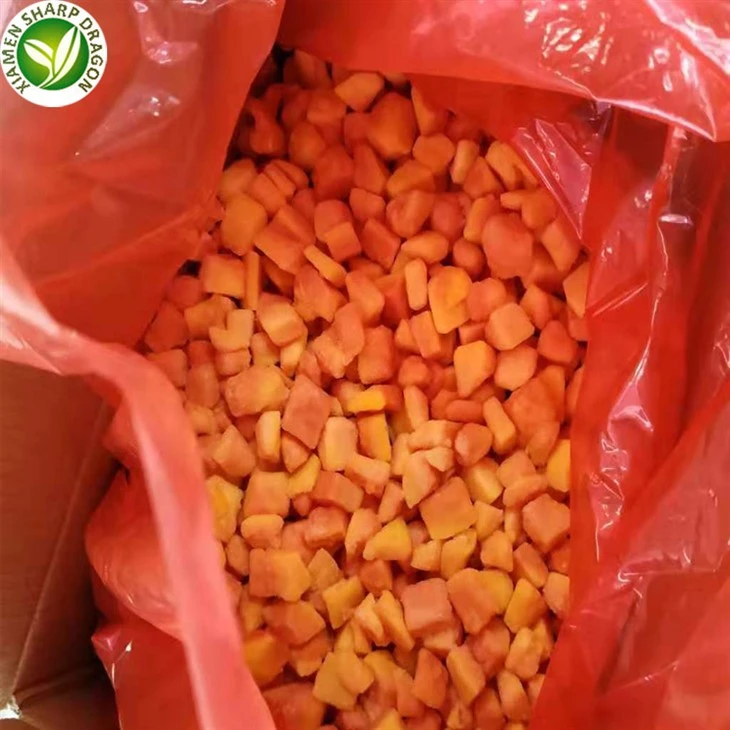
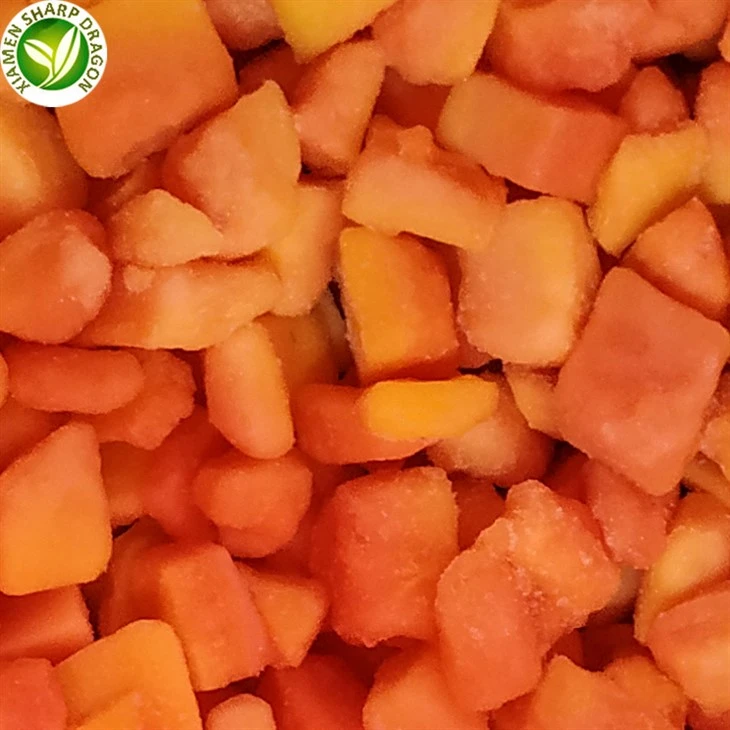
Fresh ripe papaya provides a just-cut sensory experience, but ripening, peeling, deseeding, trim loss and short prepared life require control. IQF cubes or chunks offer ready-to-use portioning and year-round frozen storage, yet thawed texture is softer and drip can increase. Puree delivers uniform flavor and pumpability but no visible fruit identity. A sweetened preparation adds another nutrition and ingredient profile.
These are operational benefits, not biological claims. A smoothie plant may benefit from direct frozen dosing and consistent cut size. A yogurt cup may need small dice that distribute evenly. A bakery filling may value puree solids and flavor more than cube integrity. A fruit-cup program may reject thawed papaya if the consumer expects firm fresh pieces.
Use the frozen papaya preparation guide for direct-from-frozen, partial-thaw and full-thaw decisions. A benefit claim survives only if the selected format also performs in the real application; nutrient language cannot repair poor texture, excessive drip or irregular dosing.
Format also changes the denominator. A 100 g frozen cube serving is not the same as 100 g nectar containing water and other ingredients. A puree may be 100% fruit or a sweetened preparation. A fruit mix divides its serving across several fruits. State papaya percentage and finished serving before transferring a raw-fruit nutrient value.
Practical example: two smoothie suppliers both claim "with papaya." Product A contains 25% IQF papaya and Product B contains 5% sweetened puree. The deciding evidence is grams of papaya per bottle, finished vitamin C and added ingredients. The action is to compare the complete formula and label, not the size of the papaya image.
Papain Is an Enzyme, Not a General Digestive Cure
Papain is a protein-cleaving enzyme associated with papaya latex, particularly unripe fruit. The enzyme fact is often stretched into a promise that ordinary ripe fruit cures indigestion, breaks down body fat or treats stomach disease. Enzyme amount and activity vary with maturity, tissue, processing, heat, storage and formulation. Eating a fruit serving does not establish a therapeutic papain dose.
If a formulation deliberately uses isolated papain as a food enzyme, manage it as a separate ingredient: specification, activity units, intended technological function, dose, exposure, safety, allergen assessment and destination authorization. That technical use cannot be inferred from frozen papaya cubes. Conversely, FDA action involving unapproved topical papain drug products should not be presented as a warning against normal ripe fruit; product categories and exposures differ.
Use restrained wording: papaya is a fruit with nutrients and enzymes; the serving contributes the measured composition; and the selected form supports a defined food application. Do not write "digestive treatment," "fat burner," "stomach cure" or "therapeutic enzyme" without product-specific legal and clinical substantiation.
Heat sensitivity further weakens casual enzyme language. A pasteurized beverage, baked filling and raw fruit cup do not expose the consumer to the same enzyme activity. Even if a process preserves some activity, the product still needs a defined technological or nutritional claim basis. The word papain is not a shortcut around measurement.
Keep supplier documents in their proper role. A papaya raw-material specification can state identity, maturity and physical quality. An enzyme certificate can state activity under its test method. A finished-product study can evaluate the recipe and outcome. Combining fragments from all three into one untested health sentence would not create stronger evidence.
Delete the Inherited Antimicrobial and Treatment Promises
The inherited article gave papaya or papain broad antimicrobial, pest-control and antiparasitic powers. A list of laboratory targets or traditional uses does not prove that eating commercial papaya safely treats an infection. The organism, preparation, concentration, route of exposure and clinical outcome would all need appropriate evidence. Ordinary fruit copy should not invite self-treatment.
The old text also assigned a significant treatment effect for calf or Achilles-area pain. Fruit composition does not establish an analgesic or tendon treatment. Pain can reflect injury, infection, vascular problems or other conditions. Product content should not delay diagnosis or imply that papaya replaces care.
Practical example: a beverage concept uses 8% papaya puree and plans a broad immunity claim plus an infection-treatment phrase on the front. The deciding inputs are the finished vitamin C value, serving, heat process and market criteria. None establishes treatment. The action is to delete the medical phrase, calculate or test the finished vitamin C, and use only an eligible nutrient statement after regulatory review.
Processing and Storage Can Change Vitamin C Evidence
Vitamin C is sensitive to oxygen, heat and time. Freezing can slow many changes but does not freeze the evidence forever. Raw material maturity, time before freezing, cut surface, blanching or heat treatment if used, package oxygen, storage temperature and shelf duration can affect the finished value. A raw database number is a starting point, not perpetual proof.
Define when a claim must remain true. Is the value required at manufacture, through declared shelf life or after the consumer's preparation? Choose sampling points that match the claim. If a beverage is pasteurized and stored, test or calculate that process. If IQF cubes enter a smoothie without heating, still account for frozen storage and the serving actually dosed.
Protect the pack and cold chain so quality evidence remains meaningful. Seal damage, temperature movement and repeated partial thaw can increase drip and sensory loss. The XMSD frozen-food packaging overview frames pack selection; the commercial specification must name the actual material, net weight, carton and storage requirements.
Set a claim-monitoring plan before launch. Define initial sample count, storage conditions, intermediate checkpoints, end-of-life test and action limit. If vitamin C is close to a regulatory threshold at manufacture, normal variability and decline can make the statement fragile. Reformulate, increase the evidence margin or use more modest wording rather than relying on a single favorable result.
Separate sensory shelf life from nutrient shelf life. Color, aroma and texture may remain acceptable while a sensitive nutrient changes; a nutrient may remain above a target while drip or freezer damage makes the product unsuitable. The commercial release decision must cover both the claim and intended application.
Calculate the Papaya Contribution in a Finished Formula
A papaya picture on a pack does not show how much fruit reaches one serving. Convert the recipe percentage into grams, scale the applicable nutrient value and then assess the full product. This prevents a small decorative inclusion from carrying a large health story.
Worked example: a 2,000 kg frozen smoothie blend contains 22% papaya. The batch requires 440 kg papaya. A 180 g serving contains 39.6 g papaya if the blend remains uniform.
Using the raw reference of 88.3 mg vitamin C per 145 g, the papaya fraction contributes an estimated 24.1 mg vitamin C: 39.6 ÷ 145 × 88.3. Compared with the U.S. 90 mg Daily Value, that is about 26.8% DV before any processing or storage adjustment.
The estimate is not a finished-label result. Other fruit may contribute vitamin C, while processing and storage can reduce it. Validate the complete formula, product state, data or test method, retention approach, serving and destination rounding before claim approval.
Check physical distribution. If papaya pieces separate during filling, individual packs will not match the planned 22% ratio. Sample the beginning, middle and end of production. A correct vitamin calculation still fails if the fruit inclusion is uncontrolled.
Also compare the likely eating occasion. If a bottle holds two servings and is commonly consumed at once, fruit grams and nutrients double. If added sugar, juice concentrate or other ingredients are present, evaluate the complete Nutrition Facts rather than calling the drink beneficial solely because it contains papaya.
Repeat the math when the recipe changes. Increasing papaya from 22% to 30% in a 180 g serving raises papaya from 39.6 g to 54 g. On the same raw reference basis, the estimated vitamin C would rise from 24.1 mg to about 32.9 mg. That calculation guides development, but processing evidence still decides what appears on the finished label.
Do not treat higher fruit percentage as universally better. More papaya can alter sweetness, acidity, color, viscosity, cost and frozen dosing. The right ratio is the one that meets sensory, nutrition, process and claim requirements together. Record why the selected percentage won the trade-off.
Safety and Suitability Limit the Benefit Story
A known papaya allergy changes the decision. Cross-reactivity with latex is also reported, though it does not mean every latex-allergic person reacts. Hives, swelling, wheezing, throat tightness, dizziness or breathing difficulty can require urgent care. Freezing does not remove an allergen.
Ripe fruit, unripe papaya, latex and concentrated papain preparations are different exposures. Pregnancy, medication and medical-condition questions need qualified individual advice rather than a blanket benefit or prohibition. The next queued article on whether papaya can make you sick will own the fuller allergy, spoilage and symptom-triage intent.
Food safety remains essential. Frozen fruit may be used without a later kill step in smoothies or fruit cups. Control approved source, water, hygiene, environmental exposure, foreign material, traceability and cold chain. Use the frozen produce safety guide as a screening framework, then apply order- and market-specific requirements.
Turn the Desired Benefit into a Product Specification
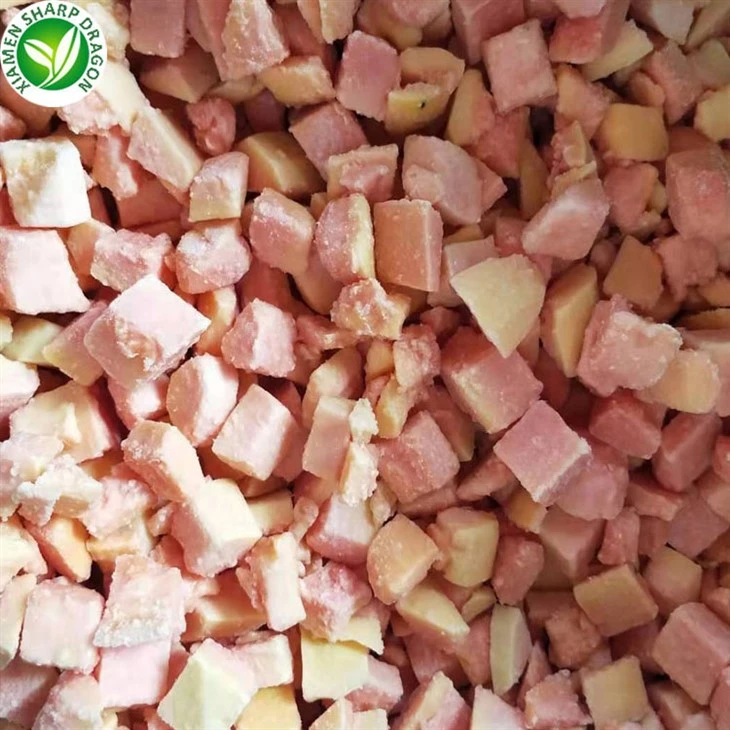
Start with application: smoothie, beverage, yogurt, bakery filling, sauce, dessert or retail fruit mix. Choose IQF cube, chunk, dice or puree. Define color and maturity, cut dimensions and tolerance, Brix or pH when material, peel and seed limits, pale or dark pieces, bruising, broken pieces, clumps, foreign material, ingredients, net weight, pack and storage.
Run the actual preparation. Measure frozen dosing, thaw time and temperature, drip, texture, color, flavor and yield. A smoothie can accept soft fruit but reject clumps that disrupt a feeder. A yogurt cup needs even distribution. A visible topping needs better piece integrity than puree processing. Record the method so later lots receive the same test.
Review the XMSD frozen papaya product format for range discovery, then write the selected form and acceptance method into the order. A product photo cannot establish vitamin C, fruit percentage or shelf-life performance.
Tie every label version to the correct formula and evidence file. Store the nutrient source or test, calculation, product state, serving, claim criterion, lot or sampling plan and approval date. If the fruit ratio, heat process, pack or shelf life changes, reopen the benefit review instead of reusing the old statement.
At incoming inspection, compare the lot with the approved sample under a fixed method. Record frozen appearance, color distribution, clumps, broken pieces, pale or dark tissue, peel, seeds, odor and net weight. Then thaw or process a measured sample and record drip, texture and flavor. A health-oriented position will not survive inconsistent raw material.
When results disagree, protect the lot and repeat the named method. A warm sample can release more liquid; a top carton may not represent the pallet; a refractometer result can shift with temperature and preparation. Record sample position, mass, temperature, equipment and operator before deciding release, rework or rejection.

Frequently Asked Questions
What is the most defensible nutritional benefit of papaya?
Papaya can contribute fruit and vitamin C on a measured serving basis. It also contains fiber and carotenoid pigments. Use data applicable to the exact product and avoid converting normal nutrient roles into disease prevention.
Does papain mean papaya cures indigestion?
No. Papain is a proteolytic enzyme, but enzyme presence does not establish a clinical dose or treatment outcome from ordinary ripe fruit. An isolated food-enzyme ingredient needs its own specification and authorization.
Does frozen papaya retain vitamin C?
It can contain vitamin C, but the value depends on raw material, process, oxygen, storage and product state. Use a valid calculation or representative testing for the actual IQF product rather than copying raw-fruit data.
Can papaya kill parasites or bacteria?
Ordinary papaya should not be promoted as an antimicrobial or antiparasitic treatment. Laboratory mechanisms or traditional use do not establish safe clinical efficacy from a fruit serving.
Is fresh papaya always better than frozen?
No. Fresh is better for a just-cut firm presentation. IQF is often better for ready-to-use frozen dosing and labor control. Thawed texture is softer, so choose by application and validate the exact product.
What should a papaya benefit claim file contain?
Keep the exact product and formula, edible serving, product state, applicable nutrient source or tests, process and shelf-life assumptions, market criterion, rounding method, artwork version and approval record.
XMSD sourcing note: Send the papaya application, cut or puree format, fruit percentage, serving, color or maturity, pack, destination and evidence needs. We can review an order-specific frozen-papaya specification and sample plan.

References
- USDA National Nutrient Database vitamin C food values, hosted by NIH ODS.
- NIH Office of Dietary Supplements. Vitamin C fact sheet for health professionals.
- UC Davis Postharvest Research and Extension Center. Papaya produce facts.
- U.S. FDA. Questions and answers regarding unapproved topical papain drug products.
- U.S. FDA. How to understand and use the Nutrition Facts label.