


Pumpkin Types by End Use: Cooking, Processing, and Frozen Supply
Nov 14, 2019

Pumpkin is a mature winter squash in practical food classification, but "pumpkin type" becomes useful only after you name the end use. Carving pumpkins favor shape, rind and handle. Pie or sugar types favor dense, smooth, flavorful flesh. Commercial processing types favor usable flesh yield, uniform maturity and factory throughput. Frozen ingredient types are selected again by peeled state, cut, cooking behavior and pack.
These types can overlap. A carving pumpkin may be edible, and a cooking pumpkin may decorate a table. The difference is breeding priority and the performance a buyer is paying for. A familiar orange exterior cannot establish flesh thickness, dry matter, fiber, sweetness or post-cook texture.
For trade, start with the application rather than a retail nickname. State whether you need whole display fruit, puree raw material, visible frozen pieces, a mash-down cut or seed production. Then compare the traits and accepted yield that control that use.
Type decision: treat pumpkin as a mature winter squash, then choose a market type-carving, cooking, processing, seed or frozen ingredient-from measurable end-use performance. The broad category is the starting point, not the specification.

Keep Biological Type and Market Type Separate
Pumpkin names can refer to cultivars across several Cucurbita species. A botanical identity helps trace the crop and can explain some shared traits, yet it does not fully predict eating or processing quality. Cultivar, maturity, growing conditions, storage and production method all contribute.
Market types sort the fruit by the work it performs. Illinois Extension lists miniature, standard orange, processing, jumbo, white, cushaw and naked-seeded groups, among others. Those categories are not a single scientific ladder. They reflect size, appearance, flesh, seed and commercial channel.
Our mature winter-squash classification guide explains the biological and culinary hierarchy. The commercial selection step maps each type to purchase tests, usable yield and frozen form.
Write both fields where they matter. A specification can name the approved crop identity and separately state "processing for puree" or "frozen dice for visible soup pieces." That prevents a taxonomic match from being mistaken for application approval.
Carving Types Are Built Around Appearance
Jack-o'-lantern types are commonly selected for an even orange color, upright shape, stable base, rind suitable for carving and a strong handle. North Carolina Cooperative Extension notes that many carving types have relatively thin walls, which leaves less interior flesh than a denser pie pumpkin.
Edible does not mean optimal. A carving fruit can be cooked when it is sound and handled as food, but thin or stringier flesh may give lower usable yield and a less smooth puree. If cooking quality is the purchasing goal, do not pay for symmetry and stem presentation unless the menu also displays the whole fruit.
A display program uses different acceptance fields: weight or diameter band, shape, upright stability, rind color, scars, decay, stem length and strength. A processing program instead records flesh thickness, cavity proportion, trim loss and cooked quality. One whole pumpkin can pass the first list and fail the second.
Once a pumpkin has been carved or displayed outside controlled food handling, do not assume it remains suitable for service. Decoration and food preparation should have separate hygiene and time controls.
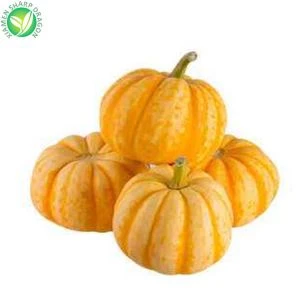
Cooking Types Prioritize Flesh Quality
Pie and sugar pumpkins are selected for cooking traits. Extension guidance commonly describes them as smaller, heavier for their size and denser than large carving fruit, with smoother, sweeter and less stringy flesh. The useful comparison is not size alone; it is accepted flesh and the result after the recipe's heat.
For roasting, check whether pieces hold edges, caramelize without collapsing and remain pleasant after service hold. For mash, check smoothness, fiber and water release. For pie or bakery puree, check flavor, color, consistency and how much free water must be managed before formulation.
Do not use "sugar pumpkin" as a sweetness guarantee. Variety and maturity influence soluble solids, but the finished sweetness also comes from formulation. A Brix or sensory target needs an agreed method and sample; a nickname alone cannot carry the claim.
Cooking whole fruit also creates rind, stem, seed and cavity removal. Compare usable flesh cost rather than price per whole kilogram. A smaller, denser fruit can outperform a lower-priced large fruit if it reduces trim and produces the needed texture.
Processing Types Must Fit the Factory
Illinois Extension identifies processing pumpkin types, including C. moschata cultivars widely used for commercial canned product. Factory suitability adds criteria that a home cook may never measure: concentrated maturity, delivery durability, flesh-to-cavity ratio, mechanical handling, peeling or trimming behavior, throughput and stable puree properties.
A puree line values predictable solids and viscosity. A dice line values flesh thickness, color and piece integrity. The same raw fruit may perform differently in these routes. Therefore the brief should name the intended process before the variety is approved.
Supply timing also matters. Pumpkins are warm-season crops even though mature fruit are winter squash. The pumpkin crop-season guide shows how harvest, whole storage and frozen production create different availability windows.
Map field volume to daily line capacity. A processing cultivar that yields well can still create loss if harvest peaks beyond washing, trimming, freezing or cold-store intake. Market type must fit both the food and the available system.

Build a Sample Matrix Before Committing Volume
A sample comparison keeps the type decision tied to one use. Give each candidate a code and record crop identity, origin, harvest or production window, whole or processed form, peeled state, cut and pack. Do not begin with "premium" or "standard"; those grades have no value until their limits are defined.
For whole pumpkins, weigh the received fruit, then rind and stem, seed and cavity material, accepted flesh and discard. Photograph representative interiors and record flesh thickness, color and defects. Cook equal accepted weights under one method. This exposes a variety that looks strong externally but loses too much during trimming or produces the wrong texture.
For frozen candidates, sample more than one bag and include different cartons where possible. Measure piece-size distribution, skin or peel residue, broken pieces, clumps and free-flow condition while frozen. Use the same thawing or direct-cook route for every candidate; switching preparation between samples invalidates the comparison.
Set the cook endpoint before the trial. A puree test may use time, temperature, sieve or viscosity. A visible-piece test may use kettle time, agitation and hold. Record accepted kilograms, not only subjective liking. Sensory comments are more useful when attached to an observed condition such as dry fiber, watery separation, skin chew or edge collapse.
Convert the result to the buyer's unit. A foodservice operator needs accepted portions per bag. A manufacturer needs input kilograms per finished batch. A whole-fruit processor needs accepted output per received tonne and expected line days. A distributor may also need cartons per pallet and days of approved inventory coverage.
One sample does not describe an entire season. Define which variables reopen approval: a new crop, origin, cultivar, size band, peeling method, cut, blanching condition or pack. For a high-volume program, confirm the chosen candidate in a larger line trial before commercial release.
The final matrix should show a trade-off, not just a score. Candidate A may hold shape but require more issue weight. Candidate B may give better yield but a softer bite. Candidate C may suit puree and fail a roasted side. Select the one whose strengths match the named application, then retain the evidence with the specification.

Seed and Ornamental Types Need Their Own Briefs
Naked-seeded or hull-less types are selected to make seed harvest and use easier. Their commercial value may sit in the seed rather than maximum flesh yield. A buyer seeking roasted pepitas should specify seed identity, cleaning, moisture, defects, treatment and pack instead of borrowing a flesh specification.
Ornamental gourds and decorative pumpkins span many shapes and colors. Not every decorative product should enter a food supply chain. Crop-protection use, postharvest coatings, display handling, bitter taste and unclear identity all change the decision. Buy edible material from a food-qualified source.
Do not infer safety from appearance or a casual variety guess. If squash flesh tastes unusually bitter, stop tasting and discard it; intense bitterness can signal elevated cucurbitacins. A verified edible cultivar and food-handling history are stronger than an online image match.
Separate outputs in a whole-fruit project. Flesh, seed and decorative value have different buyers and acceptance tests. Combining them into one "pumpkin type" hides the trade-off that should drive variety selection.
Frozen Type Is Defined After Processing
Freezing does not change the crop identity, but it changes the buying unit. The importer no longer receives whole fruit to judge by stem and rind. The relevant unit is an inner bag or carton of pieces, assessed for cut, skin, color, frost, clumps, breakage, defects, net weight and frozen condition.
Skin-on chunks suit applications that welcome a visible rind edge and rustic appearance. Peeled uniform dice suit controlled soup, ready-meal or foodservice portions. Smaller irregular pieces may work for blending or mash where piece survival is unimportant. None is universally superior.
The frozen pumpkin forms are a starting point. Approve the chosen form through the finished recipe and retain the sample identity.
Compare usable kilograms after cooking. A lower-priced bag with more skin, breakage or cook loss can cost more per accepted portion. This is the practical meaning of type in a frozen purchase.

Representative Scenario 1: A Roasted-Side Program
Practical example: A foodservice developer needs 750 portions of roasted pumpkin, each containing 160 grams of accepted cooked pieces. Its decision function is visible side-dish quality. The team compares peeled dice with skin-on chunks using the same oven and hold.
Worked example: Accepted requirement is 750 × 0.160 kilograms = 120 kilograms. The skin-on candidate yields 88 percent accepted cooked pieces, so frozen issue is 120 ÷ 0.88 = 136.36 kilograms. The peeled candidate yields 94 percent, so issue is 120 ÷ 0.94 = 127.66 kilograms.
Yield does not choose the winner alone. The menu may value a dark rind edge and rustic shape enough to accept the extra issue. The tasting checks sweetness, firmness, skin chew, color, surface drying and condition after a twenty-minute hold.
The result defines the type by application: peeled uniform dice for portion efficiency or skin-on chunks for visual identity. Both remain pumpkin, yet the approved purchase and cost basis differ.
Representative Scenario 2: A Puree Processing Campaign
Application example: A puree plant considers a 30,000-kilogram whole-pumpkin intake. Its decision function is raw-material throughput and accepted puree base. The approved trial records 62 percent accepted cooked flesh after rind, stem, seed, cavity and process loss.
Expected accepted base is 30,000 × 0.62 = 18,600 kilograms. At 5,000 kilograms accepted output per line day, nominal production time is 18,600 ÷ 5,000 = 3.72 line days. The planner books four days before adding cleaning, changeover, hold or contingency time.
The plant also checks puree color, viscosity, fiber, aroma and formula response. If another cultivar raises yield but produces a watery or pale base, it may not replace the approved processing type without recipe changes.
This scenario chooses whole raw material for factory conversion. Scenario 1 chooses an already frozen piece form for service. Their type decisions use different units and failure signals.

XMSD Experience: Approve the Form in the Food
When we review a pumpkin project, we begin with the product's job. Soup, roasted sides, fillings and puree need different flesh behavior. We translate that job into peel state, cut, maturity, color, breakage and cooked texture rather than asking for the "best type" in isolation.
For visible pieces, we compare frozen size distribution and repeat the actual heat, mixing and hold. For breakdown uses, we watch fiber, water separation, smoothness and flavor after blending. The candidate wins when it meets the finished-food target with a workable yield.
We keep the crop identity, production period and sample code with the decision. A later lot can then be checked against the result rather than against a loose photo or nickname.
The approval is application-specific. A softer, sweeter piece may be excellent for filling and wrong for a twenty-minute kettle hold. Type follows the food's required behavior.
XMSD Experience: Pack the Approved Type for Use
Inner-pack quantity should fit batch issue or daily service. We compare bag weight with recipe input, opening frequency, freezer space and leftover handling. An otherwise suitable type can create waste when the pack does not fit the operation.
Carton marks and lot codes must preserve the approved identity. At receipt, inspect bag integrity, frozen condition, frost, clumps, cut and coding before the cook check. This separates transport condition from application performance.
Forecast by approved lot and usable yield, not by total pumpkin kilograms alone. Stock from a different cut or skin state may not cover the planned menu even when the broad product name matches.
For projects tied to field origin and harvest, our farm-base overview shows why production region belongs in the review alongside the finished frozen form.

Select the Type with a Decision Sheet
Record the channel first: display, fresh cooking, puree processing, frozen visible pieces, breakdown pieces or seeds. Add the approved crop identity and maturity window. Then define the measurable traits that change the result-whole yield, flesh condition, cut, skin, cooking behavior, pack and cold-chain condition.
Set mandatory gates apart from preferences. A soup producer may require no tough rind, a defined maximum piece size and a minimum accepted kettle yield; a slightly deeper orange color may be a preference. A display buyer may reverse the priority and make shape, rind and stem mandatory. This separation helps the supplier propose alternatives without weakening the food's essential function.
Put price beside the same accepted basis. If Candidate A is 1.20 currency units per frozen kilogram at 90 percent accepted yield, its ingredient cost is 1.20 ÷ 0.90 = 1.33 per accepted kilogram. Candidate B at 1.26 per frozen kilogram and 96 percent yield costs 1.26 ÷ 0.96 = 1.31 per accepted kilogram. Freight, labor, energy and waste still need separate lines.
Record capacity and lead time as well. A superior sample cannot cover an annual program if its harvest, factory slot, pack material or frozen inventory is too limited. The final choice may use one approved type for the main season and a second tested type for a defined contingency, with each retained under its own specification.
Calculate on the accepted basis. Whole-fruit projects need usable flesh yield. Frozen projects need issue-to-accepted yield. Display programs need marketable fruit after sorting. Seed projects need clean seed output. Keeping those denominators visible prevents false price comparisons.
Finally, lock the deciding trial and update trigger. A variety, origin, maturity, cut, treatment or pack change can reopen the choice. Keep the approved sample code, calculation basis and commercial lot mapping together for the next review. That makes "kind of pumpkin" a controlled product decision rather than a decorative name.
XMSD sourcing note: Share the pumpkin application, preferred peel and cut, cook conditions, accepted yield basis, pack, demand and destination. We can review a frozen form against the required end-use performance.
References
- North Carolina Cooperative Extension: Eating and carving pumpkin selection
- Illinois Extension: Pumpkin market types and varieties
- Illinois Extension: Choosing pumpkins for decoration and processing
- University of Georgia Extension: Commercial pumpkin and gourd production
- Purdue Extension FoodLink: Pumpkin type selection and preparation
- XMSD operational perspective on pumpkin application, cut, peel state, cooking yield, packing, lot identity and frozen receipt.