


What Is Dragon Fruit? A Guide to Its Flesh, Taste and Uses
Jun 14, 2022

Dragon fruit, also called pitaya, is a cactus fruit with juicy flesh and many small black seeds. Common forms have white or red-to-magenta flesh inside a red or yellow skin. The part normally prepared for a fruit bowl is the flesh, including its seeds.
Its striking appearance is only the beginning. A first taste, a spoonful of pieces and a blended drink offer different experiences of the same ingredient. This guide explains the fruit itself, how to open it and what changes when you choose a prepared frozen form.
The fruit grows on a climbing cactus
The plant behind the familiar fruit has fleshy green stems rather than the woody trunk and leafy branches of an orchard tree. North Carolina State Extension describes a climbing or spreading cactus with aerial roots and large flowers that open at night. The roots help it climb over a support. This explains why photographs can show fruit hanging beside long cactus stems, sometimes high above the ground, rather than growing from the end of a leafy twig.
The Northern Territory government's pitaya guide makes a useful distinction about those roots: they attach to trees or rocks for support and do not feed on the host. A supporting tree in a photograph is therefore not the tree producing the dragon fruit. In a cultivated planting, a post or trellis can perform the supporting role. The fruit belongs to the cactus attached to it.
Botanical references can make the name look more complicated than the food. Kew accepts Selenicereus undatus for the species also widely described under the older name Hylocereus undatus. These names can therefore appear in different references to the same species. Kew places its native range from Mexico to Honduras. That is a statement about this particular plant's natural range; it does not identify the growing country of every dragon fruit sold today.
The name itself carries clues about the plant. North Carolina State Extension connects selene, meaning moon, with its night-opening flowers. It explains undatus as a reference to wavy edges on the stem. These words describe features of the growing cactus that you would miss by looking only at a peeled fruit or a bag of prepared pieces.
Pitaya is a broader everyday food name than that single scientific entry. There are different species, cultivars and hybrids in the wider crop. For a recipe, "dragon fruit" is a useful starting name, while flesh color helps describe the food that will actually be visible on the plate. A botanical label becomes more useful when distinguishing planting material or tracing a specific variety.
The word "fruit" describes the part eaten, while "cactus" describes the kind of plant producing it. The two descriptions fit together. A supermarket fruit aisle groups foods by their culinary use, so a cactus fruit can sit beside mangoes and pears without sharing their tree structure. For a deeper commercial discussion, our dragon-fruit identity and sourcing guide follows the ingredient into origin and specification questions.

White flesh, red flesh and yellow skin are different descriptions
Skin color and flesh color describe separate parts of the fruit. UF/IFAS identifies white, red and magenta pulp among pitayas and red or yellow peel. The following combinations are a useful first introduction to common market forms. They are not a complete identification key for every named variety.
|
Common description
|
Outside
|
Edible interior
|
|---|---|---|
|
White-fleshed dragon fruit
|
Often pink or red skin with projecting scales
|
Pale flesh dotted with black seeds
|
|
Red-fleshed dragon fruit
|
Often pink or red skin
|
Red to magenta flesh containing black seeds
|
|
Yellow pitaya
|
Yellow skin
|
Common yellow forms have white flesh and black seeds
|
The Northern Territory guide describes yellow Selenicereus megalanthus with white flesh. "Yellow dragon fruit" can therefore refer to the outside while the edible center remains pale. Likewise, "red dragon fruit" is ambiguous in casual conversation: one person may be describing the shell and another the cut flesh. Asking for red-fleshed fruit resolves that particular ambiguity without requiring a Latin name at the fruit counter.
Color words work best when attached to a part: red skin, white flesh, magenta pieces. They let a cook picture the ingredient without implying a flavor score. Two pale-fleshed fruits can still taste different, and a vivid interior should not be read as a measurement of sweetness. The next useful question is how mature the fruit was when harvested.

Expect a gentle flavor, with differences between fruits
University of Wyoming Extension describes dragon fruit as mildly flavored. That is a useful expectation for a first taste: its exterior can look more dramatic than the flavor on the spoon. Familiar comparisons can help someone imagine a new fruit, but none is an exact recipe for its taste. Calling it pear-like or kiwi-like would not make it a botanical mixture of those fruits.
For the first bite, try a little plain flesh before adding syrup, sweetened yogurt or a strong juice. This is a simple tasting suggestion: it gives the fruit a chance to be noticed. In a heavily flavored drink, the finished taste also belongs to the other ingredients. Someone who first meets pitaya in a sweetened smoothie may otherwise expect the plain fruit to taste like the complete drink.
UC Davis's July 2011 postharvest fact sheet says dragon fruit should be harvested close to fully ripe and does not continue ripening after harvest. Leaving a disappointing fruit on the counter is therefore not a dependable way to develop the flavor expected from a fruit harvested at a better stage. The sheet describes skin-color development and changing firmness during maturity, and identifies firm green bracts and freedom from injury as quality features. These observations are more useful than a blanket instruction to wait until every fruit becomes very soft.
Variety also matters. In a USDA Agricultural Research Service study published in 2020, twelve dragon-fruit cultivars were evaluated over five years at Isabela, Puerto Rico. The investigators found differences in fruit-quality traits, including soluble solids. The study concerned identified cultivars under those growing conditions. It supports looking beyond a broad fruit name, while providing no universal rule that every red-fleshed fruit tastes sweeter than every white-fleshed one. Soluble solids are also a measurement of dissolved material, not a complete description of aroma and eating enjoyment.
For a bowl that already includes a strongly flavored fruit, a gentler component can still have a useful place. Try the dragon fruit beside the other food before deciding to sweeten the whole bowl. Keeping some pieces separate lets the diner experience each ingredient. Blending everything together makes a different dish, in which the individual fruit's flavor may be less easy to recognize.
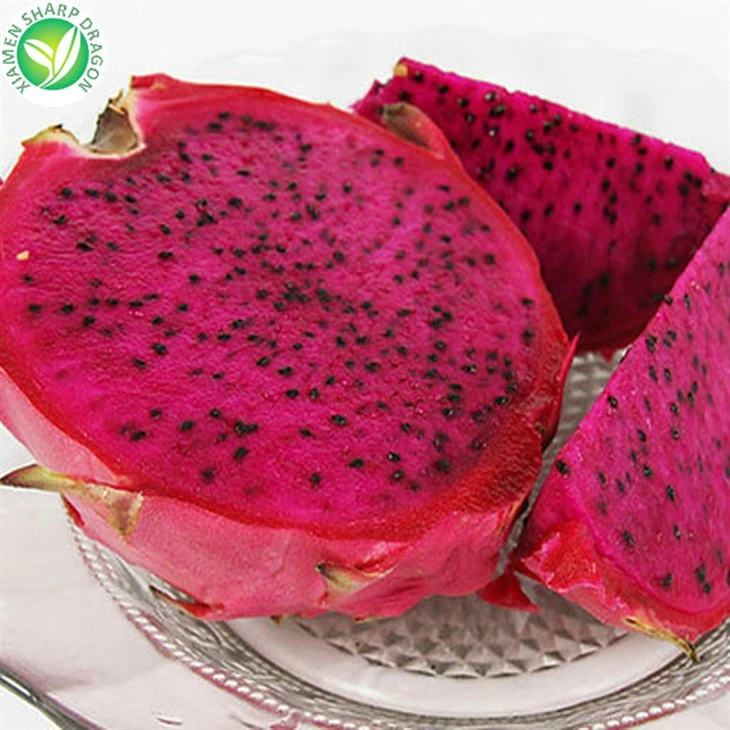
Open the fruit and eat the flesh with its seeds
Wash the outside before cutting, even though the recipe will use the interior. FDA produce guidance recommends clean hands and utensils, running water for washing produce, and keeping it away from raw meat and contaminated equipment. Do not wash the fruit with soap or detergent. A clean exterior matters because cutting passes from the outside to the flesh.
The basic preparation is straightforward. University of Wyoming Extension describes cutting the fruit in half and using a spoon around the edge and underneath the flesh to lift it out. Alternatively, peel the skin away and slice the exposed flesh. Choose the method that gives the shape you want rather than struggling to produce an intact peeled fruit for a dish that will be blended anyway.
For spoon eating, place a half securely on a plate and take flesh from the inside. For a fruit bowl, lift out the flesh onto the board before cutting it into pieces. Moving it onto the board makes it easier to choose the size and see where the blade will go. The shell can be set aside as soon as the flesh has been removed.
There is no need to pick out the tiny seeds one by one. They form part of the normal edible spoonful described in the Northern Territory guide. This is different from removing the peel or a large stone from another fruit. A recipe that specifically requires a strained preparation is asking for an additional processing step; it is not describing the ordinary way to eat fresh dragon fruit.
Think about the utensil as you cut. A small breakfast spoon works more comfortably with modest pieces than with a slab that covers the whole spoon. Slices can suit an open plate, where their shape remains visible. For a blender, evenly decorative cubes offer little advantage because the recipe deliberately breaks them down. These are choices about serving, so the same whole fruit can be prepared in several sensible ways.
Refrigerate purchased precut fruit and keep the preparation area clean, following FDA guidance. If you are preparing several foods, finish the fruit with clean equipment rather than using a board that has just held raw meat. For a packaged ingredient, keep its preparation directions available through service.

Fresh flesh, frozen pieces and pulp serve different purposes
Freshly opened fruit lets you experience the flesh directly and choose the cut yourself. Prepared pieces remove that cutting step. Pulp is useful when the dish is intended to be blended or smooth rather than to display distinct pieces. UF/IFAS lists frozen pulp among forms used for foods such as ice cream, yogurt, juice and pastry. That range of uses explains why a fruit can be sold in several forms without one form being the best choice for every recipe.
Freezing changes what happens to water inside fruit tissue. The National Center for Home Food Preservation explains that slow freezing can create large ice crystals that damage cell walls and leave thawed fruit soft. Consequently, a firm-looking frozen piece should not be assumed to reproduce the texture of freshly cut flesh after thawing. This is a general fruit-texture explanation, not a measured result for every dragon-fruit pack.
Choose the form around the dish's main job. A bowl with visible pieces asks the fruit to retain a recognizable shape. A blended dessert uses those pieces as an ingredient that will be broken down. Pulp avoids paying attention to a shape that the blender would remove. Our frozen dragon-fruit range shows examples of prepared fruit for that discussion.
The ingredient list answers a separate question from the shape. Fruit pieces, fruit pulp and a sweetened fruit preparation may look related on a screen, yet the wording on the pack explains what goes into the recipe. If a sweetened ingredient replaces plain fruit, consider the other sweet ingredients already in the dish before adding the usual amount automatically.
FDA's household storage guidance gives a refrigerator limit of 40°F (4°C) or below and a freezer temperature of 0°F (−18°C). It also explains that freezing does not kill most bacteria. Follow a frozen product's own preparation and cooking directions; the fact that it is frozen does not by itself establish that it is ready to eat. Keep household temperature guidance separate from any supplier's product-specific storage and handling instructions.
Opened-pack handling also deserves a practical place in the recipe plan. A pack that will be used in several services needs suitable storage between them. XMSD's frozen-food packaging information provides a starting point for discussing the proposed ingredient and packing arrangement.

Use the flesh color deliberately in a simple dish
White pieces can remain visually distinct against a darker fruit mixture. Magenta flesh offers a different visual starting point. The photographs here illustrate red-fleshed fruit and prepared products; the white and yellow forms are described in the text. They do not demonstrate a yogurt recipe or a controlled comparison. It is the cut interior that supplies the fruit color carried into the food.
A 2014 study by Suh and colleagues compared chemical profiles in red and white pitaya flesh and peel. Its abstract identifies betalain-related compounds, including betacyanins and betaxanthins. This is food-composition research and helps explain why pigment terminology appears in discussions of the fruit. The laboratory antioxidant measurements reported in the study do not establish a health benefit from choosing one colored bowl over another.
Practical example: suppose you are planning a small yogurt dessert and want to try two appearances. For each version, use an assumed 100 g of the same plain yogurt and 25 g of prepared fruit. Each bowl contains 125 g before any additional topping, with fruit making up 25 ÷ 125 × 100 = 20% of that mixture. Use pale flesh for one version and magenta flesh for the other. This is an illustrative recipe choice, not a recommended dietary portion or a claim that we have performed the comparison.
Keeping the fruit on top and folding it through are two different presentation choices. A topping shows individual pieces against the base. Folding distributes them within it; blending removes the piece structure altogether. Decide which of those appearances you want before increasing the amount of fruit simply to make the dish look different.
The 20% figure is a proportion of the recipe by weight, not a nutrient percentage. It also includes both the flesh and its small seeds as prepared. If you later add 25 g of another ingredient, the total becomes 150 g and the same 25 g fruit component becomes about 16.7% by weight. The fruit quantity has stayed constant while the denominator has changed. This distinction is useful when comparing two recipe descriptions that use the word "percentage" without showing the underlying amounts.

Translate a serving idea into a prepared-fruit quantity
At XMSD, we start an ingredient discussion with the dish: visible fruit pieces for a cup, slices for a plate, or fruit incorporated into a blended component. The needed quantity then has a clear meaning. A small cafeteria dessert and a large shared bowl can use the same ingredient at different scales without requiring a universal dragon-fruit serving size.
Worked example: a kitchen plans 30 fruit cups, each with an assumed 60 g of prepared dragon-fruit flesh. The dragon-fruit requirement is 30 × 60 g = 1,800 g, or 1.8 kg. That is the fruit component only. Other fruit, yogurt or toppings belong in their own ingredient lines, and the empty container is excluded from the food weight.
Suppose the complete recipe uses 120 g of food per cup. Across 30 cups, that is 3.6 kg of food, with the planned 1.8 kg dragon-fruit component accounting for half of it. The calculation describes this hypothetical recipe; it makes no nutritional recommendation. Showing both amounts prevents a request for "1.8 kg of fruit cups" from being confused with "1.8 kg of dragon fruit for the cups."
A whole-fruit purchase includes peel, so its scale weight cannot be substituted directly for the prepared-flesh requirement. For an already prepared product, establish which usable form the stated weight represents. The sensible next step is a product proposal matching that ingredient description, rather than choosing whole-fruit numbers simply because they are easier to obtain.
For a recurring service, our foodservice and catering support can help frame a request around the dish, flesh color, cut and prepared quantity. We will review suitable frozen options against those details. That keeps the commercial discussion connected to the food the kitchen intends to serve, while leaving the diner with a straightforward experience: a distinctive cactus fruit prepared in a way that suits the meal.
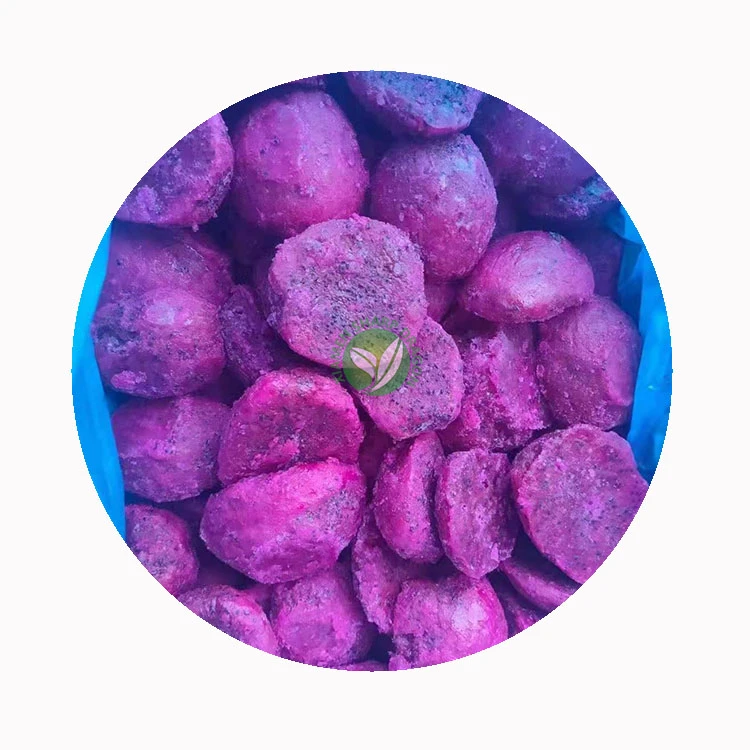
Choosing dragon fruit for a dish? Tell us the flesh color, prepared form and quantity you need. We will review suitable frozen dragon-fruit options.
References
- UF/IFAS: pitaya plants, fruit forms and uses
- Kew Plants of the World Online: Selenicereus undatus
- North Carolina State Extension: the climbing cactus
- Northern Territory: pitaya food and plant descriptions (May 2006)
- UC Davis: dragon-fruit maturity and quality (July 2011)
- USDA ARS: twelve dragon-fruit cultivars in Puerto Rico (2020)
- University of Wyoming Extension: basic flavor and preparation
- FDA: washing, preparing and serving produce
- National Center for Home Food Preservation: fruit texture after freezing
- FDA: household refrigerator and freezer guidance
- Pitaya composition study (2014): author-university abstract
- The yogurt and fruit-cup examples use hypothetical recipe quantities, not dietary recommendations or documented XMSD trials. Photos show cactus growth and red-fleshed fruit in different forms; white and yellow forms are discussed in the text. No photo establishes a nutrient value or a weighed portion.